



Filters
SORT
Product Availability –
Category –
Size –
Connection Type –
Flow Rate (GPM) –
Review Score –
 --%3E %3Csvg version='1.1' id='Fill' xmlns='http://www.w3.org/2000/svg' xmlns:xlink='http://www.w3.org/1999/xlink' x='0px' y='0px' viewBox='0 0 100 100' enable-background='new 0 0 100 100' xml:space='preserve'%3E %3Cpath fill='%23F15C02' d='M79.44,0.95H20.56C9.78,0.95,0.95,9.78,0.95,20.56v58.87c0,10.79,8.82,19.61,19.61,19.61h58.87 c10.79,0,19.61-8.83,19.61-19.61V20.56C99.05,9.78,90.22,0.95,79.44,0.95z M65.38,58.24l9.38,29.58L49.69,69.78L24.5,87.82 l9.34-29.6L8.8,39.6l30.73-0.17c0,0,6.98-19.61,10-28.93c0.54,1.36,9.88,29.1,9.88,29.1H91.2L65.38,58.24z'/%3E %3C/svg%3E)
 --%3E %3Csvg version='1.1' id='With-RB' xmlns='http://www.w3.org/2000/svg' xmlns:xlink='http://www.w3.org/1999/xlink' x='0px' y='0px' viewBox='0 0 100 100' enable-background='new 0 0 100 100' xml:space='preserve'%3E %3Cpath fill='%23FBC8B4' d='M79.44,0.95H20.56C9.78,0.95,0.95,9.78,0.95,20.56v58.87c0,10.79,8.82,19.61,19.61,19.61h58.87 c10.79,0,19.61-8.83,19.61-19.61V20.56C99.05,9.78,90.22,0.95,79.44,0.95z M65.38,58.24l9.38,29.58L49.69,69.78L24.5,87.82 l9.34-29.6L8.8,39.6l30.73-0.17c0,0,6.98-19.61,10-28.93c0.54,1.36,9.88,29.1,9.88,29.1H91.2L65.38,58.24z'/%3E %3C/svg%3E)
Price Range –
Balancing Valves

 --%3E %3Csvg version='1.1' id='No-RB' xmlns='http://www.w3.org/2000/svg' xmlns:xlink='http://www.w3.org/1999/xlink' x='0px' y='0px' viewBox='0 0 100 100' enable-background='new 0 0 100 100' xml:space='preserve'%3E %3Cpath fill='%23CECECE' d='M79.44,0.95H20.56C9.78,0.95,0.95,9.78,0.95,20.56v58.87c0,10.79,8.82,19.61,19.61,19.61h58.87 c10.79,0,19.61-8.83,19.61-19.61V20.56C99.05,9.78,90.22,0.95,79.44,0.95z M65.38,58.24l9.38,29.58L49.69,69.78L24.5,87.82 l9.34-29.6L8.8,39.6l30.73-0.17c0,0,6.98-19.61,10-28.93c0.54,1.36,9.88,29.1,9.88,29.1H91.2L65.38,58.24z'/%3E %3C/svg%3E)
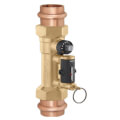
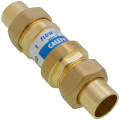
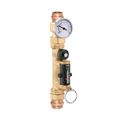

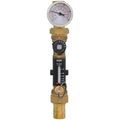
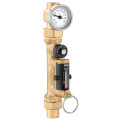
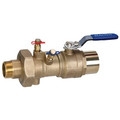
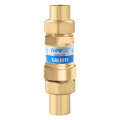
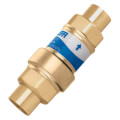
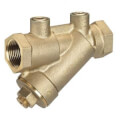

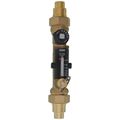
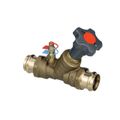
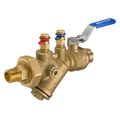
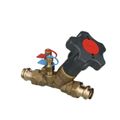
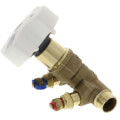
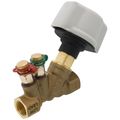
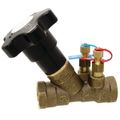
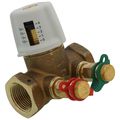
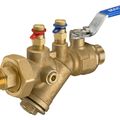
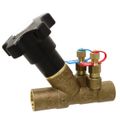
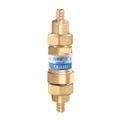
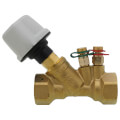
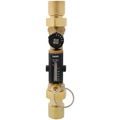
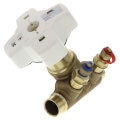
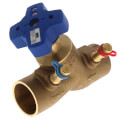
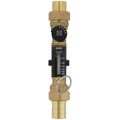
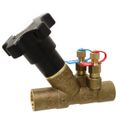
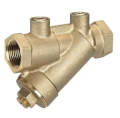
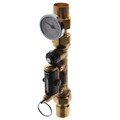
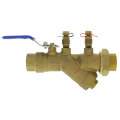
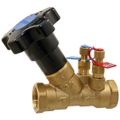
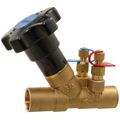
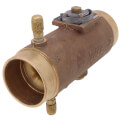
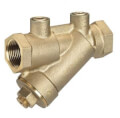

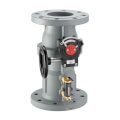
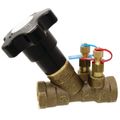
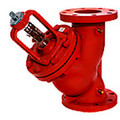

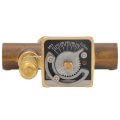
Balancing valves set and hold a precise flow rate through an individual branch of a hydronic heating or cooling system so every zone, coil, or terminal unit gets the water flow it was designed for. Without a way to throttle and measure flow at each branch, the loops closest to the pump tend to starve the far end of the system, leaving some rooms overheated and others underheated. A calibrated balancing valve combines a metering orifice with pressure taps, letting a technician read differential pressure across the valve and convert that reading to a flow rate using the manufacturer's chart or a digital meter. Because these valves also function as isolation valves and can be locked at a set position once balanced, they get installed on new hydronic systems and retrofitted into existing ones during a rebalancing job. Getting the flow settings right at commissioning cuts down on comfort complaints and callbacks well after the job is closed out.
Subcategories
- Threaded Circuit Setters: Threaded balancing valves connect with standard pipe threads and are the common choice on smaller branch lines in residential and light commercial hydronic systems. They combine a memory-stop feature with pressure ports so the valve can be closed for service and reopened to the exact prior setting. Their compact body makes them a fit for tight mechanical room piping.
- Flanged Circuit Setters: Flanged balancing valves bolt into larger commercial piping runs where welded or flanged connections are already standard. They handle higher flow rates than threaded models and are typically found on main distribution loops rather than individual terminal units. Flange sizing needs to match the pipe schedule and rating already in use on the job.
- Insert (Weld-in) Circuit Setters: Weld-in balancing valves are installed directly into the pipe run during new construction or a major retrofit, giving a permanent, low-profile connection point. They are common on systems where the piping contractor wants the balancing point built into the pipe assembly rather than added as a separate fitting later. This style requires welding capability on-site.
- Circuit Setter Plus Digital Valves: Digital balancing valves pair the same metering orifice design with an electronic flow meter, letting a technician read flow directly instead of cross-referencing a differential pressure chart. This speeds up commissioning on systems with many zones by cutting out manual chart lookups. They still function as manual balancing and isolation valves if the digital meter is ever unavailable.
Buying Guide
Start with the connection type already specified in the piping design: threaded for smaller branch lines, flanged for larger mains, or weld-in where the valve gets built into the pipe run during construction. Matching the connection type avoids adding transition fittings that were not in the original design.
Confirm the required flow rate and pipe size for each branch before ordering, since balancing valves are sized to a specific flow range and an undersized valve will not allow enough flow even fully open, while an oversized one loses precision at low flow settings.
Balancing valves generally fall into threaded, flanged, and weld-in body styles, with digital metering available as an add-on across several of those styles. Choosing between manual pressure-tap reading and a digital meter mostly comes down to how many zones need balancing and how much commissioning time is budgeted for the job.
Check that the valve includes a memory-stop or position-lock feature if isolation is needed for service, since not every low-cost balancing valve on the market includes this, and without it a technician has to manually reset the flow position every time the valve is closed and reopened.
On a retrofit, verify pressure and temperature ratings match the existing system rather than assuming a modern valve's ratings automatically exceed an older system's requirements, since some older commercial loops run at higher operating pressures than typical residential hydronic systems.
Frequently Asked Questions
What is the difference between a balancing valve and a standard isolation valve?
A balancing valve includes a calibrated metering orifice and pressure ports so flow can be measured and set precisely, while a standard isolation valve only opens or closes the line without any way to measure or fine-tune flow.
How is flow rate actually measured through a Circuit Setter valve?
A technician connects a differential pressure meter to the valve's pressure ports, reads the pressure drop across the valve, and converts that reading to a flow rate using the manufacturer's chart or, on digital models, reads flow directly from the meter.
Can a balancing valve be used as the only isolation point on a branch?
Yes, most balancing valves function as isolation valves and include a memory stop that lets the valve be closed for service and reopened to its previously set flow position without rebalancing the branch.
Do balancing valves need to be rebalanced after a system component is replaced?
Often yes, especially if a pump, coil, or major piping section changed, since those changes can shift flow distribution across the rest of the system's branches.
Are threaded and flanged balancing valves interchangeable on the same job?
They can both appear on the same system, with threaded valves typically used on smaller branch lines and flanged valves on larger mains, but the connection type at each specific point in the piping determines which style is needed there.
