




Filters
SORT
Product Availability –
Brand –
Fuel Type –
BTU Output –
Review Score –
 --%3E %3Csvg version='1.1' id='Fill' xmlns='http://www.w3.org/2000/svg' xmlns:xlink='http://www.w3.org/1999/xlink' x='0px' y='0px' viewBox='0 0 100 100' enable-background='new 0 0 100 100' xml:space='preserve'%3E %3Cpath fill='%23F15C02' d='M79.44,0.95H20.56C9.78,0.95,0.95,9.78,0.95,20.56v58.87c0,10.79,8.82,19.61,19.61,19.61h58.87 c10.79,0,19.61-8.83,19.61-19.61V20.56C99.05,9.78,90.22,0.95,79.44,0.95z M65.38,58.24l9.38,29.58L49.69,69.78L24.5,87.82 l9.34-29.6L8.8,39.6l30.73-0.17c0,0,6.98-19.61,10-28.93c0.54,1.36,9.88,29.1,9.88,29.1H91.2L65.38,58.24z'/%3E %3C/svg%3E)
 --%3E %3Csvg version='1.1' id='With-RB' xmlns='http://www.w3.org/2000/svg' xmlns:xlink='http://www.w3.org/1999/xlink' x='0px' y='0px' viewBox='0 0 100 100' enable-background='new 0 0 100 100' xml:space='preserve'%3E %3Cpath fill='%23FBC8B4' d='M79.44,0.95H20.56C9.78,0.95,0.95,9.78,0.95,20.56v58.87c0,10.79,8.82,19.61,19.61,19.61h58.87 c10.79,0,19.61-8.83,19.61-19.61V20.56C99.05,9.78,90.22,0.95,79.44,0.95z M65.38,58.24l9.38,29.58L49.69,69.78L24.5,87.82 l9.34-29.6L8.8,39.6l30.73-0.17c0,0,6.98-19.61,10-28.93c0.54,1.36,9.88,29.1,9.88,29.1H91.2L65.38,58.24z'/%3E %3C/svg%3E)
Price Range –
Condensing Boilers


 --%3E %3Csvg version='1.1' id='Half' xmlns='http://www.w3.org/2000/svg' xmlns:xlink='http://www.w3.org/1999/xlink' x='0px' y='0px' viewBox='0 0 100 100' enable-background='new 0 0 100 100' xml:space='preserve'%3E %3Cg%3E %3Cpath fill='%23F15C02' d='M30.05,70.23l3.79-12.01L8.8,39.6l30.73-0.17c0,0,6.98-19.61,10-28.93c0.54,1.36,9.88,29.1,9.88,29.1h1.58 L93.71,7.18c-3.58-3.82-8.66-6.23-14.28-6.23H20.56C9.78,0.95,0.95,9.78,0.95,20.56v58.87c0,5.41,2.22,10.32,5.79,13.88 L30.05,70.23z'/%3E %3C/g%3E %3Cpath fill='%23FBC8B4' d='M93.71,7.18L60.98,39.6H91.2L65.38,58.24l9.38,29.58L49.69,69.78L24.5,87.82l5.55-17.59L6.75,93.32 c3.55,3.54,8.44,5.73,13.82,5.73h58.87c10.79,0,19.61-8.83,19.61-19.61V20.56C99.05,15.4,97.01,10.69,93.71,7.18z'/%3E %3C/svg%3E)

 --%3E %3Csvg version='1.1' id='No-RB' xmlns='http://www.w3.org/2000/svg' xmlns:xlink='http://www.w3.org/1999/xlink' x='0px' y='0px' viewBox='0 0 100 100' enable-background='new 0 0 100 100' xml:space='preserve'%3E %3Cpath fill='%23CECECE' d='M79.44,0.95H20.56C9.78,0.95,0.95,9.78,0.95,20.56v58.87c0,10.79,8.82,19.61,19.61,19.61h58.87 c10.79,0,19.61-8.83,19.61-19.61V20.56C99.05,9.78,90.22,0.95,79.44,0.95z M65.38,58.24l9.38,29.58L49.69,69.78L24.5,87.82 l9.34-29.6L8.8,39.6l30.73-0.17c0,0,6.98-19.61,10-28.93c0.54,1.36,9.88,29.1,9.88,29.1H91.2L65.38,58.24z'/%3E %3C/svg%3E)

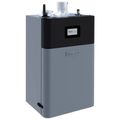
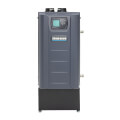



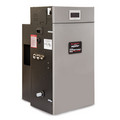

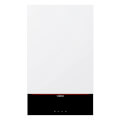
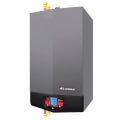
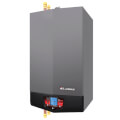
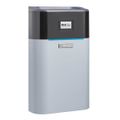

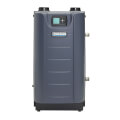
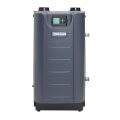
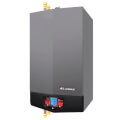

Condensing boilers are high-efficiency hydronic heat sources that recover extra heat from flue gases by cooling them enough to condense water vapor, capturing the latent heat that a conventional boiler simply vents outside. That extra heat recovery step is why condensing units run at higher efficiency ratings than standard atmospheric boilers, especially in systems designed to return cooler water to the boiler. Contractors spec condensing boilers for both residential and light commercial hydronic heating and domestic hot water applications where lower operating costs and reduced fuel use matter to the building owner.
Because condensing boilers produce acidic condensate as a byproduct, they need a condensate drain and often a neutralizer before that water reaches a standard drain line, which is a design detail that differs from non-condensing equipment. They also depend on a sealed combustion venting system rated for the cooler flue gas temperatures they produce, so installers typically use PVC, CPVC, or polypropylene venting rather than traditional metal chimney venting. Choosing the right unit means matching its output and venting requirements to the building's heat load and existing infrastructure.
Subcategories
- Wall-Hung Condensing Boilers: Compact units designed to mount directly on a wall, wall-hung condensing boilers suit residential and light commercial jobs where floor space is limited. They're common in retrofit projects replacing older floor-standing boilers, since a wall-hung unit frees up mechanical room space for other equipment. Installers appreciate the smaller footprint when working in tight utility closets or multi-family boiler rooms.
- Floor-Standing Condensing Boilers: Built for higher-output applications, floor-standing condensing boilers handle larger heat loads than most wall-hung models and are common in commercial buildings, larger homes, and multi-zone hydronic systems. Their larger footprint accommodates bigger heat exchangers and higher firing rates. Contractors typically choose floor-standing units when a single wall-hung boiler can't cover the building's full heating demand.
- Combi Condensing Boilers: Combination units provide both space heating and domestic hot water from a single appliance, eliminating the need for a separate water heater tank. They're a common fit for smaller homes and condos where mechanical room space is at a premium. Because they heat water on demand, sizing a combi unit correctly for both heating and hot water needs is an important part of the selection process.
- Condensate Neutralizers & Accessories: Condensing boilers produce acidic condensate that needs to be neutralized before it drains into a standard waste line, so neutralizer kits, drain accessories, and related hardware round out most installations. Many local plumbing codes require condensate treatment before it reaches a sewer connection. Stocking the right neutralizer media and drain fittings keeps an install code-compliant from day one.
Buying Guide
Sizing is the first decision point when selecting a condensing boiler. An undersized unit struggles to meet peak heating demand on the coldest days, while an oversized one short-cycles and can lose some of the efficiency advantage condensing boilers are chosen for in the first place. A proper heat-loss calculation for the building, not just a rule-of-thumb replacement of the old boiler's output, gives the most reliable sizing basis.
Venting is the next major factor. Condensing boilers require venting materials rated for the cooler, moisture-laden flue gases they produce, typically PVC, CPVC, or polypropylene rather than a traditional metal chimney. Confirming vent run length, termination clearances, and material compatibility with the specific condensing boiler model avoids a costly change order mid-installation.
Application type matters as well: a straight heating-only condensing boiler covers space heating loads, while a combi unit adds domestic hot water production from the same appliance for smaller buildings with limited mechanical space. Larger commercial or multi-family projects more often pair a heating-only condensing boiler with a separate indirect water heater to keep hot water recovery independent of the heating load.
Condensate handling rounds out the buying decision. Every condensing boiler installation needs a plan for routing and neutralizing acidic condensate before it reaches a drain, and that plan should be confirmed against local plumbing code before the equipment is ordered. Factoring in condensate accessories at the purchase stage, rather than as an afterthought, keeps the installation moving without a mid-job parts run.
Frequently Asked Questions
What makes a condensing boiler different from a standard boiler?
A condensing boiler recovers additional heat from flue gases by cooling them enough to condense the water vapor they contain, capturing latent heat that a standard boiler vents outside. That process is what gives condensing units their higher efficiency, particularly when the system's return water temperature is low enough to support condensing operation.
Why do condensing boilers need a condensate drain?
The condensation process that recovers extra heat also produces acidic water as a byproduct, and that condensate needs a dedicated drain path, often through a neutralizer, before it reaches a standard waste line. Skipping proper condensate handling can damage drain piping over time and may violate local plumbing code.
Can a condensing boiler vent through an existing metal chimney?
Generally no. Condensing boilers produce cooler, moisture-laden flue gases that require venting materials rated for that environment, typically PVC, CPVC, or polypropylene, rather than a traditional metal chimney designed for hotter, drier exhaust.
What's the difference between a heating-only and a combi condensing boiler?
A heating-only condensing boiler handles space heating exclusively, while a combi unit adds on-demand domestic hot water production from the same appliance. Combi units suit smaller buildings with limited mechanical room space, while larger projects often pair a heating-only boiler with a separate water heater.
How does return water temperature affect condensing boiler efficiency?
Condensing boilers reach their highest efficiency when the water returning to them is cool enough to trigger condensation in the flue gas. Systems designed with lower return temperatures, such as radiant floor heating, tend to get more of the efficiency benefit than systems running consistently hot return water.
