




Filters
SORT
Product Availability –
Category –
Fan Diameter –
Horse Power –
Review Score –
 --%3E %3Csvg version='1.1' id='Fill' xmlns='http://www.w3.org/2000/svg' xmlns:xlink='http://www.w3.org/1999/xlink' x='0px' y='0px' viewBox='0 0 100 100' enable-background='new 0 0 100 100' xml:space='preserve'%3E %3Cpath fill='%23F15C02' d='M79.44,0.95H20.56C9.78,0.95,0.95,9.78,0.95,20.56v58.87c0,10.79,8.82,19.61,19.61,19.61h58.87 c10.79,0,19.61-8.83,19.61-19.61V20.56C99.05,9.78,90.22,0.95,79.44,0.95z M65.38,58.24l9.38,29.58L49.69,69.78L24.5,87.82 l9.34-29.6L8.8,39.6l30.73-0.17c0,0,6.98-19.61,10-28.93c0.54,1.36,9.88,29.1,9.88,29.1H91.2L65.38,58.24z'/%3E %3C/svg%3E)
 --%3E %3Csvg version='1.1' id='With-RB' xmlns='http://www.w3.org/2000/svg' xmlns:xlink='http://www.w3.org/1999/xlink' x='0px' y='0px' viewBox='0 0 100 100' enable-background='new 0 0 100 100' xml:space='preserve'%3E %3Cpath fill='%23FBC8B4' d='M79.44,0.95H20.56C9.78,0.95,0.95,9.78,0.95,20.56v58.87c0,10.79,8.82,19.61,19.61,19.61h58.87 c10.79,0,19.61-8.83,19.61-19.61V20.56C99.05,9.78,90.22,0.95,79.44,0.95z M65.38,58.24l9.38,29.58L49.69,69.78L24.5,87.82 l9.34-29.6L8.8,39.6l30.73-0.17c0,0,6.98-19.61,10-28.93c0.54,1.36,9.88,29.1,9.88,29.1H91.2L65.38,58.24z'/%3E %3C/svg%3E)
Price Range –
Fantech Roof Mounted Fans

 --%3E %3Csvg version='1.1' id='Half' xmlns='http://www.w3.org/2000/svg' xmlns:xlink='http://www.w3.org/1999/xlink' x='0px' y='0px' viewBox='0 0 100 100' enable-background='new 0 0 100 100' xml:space='preserve'%3E %3Cg%3E %3Cpath fill='%23F15C02' d='M30.05,70.23l3.79-12.01L8.8,39.6l30.73-0.17c0,0,6.98-19.61,10-28.93c0.54,1.36,9.88,29.1,9.88,29.1h1.58 L93.71,7.18c-3.58-3.82-8.66-6.23-14.28-6.23H20.56C9.78,0.95,0.95,9.78,0.95,20.56v58.87c0,5.41,2.22,10.32,5.79,13.88 L30.05,70.23z'/%3E %3C/g%3E %3Cpath fill='%23FBC8B4' d='M93.71,7.18L60.98,39.6H91.2L65.38,58.24l9.38,29.58L49.69,69.78L24.5,87.82l5.55-17.59L6.75,93.32 c3.55,3.54,8.44,5.73,13.82,5.73h58.87c10.79,0,19.61-8.83,19.61-19.61V20.56C99.05,15.4,97.01,10.69,93.71,7.18z'/%3E %3C/svg%3E)



 --%3E %3Csvg version='1.1' id='No-RB' xmlns='http://www.w3.org/2000/svg' xmlns:xlink='http://www.w3.org/1999/xlink' x='0px' y='0px' viewBox='0 0 100 100' enable-background='new 0 0 100 100' xml:space='preserve'%3E %3Cpath fill='%23CECECE' d='M79.44,0.95H20.56C9.78,0.95,0.95,9.78,0.95,20.56v58.87c0,10.79,8.82,19.61,19.61,19.61h58.87 c10.79,0,19.61-8.83,19.61-19.61V20.56C99.05,9.78,90.22,0.95,79.44,0.95z M65.38,58.24l9.38,29.58L49.69,69.78L24.5,87.82 l9.34-29.6L8.8,39.6l30.73-0.17c0,0,6.98-19.61,10-28.93c0.54,1.36,9.88,29.1,9.88,29.1H91.2L65.38,58.24z'/%3E %3C/svg%3E)
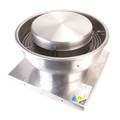
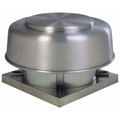

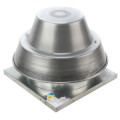
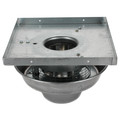
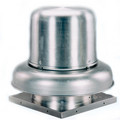
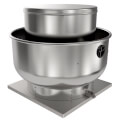

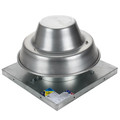
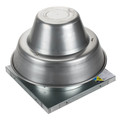
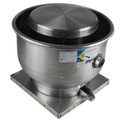
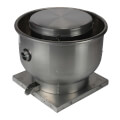
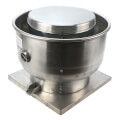
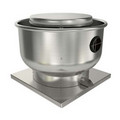
Fantech roof mounted fans are ventilation units installed directly on a roof deck to exhaust air from bathrooms, kitchens, or whole-building ventilation systems without routing ductwork through interior walls to a wall cap. Mounting the fan on the roof allows a shorter, more direct duct run from the space being ventilated, which can reduce noise inside the building since the fan motor sits outside the living space entirely. These fans are commonly used in multi-family buildings and commercial applications where several bathrooms or kitchens tie into a single exhaust point on the roof. Installers select a roof mounted fan based on the required airflow for the spaces it serves, along with the roof's pitch and the type of curb or mounting adapter needed for a weathertight installation. Because the unit is exposed to outdoor conditions year-round, the housing and components are built to handle moisture and temperature swings without corroding or failing prematurely. Contractors installing or servicing roof mounted ventilation rely on Fantech's roof fan lineup for both new construction and retrofit projects replacing older, less efficient units.
Subcategories
- Centrifugal Roof Mounted Fans: These fans use a centrifugal blower wheel to move air, which generates strong static pressure for longer duct runs or systems with more resistance. They suit multi-family buildings where several bathroom exhausts tie into one roof-mounted unit. Contractors specify centrifugal models when the ductwork run is longer or has more elbows than a basic single-bath exhaust.
- Inline-Style Roof Mounted Fans: Built with a more compact housing, these fans work well for simpler ventilation runs where high static pressure isn't as critical. They're often used for single-zone exhaust applications like one bathroom or a small commercial kitchen hood. Their smaller footprint can simplify installation on tighter roof curbs.
- Direct Drive Roof Mounted Fans: These fans connect the motor directly to the fan wheel without a belt, reducing the maintenance associated with belt wear and alignment. They're a common choice for straightforward exhaust applications where simplicity and lower maintenance are priorities. Direct drive models are typically easier to service since there are fewer moving parts to inspect.
Buying Guide
Selecting the right Fantech roof mounted fan starts with calculating the required airflow, measured in cubic feet per minute, for the spaces the fan will serve, since undersizing a fan leaves a bathroom or kitchen poorly ventilated while oversizing wastes energy and adds unnecessary noise. Adding up the exhaust needs of every fixture tied into a single roof unit, such as multiple bathroom exhausts feeding one fan in a multi-family building, gives a more accurate airflow target than sizing for just one space. Static pressure is the next factor: longer duct runs, more elbows, or attached grilles all add resistance, so a fan needs enough static pressure capability to move air effectively through the full length of ductwork rather than just at the roof cap itself. Roof pitch and the mounting curb also affect the buying decision, since a steeper roof may need a specific curb design to keep the installation weathertight. For retrofit projects replacing an older roof mounted fan, matching the new unit's base dimensions to the existing curb can save the labor of installing a new curb altogether. Contractors handling multi-family or commercial ventilation projects often standardize on one or two Fantech roof fan models to simplify parts stocking and repair familiarity across a portfolio of buildings.
Frequently Asked Questions
How is a roof mounted fan sized for a bathroom exhaust system?
Sizing starts with calculating the total airflow needed in cubic feet per minute for every fixture tied into that single fan, not just one bathroom. Adding a reasonable safety margin above the calculated total helps account for duct losses and future changes to the space. Undersizing the fan results in poor ventilation, while oversizing adds unnecessary noise and energy use.
What's the difference between a centrifugal and inline-style roof fan?
A centrifugal fan uses a blower wheel design that generates higher static pressure, making it better suited for longer duct runs or systems with more airflow resistance. An inline-style fan has a more compact housing and works well for simpler, shorter duct runs. The choice depends on the total duct length and number of elbows in the exhaust path.
Can one roof mounted fan serve multiple bathrooms?
Yes, a single roof mounted fan can serve multiple bathrooms if it's sized to handle the combined airflow requirement of all connected fixtures. This approach is common in multi-family buildings to reduce the number of roof penetrations needed. Ductwork needs to be properly balanced so each connected space gets adequate airflow.
What maintenance do roof mounted fans need?
Because these fans sit outside year-round, periodic inspection for debris buildup, weatherproofing integrity around the curb, and motor condition helps catch problems before they cause a failure. Direct drive models generally need less maintenance than belt-driven units since there's no belt to replace or realign. Scheduling inspections during regular roof maintenance visits helps catch issues early.
Does roof pitch affect which fan curb is needed?
Yes, steeper roof pitches typically require a curb designed to keep the unit level and maintain a weathertight seal around the roof penetration. Using a curb that doesn't match the roof pitch can lead to water intrusion over time. Confirming the roof pitch before ordering the curb and fan assembly avoids a mismatched installation.
