



Filters
SORT
Product Availability –
Brand –
Connection Type –
Handle Style –
Size –
Review Score –
 --%3E %3Csvg version='1.1' id='Fill' xmlns='http://www.w3.org/2000/svg' xmlns:xlink='http://www.w3.org/1999/xlink' x='0px' y='0px' viewBox='0 0 100 100' enable-background='new 0 0 100 100' xml:space='preserve'%3E %3Cpath fill='%23F15C02' d='M79.44,0.95H20.56C9.78,0.95,0.95,9.78,0.95,20.56v58.87c0,10.79,8.82,19.61,19.61,19.61h58.87 c10.79,0,19.61-8.83,19.61-19.61V20.56C99.05,9.78,90.22,0.95,79.44,0.95z M65.38,58.24l9.38,29.58L49.69,69.78L24.5,87.82 l9.34-29.6L8.8,39.6l30.73-0.17c0,0,6.98-19.61,10-28.93c0.54,1.36,9.88,29.1,9.88,29.1H91.2L65.38,58.24z'/%3E %3C/svg%3E)
 --%3E %3Csvg version='1.1' id='With-RB' xmlns='http://www.w3.org/2000/svg' xmlns:xlink='http://www.w3.org/1999/xlink' x='0px' y='0px' viewBox='0 0 100 100' enable-background='new 0 0 100 100' xml:space='preserve'%3E %3Cpath fill='%23FBC8B4' d='M79.44,0.95H20.56C9.78,0.95,0.95,9.78,0.95,20.56v58.87c0,10.79,8.82,19.61,19.61,19.61h58.87 c10.79,0,19.61-8.83,19.61-19.61V20.56C99.05,9.78,90.22,0.95,79.44,0.95z M65.38,58.24l9.38,29.58L49.69,69.78L24.5,87.82 l9.34-29.6L8.8,39.6l30.73-0.17c0,0,6.98-19.61,10-28.93c0.54,1.36,9.88,29.1,9.88,29.1H91.2L65.38,58.24z'/%3E %3C/svg%3E)
Price Range –
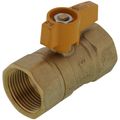
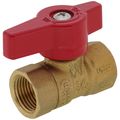
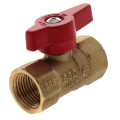
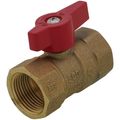
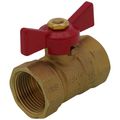
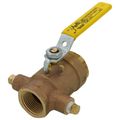
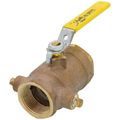
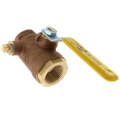
Gas Ball Valves (Gas Cocks)


 --%3E %3Csvg version='1.1' id='No-RB' xmlns='http://www.w3.org/2000/svg' xmlns:xlink='http://www.w3.org/1999/xlink' x='0px' y='0px' viewBox='0 0 100 100' enable-background='new 0 0 100 100' xml:space='preserve'%3E %3Cpath fill='%23CECECE' d='M79.44,0.95H20.56C9.78,0.95,0.95,9.78,0.95,20.56v58.87c0,10.79,8.82,19.61,19.61,19.61h58.87 c10.79,0,19.61-8.83,19.61-19.61V20.56C99.05,9.78,90.22,0.95,79.44,0.95z M65.38,58.24l9.38,29.58L49.69,69.78L24.5,87.82 l9.34-29.6L8.8,39.6l30.73-0.17c0,0,6.98-19.61,10-28.93c0.54,1.36,9.88,29.1,9.88,29.1H91.2L65.38,58.24z'/%3E %3C/svg%3E)
 --%3E %3Csvg version='1.1' id='Half' xmlns='http://www.w3.org/2000/svg' xmlns:xlink='http://www.w3.org/1999/xlink' x='0px' y='0px' viewBox='0 0 100 100' enable-background='new 0 0 100 100' xml:space='preserve'%3E %3Cg%3E %3Cpath fill='%23F15C02' d='M30.05,70.23l3.79-12.01L8.8,39.6l30.73-0.17c0,0,6.98-19.61,10-28.93c0.54,1.36,9.88,29.1,9.88,29.1h1.58 L93.71,7.18c-3.58-3.82-8.66-6.23-14.28-6.23H20.56C9.78,0.95,0.95,9.78,0.95,20.56v58.87c0,5.41,2.22,10.32,5.79,13.88 L30.05,70.23z'/%3E %3C/g%3E %3Cpath fill='%23FBC8B4' d='M93.71,7.18L60.98,39.6H91.2L65.38,58.24l9.38,29.58L49.69,69.78L24.5,87.82l5.55-17.59L6.75,93.32 c3.55,3.54,8.44,5.73,13.82,5.73h58.87c10.79,0,19.61-8.83,19.61-19.61V20.56C99.05,15.4,97.01,10.69,93.71,7.18z'/%3E %3C/svg%3E)
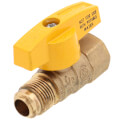
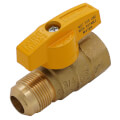
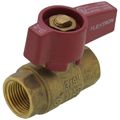
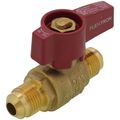
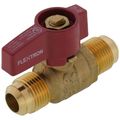
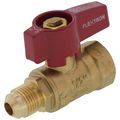
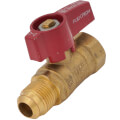
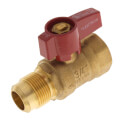
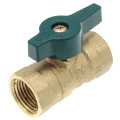
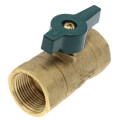
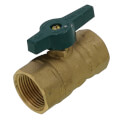
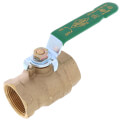
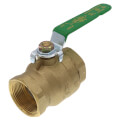
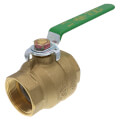
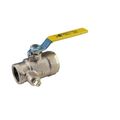
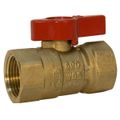
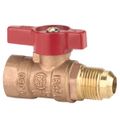
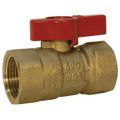
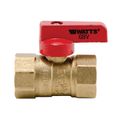
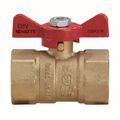

Gas ball valves (gas cocks) are quarter turn shutoff valves designed to control the flow of natural gas, liquid propane, manufactured gas, mixed gas, and LP gas air mixtures through a piping system. Gas ball valves work by rotating a spherical ball with a through bore 90 degrees, aligning the bore with the pipe to open flow and turning it perpendicular to stop flow completely. One quarter turn is all it takes, and the handle position always indicates valve status at a glance. Gas ball valves serve residential and commercial applications across appliance connections, main supply line shutoffs, and CSST system terminations, with a size range running from 3/8" through 2" to cover everything from a residential range stub out to a larger commercial gas main. Because gas shutoff reliability is not optional, gas ball valves carry application specific certifications including UL 125 and UL 842, and are rated for the fuel types, operating pressures, and connection configurations the job demands.
KEY SUBCATEGORIES / PRODUCT TYPES
FNPT x FNPT Gas Ball Valves
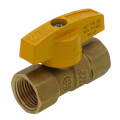
FNPT x FNPT gas ball valves are the most common configuration in gas piping, with female threaded connections on both ends that thread directly onto iron pipe, black pipe, or other threaded gas fittings. Webstone IPS gas ball valves cover sizes 3/8", 1/2", 3/4", and 1" in FNPT x FNPT, featuring a quarter turn lever handle, blowout proof stem, and NSF/ANSI 61 certification. AY McDonald model 10710 FNPT gas ball valves cover 1/2" (SKU 4901-110), 3/4" (SKU 4901-111), 1 1/4" (SKU 4901-113), and 2" (SKU 4901-115). Additional brands including Apollo Valves, BrassCraft, Bluefin, Everflow, Nibco, and Watts round out the FNPT x FNPT options across the full 3/8" through 2" size range. When selecting an FNPT x FNPT gas ball valve, confirm pipe size, operating pressure rating, and whether a pilot tap is required for the application.
Flare x FNPT Gas Ball Valves
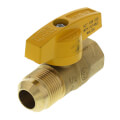
Flare x FNPT gas ball valves combine a flare connection on one end with a female threaded pipe connection on the other, serving as the appliance shutoff where a CSST appliance connector terminates at a gas stub out. Everflow flare gas ball valves are available in 3/8" flare, 1/2" flare x 1/2" FIP (SKU FTGV-12R12F), and 5/8" flare x 3/4" FIP configurations, with a forged brass body, stainless steel ball, and aluminum alloy handle. BrassCraft flare gas ball valves, including the TBV8-8 (1/2" OD flare x 1/2" FIP) and TBV10-8 (5/8" OD flare x 1/2" FIP), feature heavy duty forged brass bodies and blowout proof stems assembled from the inside with double o rings and PTFE seat rings. A critical compatibility note: Everflow and BrassCraft flare gas ball valves in this category are not compatible with short or long flare nuts and are designed for CSST appliance connectors only. The BrassCraft 5/8" OD flare uses a 15/16-16 CSA standard thread, which mates only with BrassCraft CSSC series gas connectors, not SAE 45 flare fittings. Confirming CSST connector compatibility before specifying a flare gas ball valve prevents a return trip.
Gas Shutoff Ball Valves with Pilot Taps
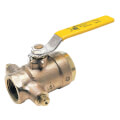
Gas shutoff ball valves with pilot taps are full port bronze valves designed for main burner applications where a pressure test port or pilot gas connection is needed directly at the valve body. Apollo GB-50 series gas shutoff ball valves are available with single or dual 1/4" or 1/8" cast in pilot taps, covering sizes 1/2" through 2" FNPT, rated for gas pressures of 1/2 and 5 psig, and listed to UL 125 and UL 842. Apollo GB-50 series valves carry BTU capacity ratings by size, including 3,144,000 BTU at 1" (SKU 50GB5A1), 6,441,000 BTU at 1 1/4" (SKU 50GB6A1), and 7,745,000 BTU at 1 1/2" (SKU 50GB7A1A). Apollo GB-50 series valves are made in the USA, 100% factory tested, and approved for natural gas, manufactured gas, mixed gas, LP gas, and LP gas air mixtures. The dual tap configuration allows pressure testing at both the inlet and outlet sides of the valve without adding separate test fittings to the piping run.
T Handle Gas Ball Valves
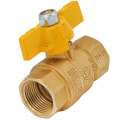
T handle gas ball valves use a tee shaped handle rather than a lever, making them easier to operate in tight mechanical spaces or in locations where a lever handle may catch on adjacent piping or structure. Apollo GB-50 series tee handle gas shutoff ball valves, including the 3/4" FNPT bronze 2 piece full port model (SKU 50GB401A) and the 1" FNPT bronze 2 piece full port model (SKU 50GB501), carry the same UL 125 and UL 842 listings as the lever handle variants and are available with single or dual pilot tap configurations. T handle gas ball valves cover sizes from 1/2" through 2" in FNPT x FNPT across the GB-50 series. When specifying a T handle gas valve for locations with limited clearance, confirming that the tee handle swing radius clears adjacent piping before installation saves a job site headache.
BUYING GUIDE / HOW TO CHOOSE
Selecting the right gas ball valve (gas cock) starts with two decisions that cannot be skipped: connection type and size. Connection type determines whether the valve installs at all. Size determines whether the valve flows enough gas for the application. Getting either one wrong means the valve comes back off.
Connection type in this category falls into two primary groups. FNPT x FNPT valves thread onto iron or black pipe at both ends, covering main line shutoffs, appliance isolation valves, and branch line service. Flare x FNPT valves connect a CSST appliance connector on one side to threaded pipe on the other, serving as the dedicated shutoff at the point where a flexible gas connector terminates. Flare x FNPT valves from Everflow and BrassCraft in this category are designed exclusively for CSST appliance connectors. BrassCraft's 5/8" OD flare valves use a 15/16-16 CSA standard thread that only mates with BrassCraft CSSC series connectors, not SAE 45 flare fittings. Confirming the connector brand and thread standard before specifying a flare gas ball valve is a required step.
Operating pressure is the next filter. Most residential gas systems run at 1/2 psig or below. Apollo GB-50 series gas shutoff ball valves are rated for 1/2 and 5 psig, handling both standard residential and higher pressure service applications. The 1 1/4" Apollo GB-50 series extends to rated pressures of 1/2, 2, and 5 psig. Confirm the system operating pressure against the valve's rated gas pressure before specifying, especially on commercial jobs.
For main burner or any application requiring pressure testing at the valve, a tapped gas ball valve eliminates the need for a separate test tee fitting in the piping run. Apollo GB-50 series valves come with 1/4" or 1/8" single or dual pilot taps from 1/2" through 2" FNPT. Dual tap configurations allow independent pressure testing at both the inlet and outlet sides of the valve.
Handle style matters in tight spaces. Lever handles are the standard across most brands and sizes. Tee handles in the Apollo GB-50 series work where lever clearance is limited. Confirming the handle swing radius against the installed geometry of the piping run before ordering avoids a swap on the job.
FAQs
What is the difference between a gas ball valve and a gas cock?
The difference between a gas ball valve and a gas cock is the internal shutoff mechanism. A gas ball valve uses a rotating sphere with a through bore that opens and closes flow with a single 90 degree turn of the handle. A gas cock traditionally used a tapered plug, but the terms are now used interchangeably in the trade to describe any quarter turn manual gas shutoff valve. Both serve the same function: isolating gas flow to an appliance or section of piping for service, repair, or emergency shutoff.
Which gas ball valves are compatible with CSST appliance connectors?
Gas ball valves with flare connections, including Everflow flare gas ball valves in 3/8", 1/2", and 5/8" OD configurations and BrassCraft TBV series valves in 1/2" OD (SKU TBV8-8) and 5/8" OD (SKU TBV10-8), are designed for use with CSST appliance connectors. Everflow and BrassCraft flare gas ball valves are explicitly not compatible with short or long flare nuts. BrassCraft's 5/8" OD flare uses a 15/16-16 CSA standard thread that mates only with BrassCraft CSSC series gas connectors, not SAE 45 flare fittings. Verifying the connector brand and thread standard before specifying a CSST compatible flare gas ball valve prevents mismatched connections on the job.
What UL listings are required for gas ball valves?
The UL listings most commonly required for gas ball valves used in natural gas and LP gas applications are UL 125 and UL 842. Apollo GB-50 series bronze gas shutoff ball valves carry both UL 125 and UL 842 listings and are approved for natural gas, manufactured gas, mixed gas, LP gas, and LP gas air mixtures across sizes 1/2" through 2" FNPT. Webstone IPS gas ball valves carry NSF/ANSI 61 certification. The specific listings required for any given installation are determined by the local authority having jurisdiction, and confirming code requirements before specifying any gas valve is the installer's responsibility.
What does a pilot tap on a gas shutoff ball valve do, and when is one needed?
A pilot tap on a gas shutoff ball valve is a cast in threaded port on the valve body that provides a connection point for a pressure gauge, manometer, or pilot gas line without adding a separate tee fitting to the piping run. Apollo GB-50 series gas shutoff ball valves are available with 1/4" and 1/8" single or dual pilot taps from 1/2" through 2" FNPT. A pilot tap is typically needed on main burner applications where pressure testing at the valve location is part of the commissioning or inspection procedure. Dual tap configurations allow pressure testing independently at both the inlet and outlet sides of the valve, which can simplify verification on complex commercial gas piping runs.
What size range do gas ball valves cover, and how is the right size determined?
Gas ball valves in this category cover sizes from 3/8" through 2" FNPT x FNPT, with flare x FNPT options in 3/8", 1/2", and 5/8" OD. AY McDonald model 10710 covers 1/2", 3/4", 1 1/4", and 2" FNPT. Apollo GB-50 series covers 1/2" through 2" FNPT. Webstone IPS gas ball valves cover 3/8", 1/2", 3/4", and 1" FNPT. The right size is determined by the actual pipe or connector size at the installation point, confirmed from the pipe OD or thread size at the connection, not estimated from the appliance BTU rating alone.
