



Filters
SORT
Product Availability –
Brand –
Connection Size –
Connection Type –
Micron Rating –
Refrigerant Type –
Ton –
Cubic Inches –
Review Score –
 --%3E %3Csvg version='1.1' id='Fill' xmlns='http://www.w3.org/2000/svg' xmlns:xlink='http://www.w3.org/1999/xlink' x='0px' y='0px' viewBox='0 0 100 100' enable-background='new 0 0 100 100' xml:space='preserve'%3E %3Cpath fill='%23F15C02' d='M79.44,0.95H20.56C9.78,0.95,0.95,9.78,0.95,20.56v58.87c0,10.79,8.82,19.61,19.61,19.61h58.87 c10.79,0,19.61-8.83,19.61-19.61V20.56C99.05,9.78,90.22,0.95,79.44,0.95z M65.38,58.24l9.38,29.58L49.69,69.78L24.5,87.82 l9.34-29.6L8.8,39.6l30.73-0.17c0,0,6.98-19.61,10-28.93c0.54,1.36,9.88,29.1,9.88,29.1H91.2L65.38,58.24z'/%3E %3C/svg%3E)
 --%3E %3Csvg version='1.1' id='With-RB' xmlns='http://www.w3.org/2000/svg' xmlns:xlink='http://www.w3.org/1999/xlink' x='0px' y='0px' viewBox='0 0 100 100' enable-background='new 0 0 100 100' xml:space='preserve'%3E %3Cpath fill='%23FBC8B4' d='M79.44,0.95H20.56C9.78,0.95,0.95,9.78,0.95,20.56v58.87c0,10.79,8.82,19.61,19.61,19.61h58.87 c10.79,0,19.61-8.83,19.61-19.61V20.56C99.05,9.78,90.22,0.95,79.44,0.95z M65.38,58.24l9.38,29.58L49.69,69.78L24.5,87.82 l9.34-29.6L8.8,39.6l30.73-0.17c0,0,6.98-19.61,10-28.93c0.54,1.36,9.88,29.1,9.88,29.1H91.2L65.38,58.24z'/%3E %3C/svg%3E)
Price Range –
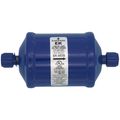
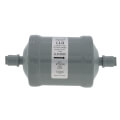
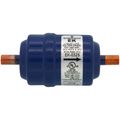
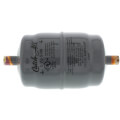
Liquid Line Filter-Driers





 --%3E %3Csvg version='1.1' id='No-RB' xmlns='http://www.w3.org/2000/svg' xmlns:xlink='http://www.w3.org/1999/xlink' x='0px' y='0px' viewBox='0 0 100 100' enable-background='new 0 0 100 100' xml:space='preserve'%3E %3Cpath fill='%23CECECE' d='M79.44,0.95H20.56C9.78,0.95,0.95,9.78,0.95,20.56v58.87c0,10.79,8.82,19.61,19.61,19.61h58.87 c10.79,0,19.61-8.83,19.61-19.61V20.56C99.05,9.78,90.22,0.95,79.44,0.95z M65.38,58.24l9.38,29.58L49.69,69.78L24.5,87.82 l9.34-29.6L8.8,39.6l30.73-0.17c0,0,6.98-19.61,10-28.93c0.54,1.36,9.88,29.1,9.88,29.1H91.2L65.38,58.24z'/%3E %3C/svg%3E)



 --%3E %3Csvg version='1.1' id='Half' xmlns='http://www.w3.org/2000/svg' xmlns:xlink='http://www.w3.org/1999/xlink' x='0px' y='0px' viewBox='0 0 100 100' enable-background='new 0 0 100 100' xml:space='preserve'%3E %3Cg%3E %3Cpath fill='%23F15C02' d='M30.05,70.23l3.79-12.01L8.8,39.6l30.73-0.17c0,0,6.98-19.61,10-28.93c0.54,1.36,9.88,29.1,9.88,29.1h1.58 L93.71,7.18c-3.58-3.82-8.66-6.23-14.28-6.23H20.56C9.78,0.95,0.95,9.78,0.95,20.56v58.87c0,5.41,2.22,10.32,5.79,13.88 L30.05,70.23z'/%3E %3C/g%3E %3Cpath fill='%23FBC8B4' d='M93.71,7.18L60.98,39.6H91.2L65.38,58.24l9.38,29.58L49.69,69.78L24.5,87.82l5.55-17.59L6.75,93.32 c3.55,3.54,8.44,5.73,13.82,5.73h58.87c10.79,0,19.61-8.83,19.61-19.61V20.56C99.05,15.4,97.01,10.69,93.71,7.18z'/%3E %3C/svg%3E)
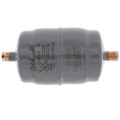
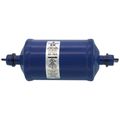
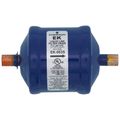
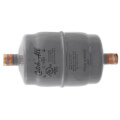
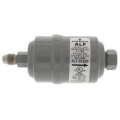
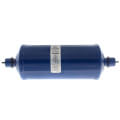

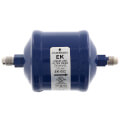
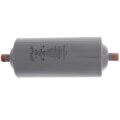
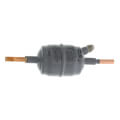
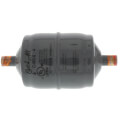
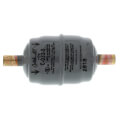
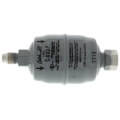
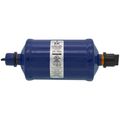
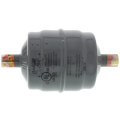
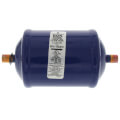
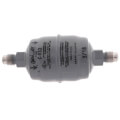
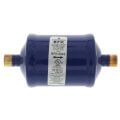
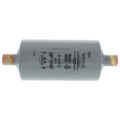
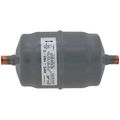
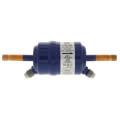
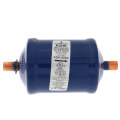
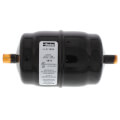
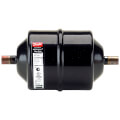
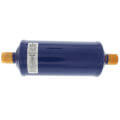
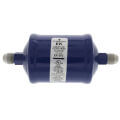
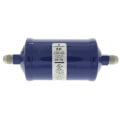
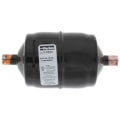
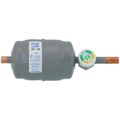
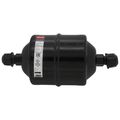
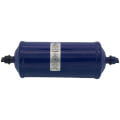


Liquid line filter driers are refrigeration components installed in the liquid line to remove moisture, acid, and particulate contamination before refrigerant reaches the metering device and evaporator. A filter drier protects sensitive components like thermostatic expansion valves and compressors from the wear and corrosion that moisture and debris cause inside a sealed refrigerant system.
Filter driers come in permanent, replaceable core, and solid core styles, and the choice affects how a technician services the unit after installation. Sizing a filter drier to the system tonnage and refrigerant type keeps pressure drop within an acceptable range while still trapping enough contamination to protect the equipment downstream.
Subcategories
- Permanent (Sealed) Filter Driers: Permanent filter driers get installed once and replaced as a full unit once the desiccant core is saturated, which suits smaller residential systems serviced on an infrequent basis. Technicians favor the simplicity of a single sealed unit on these installations.
- Replaceable-Core Filter Driers: Replaceable core filter driers let a technician swap the internal core without removing the outer shell from the line, which fits larger commercial systems serviced on a regular schedule. Shops running frequent maintenance visits stock spare cores to speed up each service call.
- Solid-Core Filter Driers: Solid core filter driers use a single piece desiccant core designed for a straightforward drop in replacement. Technicians use these where a quick, complete swap makes more sense than servicing an internal core in the field.
- Flare and Sweat Connection Filter Driers: Filter driers come with flare or sweat connections to match how a technician is installing or servicing the liquid line, letting a repair proceed without changing the surrounding pipe fittings. A flare connection suits a quick field replacement, while a sweat connection matches new construction where the technician is already brazing the line.
Buying Guide
Selecting a liquid line filter drier starts with matching its capacity to the system tonnage it protects, since an undersized drier restricts refrigerant flow and an oversized one adds unnecessary cost and installation space. Manufacturers rate filter driers by tonnage and moisture holding capacity, and staying within that rating keeps pressure drop across the drier within a normal range.
System history matters as much as tonnage. A system being serviced after a compressor burnout needs a filter drier with a higher acid and debris holding capacity than a routine replacement on a clean system, since burnout contamination can quickly saturate an undersized drier and require another replacement soon after.
Connection style should match how the technician plans to service the line going forward. Replaceable core filter driers let a shop swap just the core during future maintenance without removing the shell from the line, which some crews prefer on commercial systems serviced on a regular schedule. Solid core and permanent driers suit installations where the whole unit gets replaced as a matter of course.
Liquid Line Filter-Driers installed with the correct flare or sweat fitting for the existing line keep a replacement job simple rather than requiring additional fittings or adapters. Reviewing system tonnage, refrigerant type, and service history together points toward a filter drier sized to protect the equipment without adding unnecessary pressure drop.
Frequently Asked Questions
What does a liquid line filter drier do?
A liquid line filter drier removes moisture, acid, and particulate contamination from refrigerant before it reaches the metering device and evaporator, protecting those components from the wear and corrosion that contamination causes.
When should a filter drier be replaced?
A filter drier typically gets replaced whenever the refrigerant system is opened for service, since exposure to atmospheric moisture during the repair can saturate the existing drier. A drier showing a pressure drop higher than normal across it also signals it may need replacement.
What size filter drier does a system need?
Filter driers are rated by system tonnage and moisture holding capacity, and manufacturer specifications for the specific equipment being serviced indicate the correct size. Using an undersized drier restricts refrigerant flow, while an oversized one adds unnecessary cost.
Why do systems need a larger filter drier after a compressor burnout?
A compressor burnout releases acid and debris into the refrigerant system that a standard filter drier is not sized to handle, so technicians typically install a higher capacity drier, sometimes alongside a suction line drier, to protect the replacement compressor.
What is the difference between a replaceable-core and solid-core filter drier?
A replaceable core filter drier lets a technician swap just the internal core during future service without removing the shell from the line, while a solid core drier gets replaced as a complete unit each time.
