



Filters
SORT
Product Availability –
Brand –
Product Type –
OD –
ID –
Review Score –
 --%3E %3Csvg version='1.1' id='Fill' xmlns='http://www.w3.org/2000/svg' xmlns:xlink='http://www.w3.org/1999/xlink' x='0px' y='0px' viewBox='0 0 100 100' enable-background='new 0 0 100 100' xml:space='preserve'%3E %3Cpath fill='%23F15C02' d='M79.44,0.95H20.56C9.78,0.95,0.95,9.78,0.95,20.56v58.87c0,10.79,8.82,19.61,19.61,19.61h58.87 c10.79,0,19.61-8.83,19.61-19.61V20.56C99.05,9.78,90.22,0.95,79.44,0.95z M65.38,58.24l9.38,29.58L49.69,69.78L24.5,87.82 l9.34-29.6L8.8,39.6l30.73-0.17c0,0,6.98-19.61,10-28.93c0.54,1.36,9.88,29.1,9.88,29.1H91.2L65.38,58.24z'/%3E %3C/svg%3E)
 --%3E %3Csvg version='1.1' id='With-RB' xmlns='http://www.w3.org/2000/svg' xmlns:xlink='http://www.w3.org/1999/xlink' x='0px' y='0px' viewBox='0 0 100 100' enable-background='new 0 0 100 100' xml:space='preserve'%3E %3Cpath fill='%23FBC8B4' d='M79.44,0.95H20.56C9.78,0.95,0.95,9.78,0.95,20.56v58.87c0,10.79,8.82,19.61,19.61,19.61h58.87 c10.79,0,19.61-8.83,19.61-19.61V20.56C99.05,9.78,90.22,0.95,79.44,0.95z M65.38,58.24l9.38,29.58L49.69,69.78L24.5,87.82 l9.34-29.6L8.8,39.6l30.73-0.17c0,0,6.98-19.61,10-28.93c0.54,1.36,9.88,29.1,9.88,29.1H91.2L65.38,58.24z'/%3E %3C/svg%3E)
Price Range –
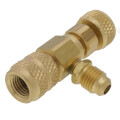
Refrigeration Access Fittings


 --%3E %3Csvg version='1.1' id='No-RB' xmlns='http://www.w3.org/2000/svg' xmlns:xlink='http://www.w3.org/1999/xlink' x='0px' y='0px' viewBox='0 0 100 100' enable-background='new 0 0 100 100' xml:space='preserve'%3E %3Cpath fill='%23CECECE' d='M79.44,0.95H20.56C9.78,0.95,0.95,9.78,0.95,20.56v58.87c0,10.79,8.82,19.61,19.61,19.61h58.87 c10.79,0,19.61-8.83,19.61-19.61V20.56C99.05,9.78,90.22,0.95,79.44,0.95z M65.38,58.24l9.38,29.58L49.69,69.78L24.5,87.82 l9.34-29.6L8.8,39.6l30.73-0.17c0,0,6.98-19.61,10-28.93c0.54,1.36,9.88,29.1,9.88,29.1H91.2L65.38,58.24z'/%3E %3C/svg%3E)

 --%3E %3Csvg version='1.1' id='Half' xmlns='http://www.w3.org/2000/svg' xmlns:xlink='http://www.w3.org/1999/xlink' x='0px' y='0px' viewBox='0 0 100 100' enable-background='new 0 0 100 100' xml:space='preserve'%3E %3Cg%3E %3Cpath fill='%23F15C02' d='M30.05,70.23l3.79-12.01L8.8,39.6l30.73-0.17c0,0,6.98-19.61,10-28.93c0.54,1.36,9.88,29.1,9.88,29.1h1.58 L93.71,7.18c-3.58-3.82-8.66-6.23-14.28-6.23H20.56C9.78,0.95,0.95,9.78,0.95,20.56v58.87c0,5.41,2.22,10.32,5.79,13.88 L30.05,70.23z'/%3E %3C/g%3E %3Cpath fill='%23FBC8B4' d='M93.71,7.18L60.98,39.6H91.2L65.38,58.24l9.38,29.58L49.69,69.78L24.5,87.82l5.55-17.59L6.75,93.32 c3.55,3.54,8.44,5.73,13.82,5.73h58.87c10.79,0,19.61-8.83,19.61-19.61V20.56C99.05,15.4,97.01,10.69,93.71,7.18z'/%3E %3C/svg%3E)

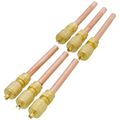
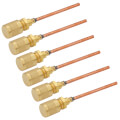
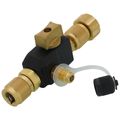
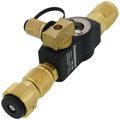
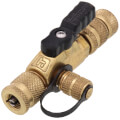
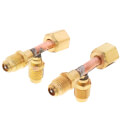

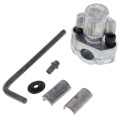
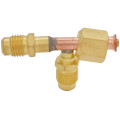
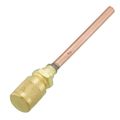
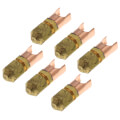

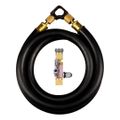
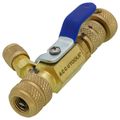
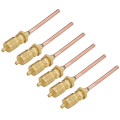
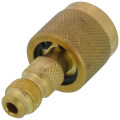
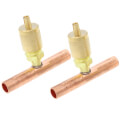
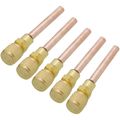
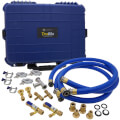
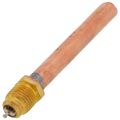
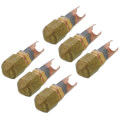

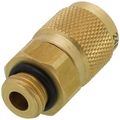
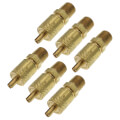
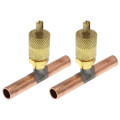
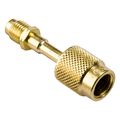
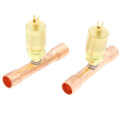

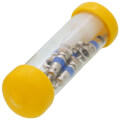
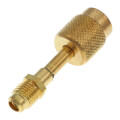

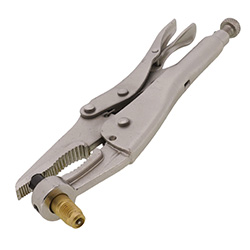
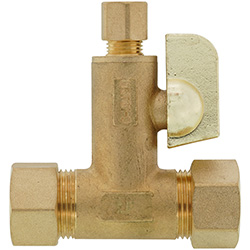
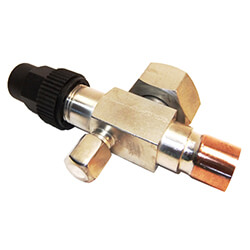
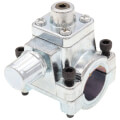
Refrigeration Access Fittings are the valve stems, service ports, and access couplings brazed or threaded into refrigerant lines so a technician can connect gauges, recovery equipment, or a charging hose without cutting into the line. Access fittings typically use a Schrader-style core, similar in principle to a tire valve, which stays closed under system pressure until a hose fitting depresses the core to open a path for refrigerant or gauge readings. Fitting sizes are matched to the tubing diameter they're brazed onto, and a core with a damaged seat is one of the more common sources of a slow refrigerant leak that's hard to trace. Choosing the correct fitting size and core type for the application keeps future service work straightforward instead of requiring a cut-and-braze repair just to access the line.
Subcategories
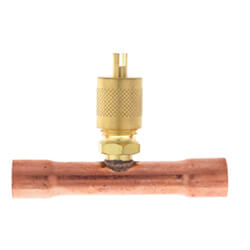
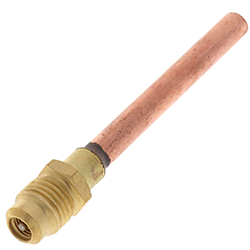
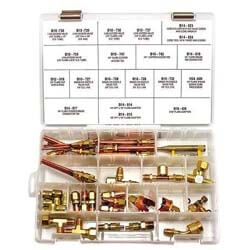
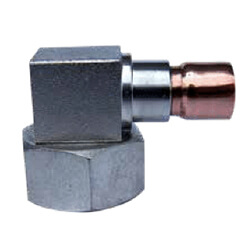
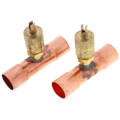
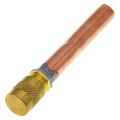
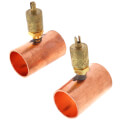
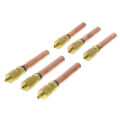
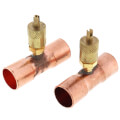
- Braze-In Access Fittings: Braze-in access fittings are copper-bodied fittings sized to slip over a specific tubing diameter and brazed permanently in place, giving a refrigeration or air conditioning line a fixed point for gauge or charging hose connections. Sizing is based on the outside diameter of the tubing the fitting will be brazed onto, not the system's tonnage or capacity, so confirming tubing size with calipers or a tubing gauge avoids ordering a fitting that won't slip over the line. Fittings are available with different core housing angles to fit tight spaces where a straight fitting wouldn't clear surrounding components. Matching tubing diameter first, then confirming the space available for the finished fitting, is the standard approach to sizing a braze-in access fitting.
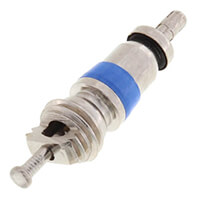
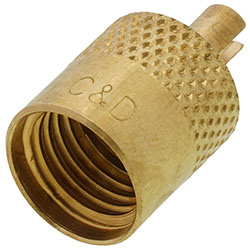
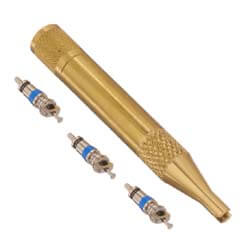
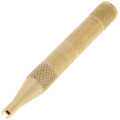
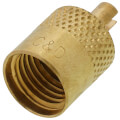
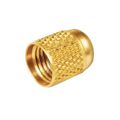
- Schrader Valve Cores and Caps: Schrader valve cores and caps are the replaceable internal components that seal an access fitting between service calls. The core's seat can wear or collect debris over repeated hose connections, which is a common cause of a slow leak at a fitting that otherwise looks intact. Caps serve a secondary sealing function and also protect the core from physical damage, so a missing cap is often the reason a technician finds debris fouling a core's seat. Replacing a worn core is usually far less costly in labor than replacing the entire access fitting, making it the first thing to check on a fitting that won't hold pressure.
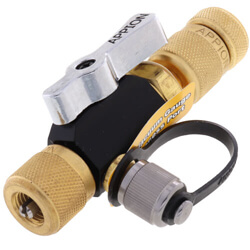
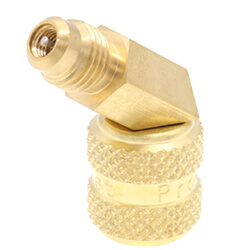
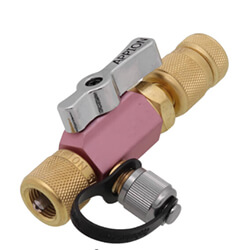
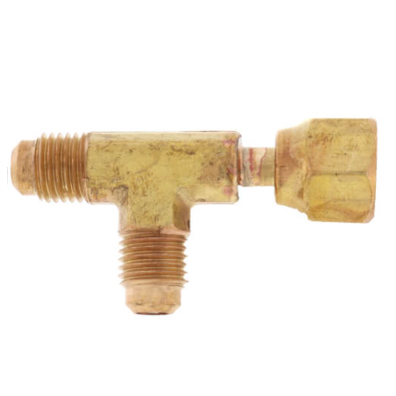
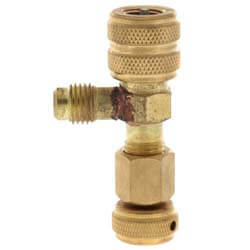
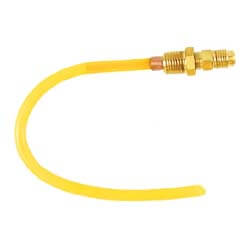
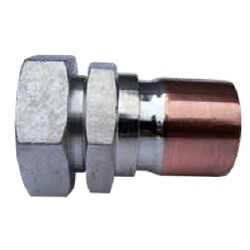
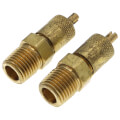
- Access Fitting Adapters: Access fitting adapters convert a fitting's thread size or connection style, most often between the 1/4-inch flare fittings common on smaller systems and the larger connections used on some commercial refrigeration equipment. An adapter lets a standard gauge manifold hose connect to a fitting it wouldn't otherwise thread onto, without brazing in a new access fitting. Matching thread pitch as well as diameter matters here, since two fittings with the same nominal size can still use different thread standards. Confirming both ends of the adapter against the hose and the existing access fitting before ordering avoids a connection that looks right but won't seal.
Buying Guide
Refrigeration Access Fittings are sized around the tubing they connect to and the hose or gauge connection they need to support, rather than around the refrigeration or air conditioning system's overall capacity. A braze-in fitting has to match the outside diameter of the copper tubing it will be brazed onto, and confirming that measurement with calipers or a tubing gauge before ordering avoids a fitting that won't slip over the line or leaves too large a gap for a clean braze joint. Core housing angle is a secondary consideration on braze-in fittings, since a straight fitting may not clear surrounding components in a tight installation, while an angled fitting can provide the clearance needed for a hose connection later. Schrader valve cores wear with repeated use and are often the actual point of failure on a fitting that won't hold pressure, so checking and replacing the core is a lower-cost first step before assuming the entire fitting needs replacement. A missing or damaged cap accelerates core wear by leaving the core exposed to debris, so replacing a lost cap is worth doing even when the fitting is otherwise in good condition. Adapters bridge different thread sizes and standards, most commonly between smaller 1/4-inch flare connections and the larger fittings found on some commercial equipment, and matching thread pitch as well as diameter on both ends of an adapter prevents a connection that threads on but doesn't seal under pressure.
Frequently Asked Questions
What determines the correct size for a braze-in refrigeration access fitting?
The outside diameter of the copper tubing it will be brazed onto, not the system's tonnage or capacity. Measuring the tubing with calipers or a tubing gauge before ordering avoids a fitting that won't fit.
Why does an access fitting leak even though it looks intact?
A worn or debris-fouled Schrader valve core is the most common cause of a slow leak at a fitting that otherwise appears fine. Replacing the core is usually enough to resolve it without replacing the whole fitting.
Does the cap on an access fitting matter if the core seals correctly?
Yes. A cap provides a secondary seal and protects the core from debris, so a missing cap accelerates wear on the core underneath it, even when the core is currently sealing correctly.
When would an access fitting adapter be needed instead of a new fitting?
When the existing access fitting's thread size doesn't match the gauge manifold hose being used, most often between 1/4-inch flare connections and larger commercial fitting sizes. An adapter avoids brazing in a new fitting just to change the connection type.
Can two access fittings with the same nominal size use different threads?
Yes. Thread pitch can differ even when the nominal diameter matches, so confirming both diameter and thread pitch before ordering an adapter or replacement fitting prevents a connection that threads on but doesn't seal.
