



'/%3E%3C/svg%3E)
 --%3E %3Csvg version='1.1' id='Fill' xmlns='http://www.w3.org/2000/svg' xmlns:xlink='http://www.w3.org/1999/xlink' x='0px' y='0px' viewBox='0 0 100 100' enable-background='new 0 0 100 100' xml:space='preserve'%3E %3Cpath fill='%23F15C02' d='M79.44,0.95H20.56C9.78,0.95,0.95,9.78,0.95,20.56v58.87c0,10.79,8.82,19.61,19.61,19.61h58.87 c10.79,0,19.61-8.83,19.61-19.61V20.56C99.05,9.78,90.22,0.95,79.44,0.95z M65.38,58.24l9.38,29.58L49.69,69.78L24.5,87.82 l9.34-29.6L8.8,39.6l30.73-0.17c0,0,6.98-19.61,10-28.93c0.54,1.36,9.88,29.1,9.88,29.1H91.2L65.38,58.24z'/%3E %3C/svg%3E)
 --%3E %3Csvg version='1.1' id='Half' xmlns='http://www.w3.org/2000/svg' xmlns:xlink='http://www.w3.org/1999/xlink' x='0px' y='0px' viewBox='0 0 100 100' enable-background='new 0 0 100 100' xml:space='preserve'%3E %3Cg%3E %3Cpath fill='%23F15C02' d='M30.05,70.23l3.79-12.01L8.8,39.6l30.73-0.17c0,0,6.98-19.61,10-28.93c0.54,1.36,9.88,29.1,9.88,29.1h1.58 L93.71,7.18c-3.58-3.82-8.66-6.23-14.28-6.23H20.56C9.78,0.95,0.95,9.78,0.95,20.56v58.87c0,5.41,2.22,10.32,5.79,13.88 L30.05,70.23z'/%3E %3C/g%3E %3Cpath fill='%23FBC8B4' d='M93.71,7.18L60.98,39.6H91.2L65.38,58.24l9.38,29.58L49.69,69.78L24.5,87.82l5.55-17.59L6.75,93.32 c3.55,3.54,8.44,5.73,13.82,5.73h58.87c10.79,0,19.61-8.83,19.61-19.61V20.56C99.05,15.4,97.01,10.69,93.71,7.18z'/%3E %3C/svg%3E)
' fill='%23F15C02' d='M49 0C21.938 0 0 21.938 0 49s21.938 49 49 49 49-21.938 49-49S76.062 0 49 0m0 82.709a7.54 7.54 0 1 1 0-15.08 7.54 7.54 0 0 1 0 15.08m7.54-28.412a7.541 7.541 0 0 1-15.08 0V22.831a7.54 7.54 0 0 1 15.08 0v31.466z'/%3E%3C/svg%3E)
MANUALS (5)
'/%3E%3C/svg%3E)
Product Highlights


Description
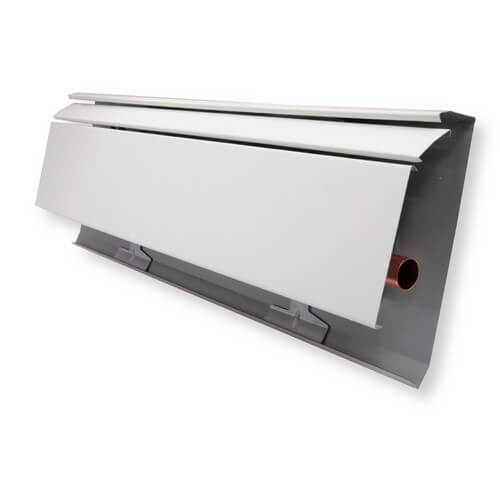
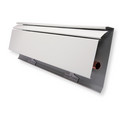
Long acclaimed by contractors for its construction quality and ease of installation, Fine/Line 30 baseboard is America's premier baseboard. Providing deluxe heating comfort in millions of homes, Fine/Line 30 provides gentle full room convection heating that blocks chilling drafts at the outside walls. For decades, Fine/Line 30 baseboard has been leading the industry with high quality baseboard heating.
Fine/Line 30 baseboard is ideal for high quality installations in homes, apartments and many light commercial applications. With its high performance heating element, super strong galvanized steel enclosure that resists rust and the industry's finest accessories, Fine/Line 30 will provide a quality installation that performs superbly and looks good for years.
Specs
| Length (Feet): | 8' |
|---|---|
| Height (Inches): | 7.875" |
| Color: | Nu-White enamel |
| Finish: | Nu-White enamel |
| Model: | Fine/Line 30A |
| Application: | Heating |
| Depth (Inches): | 2-11/16" |
| Type: | Hydronic |
| BTU Output: | 610 |
| Package Type: | Includes Heating Element |

Questions?

Compare Similar Products
You May Also Need
4 Replacement Parts

Need help finding a replacement part?
Product Reviews
Most Liked Positive Review
 --%3E %3Csvg version='1.1' id='With-RB' xmlns='http://www.w3.org/2000/svg' xmlns:xlink='http://www.w3.org/1999/xlink' x='0px' y='0px' viewBox='0 0 100 100' enable-background='new 0 0 100 100' xml:space='preserve'%3E %3Cpath fill='%23FBC8B4' d='M79.44,0.95H20.56C9.78,0.95,0.95,9.78,0.95,20.56v58.87c0,10.79,8.82,19.61,19.61,19.61h58.87 c10.79,0,19.61-8.83,19.61-19.61V20.56C99.05,9.78,90.22,0.95,79.44,0.95z M65.38,58.24l9.38,29.58L49.69,69.78L24.5,87.82 l9.34-29.6L8.8,39.6l30.73-0.17c0,0,6.98-19.61,10-28.93c0.54,1.36,9.88,29.1,9.88,29.1H91.2L65.38,58.24z'/%3E %3C/svg%3E)
Easy to work with - if you can get them in one piece!
Most Liked Negative Review
Sharp and Easy to install
Awesome experience

The packaging is poor.
I'm very happy with Supply House's customer service!
Poor packaging
Poor packaging
Arrived damaged
Would look for an alternative if I started over
Would look for an alternative if I started over
Yes
Very poor manufacturer packaging- doesnt protect radiators
Product Q&A
34 QuestionsQ: Other than obvious trim differences, what are the quality and functional differences between 30A Fine/Line Baseboard and Baseline 2000 Baseboard. And when you say the pipe is M-type copper, does that mean it's heavier that the flimsy stuff I currently have which cannot even be cut with a regular tubing cutter (I'm not sure of the brand)
Asked by Richard the Querulous 12 years ago
Add your answer
There is no difference in between the two type of baseboard mentioned other than appearance and price. Both install and work the same. M type copper is not the heaviest, remember when dealing with any type of metal the lower the letter or number the heavier.
Q: Do these covers need to be painted to avoid rusting?
Asked by Tommy 13 years ago
Add your answer
They do not need to be painted, it is already painted.
no they have a very nice protective finish already on them. The only problem I had is that they got beat up bit by the shipper. the longest ones are the ones that got beat up.
Baseboard thats going to be used in bathroom were there's alot of moisture you should spray the covers inside & out with high heat (clear) engine paint you will be glade in the long run!covers are not painted well on the in side.they will rust over time!
Q: Is the color nu-white really white or more of a neutral/beige/tan.
Asked by ed 13 years ago
Add your answer
Not white, more of an ivory or neutral/beige color
The latter-it's not white. A quick touch-up with some spray paint works fine.
The white on the nu-white slat-fin is just a shade on the beige side as compared to the plastic covers used on wall electric receptacles. sorry best answer I could give you. All in all I thrilled with the finished look.
I would say it's white. I have installed this product/color and it matches my white vanity and baseboard nicely.
Q: I have a wall that a 5'1". Should I run a 4' or 5' baseboard on this wall? I want it to look continuous with the baseboards on the adjoining walls.
Asked by Sean 13 years ago
Add your answer
Definitely a 5' baseboard. You can cut it to size.
Q: One of the main reasons I chose pex for my heat distribution was the easy of making connections. No soldering, just easy crimp and threaded connections. Are these or any of the baseboard heaters you sell pex ready with either crimp connections or NPT fittings?
Asked by Austin 13 years ago
Add your answer
Verified Reply- PexSupply StaffSlant/Fin baseboard heaters are only currently available with copper elements that do not have threaded connections. Although it would be possible to use SharkBite fittings to connect PEX to one end of a baseboard (the side with a smaller, "street" connection), you may want to look at Runtal-brand baseboards. These have 1/2" female NPT connections, which would enable you to connect to PEX without first needing to solder any adapters.
"Shark-fin" connectors will work on the baseboard stubs: just push on the appropriately sized coupling & then push-in the appropriately sized pex tubing. The pex tubing must be of the oxygen-barrier type.
Q: Is it possible to invert these units and mount them on the ceiling? I have a slab floor and don't want to tear up my walls. I understand this will have a negative effect on heat distribution, but I assume these can also work as chillers in the summer.
Asked by bob 14 years ago
Add your answer
If these are hot water heater you can put them up side down, they are just copper tubes with fins on them. If you are running the pipes through the ceiling you would have to worry about freezing. If your furnace will let you run the pump only for the summer you can use it for cooling. I just ran the pipe through the wall by drilling a hole and taking the fins off at that point or order the right length. Most all places that sell these things will answer any questions. I am a 64 yr old women and I did it myself, with a little help from my sister and company that I bought them from.
This isn't a good idea Yes they will work on the ceiling with very poor heat distribution, and if you going to pump ice water through them for your chiller(????).....I don't think so It's back to the drawing board Sent via airmail!
The heaters would not convect like they are designed to do mounting them on the ceiling. I would think the floor area will remain cold. Using cool water in them in the summer would create a great deal of condensation on the fins if there is any humidity in the air.
Q: I plan to replace several baseboard units that have 1/2" copper elements. Is the 30A Fine Line series available with 1/2" element? I could use couplings to change the pipes to 3/4 but would prefer to avoid the extra soldering.
Asked by Bryan 14 years ago
Add your answer
Verified Reply- PexSupply StaffThe Fine/Line 30 Series is only available with a 3/4" element, but Fine/Line 15 and Base/Line 2000 models can be custom-ordered with a 1/2" element.
Q: how important are the deflectors or covers? can i just use the elements for heating? space is an issue in a particular room.
Asked by 14 years ago
Add your answer
Verified Reply- PexSupply StaffWhile the covers do help create convection currents in the room, they are not necessary for heating. They are more important when it comes to the look and protecting small children from touching the hot element.
Q: I purchased fine/line 30A baseboards and wish to connect to PEX using H110750 copper pipe brass elbows. They only fit on one side of the baseboard and are not wide enough to fit the right side of the baseboard. What product can be used to join the PEX to the copper on the right side of the baseboard since it is gets wider on the right side?
Asked by 14 years ago
Add your answer
Verified Reply- PexSupply StaffOne side of a baseboard element is designed to fit over the other (so that you can connect units together). This means one side is sized as a copper fitting. Part H060750 would work on this side, but we do not have a copper x PEX elbow that would work.
Q: I have a question about custom sizes. If I'm replacing a 2.5' baseboard, what size do I buy? How do I / how can I make length adjustments if necessary?
Asked by Jimbob 14 years ago
Add your answer
Verified Reply- PexSupply StaffYou can cut a baseboard with a chop saw, but you can also combine a 2-foot unit with end caps. We offer custom cutting of the Baseboarders DIY covers we sell, but these do not include an element.
It is possible to cut a baseboard with a chop saw, but it is also plausible to combine a 2-foot unit with end caps long enough to take up 2.5 ft. Either method would work, but the second has less chance for a destructive error.