




Filters
SORT
Product Availability –
Product Type –
Brand –
Battery Type –
Sensor Type –
Diameter (Inches) –
Depth (Inches) –
Review Score –
 --%3E %3Csvg version='1.1' id='Fill' xmlns='http://www.w3.org/2000/svg' xmlns:xlink='http://www.w3.org/1999/xlink' x='0px' y='0px' viewBox='0 0 100 100' enable-background='new 0 0 100 100' xml:space='preserve'%3E %3Cpath fill='%23F15C02' d='M79.44,0.95H20.56C9.78,0.95,0.95,9.78,0.95,20.56v58.87c0,10.79,8.82,19.61,19.61,19.61h58.87 c10.79,0,19.61-8.83,19.61-19.61V20.56C99.05,9.78,90.22,0.95,79.44,0.95z M65.38,58.24l9.38,29.58L49.69,69.78L24.5,87.82 l9.34-29.6L8.8,39.6l30.73-0.17c0,0,6.98-19.61,10-28.93c0.54,1.36,9.88,29.1,9.88,29.1H91.2L65.38,58.24z'/%3E %3C/svg%3E)
 --%3E %3Csvg version='1.1' id='With-RB' xmlns='http://www.w3.org/2000/svg' xmlns:xlink='http://www.w3.org/1999/xlink' x='0px' y='0px' viewBox='0 0 100 100' enable-background='new 0 0 100 100' xml:space='preserve'%3E %3Cpath fill='%23FBC8B4' d='M79.44,0.95H20.56C9.78,0.95,0.95,9.78,0.95,20.56v58.87c0,10.79,8.82,19.61,19.61,19.61h58.87 c10.79,0,19.61-8.83,19.61-19.61V20.56C99.05,9.78,90.22,0.95,79.44,0.95z M65.38,58.24l9.38,29.58L49.69,69.78L24.5,87.82 l9.34-29.6L8.8,39.6l30.73-0.17c0,0,6.98-19.61,10-28.93c0.54,1.36,9.88,29.1,9.88,29.1H91.2L65.38,58.24z'/%3E %3C/svg%3E)
Price Range –
Smoke Detectors


 --%3E %3Csvg version='1.1' id='No-RB' xmlns='http://www.w3.org/2000/svg' xmlns:xlink='http://www.w3.org/1999/xlink' x='0px' y='0px' viewBox='0 0 100 100' enable-background='new 0 0 100 100' xml:space='preserve'%3E %3Cpath fill='%23CECECE' d='M79.44,0.95H20.56C9.78,0.95,0.95,9.78,0.95,20.56v58.87c0,10.79,8.82,19.61,19.61,19.61h58.87 c10.79,0,19.61-8.83,19.61-19.61V20.56C99.05,9.78,90.22,0.95,79.44,0.95z M65.38,58.24l9.38,29.58L49.69,69.78L24.5,87.82 l9.34-29.6L8.8,39.6l30.73-0.17c0,0,6.98-19.61,10-28.93c0.54,1.36,9.88,29.1,9.88,29.1H91.2L65.38,58.24z'/%3E %3C/svg%3E)




 --%3E %3Csvg version='1.1' id='Half' xmlns='http://www.w3.org/2000/svg' xmlns:xlink='http://www.w3.org/1999/xlink' x='0px' y='0px' viewBox='0 0 100 100' enable-background='new 0 0 100 100' xml:space='preserve'%3E %3Cg%3E %3Cpath fill='%23F15C02' d='M30.05,70.23l3.79-12.01L8.8,39.6l30.73-0.17c0,0,6.98-19.61,10-28.93c0.54,1.36,9.88,29.1,9.88,29.1h1.58 L93.71,7.18c-3.58-3.82-8.66-6.23-14.28-6.23H20.56C9.78,0.95,0.95,9.78,0.95,20.56v58.87c0,5.41,2.22,10.32,5.79,13.88 L30.05,70.23z'/%3E %3C/g%3E %3Cpath fill='%23FBC8B4' d='M93.71,7.18L60.98,39.6H91.2L65.38,58.24l9.38,29.58L49.69,69.78L24.5,87.82l5.55-17.59L6.75,93.32 c3.55,3.54,8.44,5.73,13.82,5.73h58.87c10.79,0,19.61-8.83,19.61-19.61V20.56C99.05,15.4,97.01,10.69,93.71,7.18z'/%3E %3C/svg%3E)
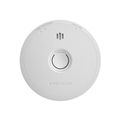

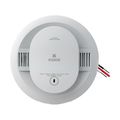

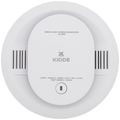


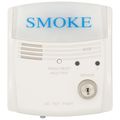


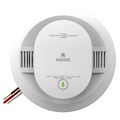


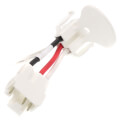


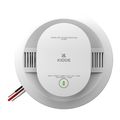


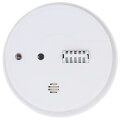

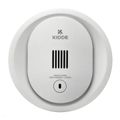


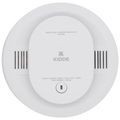

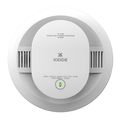


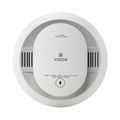


Smoke detectors are life-safety devices installed in homes and light-commercial buildings to sense combustion byproducts and alert occupants before a fire spreads. Electricians and contractors typically choose between photoelectric and ionization sensing technology, or combination units that use both, depending on the types of fires most likely in a given space. Hardwired detectors that interconnect so every unit in the building sounds together are standard on most new construction and many renovation jobs, while battery-powered units remain common for retrofits where running new wire isn't practical. Placement matters as much as sensor type: detectors positioned too close to kitchens or bathrooms without the right sensing technology tend to nuisance-alarm and get disabled by frustrated occupants. Getting the sensor type, power source, and placement right the first time keeps a system reliable instead of becoming the smoke detector residents pull the battery out of.
Subcategories
- Hardwired Smoke Detectors: Hardwired units tie into a building's electrical system and interconnect so every detector sounds when one senses smoke. Most include a battery backup to keep working during a power outage. New construction and many renovation projects specify hardwired detectors because local code often requires interconnection between units.
- Battery-Powered Smoke Detectors: Battery-powered units are common in retrofit jobs where running new wiring isn't practical or cost-effective. They still need regular battery checks to stay reliable, which makes them less consistent over the long run than hardwired units. Some models use sealed, long-life batteries rated to last the life of the detector.
- Combination Smoke & Carbon Monoxide Detectors: Combination units add carbon monoxide sensing to standard smoke detection, covering two life-safety requirements with a single device. They suit bedrooms and hallways near fuel-burning appliances where both hazards are a concern. Consolidating detection into one unit also simplifies maintenance and testing schedules for property owners.
- Smoke Detector Accessories & Replacement Parts: Mounting brackets, replacement batteries, and sensor covers keep existing detectors in service between full replacements. Dust covers protect sensors during construction work so drywall dust doesn't trigger nuisance alarms or contaminate the sensor. Testing accessories help technicians verify a unit is still responding correctly during routine inspections.
Buying Guide
Choosing smoke detectors starts with deciding between photoelectric and ionization sensing, since photoelectric units tend to respond faster to smoldering fires while ionization units react quicker to flaming fires with fast-moving flames. Many contractors default to combination units that include both technologies to cover a wider range of fire types in a single device. Power source is the next decision: hardwired detectors that interconnect across a building are standard on new construction and many renovations, since a fire on one floor triggers every alarm in the building rather than just the unit nearest the fire. Battery-powered units remain a practical option for retrofits where running new wiring would mean opening up finished walls, though they depend on someone maintaining the batteries over time. Placement affects performance regardless of sensor type: detectors mounted too close to kitchens, bathrooms, or HVAC supply vents are prone to nuisance alarms, which leads occupants to disable them altogether. For buildings with fuel-burning appliances, pairing smoke detection with carbon monoxide sensing in combination units covers both hazards without adding a second device to every location. Whatever combination gets specified, confirming local code requirements for interconnection and placement before the job starts avoids a failed inspection.
Frequently Asked Questions
What's the difference between photoelectric and ionization smoke detectors?
Photoelectric detectors generally respond faster to smoldering, slow-building fires, while ionization detectors tend to react quicker to fast-flaming fires. Combination units that include both sensing technologies are common where either fire type is a realistic risk.
Do all smoke detectors in a building need to be interconnected?
Interconnection requirements depend on local code, but many jurisdictions require every smoke detector in a home to sound together when one detects smoke. Hardwired systems handle this natively, while some battery-powered detectors use wireless interconnection to meet the same requirement.
How often should smoke detector batteries be checked?
Most manufacturers recommend testing detectors monthly and replacing standard batteries at least once a year, though units with sealed long-life batteries are designed to last for the detector's full service life. Even hardwired units with battery backup need that backup battery checked periodically.
Why do smoke detectors near kitchens keep false-alarming?
Detectors placed too close to cooking appliances can pick up steam or cooking exhaust and mistake it for smoke, especially ionization units. Moving the detector farther from the kitchen or switching to a photoelectric or combination unit designed to resist nuisance alarms usually solves the problem.
When does a combination smoke and carbon monoxide detector make sense?
Combination units make sense in rooms near fuel-burning appliances, attached garages, or anywhere carbon monoxide exposure is a realistic risk alongside fire. They cover both hazards with one device instead of mounting separate detectors in the same location.
