




Filters
SORT
Product Availability –
Category –
Product Type –
Battery Type –
Review Score –
 --%3E %3Csvg version='1.1' id='Fill' xmlns='http://www.w3.org/2000/svg' xmlns:xlink='http://www.w3.org/1999/xlink' x='0px' y='0px' viewBox='0 0 100 100' enable-background='new 0 0 100 100' xml:space='preserve'%3E %3Cpath fill='%23F15C02' d='M79.44,0.95H20.56C9.78,0.95,0.95,9.78,0.95,20.56v58.87c0,10.79,8.82,19.61,19.61,19.61h58.87 c10.79,0,19.61-8.83,19.61-19.61V20.56C99.05,9.78,90.22,0.95,79.44,0.95z M65.38,58.24l9.38,29.58L49.69,69.78L24.5,87.82 l9.34-29.6L8.8,39.6l30.73-0.17c0,0,6.98-19.61,10-28.93c0.54,1.36,9.88,29.1,9.88,29.1H91.2L65.38,58.24z'/%3E %3C/svg%3E)
 --%3E %3Csvg version='1.1' id='With-RB' xmlns='http://www.w3.org/2000/svg' xmlns:xlink='http://www.w3.org/1999/xlink' x='0px' y='0px' viewBox='0 0 100 100' enable-background='new 0 0 100 100' xml:space='preserve'%3E %3Cpath fill='%23FBC8B4' d='M79.44,0.95H20.56C9.78,0.95,0.95,9.78,0.95,20.56v58.87c0,10.79,8.82,19.61,19.61,19.61h58.87 c10.79,0,19.61-8.83,19.61-19.61V20.56C99.05,9.78,90.22,0.95,79.44,0.95z M65.38,58.24l9.38,29.58L49.69,69.78L24.5,87.82 l9.34-29.6L8.8,39.6l30.73-0.17c0,0,6.98-19.61,10-28.93c0.54,1.36,9.88,29.1,9.88,29.1H91.2L65.38,58.24z'/%3E %3C/svg%3E)
Price Range –
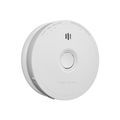
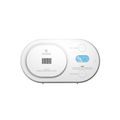
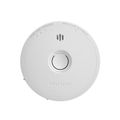
Carbon Monoxide and Smoke Detectors


 --%3E %3Csvg version='1.1' id='No-RB' xmlns='http://www.w3.org/2000/svg' xmlns:xlink='http://www.w3.org/1999/xlink' x='0px' y='0px' viewBox='0 0 100 100' enable-background='new 0 0 100 100' xml:space='preserve'%3E %3Cpath fill='%23CECECE' d='M79.44,0.95H20.56C9.78,0.95,0.95,9.78,0.95,20.56v58.87c0,10.79,8.82,19.61,19.61,19.61h58.87 c10.79,0,19.61-8.83,19.61-19.61V20.56C99.05,9.78,90.22,0.95,79.44,0.95z M65.38,58.24l9.38,29.58L49.69,69.78L24.5,87.82 l9.34-29.6L8.8,39.6l30.73-0.17c0,0,6.98-19.61,10-28.93c0.54,1.36,9.88,29.1,9.88,29.1H91.2L65.38,58.24z'/%3E %3C/svg%3E)




 --%3E %3Csvg version='1.1' id='Half' xmlns='http://www.w3.org/2000/svg' xmlns:xlink='http://www.w3.org/1999/xlink' x='0px' y='0px' viewBox='0 0 100 100' enable-background='new 0 0 100 100' xml:space='preserve'%3E %3Cg%3E %3Cpath fill='%23F15C02' d='M30.05,70.23l3.79-12.01L8.8,39.6l30.73-0.17c0,0,6.98-19.61,10-28.93c0.54,1.36,9.88,29.1,9.88,29.1h1.58 L93.71,7.18c-3.58-3.82-8.66-6.23-14.28-6.23H20.56C9.78,0.95,0.95,9.78,0.95,20.56v58.87c0,5.41,2.22,10.32,5.79,13.88 L30.05,70.23z'/%3E %3C/g%3E %3Cpath fill='%23FBC8B4' d='M93.71,7.18L60.98,39.6H91.2L65.38,58.24l9.38,29.58L49.69,69.78L24.5,87.82l5.55-17.59L6.75,93.32 c3.55,3.54,8.44,5.73,13.82,5.73h58.87c10.79,0,19.61-8.83,19.61-19.61V20.56C99.05,15.4,97.01,10.69,93.71,7.18z'/%3E %3C/svg%3E)
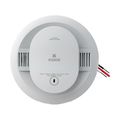
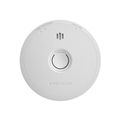

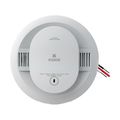

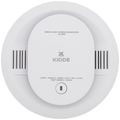


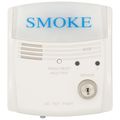


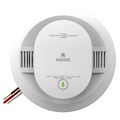
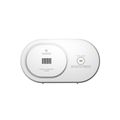


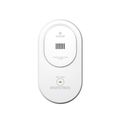



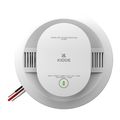






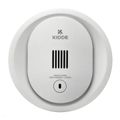

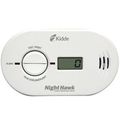

Carbon monoxide and smoke detectors are life-safety devices installed in homes and commercial buildings to warn occupants of dangerous gas buildup or fire before it becomes a life-threatening emergency. Electricians and HVAC contractors install and service these units both for new construction and to bring existing properties up to current code, since requirements for detector placement and type have changed over time. Combination units that detect both smoke and carbon monoxide in one device have become common where code allows it, cutting down on the number of devices mounted per room. Hardwired models with battery backup are standard in most new construction, while battery-only units remain common in retrofit and rental situations.
Property managers and landlords depend on these devices passing inspection and staying functional between tenants, which makes battery life, interconnection compatibility, and end-of-life indicators important considerations beyond the base detection function. A contractor stocking a range of hardwired, battery, and combination units can match whatever a specific job or code requirement calls for without a special order.
Subcategories
- Carbon Monoxide Detectors: Carbon monoxide detectors sense the buildup of this odorless, colorless gas produced by fuel-burning appliances like furnaces, water heaters, and stoves. They're required near sleeping areas in most jurisdictions when a home has any fuel-burning appliance or attached garage. Standalone CO units are common in older homes that already have separate smoke detection installed.
- Smoke Detectors: Smoke detectors use either photoelectric or ionization sensing technology to detect smoke particles, with photoelectric models generally responding faster to smoldering fires and ionization models responding faster to flaming fires. Many jurisdictions now require photoelectric or dual-sensor units in new installations. Placement requirements typically call for a detector in every bedroom, outside sleeping areas, and on every level of the home.
- Combination Smoke and CO Detectors: Combination units detect both smoke and carbon monoxide in a single housing, reducing the number of devices needed on a ceiling or wall. These are popular in remodels and retrofits where adding a second standalone device isn't practical. Combination units still need to meet the same placement code as each individual detector type they replace.
- Interconnected and Smart Detectors: Interconnected detectors communicate with each other, either through household wiring or wirelessly, so that one unit triggering sounds the alarm on every connected device in the building. Smart detectors add app notifications and self-testing features on top of interconnection. These are increasingly specified in multi-family and rental properties where a single point of failure across many units is a liability concern.
Buying Guide
Start with local code requirements rather than the building's age, since detector placement and type requirements have been updated multiple times over the past two decades and older properties are often grandfathered until a renovation triggers compliance. Confirming the current code for the specific municipality avoids installing a unit that passes a quick check but fails a formal inspection.
Choose between hardwired and battery-only power based on the scope of the job. New construction and major renovations almost always call for hardwired units with battery backup, since electrical access is already part of the work. Retrofit and rental situations often use battery-only or sealed long-life battery units where running new wiring isn't practical or cost-effective.
Decide between standalone and combination smoke/CO units based on existing coverage in the building. A property with working standalone smoke detectors already in every required location may only need standalone CO detectors added, while a full retrofit is a more natural fit for combination units that consolidate both functions.
For multi-family buildings, confirm whether interconnection is required or specified, since a mix of interconnected and standalone units in the same building creates gaps in the alarm notification chain. Wireless interconnection kits allow retrofitting older buildings without running new wire between units, which is often the deciding factor for renovation projects.
Frequently Asked Questions
Do I need both a smoke detector and a separate CO detector in the same room?
Not necessarily. A combination smoke and CO detector satisfies both requirements in a single unit where code allows it, though some jurisdictions still specify separate devices in certain rooms. Checking local code before installing is the safest way to confirm what a given room requires.
How long do carbon monoxide and smoke detectors last before replacement?
Most detectors have a manufacturer-specified end-of-life, commonly printed on the unit itself, after which the sensor is no longer considered reliable even if the alarm still functions. Replacing units at or before that date is standard practice regardless of whether they've ever triggered.
What's the difference between photoelectric and ionization smoke detectors?
Photoelectric detectors generally respond faster to smoldering, slow-building fires, while ionization detectors respond faster to fast-flaming fires. Dual-sensor units combine both technologies, and many current codes favor photoelectric or dual-sensor detection for residential installations.
Can battery-only detectors be interconnected?
Some battery-only detectors support wireless interconnection, letting one unit's alarm trigger every connected unit in the building without running new wiring. This is a common solution for retrofitting interconnection into older buildings.
Where should carbon monoxide detectors be placed in a home?
Most codes call for a CO detector near each sleeping area, with additional units required on levels of the home with a fuel-burning appliance or an attached garage. Confirming placement against the current local code prevents a failed inspection over a missed location.
