



'/%3E%3C/svg%3E)
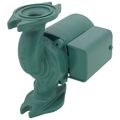
007 Cast Iron Circulator with Integral Flow Check, 1/25 HP
 --%3E %3Csvg version='1.1' id='Fill' xmlns='http://www.w3.org/2000/svg' xmlns:xlink='http://www.w3.org/1999/xlink' x='0px' y='0px' viewBox='0 0 100 100' enable-background='new 0 0 100 100' xml:space='preserve'%3E %3Cpath fill='%23F15C02' d='M79.44,0.95H20.56C9.78,0.95,0.95,9.78,0.95,20.56v58.87c0,10.79,8.82,19.61,19.61,19.61h58.87 c10.79,0,19.61-8.83,19.61-19.61V20.56C99.05,9.78,90.22,0.95,79.44,0.95z M65.38,58.24l9.38,29.58L49.69,69.78L24.5,87.82 l9.34-29.6L8.8,39.6l30.73-0.17c0,0,6.98-19.61,10-28.93c0.54,1.36,9.88,29.1,9.88,29.1H91.2L65.38,58.24z'/%3E %3C/svg%3E)


MANUALS (4)
'/%3E%3C/svg%3E)
Product Highlights


Description
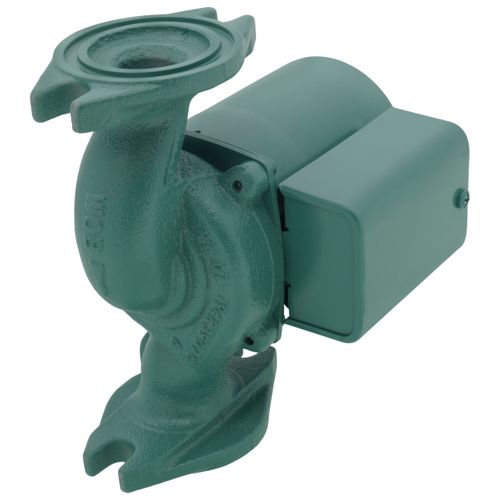
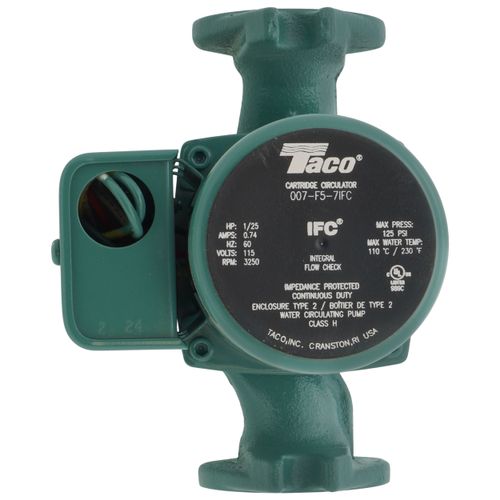
Taco's 007-F5-7IFC Model is a cartridge style, maintenance free, wet-rotor, in-line, single stage circulator pump. Its rugged cast iron construction makes the circulating pump a versatile and reliable unit in your HVAC system. Since the cartridge contains all of the interacting parts, circulator and IFC maintenance is made easy and you don't have to replace the entire unit. Its quiet, effective operation, unmatched reliability, unique design and functionality makes the Taco 007-F5-7IFC cartridge circulator pump among the most popular hydronic circulator pumps available in the market.
The Taco 007-F5-7IFC is engineered to simplify piping, reduce installation costs and optimize system performance when zoning with Taco 00 circulators. Its main function is to protect against reverse and gravity flow. A low pressure drop caused by the spring-loaded IFC increases flow performance vs. traditional in-line flow checks. Applications include: hydronic heating/cooling, hydro-air fan coils, radiant heating, and indirect water heaters.
Replacement Parts List:
Casing O-Ring: 008-005RP
Flange Gasket Set: 007-007RP
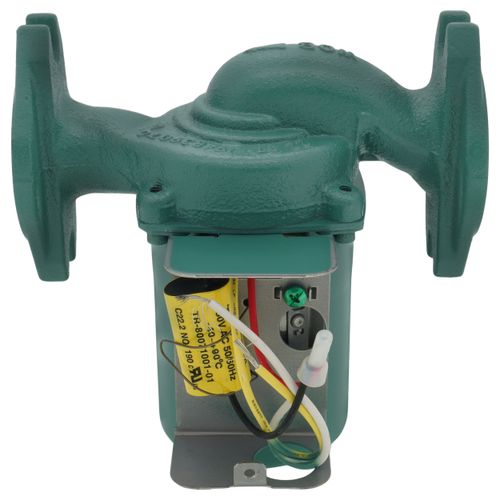
Capacitor or PC Board: 007-002RP
Cartridge Assembly Complete: 0010-025RP
valve Assembly Trans/Relay: 006-047RP
Features:
- Integral Flow Check (IFC)--Eliminates In-Line Flow Check, Reduces Installed Cost, Easy to Service, and Improved Performance vs. In-Line Flow Checks
- Unique Replaceable Cartridge Design-Field Serviceable
- Unmatched Reliability-Maintenance Free
- Quiet, Efficient Operation
- Direct Drive-Low Power Consumption
- Standard High Capacity Output-Compact Design
- Self Lubricating, No Mechanical Seal
- Cast iron Construction with Flanged Connections
Specs
| Application: | Zoning |
|---|---|
| Material: | Cast Iron |
| Amperage: | 0.71 |
| Voltage: | 115V |
| Max Pressure (PSI): | 125 |
| Type: | Pump |
| Horse Power: | 1/25 |
| Connection Size: | 1" 3/4" 1-1/2" 1-1/4" |
| Flow Range (GPM): | 0-17 |
| Max Flow (GPM): | 17 |
| Max Head (Ft): | 8.5 |
| Head Range (ft.): | 0-8.5 |
| Hertz: | 60 |
| Phase: | 1 |
| RPM: | 3250 |
| Temperature Range (F): | 40°F to 230°F |
| Connection Type: | Flanged x Flanged |
| Warranty: | 3 Year |

Questions?
Compare Similar Products
You May Also Need
6 Replacement Parts
Need help finding a replacement part?
Product Reviews
Most Liked Positive Review
Seized Iron Circulator Pump and No Heat In House
Most Liked Negative Review
 --%3E %3Csvg version='1.1' id='With-RB' xmlns='http://www.w3.org/2000/svg' xmlns:xlink='http://www.w3.org/1999/xlink' x='0px' y='0px' viewBox='0 0 100 100' enable-background='new 0 0 100 100' xml:space='preserve'%3E %3Cpath fill='%23FBC8B4' d='M79.44,0.95H20.56C9.78,0.95,0.95,9.78,0.95,20.56v58.87c0,10.79,8.82,19.61,19.61,19.61h58.87 c10.79,0,19.61-8.83,19.61-19.61V20.56C99.05,9.78,90.22,0.95,79.44,0.95z M65.38,58.24l9.38,29.58L49.69,69.78L24.5,87.82 l9.34-29.6L8.8,39.6l30.73-0.17c0,0,6.98-19.61,10-28.93c0.54,1.36,9.88,29.1,9.88,29.1H91.2L65.38,58.24z'/%3E %3C/svg%3E)
Pump had some issues at first
When I needed I will buy this circulation pomp again.
fast delivery, good price
Fast and always reliable
easy to install but must prime
As always, great price and fast shipping
Quick delivery and right product
Very happy
would buy circulator again
excelent product
Best pump on the market!
Product Q&A
35 QuestionsQ: noise coming from the taco circulator model 007 6f5 my plumber said to replace only 2 1/2 years young. need a few suggestions what can i try.
Asked by bonnie 10 years ago
Add your answer
Verified Reply- SupplyHouse StaffIf there is an issue with the pump one of the only replacements available is the internal cartridge. The cartridge for this pump is SKU: 007-042RP.
Q: I have a three zone, three circulator system. If I use pumps with integral flow checks,do I still need to use flow control valves to prevent circulation in a zone not calling for heat?
Asked by Bill 10 years ago
Add your answer
Verified Reply- SupplyHouse StaffYes, the integral flow checks are not a substitute for a zone valve on your system.
Q: I currently have a 5 zone heating system w/ one Taco 007-F3 Circ. Pump. I am looking at replacing it. Do I go with the 007-F5 or the 007-F5IFC pump ?
Asked by Gee 10 years ago
Add your answer
Verified Reply- Supplyhouse Staffsame pump the IFC just has a built in check valve.
Q: Can I use the Taco 007-F5 in a closed loop heating system with a water/anti-freeze solution?
Asked by Gerald 11 years ago
Add your answer
If you're using no more than a 50/50 propylene glycol mix and the system is truly "closed", meaning that there is an air eliminator in the system and no access of oxygenated (fresh) water that would alter the mix, then it should work fine. A caution though: some antifreeze mixtures may contain "anti-corrosion" and "seal conditioners" additives that are *not* good for some sealed components. Be wary of using them-in anything.
I have had that size Taco in my glycol loop running for ten years now. It melts ice on my front porch. -Bill
Q: Taco model 007-F5 cartridge circulator has started making alot of noise when it runs.it still appears to be working though. Can you tell me what part may need to be replaced or could it be from a pump blockage of some kind? Ant suggestions?
Asked by Dave 12 years ago
Add your answer
Verified Reply- Supplyhouse Staffwe can not diagnose issues you would need a plumber to tell you whats wrong.
Q: Do these circs come with the flanges for 3/4" connection OR do I need to buy them separately?
Asked by Matthew 12 years ago
Add your answer
You need flanges Sent from my Sprint phone.
only pump side flanges are included as pictured. Flanges for mating to rest of the system will be needed.
Q: Our pump is making a whistle or high pitch noise after start up. (intermittently) We have a switch beside each pump (in floor heat) to turn off & on for service. When I turn off the pump the noise the sound is eliminated temporary. What is your suggestion? Regards Don
Asked by Sherman 12 years ago
Add your answer
I am not a plumber, but it sounds like a bearing issue to me. I would think you can replace the guts of the pump or the parts that are the issue. Just a guess on my part.
I would suspect either some air in the system that creates a whistle as the impeller tries to pump it- air does not pump very well or, a bearing in the pump needs either lubrication or replacement. The second is more likely. Does this help?
I would guess that you have something in the pump. Take it apart and check for pipe shavings.
Q: I have noticed the floors on one of my zones are not as warm as the other floors in other zones although the thermostats are set to the same temperature . I also noticed that the water in the pipe that comes out of the Taco Cartridge Circulator for this zone is not as hot as the other zones. Does this cartridge need to be replaced?
Asked by new home owner matt 13 years ago
Add your answer
I am no expert, but my first thought was there wasn’t enough flow through the loop. Has it worked properly prior to this? If so, there could be a pump problem or some other blockage that is reducing flow. It COULD be the pump I suppose, but it is hard to know from the description. Are there automated valves that can be unresponsive?
This could be the problem or you could have a flow restriction somewhere else. I would start by removing the return line for this zone from the manifold and turning on the pump If water shoots out, then you have a design problem. This is my guess, because I rarely see hydraulic separation on residential boilers. This is the best source of info on the web http://www.caleffi.info/webinars/#
Possible, need to take out of line and check to make sure nothing clogged in pump, and pump is running.
Q: How do I set the pump speed in GPM? It says it can flow up to 17 GPM, I only want ~4.
Asked by Robert 13 years ago
Add your answer
Verified Reply- PexSupply StaffThe pump only operates along its listed curve. It would only be able to circulate 4 GPM at about 7.5 feet of head pressure.
This is determined using the pump curve, find your head loss and follow over to flow. Head loss is determined by piping size and configuration.
You cannot set speed. Pump motor is either on or off, no controls. Gpm will be a affected by pipe size, distance, vertical rise, number of elbows, etc. You may slow the flow with a hand valve downstream ( at pump outlet) not upstream ( at inlet). Determining actual flow rate will be difficult. Good luck.
You cannot set speed. Pump motor is either on or off, no controls. Gpm will be a affected by pipe size, distance, vertical rise, number of elbows, etc. You may slow the flow with a hand valve downstream ( at pump outlet) not upstream ( at inlet). Determining actual flow rate will be difficult. Good luck.
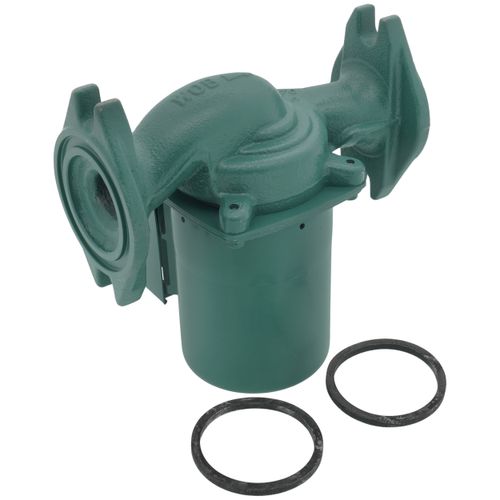
Q: I'm looking at the gaskets in the picture and they are small and round O-rings. Looking at the ones on my circulator pumps they are red flat full flange style gaskets. Do the old pumps have a seating space for O rings and mine happen to have flat gaskets ...? I reuse those flat gaskets and the O rings or do I have to get new flanges too? -3 series Thsnks in advance.
Asked by Kraig 13 years ago
Add your answer
The gaskets I got were flat, black rubber gaskets, not round O-rings. This has been a few years and I don’t know if that has changed. There is seating space for the gaskets to sit in on the pump end of the flange if I remember correctly.
If you purchased new pumps they should have mating flanges . O-ring type flange does not use traditional flat gaskets .
The circulator in the picture can be used with the smaller round o-rings or full faced gaskets like the ones you have, however whenever you replace a pump it is wise to use new gaskets of either type. Either way you should clean all of the old gaskets off your existing flanges. Clean the flanges down to the metal removing all of the old gasket material. Then either put on new full faced gaskets or use the round ones that come in the box with the new circulator. The round ones fit into grooves on both sides of the new circulator. Andrew Larson
Most flanges I have come across are flat, the pump is set up to use o rings- the pump should come with them- you don't have to use anything but the o rings- no flat gasket is needed. Bo
The "O" ring grooved flanges (must be the same face to face) can ONLY use O rings. The flat faced flanges can ONLY use flat gaskets. Mixing them will cause problems for sure. You're welcome- John Carsten
The recess in the flanges on the pump take the flat gaskets. I would buy new gaskets with the pump. They tend to get hard after time. I bought 6 pumps last year (2012) and they all worked with the flat gaskets. I also bought the new flanges that have built in valves. This makes a pump change easier.
Hi Kraig, The rubber squishes when heat and pressure are added, so your old ones look flat now but started much thicker. Only install the new rubber washers.
The pump has the seating for the gaskets and the other flange is normally just a flat surface for the gasket to site on. This way the seal won't get torqued in the wrong direction causing a leak. Let me know if there is anything else I can help with.