




Filters
SORT
Product Availability –
Category –
Duct Size –
Max Airflow (CFM) –
Review Score –
 --%3E %3Csvg version='1.1' id='Fill' xmlns='http://www.w3.org/2000/svg' xmlns:xlink='http://www.w3.org/1999/xlink' x='0px' y='0px' viewBox='0 0 100 100' enable-background='new 0 0 100 100' xml:space='preserve'%3E %3Cpath fill='%23F15C02' d='M79.44,0.95H20.56C9.78,0.95,0.95,9.78,0.95,20.56v58.87c0,10.79,8.82,19.61,19.61,19.61h58.87 c10.79,0,19.61-8.83,19.61-19.61V20.56C99.05,9.78,90.22,0.95,79.44,0.95z M65.38,58.24l9.38,29.58L49.69,69.78L24.5,87.82 l9.34-29.6L8.8,39.6l30.73-0.17c0,0,6.98-19.61,10-28.93c0.54,1.36,9.88,29.1,9.88,29.1H91.2L65.38,58.24z'/%3E %3C/svg%3E)
 --%3E %3Csvg version='1.1' id='With-RB' xmlns='http://www.w3.org/2000/svg' xmlns:xlink='http://www.w3.org/1999/xlink' x='0px' y='0px' viewBox='0 0 100 100' enable-background='new 0 0 100 100' xml:space='preserve'%3E %3Cpath fill='%23FBC8B4' d='M79.44,0.95H20.56C9.78,0.95,0.95,9.78,0.95,20.56v58.87c0,10.79,8.82,19.61,19.61,19.61h58.87 c10.79,0,19.61-8.83,19.61-19.61V20.56C99.05,9.78,90.22,0.95,79.44,0.95z M65.38,58.24l9.38,29.58L49.69,69.78L24.5,87.82 l9.34-29.6L8.8,39.6l30.73-0.17c0,0,6.98-19.61,10-28.93c0.54,1.36,9.88,29.1,9.88,29.1H91.2L65.38,58.24z'/%3E %3C/svg%3E)
Price Range –
Fantech Ventilation Fans




 --%3E %3Csvg version='1.1' id='Half' xmlns='http://www.w3.org/2000/svg' xmlns:xlink='http://www.w3.org/1999/xlink' x='0px' y='0px' viewBox='0 0 100 100' enable-background='new 0 0 100 100' xml:space='preserve'%3E %3Cg%3E %3Cpath fill='%23F15C02' d='M30.05,70.23l3.79-12.01L8.8,39.6l30.73-0.17c0,0,6.98-19.61,10-28.93c0.54,1.36,9.88,29.1,9.88,29.1h1.58 L93.71,7.18c-3.58-3.82-8.66-6.23-14.28-6.23H20.56C9.78,0.95,0.95,9.78,0.95,20.56v58.87c0,5.41,2.22,10.32,5.79,13.88 L30.05,70.23z'/%3E %3C/g%3E %3Cpath fill='%23FBC8B4' d='M93.71,7.18L60.98,39.6H91.2L65.38,58.24l9.38,29.58L49.69,69.78L24.5,87.82l5.55-17.59L6.75,93.32 c3.55,3.54,8.44,5.73,13.82,5.73h58.87c10.79,0,19.61-8.83,19.61-19.61V20.56C99.05,15.4,97.01,10.69,93.71,7.18z'/%3E %3C/svg%3E)






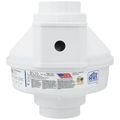


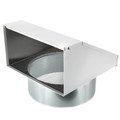



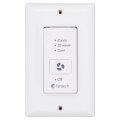
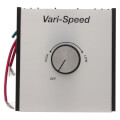


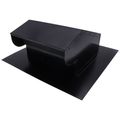
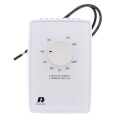

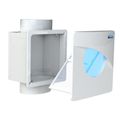


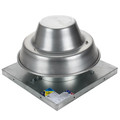



Fantech Ventilation Fans move air in and out of homes and light commercial buildings to control moisture, odors, and indoor air quality where a standard bathroom fan or rooftop unit isn't the right fit. The lineup spans bathroom fans, whole-house fresh-air units, garage exhaust fans, radon mitigation fans, and kitchen makeup air systems, so the right choice depends heavily on what problem the fan needs to solve rather than a single universal spec. Fantech builds its products around what the company describes as expertise in healthy indoor air for building professionals, which shows up in a lineup organized by application rather than just horsepower or size. Contractors most often reach for these fans on jobs where a single point-of-use fan can't clear the air fast enough, such as a below-grade radon system or a tightly sealed home that needs continuous mechanical ventilation. Matching fan type to the actual air-quality problem, not just swapping in a bigger fan, is what determines whether the installation actually solves the issue.
Subcategories
- Bathroom Exhaust Fans: Bathroom exhaust fans remove humid air at the source to prevent mold and mildew growth, with remote-mounted options that move the motor and noise out of the ceiling and into a nearby attic or closet space. Remote mounting is common in primary bathrooms where sound level matters, since the only thing left in the ceiling is a low-profile grille. Duct run length and the number of elbows both affect actual airflow more than the fan's rated capacity.
- Whole-House and Fresh-Air Ventilation: Whole-house units bring outdoor air into a home's duct system on a continuous or scheduled basis, which is the approach most new, tightly sealed construction needs to meet mechanical ventilation requirements. Some models add energy recovery so the incoming air is preconditioned by the outgoing exhaust air before it reaches the living space. Installation typically happens once, during construction or a major renovation, rather than room by room.
- Radon Mitigation Fans: Radon fans run continuously to pull soil gas from beneath a foundation and vent it above the roofline before it can enter the living space. They're typically installed outside or in an attic rather than inside conditioned space, both to keep any radon-laden air outside the home and to reduce noise. A dedicated pressure gauge or alarm is usually installed alongside the fan so a technician can confirm the system is still creating negative pressure under the slab.
- Garage Ventilation Fans: Garage exhaust fans clear exhaust fumes, humidity, and chemical odors from attached and detached garages, which matters most in cold climates where garage doors stay closed for months at a time. Wall-mounted models duct directly to the exterior without needing an attic run, which keeps installation straightforward in a garage that wasn't built with ventilation in mind. Contractors typically pair these with a timer or motion-based control so the fan isn't left running continuously.
Buying Guide
Application drives the fan selection more than any single spec on a Fantech ventilation fan. A bathroom job calls for a fan sized to the room's square footage and duct run length, while a radon mitigation job calls for a fan rated to maintain negative pressure under a slab regardless of room size. Duct routing is the next constraint to check. Remote-mounted bathroom fans and inline units need attic or crawlspace access for the duct run, and every elbow or foot of extra duct reduces actual airflow below the fan's rated capacity, so oversizing slightly to cover duct losses is common practice. Noise matters more in occupied spaces than in a garage or attic installation, which is why remote-mounted and inline fans are more common in primary bathrooms and bedrooms than ceiling-mounted units. Climate and building tightness affect the whole-house side of the Fantech Ventilation Fans lineup specifically: a loosely built older home may not need continuous mechanical ventilation at all, while a new, tightly sealed home built to modern energy codes usually does. Finally, check control compatibility before finalizing a spec. Some fans are designed to pair with a specific humidity sensor, timer, or wall control, and mixing components across product lines isn't always supported, so confirming compatibility up front avoids a return trip to the supply house.
Frequently Asked Questions
What's the difference between a ceiling-mounted and remote-mounted bathroom fan?
A ceiling-mounted fan has the motor built into the housing that sits in the ceiling, while a remote-mounted fan moves the motor to an inline location in the attic or a nearby space, leaving only a grille in the ceiling. Remote mounting is quieter in the room but requires more attic space and a longer duct run for the same installation.
How is a radon fan different from a regular exhaust fan?
A radon fan is built to run continuously against the resistance of drawing gas from beneath a concrete slab, which is a different job than moving room air against low duct resistance. Running a standard bathroom or garage fan on a radon mitigation system won't maintain the negative pressure the system depends on.
Can one whole-house ventilation fan replace individual bathroom fans?
Not entirely. A whole-house unit is designed for continuous, building-wide ventilation, while bathroom fans handle spot removal of moisture and odor right after a shower. Many homes use both together rather than relying on one system to do both jobs.
Do garage ventilation fans need to run constantly?
No. Most garage fans are set up with a timer, humidity sensor, or motion control so they only run when needed, since a garage doesn't need continuous ventilation the way an occupied living space does. Running the fan only when triggered also cuts down on unnecessary heat loss in cold weather.
What affects a ventilation fan's real-world airflow versus its rated capacity?
Duct length, the number of elbows, and any restrictions like a damaged duct or blocked grille all reduce airflow below the fan's rated capacity. Sizing a fan with some margin above the calculated minimum airflow helps account for these losses once the system is actually installed.
