



Filters
SORT
Product Availability –
Brand –
ID –
Connection Type –
Length (Inches) –
Coating –
LP Capacity (BTU) –
NG Capacity (BTU) –
Review Score –
 --%3E %3Csvg version='1.1' id='Fill' xmlns='http://www.w3.org/2000/svg' xmlns:xlink='http://www.w3.org/1999/xlink' x='0px' y='0px' viewBox='0 0 100 100' enable-background='new 0 0 100 100' xml:space='preserve'%3E %3Cpath fill='%23F15C02' d='M79.44,0.95H20.56C9.78,0.95,0.95,9.78,0.95,20.56v58.87c0,10.79,8.82,19.61,19.61,19.61h58.87 c10.79,0,19.61-8.83,19.61-19.61V20.56C99.05,9.78,90.22,0.95,79.44,0.95z M65.38,58.24l9.38,29.58L49.69,69.78L24.5,87.82 l9.34-29.6L8.8,39.6l30.73-0.17c0,0,6.98-19.61,10-28.93c0.54,1.36,9.88,29.1,9.88,29.1H91.2L65.38,58.24z'/%3E %3C/svg%3E)
 --%3E %3Csvg version='1.1' id='With-RB' xmlns='http://www.w3.org/2000/svg' xmlns:xlink='http://www.w3.org/1999/xlink' x='0px' y='0px' viewBox='0 0 100 100' enable-background='new 0 0 100 100' xml:space='preserve'%3E %3Cpath fill='%23FBC8B4' d='M79.44,0.95H20.56C9.78,0.95,0.95,9.78,0.95,20.56v58.87c0,10.79,8.82,19.61,19.61,19.61h58.87 c10.79,0,19.61-8.83,19.61-19.61V20.56C99.05,9.78,90.22,0.95,79.44,0.95z M65.38,58.24l9.38,29.58L49.69,69.78L24.5,87.82 l9.34-29.6L8.8,39.6l30.73-0.17c0,0,6.98-19.61,10-28.93c0.54,1.36,9.88,29.1,9.88,29.1H91.2L65.38,58.24z'/%3E %3C/svg%3E)
Price Range –
Appliance Connectors

 --%3E %3Csvg version='1.1' id='No-RB' xmlns='http://www.w3.org/2000/svg' xmlns:xlink='http://www.w3.org/1999/xlink' x='0px' y='0px' viewBox='0 0 100 100' enable-background='new 0 0 100 100' xml:space='preserve'%3E %3Cpath fill='%23CECECE' d='M79.44,0.95H20.56C9.78,0.95,0.95,9.78,0.95,20.56v58.87c0,10.79,8.82,19.61,19.61,19.61h58.87 c10.79,0,19.61-8.83,19.61-19.61V20.56C99.05,9.78,90.22,0.95,79.44,0.95z M65.38,58.24l9.38,29.58L49.69,69.78L24.5,87.82 l9.34-29.6L8.8,39.6l30.73-0.17c0,0,6.98-19.61,10-28.93c0.54,1.36,9.88,29.1,9.88,29.1H91.2L65.38,58.24z'/%3E %3C/svg%3E)
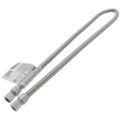

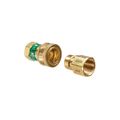
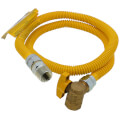
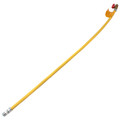
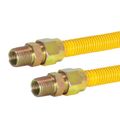
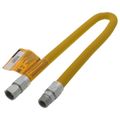
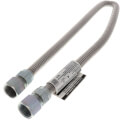
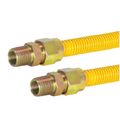
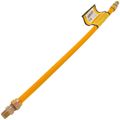

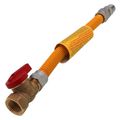
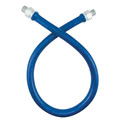
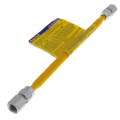

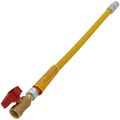
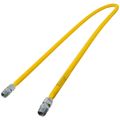
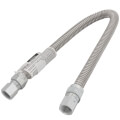
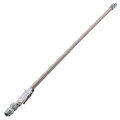
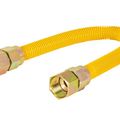
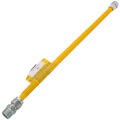
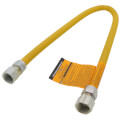
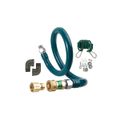
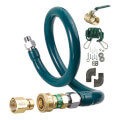
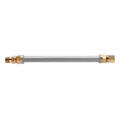
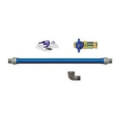
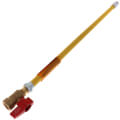
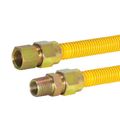
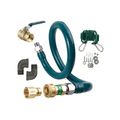
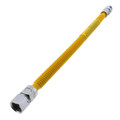
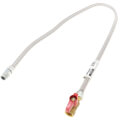
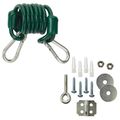
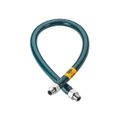
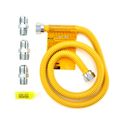
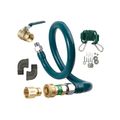
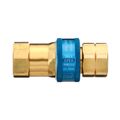
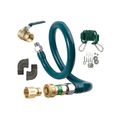
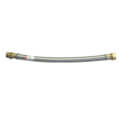
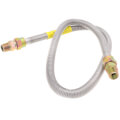
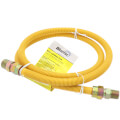

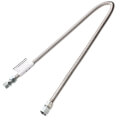
Appliance connectors are flexible supply lines that link a fixed water, gas, or electrical hookup to an appliance, letting a dishwasher, range, water heater, or similar unit be installed, moved, or serviced without cutting into rigid piping every time. A flexible connector absorbs minor misalignment between the wall or floor hookup and the appliance's own connection point, something rigid pipe can't accommodate without careful, exact measurement. Braided stainless steel construction is common for water and gas connectors because it resists kinking and handles the vibration many appliances produce during normal operation. Length, connection size, and pressure rating all need to match the specific appliance and the type of service, water, gas, or ice maker supply, being connected, since using the wrong connector type for the application creates a leak risk regardless of how well it's installed.
Subcategories
- Gas Appliance Connectors: Gas appliance connectors link a gas shutoff valve to appliances like ranges, dryers, and water heaters, typically built from corrugated stainless steel tubing with a protective coating. These connectors need a pressure and BTU rating that matches the appliance's gas demand, and many jurisdictions require them to carry a specific safety listing for the application. Flexibility matters here since gas ranges and dryers often need to be pulled out from the wall periodically for cleaning or service. Technicians check the connector's rating against local code requirements before final installation, since gas connector rules vary more by jurisdiction than water connector rules do.
- Water Supply Connectors: Water supply connectors run from a shutoff valve or supply stop to faucets, toilets, and other fixtures, most commonly built with a braided stainless steel exterior over an inner tube rated for potable water. Length options let installers match the exact distance between the stop valve and the fixture connection without excess slack that can kink or trap sediment. Connection ends vary between compression, threaded, and quick-connect styles depending on the fixture and existing plumbing. A connector rated for the wrong pressure or temperature range is one of the more common causes of a slow supply-line leak.
- Ice Maker and Refrigerator Water Line Connectors: Ice maker connectors supply a small, steady water line from a shutoff valve to a refrigerator's ice maker or water dispenser, typically using a smaller diameter tubing than standard fixture supply lines. These connectors see continuous low-pressure water contact for extended periods, so material compatibility with the refrigerator's connection fitting matters more here than in some other appliance connections. Length needs to account for the refrigerator being pulled away from the wall for cleaning without stressing the connection at either end. A kinked or pinched ice maker line is a frequent cause of reduced ice production that gets mistaken for a refrigerator malfunction.
- Dryer and Range Electrical Cords and Connectors: Some appliance connector needs are electrical rather than water or gas, particularly the power cords that connect electric ranges and dryers to a wall receptacle. These cords come rated for specific amperage and plug configurations that must match both the appliance's electrical requirements and the receptacle already installed at the property. Length and cord gauge affect both safety and the appliance's ability to draw the current it needs without excessive voltage drop. Confirming the receptacle type installed in a given home before purchasing a cord avoids a mismatch that prevents the appliance from being connected at all.
Buying Guide
Choosing the right appliance connector starts with identifying the type of service involved, since water, gas, ice maker, and electrical connections each use entirely different connector designs and cannot substitute for one another. Confirming the appliance's specific connection requirements against the shutoff valve or receptacle already in place at the property is the first step before any other specification comes into play.
Length is the next consideration, and Appliance Connectors should be measured to reach the connection point with a gentle bend rather than pulled taut or coiled with excess slack. A connector that's too short puts constant strain on both end fittings, while one that's too long is more likely to kink, trap sediment, or get pinched when the appliance is pushed back into place after service.
Pressure and temperature rating, along with any required safety listing, round out the selection. Gas connectors in particular often need to meet specific code requirements that vary by jurisdiction, so checking local code before purchase avoids a connector that passes a visual inspection but fails to meet the applicable standard. Matching connection end types, whether compression, threaded, or quick-connect, to both the shutoff valve and the appliance itself completes a proper fit.
Frequently Asked Questions
Can a gas appliance connector be reused when replacing an appliance?
Reusing an existing gas connector is generally discouraged, since flexing and kinking over time can weaken the corrugated tubing even when no visible damage is present. Installing a new connector rated for the replacement appliance's gas demand is the safer standard practice during any appliance swap.
Why do ice maker lines need a different connector than a standard water supply line?
Ice maker connectors use smaller diameter tubing suited to the low, steady flow an ice maker needs, rather than the larger diameter used for higher-flow fixtures like sinks or toilets. Using an oversized connector on an ice maker line doesn't damage anything directly, but a properly sized line reduces the risk of kinking behind a refrigerator that gets pulled out periodically.
How is the correct length of an appliance connector determined?
Length should span the distance between the shutoff valve or receptacle and the appliance's connection point with a gentle bend, not a tight pull or a large coil of excess line. Measuring the actual gap before purchase, rather than estimating, avoids both the strain of a too-short connector and the kinking risk of one that's too long.
Do gas appliance connectors need to meet specific safety listings?
Many jurisdictions require gas appliance connectors to carry a specific safety listing appropriate to the installation, and requirements can vary from one location to another. Checking local code before installation is the standard way to confirm a connector meets what's required in that specific area.
What's the most common cause of a leaking appliance water connector?
A connector rated for the wrong pressure or temperature range for its application is one of the more frequent causes of a slow leak at an appliance connection. Kinking from excess length or repeated flexing during appliance service also weakens the connector over time, so confirming both the rating and the fit during installation reduces the chance of an early failure.
