




Filters
SORT
Product Availability –
Brand –
Horse Power –
Flow At 5 FT Head –
Shutoff Head (ft.) –
Review Score –
 --%3E %3Csvg version='1.1' id='Fill' xmlns='http://www.w3.org/2000/svg' xmlns:xlink='http://www.w3.org/1999/xlink' x='0px' y='0px' viewBox='0 0 100 100' enable-background='new 0 0 100 100' xml:space='preserve'%3E %3Cpath fill='%23F15C02' d='M79.44,0.95H20.56C9.78,0.95,0.95,9.78,0.95,20.56v58.87c0,10.79,8.82,19.61,19.61,19.61h58.87 c10.79,0,19.61-8.83,19.61-19.61V20.56C99.05,9.78,90.22,0.95,79.44,0.95z M65.38,58.24l9.38,29.58L49.69,69.78L24.5,87.82 l9.34-29.6L8.8,39.6l30.73-0.17c0,0,6.98-19.61,10-28.93c0.54,1.36,9.88,29.1,9.88,29.1H91.2L65.38,58.24z'/%3E %3C/svg%3E)
 --%3E %3Csvg version='1.1' id='With-RB' xmlns='http://www.w3.org/2000/svg' xmlns:xlink='http://www.w3.org/1999/xlink' x='0px' y='0px' viewBox='0 0 100 100' enable-background='new 0 0 100 100' xml:space='preserve'%3E %3Cpath fill='%23FBC8B4' d='M79.44,0.95H20.56C9.78,0.95,0.95,9.78,0.95,20.56v58.87c0,10.79,8.82,19.61,19.61,19.61h58.87 c10.79,0,19.61-8.83,19.61-19.61V20.56C99.05,9.78,90.22,0.95,79.44,0.95z M65.38,58.24l9.38,29.58L49.69,69.78L24.5,87.82 l9.34-29.6L8.8,39.6l30.73-0.17c0,0,6.98-19.61,10-28.93c0.54,1.36,9.88,29.1,9.88,29.1H91.2L65.38,58.24z'/%3E %3C/svg%3E)
Price Range –
Battery Back Up Pumps


 --%3E %3Csvg version='1.1' id='Half' xmlns='http://www.w3.org/2000/svg' xmlns:xlink='http://www.w3.org/1999/xlink' x='0px' y='0px' viewBox='0 0 100 100' enable-background='new 0 0 100 100' xml:space='preserve'%3E %3Cg%3E %3Cpath fill='%23F15C02' d='M30.05,70.23l3.79-12.01L8.8,39.6l30.73-0.17c0,0,6.98-19.61,10-28.93c0.54,1.36,9.88,29.1,9.88,29.1h1.58 L93.71,7.18c-3.58-3.82-8.66-6.23-14.28-6.23H20.56C9.78,0.95,0.95,9.78,0.95,20.56v58.87c0,5.41,2.22,10.32,5.79,13.88 L30.05,70.23z'/%3E %3C/g%3E %3Cpath fill='%23FBC8B4' d='M93.71,7.18L60.98,39.6H91.2L65.38,58.24l9.38,29.58L49.69,69.78L24.5,87.82l5.55-17.59L6.75,93.32 c3.55,3.54,8.44,5.73,13.82,5.73h58.87c10.79,0,19.61-8.83,19.61-19.61V20.56C99.05,15.4,97.01,10.69,93.71,7.18z'/%3E %3C/svg%3E)
 --%3E %3Csvg version='1.1' id='No-RB' xmlns='http://www.w3.org/2000/svg' xmlns:xlink='http://www.w3.org/1999/xlink' x='0px' y='0px' viewBox='0 0 100 100' enable-background='new 0 0 100 100' xml:space='preserve'%3E %3Cpath fill='%23CECECE' d='M79.44,0.95H20.56C9.78,0.95,0.95,9.78,0.95,20.56v58.87c0,10.79,8.82,19.61,19.61,19.61h58.87 c10.79,0,19.61-8.83,19.61-19.61V20.56C99.05,9.78,90.22,0.95,79.44,0.95z M65.38,58.24l9.38,29.58L49.69,69.78L24.5,87.82 l9.34-29.6L8.8,39.6l30.73-0.17c0,0,6.98-19.61,10-28.93c0.54,1.36,9.88,29.1,9.88,29.1H91.2L65.38,58.24z'/%3E %3C/svg%3E)
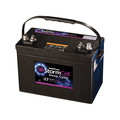
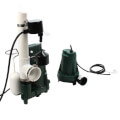
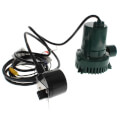
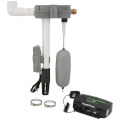
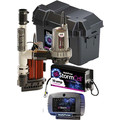
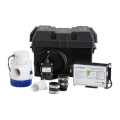
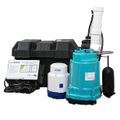
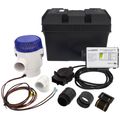
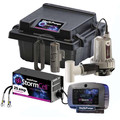

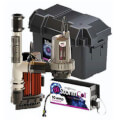
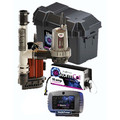
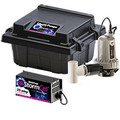

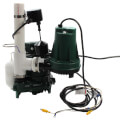
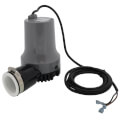
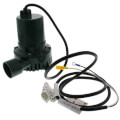
Battery back up pumps are secondary sump pumps that run on a dedicated battery system to keep a sump basin pumping during a power outage, when the primary AC powered pump stops working. Installed alongside a primary pump in the same basin, the battery backup switches on automatically once it detects a loss of power or a primary pump failure, giving a home continued flood protection exactly when storms are most likely to also cause outages. Homeowners in areas prone to heavy rain or frequent power interruptions specify these systems most often, along with anyone who has experienced a basement flood during a past outage. The battery, charger, and pump typically come packaged as a complete system, though components can also be selected separately to match an existing primary pump setup. Battery capacity and pump output both factor into how long and how effectively the backup can keep up with incoming water during an extended outage.
Subcategories
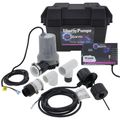
- Battery Backup Sump Pump Systems: Complete battery backup systems bundle the pump, battery, and charging unit together as one packaged product, sized to work as a matched set. Homeowners installing backup protection for the first time typically choose a complete system since it removes the guesswork of pairing separate components. Chargers keep the battery topped off during normal operation so it is ready the moment a power interruption or primary pump failure occurs. Most systems also include an alarm that alerts occupants when the backup pump activates.
- Backup Pump Batteries: Backup pump batteries store the charge that powers the pump motor during an outage, and capacity is generally measured in amp hours to indicate how long the battery can run the pump under load. Replacing an aging battery on its own is a common maintenance task, since batteries lose capacity over repeated charge cycles well before the rest of the system needs replacement. Deep cycle batteries designed for this kind of repeated discharge and recharge are the standard choice. Testing battery condition periodically helps confirm the backup will perform when actually needed.
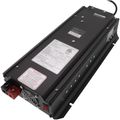
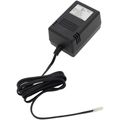
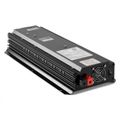
- Battery Backup Chargers: Chargers keep the backup battery at full charge during normal operation and typically include monitoring circuitry that protects against overcharging during long periods without an outage. A failed charger can leave a battery undercharged without any obvious sign until the backup pump is actually needed, which makes periodic system checks important. Some chargers include a status indicator or alarm to flag charging problems before they become critical. Chargers are generally matched to a specific battery voltage and capacity.
- Battery Backup Pump Accessories: Accessories for battery backup systems include float switches, check valves, alarms, and mounting hardware that complete the installation alongside the pump and battery. A dedicated float switch for the backup pump, separate from the primary pump's switch, lets the backup activate independently if the primary fails while power is still present. Check valves prevent water pumped out from flowing back into the basin between pump cycles. These accessories are typically ordered alongside the main components rather than sourced separately.
Buying Guide
The most important factor when choosing Battery Back Up Pumps is matching pumping capacity, measured in gallons per hour at a given lift height, to how much water the sump basin actually needs to handle during a worst case storm, since undersized backup capacity defeats the purpose of having a backup at all. Battery capacity comes next, since a larger battery keeps the pump running longer during an extended outage, and extended outages are exactly when a backup pump matters most. Deep cycle batteries built for repeated full discharge and recharge cycles hold up better over time than batteries intended for other uses, so confirming battery type before purchase is worth the extra step. Complete packaged systems, with pump, battery, and charger sold together and sized as a set, work well for a first time installation, while separate components make more sense when adding backup protection to an existing primary pump that is otherwise working fine. A dedicated float switch for the backup pump, independent from the primary pump's switch, lets the backup take over automatically if the primary pump itself fails even while power remains available, not just during outages. Finally, an audible or connected alarm that signals when the backup pump has activated gives occupants an early warning that the primary system needs attention, rather than discovering a problem only after the battery has drained.
Frequently Asked Questions
How does a battery backup pump know when to turn on?
A dedicated float switch monitors water level in the sump basin, and most backup systems also monitor for loss of power to the primary pump. The backup activates automatically when either the water level rises above the normal operating point or the primary pump stops running. This dual trigger means the backup can respond to a primary pump failure even when power is still available.
How long can a battery backup pump run during an outage?
Run time depends on both battery capacity and how much water the pump has to move, since a pump running continuously drains a battery faster than one cycling on and off. Manufacturers typically publish an estimated run time at a given pumping rate for their specific battery and pump combination. Choosing a higher capacity battery extends how long the system can protect against flooding during longer outages.
What type of battery is used in a backup sump pump system?
Deep cycle batteries, built to handle repeated full discharge and recharge cycles, are the standard choice for backup pump systems rather than batteries designed for a single high current burst. This construction holds up better over the battery's service life under the demands of a backup pump application. Manufacturers typically specify the battery type and capacity required for their specific backup system.
Can a battery backup pump replace the primary sump pump entirely?
Battery backup pumps are designed to supplement a primary AC powered pump, not replace it, since battery run time is limited compared to a primary pump that can run continuously as long as power is available. Running on backup power alone for an extended period risks the battery draining before the water threat has passed. Both pumps working together in the same basin gives the most reliable protection.
How often should a battery backup pump's battery be tested or replaced?
Battery condition should be checked periodically since capacity fades over repeated charge cycles well before the rest of the system wears out. Manufacturers typically recommend a testing interval, and many backup systems include a built in indicator or alarm that flags a weak battery. Replacing the battery on that schedule keeps the backup ready rather than discovering a dead battery during an actual outage.
