


Filters
SORT
Product Availability –
Fuel Type –
BTU Output –
Efficiency –
Review Score –
 --%3E %3Csvg version='1.1' id='Fill' xmlns='http://www.w3.org/2000/svg' xmlns:xlink='http://www.w3.org/1999/xlink' x='0px' y='0px' viewBox='0 0 100 100' enable-background='new 0 0 100 100' xml:space='preserve'%3E %3Cpath fill='%23F15C02' d='M79.44,0.95H20.56C9.78,0.95,0.95,9.78,0.95,20.56v58.87c0,10.79,8.82,19.61,19.61,19.61h58.87 c10.79,0,19.61-8.83,19.61-19.61V20.56C99.05,9.78,90.22,0.95,79.44,0.95z M65.38,58.24l9.38,29.58L49.69,69.78L24.5,87.82 l9.34-29.6L8.8,39.6l30.73-0.17c0,0,6.98-19.61,10-28.93c0.54,1.36,9.88,29.1,9.88,29.1H91.2L65.38,58.24z'/%3E %3C/svg%3E)
 --%3E %3Csvg version='1.1' id='With-RB' xmlns='http://www.w3.org/2000/svg' xmlns:xlink='http://www.w3.org/1999/xlink' x='0px' y='0px' viewBox='0 0 100 100' enable-background='new 0 0 100 100' xml:space='preserve'%3E %3Cpath fill='%23FBC8B4' d='M79.44,0.95H20.56C9.78,0.95,0.95,9.78,0.95,20.56v58.87c0,10.79,8.82,19.61,19.61,19.61h58.87 c10.79,0,19.61-8.83,19.61-19.61V20.56C99.05,9.78,90.22,0.95,79.44,0.95z M65.38,58.24l9.38,29.58L49.69,69.78L24.5,87.82 l9.34-29.6L8.8,39.6l30.73-0.17c0,0,6.98-19.61,10-28.93c0.54,1.36,9.88,29.1,9.88,29.1H91.2L65.38,58.24z'/%3E %3C/svg%3E)
Price Range –
Lochinvar Boilers

 --%3E %3Csvg version='1.1' id='No-RB' xmlns='http://www.w3.org/2000/svg' xmlns:xlink='http://www.w3.org/1999/xlink' x='0px' y='0px' viewBox='0 0 100 100' enable-background='new 0 0 100 100' xml:space='preserve'%3E %3Cpath fill='%23CECECE' d='M79.44,0.95H20.56C9.78,0.95,0.95,9.78,0.95,20.56v58.87c0,10.79,8.82,19.61,19.61,19.61h58.87 c10.79,0,19.61-8.83,19.61-19.61V20.56C99.05,9.78,90.22,0.95,79.44,0.95z M65.38,58.24l9.38,29.58L49.69,69.78L24.5,87.82 l9.34-29.6L8.8,39.6l30.73-0.17c0,0,6.98-19.61,10-28.93c0.54,1.36,9.88,29.1,9.88,29.1H91.2L65.38,58.24z'/%3E %3C/svg%3E)

 --%3E %3Csvg version='1.1' id='Half' xmlns='http://www.w3.org/2000/svg' xmlns:xlink='http://www.w3.org/1999/xlink' x='0px' y='0px' viewBox='0 0 100 100' enable-background='new 0 0 100 100' xml:space='preserve'%3E %3Cg%3E %3Cpath fill='%23F15C02' d='M30.05,70.23l3.79-12.01L8.8,39.6l30.73-0.17c0,0,6.98-19.61,10-28.93c0.54,1.36,9.88,29.1,9.88,29.1h1.58 L93.71,7.18c-3.58-3.82-8.66-6.23-14.28-6.23H20.56C9.78,0.95,0.95,9.78,0.95,20.56v58.87c0,5.41,2.22,10.32,5.79,13.88 L30.05,70.23z'/%3E %3C/g%3E %3Cpath fill='%23FBC8B4' d='M93.71,7.18L60.98,39.6H91.2L65.38,58.24l9.38,29.58L49.69,69.78L24.5,87.82l5.55-17.59L6.75,93.32 c3.55,3.54,8.44,5.73,13.82,5.73h58.87c10.79,0,19.61-8.83,19.61-19.61V20.56C99.05,15.4,97.01,10.69,93.71,7.18z'/%3E %3C/svg%3E)
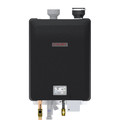
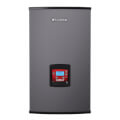

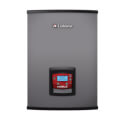
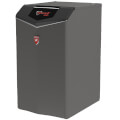
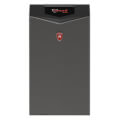
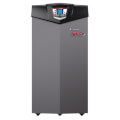

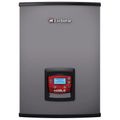
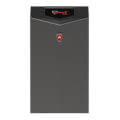


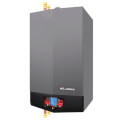
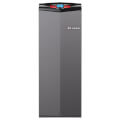
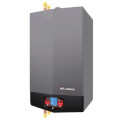
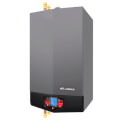
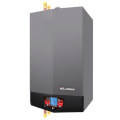
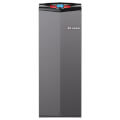
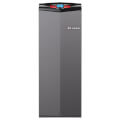
Lochinvar boilers are gas-fired heating units used in residential and commercial hydronic systems to heat water for space heating, radiant floor systems, and domestic hot water. The lineup includes condensing models that recover additional heat from exhaust gases for higher efficiency, along with wall-mounted and floor-standing configurations to fit different mechanical room layouts. Contractors specify a boiler by matching its BTU output to the building's calculated heating load, then confirming venting requirements and gas supply can support the selected model. Condensing boilers require different venting materials than standard atmospheric models because of the lower exhaust temperatures involved, which affects both installation cost and code compliance. Because boilers represent a long-term investment in a building's heating system, confirming compatibility with existing piping, controls, and venting before ordering avoids costly changes once installation is underway.
Subcategories
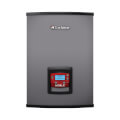
- Condensing Boilers: Condensing boilers extract additional heat from exhaust gases by cooling them enough to condense water vapor, reaching higher efficiency than standard atmospheric models. They require corrosion-resistant venting materials rated for the lower exhaust temperatures and acidic condensate produced during operation. Contractors specify condensing models most often on jobs where higher efficiency offsets added venting and condensate drainage costs.
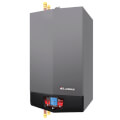
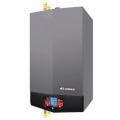
- Wall-Mounted Boilers: Wall-mounted boilers save floor space by hanging directly on a wall in the mechanical room, a common choice in smaller buildings or tight utility closets. They typically cover a lower BTU output range than floor-standing models, matching residential and light commercial loads. Wall mounting requires confirming the wall can support the unit's weight and that clearances around it meet code.
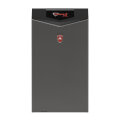
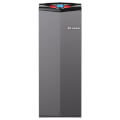
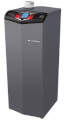
- Floor-Standing Boilers: Floor-standing boilers sit directly on the mechanical room floor and generally cover a wider BTU output range, making them a common choice for larger residential systems and commercial applications. Their larger footprint requires more mechanical room floor space than a wall-mounted model. Floor-standing units are often specified when the calculated heating load exceeds what wall-mounted models can efficiently cover.
Buying Guide
Specifying a Lochinvar boiler starts with a heating load calculation for the building, since matching BTU output to actual demand prevents both the short cycling that comes with an oversized unit and the struggle to keep up that comes with an undersized one. Existing radiators, baseboard, or radiant tubing already installed in the building should factor into that calculation along with square footage and climate.
Choosing between condensing and non-condensing models comes down to efficiency versus installation cost. Condensing boilers reach higher efficiency by recovering heat from exhaust gases, but they require corrosion-resistant venting materials and a condensate drainage system that non-condensing models do not need. On a retrofit, checking whether the building already has compatible venting in place can affect which option makes more financial sense.
Physical configuration, wall-mounted or floor-standing, generally follows from available mechanical room space and the required BTU output, since wall-mounted models typically cover a lower output range. Confirming a wall can support the unit's weight and that code-required clearances are met is necessary before committing to a wall-mounted installation.
Gas supply and existing piping deserve a check as well. A boiler's BTU input requirement needs to be supported by the existing gas line sizing, and upsizing a gas line adds cost and time to a job that was not otherwise budgeted for a piping change.
Frequently Asked Questions
What is the difference between a condensing and non-condensing boiler?
A condensing boiler extracts extra heat from exhaust gases by cooling them enough to condense water vapor, reaching higher efficiency than a non-condensing model, but it requires different venting materials rated for the acidic condensate produced. A non-condensing boiler uses simpler venting but runs at lower overall efficiency.
How is a Lochinvar boiler sized for a building?
Sizing starts with a heating load calculation that accounts for square footage, insulation, and local climate, then matches that calculated load to a boiler's rated BTU output. An oversized boiler short cycles and wastes fuel, while an undersized one struggles to keep up during peak cold.
Can a wall-mounted boiler replace a floor-standing model?
A wall-mounted boiler can replace a floor-standing model as long as its BTU output covers the building's calculated heating load and the wall can support its weight, but the lower output range of most wall-mounted models means this only works on smaller heating loads. Confirming output capacity against the load calculation before switching styles avoids undersizing the replacement.
What venting is required for a condensing boiler?
Condensing boilers need venting materials rated for the lower exhaust temperatures and acidic condensate they produce, commonly PVC, CPVC, or polypropylene rather than the metal venting used on atmospheric models. Local code and the manufacturer's installation manual specify the exact approved materials and clearances.
How often does a boiler need maintenance?
Most manufacturers recommend annual inspection and service, which typically includes checking combustion efficiency, inspecting venting, and testing safety controls. Condensing boilers also need periodic condensate trap and neutralizer checks to keep the drainage system working properly.
