




Filters
SORT
Product Availability –
Brand –
Conductors –
AWG –
Color –
Voltage –
Review Score –
 --%3E %3Csvg version='1.1' id='Fill' xmlns='http://www.w3.org/2000/svg' xmlns:xlink='http://www.w3.org/1999/xlink' x='0px' y='0px' viewBox='0 0 100 100' enable-background='new 0 0 100 100' xml:space='preserve'%3E %3Cpath fill='%23F15C02' d='M79.44,0.95H20.56C9.78,0.95,0.95,9.78,0.95,20.56v58.87c0,10.79,8.82,19.61,19.61,19.61h58.87 c10.79,0,19.61-8.83,19.61-19.61V20.56C99.05,9.78,90.22,0.95,79.44,0.95z M65.38,58.24l9.38,29.58L49.69,69.78L24.5,87.82 l9.34-29.6L8.8,39.6l30.73-0.17c0,0,6.98-19.61,10-28.93c0.54,1.36,9.88,29.1,9.88,29.1H91.2L65.38,58.24z'/%3E %3C/svg%3E)
 --%3E %3Csvg version='1.1' id='With-RB' xmlns='http://www.w3.org/2000/svg' xmlns:xlink='http://www.w3.org/1999/xlink' x='0px' y='0px' viewBox='0 0 100 100' enable-background='new 0 0 100 100' xml:space='preserve'%3E %3Cpath fill='%23FBC8B4' d='M79.44,0.95H20.56C9.78,0.95,0.95,9.78,0.95,20.56v58.87c0,10.79,8.82,19.61,19.61,19.61h58.87 c10.79,0,19.61-8.83,19.61-19.61V20.56C99.05,9.78,90.22,0.95,79.44,0.95z M65.38,58.24l9.38,29.58L49.69,69.78L24.5,87.82 l9.34-29.6L8.8,39.6l30.73-0.17c0,0,6.98-19.61,10-28.93c0.54,1.36,9.88,29.1,9.88,29.1H91.2L65.38,58.24z'/%3E %3C/svg%3E)
Price Range –
Mini Split Cables

 --%3E %3Csvg version='1.1' id='Half' xmlns='http://www.w3.org/2000/svg' xmlns:xlink='http://www.w3.org/1999/xlink' x='0px' y='0px' viewBox='0 0 100 100' enable-background='new 0 0 100 100' xml:space='preserve'%3E %3Cg%3E %3Cpath fill='%23F15C02' d='M30.05,70.23l3.79-12.01L8.8,39.6l30.73-0.17c0,0,6.98-19.61,10-28.93c0.54,1.36,9.88,29.1,9.88,29.1h1.58 L93.71,7.18c-3.58-3.82-8.66-6.23-14.28-6.23H20.56C9.78,0.95,0.95,9.78,0.95,20.56v58.87c0,5.41,2.22,10.32,5.79,13.88 L30.05,70.23z'/%3E %3C/g%3E %3Cpath fill='%23FBC8B4' d='M93.71,7.18L60.98,39.6H91.2L65.38,58.24l9.38,29.58L49.69,69.78L24.5,87.82l5.55-17.59L6.75,93.32 c3.55,3.54,8.44,5.73,13.82,5.73h58.87c10.79,0,19.61-8.83,19.61-19.61V20.56C99.05,15.4,97.01,10.69,93.71,7.18z'/%3E %3C/svg%3E)

 --%3E %3Csvg version='1.1' id='No-RB' xmlns='http://www.w3.org/2000/svg' xmlns:xlink='http://www.w3.org/1999/xlink' x='0px' y='0px' viewBox='0 0 100 100' enable-background='new 0 0 100 100' xml:space='preserve'%3E %3Cpath fill='%23CECECE' d='M79.44,0.95H20.56C9.78,0.95,0.95,9.78,0.95,20.56v58.87c0,10.79,8.82,19.61,19.61,19.61h58.87 c10.79,0,19.61-8.83,19.61-19.61V20.56C99.05,9.78,90.22,0.95,79.44,0.95z M65.38,58.24l9.38,29.58L49.69,69.78L24.5,87.82 l9.34-29.6L8.8,39.6l30.73-0.17c0,0,6.98-19.61,10-28.93c0.54,1.36,9.88,29.1,9.88,29.1H91.2L65.38,58.24z'/%3E %3C/svg%3E)
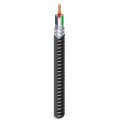
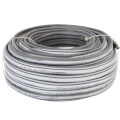
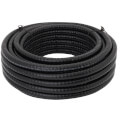
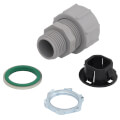
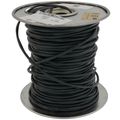
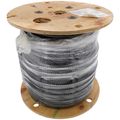
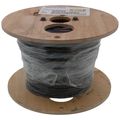
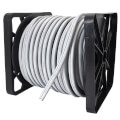
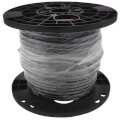
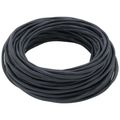
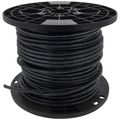
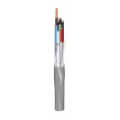

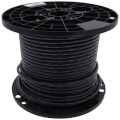
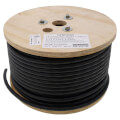
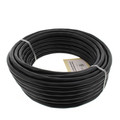
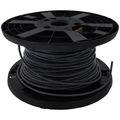
Mini split cables carry power and communication signals between the outdoor condensing unit and indoor air handler of a ductless mini-split system. Most residential mini-split systems use a multi-conductor cable that combines power conductors with a signal or communication pair inside a single jacket, simplifying the wall penetration needed between indoor and outdoor units. Conductor count and gauge vary by system capacity and by whether the indoor unit requires a separate power feed or draws power through the same cable as the outdoor unit. Installers select cable length based on the actual routing distance between units, since splicing a communication cable can introduce signal problems on some manufacturer's control boards. Outdoor-rated jacketing matters for any cable run that will be exposed to weather rather than routed entirely inside a wall or conduit.
Subcategories
- 4-Conductor Power and Communication Cables: 4-conductor cables are common on single-zone mini-split systems where the indoor unit draws power through the same cable running to the outdoor unit. Combining power and communication in one cable reduces the number of separate runs needed between indoor and outdoor locations. Conductor gauge should match the system's rated amperage to avoid voltage drop over longer runs. Cables used for this purpose are typically direct-burial or outdoor rated for the portion of run exposed outside.
- 5-Conductor and Multi-Zone Cables: 5-conductor and higher count cables support systems where additional control signals or a separate ground conductor are needed, including some multi-zone configurations. Installers should confirm conductor count against the specific system's wiring diagram before ordering, since manufacturers assign conductor functions differently. Using a cable with fewer conductors than the system requires leaves no path for a required signal or ground connection. Higher-conductor cables like these are common on multi-zone installations with several indoor units tied to one outdoor condenser.
- Communication-Only Cables: Communication-only cables carry signal between indoor and outdoor units on systems where the indoor unit receives power from a separate branch circuit rather than through the same cable as the outdoor unit. Shielded construction on these cables helps reduce interference from nearby power wiring. Installers should keep communication cable runs separated from high-voltage power runs where local code and manufacturer instructions require it. Cable length limits vary by manufacturer and should be checked before a long run is planned.
- Outdoor-Rated Whips and Conduit Cable: Outdoor-rated whips and conduit-rated cable are built for the exposed portion of a run between an outdoor condenser and the point where the cable enters a wall or conduit. UV-resistant jacketing on these cables holds up to direct sun and weather exposure better than indoor-rated cable. Installers should route this cable through conduit where local code requires mechanical protection. Confirming the exposed run length before ordering avoids needing a mid-run splice.
Buying Guide
Selecting the right Mini Split Cables starts with confirming the exact conductor count and gauge the manufacturer specifies for the installed system, since indoor and outdoor units from different manufacturers assign power and communication functions to different conductors even when cable appearance looks similar. Installers should measure the actual routing distance between indoor and outdoor units before ordering, accounting for any vertical runs through walls or attic space, since ordering a cable too short forces a splice that some manufacturers don't support on communication runs. Any portion of the cable exposed to weather, including short exterior runs between a wall penetration and the outdoor unit, should use outdoor-rated or conduit-rated jacketing rather than indoor cable rated for interior use only. Multi-zone systems typically require higher conductor counts than single-zone systems, so confirming the system configuration against the manufacturer's wiring diagram before purchase prevents ordering a cable that can't carry every required signal. Local electrical code may also dictate whether communication and power conductors can share a jacket or need to run separately, particularly where power conductors carry higher voltage. Checking these code requirements alongside the manufacturer's specifications before rough-in avoids having to pull new cable after walls are closed.
Frequently Asked Questions
How many conductors do I need for a mini split cable?
Conductor count depends on whether the indoor unit draws power through the same cable as the outdoor unit and whether the system needs additional control signals. Single-zone systems commonly use 4-conductor cable, while multi-zone or systems with separate power feeds may need 5 conductors or more. Checking the manufacturer's wiring diagram confirms the exact count needed.
Can I splice a mini split communication cable if my run is too long?
Some manufacturers allow splicing with proper connectors while others specify a continuous run without splices to avoid signal interference. Checking manufacturer installation instructions before splicing avoids a communication fault after the system is powered up. Ordering a cable long enough for the full run without a splice is the simpler option when it's available.
Does the cable running to the outdoor unit need to be outdoor rated?
Any portion of the cable exposed to weather, including short exterior runs, should use outdoor-rated or conduit-rated jacketing. Indoor-rated cable used outdoors can degrade from UV exposure and moisture over time. Running the cable through conduit adds mechanical protection where local code requires it.
What happens if I use a cable with fewer conductors than the system needs?
A cable with fewer conductors than the system requires leaves no path for a needed power, signal, or ground connection, which can prevent the system from communicating correctly or cause a control fault. Checking the manufacturer's wiring diagram before ordering avoids this problem. Matching conductor count exactly is more reliable than assuming a similar-looking cable will work.
Should communication wiring run separately from power wiring?
Local code and manufacturer instructions sometimes require separating communication conductors from higher-voltage power runs to reduce interference and meet safety requirements. Shielded communication-only cable can help where separation isn't practical. Checking both code requirements and manufacturer instructions before rough-in confirms the correct approach for a specific job.
