



Filters
SORT
Product Availability –
Brand –
Product Type –
Finish Family –
Flow Rate (GPM) –
Handle Style –
Number Of Handles –
Series –
Review Score –
 --%3E %3Csvg version='1.1' id='Fill' xmlns='http://www.w3.org/2000/svg' xmlns:xlink='http://www.w3.org/1999/xlink' x='0px' y='0px' viewBox='0 0 100 100' enable-background='new 0 0 100 100' xml:space='preserve'%3E %3Cpath fill='%23F15C02' d='M79.44,0.95H20.56C9.78,0.95,0.95,9.78,0.95,20.56v58.87c0,10.79,8.82,19.61,19.61,19.61h58.87 c10.79,0,19.61-8.83,19.61-19.61V20.56C99.05,9.78,90.22,0.95,79.44,0.95z M65.38,58.24l9.38,29.58L49.69,69.78L24.5,87.82 l9.34-29.6L8.8,39.6l30.73-0.17c0,0,6.98-19.61,10-28.93c0.54,1.36,9.88,29.1,9.88,29.1H91.2L65.38,58.24z'/%3E %3C/svg%3E)
 --%3E %3Csvg version='1.1' id='With-RB' xmlns='http://www.w3.org/2000/svg' xmlns:xlink='http://www.w3.org/1999/xlink' x='0px' y='0px' viewBox='0 0 100 100' enable-background='new 0 0 100 100' xml:space='preserve'%3E %3Cpath fill='%23FBC8B4' d='M79.44,0.95H20.56C9.78,0.95,0.95,9.78,0.95,20.56v58.87c0,10.79,8.82,19.61,19.61,19.61h58.87 c10.79,0,19.61-8.83,19.61-19.61V20.56C99.05,9.78,90.22,0.95,79.44,0.95z M65.38,58.24l9.38,29.58L49.69,69.78L24.5,87.82 l9.34-29.6L8.8,39.6l30.73-0.17c0,0,6.98-19.61,10-28.93c0.54,1.36,9.88,29.1,9.88,29.1H91.2L65.38,58.24z'/%3E %3C/svg%3E)
Price Range –
Water Dispenser Faucets


 --%3E %3Csvg version='1.1' id='No-RB' xmlns='http://www.w3.org/2000/svg' xmlns:xlink='http://www.w3.org/1999/xlink' x='0px' y='0px' viewBox='0 0 100 100' enable-background='new 0 0 100 100' xml:space='preserve'%3E %3Cpath fill='%23CECECE' d='M79.44,0.95H20.56C9.78,0.95,0.95,9.78,0.95,20.56v58.87c0,10.79,8.82,19.61,19.61,19.61h58.87 c10.79,0,19.61-8.83,19.61-19.61V20.56C99.05,9.78,90.22,0.95,79.44,0.95z M65.38,58.24l9.38,29.58L49.69,69.78L24.5,87.82 l9.34-29.6L8.8,39.6l30.73-0.17c0,0,6.98-19.61,10-28.93c0.54,1.36,9.88,29.1,9.88,29.1H91.2L65.38,58.24z'/%3E %3C/svg%3E)

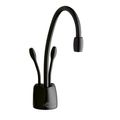
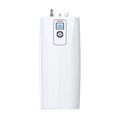

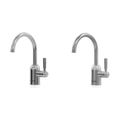
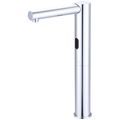

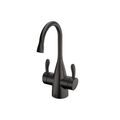


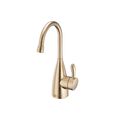
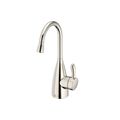
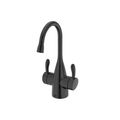
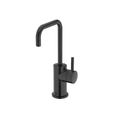


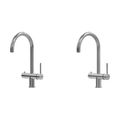

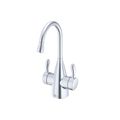
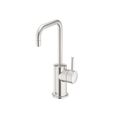

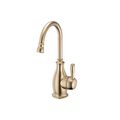


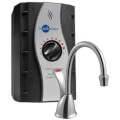

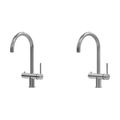
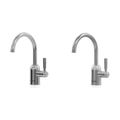


Water dispenser faucets are the small, dedicated fixtures installed alongside a kitchen sink to deliver filtered or reverse osmosis drinking water separately from the main faucet. Plumbers typically mount these faucets through an extra hole in the sink or countertop and connect them to a dedicated line running from an under-sink filtration or reverse osmosis system. Because the faucet only carries treated drinking water, its internal components and finish options are chosen to match kitchen decor rather than to handle the volume or pressure of a primary kitchen faucet. Homeowners request these fixtures when adding or upgrading a water filtration system, since a dedicated tap keeps filtered water clearly separated from tap water at the sink. Style and finish selection generally follow the existing kitchen faucet, while the connection type and available air gap options depend on the filtration system being installed alongside it.
Subcategories
- Air Gap Dispenser Faucets: Air gap faucets include a built-in air gap fitting that prevents backflow from a reverse osmosis system's drain line into the water supply, which some local plumbing codes require. They typically have a slightly taller base to accommodate the air gap mechanism.
- Non-Air Gap Dispenser Faucets: Non-air gap faucets have a simpler, lower-profile design and are used where local code does not require an air gap or where the reverse osmosis system handles backflow prevention elsewhere in its design. They install through a smaller hole and sit lower on the countertop.
- Dispenser Faucet Finishes and Styles: Dispenser faucets come in finishes matched to common kitchen faucet lines, including chrome, stainless, and matte black, so the drinking water tap can coordinate with the primary faucet already installed. Handle styles range from a simple lever to a more decorative traditional design.
Buying Guide
Selecting a water dispenser faucet starts with confirming whether the filtration or reverse osmosis system it will connect to requires an air gap. Local plumbing code and the system manufacturer's installation instructions both factor into that decision, and choosing the wrong style can mean redoing the countertop hole.
Mounting hole size and countertop thickness affect which faucets will fit without additional drilling or an adapter. Measuring the existing or planned hole before ordering keeps the installation straightforward and avoids a mismatched base plate.
Finish and handle style are mostly an aesthetic decision, though matching the dispenser faucet to the primary kitchen faucet keeps the sink area looking coordinated. Many manufacturers offer a dispenser faucet in the same finish line as their standard kitchen faucets.
Connection type at the supply line end should match the tubing size coming from the filtration or reverse osmosis system, which is commonly a small diameter push-fit or compression connection rather than standard supply line fittings.
Anyone installing a new filtration system alongside an existing kitchen faucet should confirm the dispenser faucet's compatibility with that specific system before purchase, since air gap requirements and connection sizes vary enough between systems that a universal fit is not guaranteed.
Frequently Asked Questions
Do all reverse osmosis systems need an air gap faucet?
Not every system requires one, but many local plumbing codes call for an air gap on reverse osmosis drain connections. Checking local code along with the system manufacturer's instructions determines whether an air gap or non-air gap faucet is the right choice.
Can a water dispenser faucet be installed without drilling a new hole?
Some sinks already have a pre-punched extra hole for a soap dispenser or sprayer that can be repurposed for a dispenser faucet. Where no extra hole exists, a new hole needs to be drilled in the sink or countertop.
What size hole does a dispenser faucet need?
Hole size varies by faucet model, though many standard dispenser faucets fit a similar diameter hole to a soap dispenser. Checking the specific faucet's installation specifications before drilling avoids an incorrect hole size.
Does the dispenser faucet finish need to match the main kitchen faucet?
Matching finishes is a common preference for a coordinated look at the sink, but it isn't a functional requirement. Many homeowners choose a finish that matches, while others prioritize a specific dispenser faucet style regardless of the main faucet's finish.
Can a dispenser faucet be used with a standard water filter instead of reverse osmosis?
Dispenser faucets work with standard under-sink filtration systems as well as reverse osmosis, since the faucet itself only delivers water and does not filter it. The connection type just needs to match the tubing coming from whichever system is installed.
