



Concrete Anchors and Screws


 --%3E %3Csvg version='1.1' id='Fill' xmlns='http://www.w3.org/2000/svg' xmlns:xlink='http://www.w3.org/1999/xlink' x='0px' y='0px' viewBox='0 0 100 100' enable-background='new 0 0 100 100' xml:space='preserve'%3E %3Cpath fill='%23F15C02' d='M79.44,0.95H20.56C9.78,0.95,0.95,9.78,0.95,20.56v58.87c0,10.79,8.82,19.61,19.61,19.61h58.87 c10.79,0,19.61-8.83,19.61-19.61V20.56C99.05,9.78,90.22,0.95,79.44,0.95z M65.38,58.24l9.38,29.58L49.69,69.78L24.5,87.82 l9.34-29.6L8.8,39.6l30.73-0.17c0,0,6.98-19.61,10-28.93c0.54,1.36,9.88,29.1,9.88,29.1H91.2L65.38,58.24z'/%3E %3C/svg%3E)



 --%3E %3Csvg version='1.1' id='No-RB' xmlns='http://www.w3.org/2000/svg' xmlns:xlink='http://www.w3.org/1999/xlink' x='0px' y='0px' viewBox='0 0 100 100' enable-background='new 0 0 100 100' xml:space='preserve'%3E %3Cpath fill='%23CECECE' d='M79.44,0.95H20.56C9.78,0.95,0.95,9.78,0.95,20.56v58.87c0,10.79,8.82,19.61,19.61,19.61h58.87 c10.79,0,19.61-8.83,19.61-19.61V20.56C99.05,9.78,90.22,0.95,79.44,0.95z M65.38,58.24l9.38,29.58L49.69,69.78L24.5,87.82 l9.34-29.6L8.8,39.6l30.73-0.17c0,0,6.98-19.61,10-28.93c0.54,1.36,9.88,29.1,9.88,29.1H91.2L65.38,58.24z'/%3E %3C/svg%3E)


 --%3E %3Csvg version='1.1' id='With-RB' xmlns='http://www.w3.org/2000/svg' xmlns:xlink='http://www.w3.org/1999/xlink' x='0px' y='0px' viewBox='0 0 100 100' enable-background='new 0 0 100 100' xml:space='preserve'%3E %3Cpath fill='%23FBC8B4' d='M79.44,0.95H20.56C9.78,0.95,0.95,9.78,0.95,20.56v58.87c0,10.79,8.82,19.61,19.61,19.61h58.87 c10.79,0,19.61-8.83,19.61-19.61V20.56C99.05,9.78,90.22,0.95,79.44,0.95z M65.38,58.24l9.38,29.58L49.69,69.78L24.5,87.82 l9.34-29.6L8.8,39.6l30.73-0.17c0,0,6.98-19.61,10-28.93c0.54,1.36,9.88,29.1,9.88,29.1H91.2L65.38,58.24z'/%3E %3C/svg%3E)


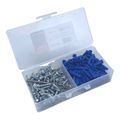


Concrete Anchors and Screws are fasteners designed to hold into concrete, brick, and masonry block, where a standard wood screw or bolt has nothing solid to bite into. The category covers concrete screws like a 1/4-inch by 1-3/4-inch hex washer head anchor for light to medium duty work, along with heavier options like a 3/8-inch by 2-inch double expansion anchor for materials of questionable strength such as stone. Contractors use concrete screws for mounting brackets, strut, and fixtures directly into a pre-drilled hole, while expansion and screw bolt anchors handle heavier structural loads that need more holding strength. Picking the right anchor type and size matters because an undersized or mismatched anchor pulls loose under load, which on HVAC equipment mounts or structural brackets can mean a costly failure well after the installation crew has moved on to the next job.
Subcategories
- Concrete Screws: Concrete screws are tempered masonry screws, such as a 1/4-inch by 1-3/4-inch hex washer head model, built for light to medium duty holding in concrete, brick, masonry block, and wood base materials. Installers drive them directly into a pre-drilled pilot hole without a separate expansion sleeve or plug. Contractors use them for mounting brackets, conduit straps, and fixtures where a lighter-duty anchor is enough.
- Wedge and Expansion Anchors: Wedge and expansion anchors, including double expansion machine bolt anchors like a 3/8-inch by 2-inch model, use a mechanical expansion action to grip the sides of a drilled hole. They suit materials of questionable strength or consistency, such as stone, along with solid concrete, block, and brick. Heavier equipment mounts and structural brackets often call for this anchor type over a standard concrete screw.
- Screw Bolts: Screw bolts, sometimes called Mega-Bolt style anchors, are single-piece heavy-duty fasteners, such as a 1/2-inch by 4-inch hex head model, installed with a standard wrench or socket instead of a hammer drill setting tool. They install with minimal torque and remain fully removable, unlike a permanent expansion anchor. Contractors reach for them on heavier structural connections that still need the option to remove the fastener later.
- Self-Drilling Anchors: Self-drilling anchors combine the drilling and anchoring function into one fastener, cutting their own hole in lighter masonry materials without a separate pilot hole step. HVAC installers use them for mounting equipment brackets and line set supports directly into block or brick. Skipping the separate pilot-hole step saves time on repetitive mounting work across a jobsite.
- Anchor Screw Kits: Anchor screw kits bundle an assortment of screw sizes, such as a 1/4-inch assorted concrete screw anchor kit, into one case for jobs that call for mixed sizes. Service techs carry them for smaller mounting jobs where buying full boxes of each individual size isn't practical. A kit keeps a range of common sizes on hand without stocking separate boxes for each one.
Buying Guide
Start with the load the anchor needs to carry, since a lightweight bracket and a heavy piece of HVAC equipment call for very different holding strength. A concrete screw handles light to medium duty mounting like conduit straps or small brackets, while a wedge or expansion anchor, or a heavier screw bolt, suits equipment mounts and structural connections that carry real weight. Matching anchor type to load keeps a fastener from pulling loose after installation instead of holding for the life of the equipment.
Base material matters just as much as load. Concrete Anchors and Screws perform differently depending on whether they're going into solid concrete, hollow block, brick, or a material of questionable strength like stone. A double expansion anchor suits inconsistent materials better than a standard concrete screw, which works best in solid, uniform concrete or masonry.
Drill bit size and embedment depth come next, since an anchor only holds as well as the hole it's set into. Using the drill bit size specified for a given anchor diameter, and drilling to the embedment depth called for by the anchor, keeps holding strength at the rated level instead of guessing at hole depth. Removability is worth considering too. A screw bolt installs with minimal torque and comes out again if equipment gets relocated, while a standard expansion anchor is closer to a permanent installation once it's set and expanded in the hole.
Frequently Asked Questions
What's the difference between a concrete screw and an expansion anchor?
A concrete screw drives directly into a pre-drilled pilot hole and grips through its threads, suited to light to medium duty mounting like brackets or conduit straps. An expansion anchor uses a mechanical expansion action to grip the sides of the hole and generally holds heavier loads. Material condition also plays a role, since an expansion anchor handles inconsistent materials like stone better than a standard concrete screw.
What drill bit size is needed for a concrete screw?
Drill bit size depends on the anchor's diameter, with the manufacturer's specification sheet listing the exact bit size for each screw diameter offered. Using an undersized or oversized bit reduces holding strength even if the correct screw length is used. Checking the bit size against the specific anchor diameter before drilling avoids a weak connection.
When should a screw bolt be used instead of a standard anchor?
A screw bolt, sometimes called a Mega-Bolt style anchor, suits heavier structural connections that still need to be removable later, since it installs with minimal torque and comes back out with a wrench. A standard expansion anchor is closer to a permanent installation once it's set. Concrete Anchors and Screws in the screw bolt category work well where equipment might need to be relocated or removed.
What anchor works best in block or brick instead of solid concrete?
A double expansion anchor suits materials of questionable strength or consistency, including block, brick, and stone, better than a standard concrete screw built for solid, uniform concrete. Self-drilling anchors also work well in lighter masonry since they cut their own hole without a separate pilot hole step. Matching anchor type to the actual base material keeps holding strength at the rated level.
How deep should a concrete anchor be embedded?
Embedment depth is set by the anchor manufacturer for each specific diameter and length, and drilling to that specified depth keeps the anchor's rated holding strength intact. Drilling a shallower hole than specified reduces holding strength even with the correct anchor installed. Checking the embedment depth listed for a chosen anchor before drilling avoids a connection that pulls loose under load.
