




Filters
SORT
Product Availability –
Product Type –
Brand –
Review Score –
 --%3E %3Csvg version='1.1' id='Fill' xmlns='http://www.w3.org/2000/svg' xmlns:xlink='http://www.w3.org/1999/xlink' x='0px' y='0px' viewBox='0 0 100 100' enable-background='new 0 0 100 100' xml:space='preserve'%3E %3Cpath fill='%23F15C02' d='M79.44,0.95H20.56C9.78,0.95,0.95,9.78,0.95,20.56v58.87c0,10.79,8.82,19.61,19.61,19.61h58.87 c10.79,0,19.61-8.83,19.61-19.61V20.56C99.05,9.78,90.22,0.95,79.44,0.95z M65.38,58.24l9.38,29.58L49.69,69.78L24.5,87.82 l9.34-29.6L8.8,39.6l30.73-0.17c0,0,6.98-19.61,10-28.93c0.54,1.36,9.88,29.1,9.88,29.1H91.2L65.38,58.24z'/%3E %3C/svg%3E)
 --%3E %3Csvg version='1.1' id='With-RB' xmlns='http://www.w3.org/2000/svg' xmlns:xlink='http://www.w3.org/1999/xlink' x='0px' y='0px' viewBox='0 0 100 100' enable-background='new 0 0 100 100' xml:space='preserve'%3E %3Cpath fill='%23FBC8B4' d='M79.44,0.95H20.56C9.78,0.95,0.95,9.78,0.95,20.56v58.87c0,10.79,8.82,19.61,19.61,19.61h58.87 c10.79,0,19.61-8.83,19.61-19.61V20.56C99.05,9.78,90.22,0.95,79.44,0.95z M65.38,58.24l9.38,29.58L49.69,69.78L24.5,87.82 l9.34-29.6L8.8,39.6l30.73-0.17c0,0,6.98-19.61,10-28.93c0.54,1.36,9.88,29.1,9.88,29.1H91.2L65.38,58.24z'/%3E %3C/svg%3E)
Price Range –
Electric Unit Heaters


 --%3E %3Csvg version='1.1' id='Half' xmlns='http://www.w3.org/2000/svg' xmlns:xlink='http://www.w3.org/1999/xlink' x='0px' y='0px' viewBox='0 0 100 100' enable-background='new 0 0 100 100' xml:space='preserve'%3E %3Cg%3E %3Cpath fill='%23F15C02' d='M30.05,70.23l3.79-12.01L8.8,39.6l30.73-0.17c0,0,6.98-19.61,10-28.93c0.54,1.36,9.88,29.1,9.88,29.1h1.58 L93.71,7.18c-3.58-3.82-8.66-6.23-14.28-6.23H20.56C9.78,0.95,0.95,9.78,0.95,20.56v58.87c0,5.41,2.22,10.32,5.79,13.88 L30.05,70.23z'/%3E %3C/g%3E %3Cpath fill='%23FBC8B4' d='M93.71,7.18L60.98,39.6H91.2L65.38,58.24l9.38,29.58L49.69,69.78L24.5,87.82l5.55-17.59L6.75,93.32 c3.55,3.54,8.44,5.73,13.82,5.73h58.87c10.79,0,19.61-8.83,19.61-19.61V20.56C99.05,15.4,97.01,10.69,93.71,7.18z'/%3E %3C/svg%3E)
 --%3E %3Csvg version='1.1' id='No-RB' xmlns='http://www.w3.org/2000/svg' xmlns:xlink='http://www.w3.org/1999/xlink' x='0px' y='0px' viewBox='0 0 100 100' enable-background='new 0 0 100 100' xml:space='preserve'%3E %3Cpath fill='%23CECECE' d='M79.44,0.95H20.56C9.78,0.95,0.95,9.78,0.95,20.56v58.87c0,10.79,8.82,19.61,19.61,19.61h58.87 c10.79,0,19.61-8.83,19.61-19.61V20.56C99.05,9.78,90.22,0.95,79.44,0.95z M65.38,58.24l9.38,29.58L49.69,69.78L24.5,87.82 l9.34-29.6L8.8,39.6l30.73-0.17c0,0,6.98-19.61,10-28.93c0.54,1.36,9.88,29.1,9.88,29.1H91.2L65.38,58.24z'/%3E %3C/svg%3E)
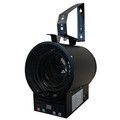
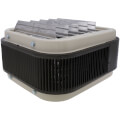
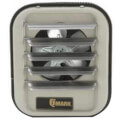
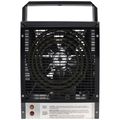
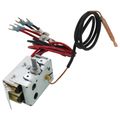
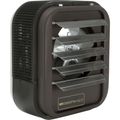
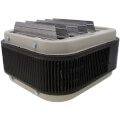
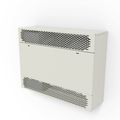
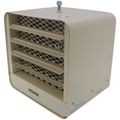
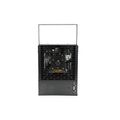
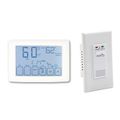
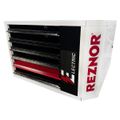

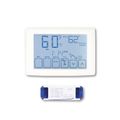
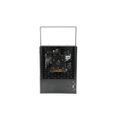
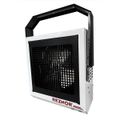
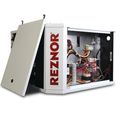
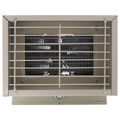
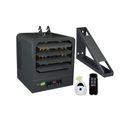
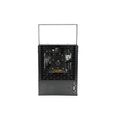

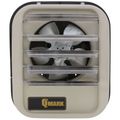
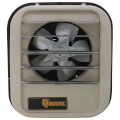
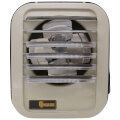
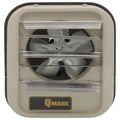
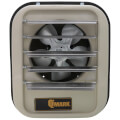
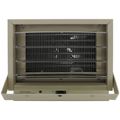
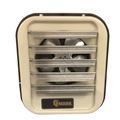
Electric unit heaters are self-contained, fan-forced heating appliances that mount to a wall or ceiling and deliver conditioned air directly into a space without ductwork, piping, flues, or combustion. A heating element, an integral blower, and a control circuit come packaged in a single enclosure, making electric unit heaters one of the most straightforward heating solutions for commercial, industrial, and large residential applications. The Qmark MUH Series, for example, delivers airflows from 350 to 3,000 CFM across a temperature operating range of 40 to 90°F, covering everything from a 300-square-foot garage to a full loading dock. Electric unit heaters handle primary, supplemental, or spot heating duty equally well, and because they draw no fuel lines, they install in places where gas-fired equipment isn’t practical. For contractors and facility managers specifying heat in warehouses, stairwells, mechanical rooms, and workshops, electric unit heaters deliver reliable, controllable output without combustion-related code complexity.
Fan-Forced Electric Unit Heaters
Fan-forced electric unit heaters are the workhorse of the category. A resistance heating element and a direct-drive or belt-drive blower share an enclosure, pulling air through the element and discharging it in a controlled direction via adjustable louvers. Qmark MUH Series heaters use a pull-through airflow design that draws air across the element for even heat distribution and cooler element operation, extending element service life. Berko HUHAA Series units follow the same design logic, housing the element in 20-gauge steel on smaller models and 18-gauge steel on larger models, with 30-degree adjustable louvers for precise air direction. These heaters cover a broad voltage and phase range, running on 208V, 240V, 277V, 480V, or 600V single or three-phase supply depending on the model, which makes them adaptable to whatever the panel room has available.
Multi-Wattage and Multi-Stage Electric Unit Heaters
Multi-wattage and multi-stage electric unit heaters provide more granular output control, reducing electrical demand during mild weather instead of running the heater at full capacity on a simple on/off cycle. King Electric KB ECO2S Series unit heaters operate at 240/208V with 2-stage heating, automatically stepping down to the lowest wattage needed to hold setpoint, which reduces heating bills over a full season. For even finer selection, the King Electric KBP series features Pic-A-Watt elements that allow multiple wattage settings on a single unit to match the heater output exactly to the room’s heating requirement. Reznor EUH Series units address this through a two-stage design on larger 15 to 30 kW models, letting building automation systems modulate output rather than full cycling.
High-Capacity Industrial Electric Unit Heaters
High-capacity electric unit heaters, typically ranging from 15 kW up to 50 kW or more, handle primary heating in large industrial spaces where a single hung unit needs to cover significant square footage. Qmark MUH Series models scale up to 3,000 CFM on larger cabinet sizes, suitable for factories, aircraft hangars, and power stations. Berko HUHAA Series large-cabinet models use 18-gauge steel construction and support two-speed motors with dual CFM ratings for variable airflow in high-bay settings. Reznor EUH Series units run in three-phase configurations and connect to BMS systems via external terminal strips, which makes multi-unit coordination from a single thermostat straightforward on large floor plates. Voltage options on this class of heater commonly include 240V, 480V, and 600V three-phase, matching industrial panel infrastructure without transformer expenses.
Wall and Cabinet Electric Unit Heaters
Wall and cabinet electric unit heaters are compact, surface-mounted units designed for finished commercial spaces, utility rooms, and corridor applications where a ceiling-hung industrial unit would be impractical or visually disruptive. The Berko HUHTA/ST Series handles 270 CFM in a 14-inch by 12.5-inch by 11.25-inch cabinet with a 45 to 90°F operating range, fitting between standard stud bays in maintenance rooms, workshops, and service areas. King Electric KB Platinum Series wall-mount configurations include a universal wall/ceiling bracket in the box, eliminating a separate mounting accessory order. Control options on smaller wall units typically run line-voltage or 24V thermostat connections, covering everything from a simple on/off application to smart thermostat integration.
Accessories, Controls, and Replacement Parts
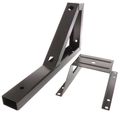
A complete electric unit heater installation often requires mounting brackets, thermostats, disconnect switches, and control kits beyond the heater itself. Qmark B10 and B30 universal brackets serve the MUH Series family across different cabinet sizes, with the B10 covering 3 to 10 kW MUH units and the B30 compatible with MUH25 and MUH30 models. Berko HUHAA-PRO bundles address this by combining the base heater with a SmartSeries Plus thermostat, disconnect switch, and B10 bracket in a single order. King Electric KB PlatinumX units include a hand-held infrared remote control, a wall holder, and the mounting bracket in the box, and come pre-wired with a 24V thermostat provision compatible with Nest and other smart stats. Replacement heating elements, motors, and control boards for Qmark and Berko units trace back to Marley Engineered Products, the common parent brand, which simplifies parts sourcing across both lines.
Sizing is the first decision when specifying electric unit heaters. The basic calculation is 10 watts per square foot as a starting rule of thumb for spaces with 8 to 10-foot ceilings and adequate insulation, but that number rises fast in poorly insulated garages, loading docks, and high-bay warehouses. Ceiling height matters more than square footage in industrial settings: heat stratifies, and a 30-foot ceiling may require destratification fans in addition to unit heaters to keep the working zone warm without running elements at full output continuously.
Voltage and phase availability drives the second decision. Residential and light commercial panels typically supply 120V or 240V single-phase. Industrial facilities commonly offer 208V, 277V, 480V, or 600V three-phase. Choosing a unit heater matched to the available supply eliminates transformer costs and wiring complexity. Reznor EUH Series 3 to 10 kW models address this directly by combining 208-240V single or three-phase operation in one field-convertible SKU, reducing the number of stocked part numbers for distributors and contractors specifying across multiple job types.
Control strategy is the third variable. Line-voltage thermostats work for simple on/off applications and cost less to install, but 24V control transformers, standard on most Qmark MUH and Berko HUHAA models above 5 kW, provide more accurate temperature sensing and longer thermostat contact life. Multi-stage units like the King Electric KB ECO2S step down automatically to maintain setpoint at lower wattage, cutting energy draw during shoulder-season conditions. BMS integration via 24V terminal strips, supported on Reznor EUH models, allows electric unit heaters to coordinate with building automation in commercial and industrial facilities.
Finally, mounting position and throw distance affect air distribution. Horizontal mounting projects air outward across a floor; vertical mounting directs heat downward into the occupied zone. Qmark MUH Series heaters include a specially designed venturi outlet to maintain air throw in vertical position, which is important in high-bay settings where ceiling-hung horizontal discharge may not reach the working level effectively.
FAQs
What size electric unit heater do I need for a garage or workshop?
The sizing starting point for electric unit heaters in garages and workshops is 10 watts per square foot for a standard 8 to 10-foot ceiling, adjusted upward for poor insulation, large doors, or high ceilings. A 400-square-foot garage with reasonable insulation typically needs a 4 to 5 kW unit, while the same space with little insulation and a large overhead door may require 7.5 kW or more. Confirm the available panel voltage before sizing, since choosing between 120V, 208V, 240V, or 480V affects both the unit selection and the wiring circuit required.
What is the difference between a line-voltage and 24V controlled electric unit heater?
The difference between line-voltage and 24V control on electric unit heaters is how the thermostat circuit operates and what it switches. Line-voltage controls run the full supply voltage through the thermostat contacts, which works for simple on/off applications but can reduce thermostat contact life over time. A 24V control transformer, standard on most Qmark MUH and Berko HUHAA models in sizes above 3 to 5 kW, steps the control circuit down so the thermostat switches low-voltage signal only, improving accuracy and longevity. Most 24V-controlled units also support smart thermostat connections, including BACnet and Wi-Fi-compatible stats.
Can electric unit heaters be mounted vertically as well as horizontally?
Electric unit heaters from the Qmark MUH Series and Berko HUHAA Series support both horizontal and vertical mounting. Qmark MUH Series heaters include a specially designed venturi outlet that maintains air throw distance when mounted in the vertical position, directing heated air downward into the occupied zone rather than losing it to ceiling stratification. Mounting bracket compatibility should be confirmed for the specific cabinet size when switching from horizontal to vertical orientation, as some bracket models are size-specific.
What voltage options do electric unit heaters come in for industrial applications?
Electric unit heaters for industrial applications come in a range of voltages including 208V, 240V, 277V, 480V, and 600V, with both single-phase and three-phase configurations. Qmark MUH Series and Berko HUHAA Series units span this full voltage range across their model families. Reznor EUH Series 3 to 10 kW models combine 208-240V single-phase and three-phase in one field-convertible unit, which simplifies stocking and reduces the number of separate models a contractor needs to carry for mixed-voltage commercial jobs.
How do multi-stage electric unit heaters reduce energy use compared to single-stage models?
Multi-stage electric unit heaters reduce energy use by automatically stepping down to a lower output level once the space reaches near-setpoint temperature, rather than cycling fully off and on. The King Electric KB ECO2S Series uses a 2-stage approach where the unit runs at full capacity to bring a cold space up to temperature, then switches to a lower wattage to hold setpoint during mild conditions. Reznor EUH Series larger models (15 to 30 kW) also support two-stage operation. Single-stage heaters run at full wattage whenever the thermostat calls for heat, which draws more energy during shoulder-season conditions when the full load isn’t needed.
