




Filters
SORT
Product Availability –
Category –
Brand –
Material –
Size –
Review Score –
 --%3E %3Csvg version='1.1' id='Fill' xmlns='http://www.w3.org/2000/svg' xmlns:xlink='http://www.w3.org/1999/xlink' x='0px' y='0px' viewBox='0 0 100 100' enable-background='new 0 0 100 100' xml:space='preserve'%3E %3Cpath fill='%23F15C02' d='M79.44,0.95H20.56C9.78,0.95,0.95,9.78,0.95,20.56v58.87c0,10.79,8.82,19.61,19.61,19.61h58.87 c10.79,0,19.61-8.83,19.61-19.61V20.56C99.05,9.78,90.22,0.95,79.44,0.95z M65.38,58.24l9.38,29.58L49.69,69.78L24.5,87.82 l9.34-29.6L8.8,39.6l30.73-0.17c0,0,6.98-19.61,10-28.93c0.54,1.36,9.88,29.1,9.88,29.1H91.2L65.38,58.24z'/%3E %3C/svg%3E)
 --%3E %3Csvg version='1.1' id='With-RB' xmlns='http://www.w3.org/2000/svg' xmlns:xlink='http://www.w3.org/1999/xlink' x='0px' y='0px' viewBox='0 0 100 100' enable-background='new 0 0 100 100' xml:space='preserve'%3E %3Cpath fill='%23FBC8B4' d='M79.44,0.95H20.56C9.78,0.95,0.95,9.78,0.95,20.56v58.87c0,10.79,8.82,19.61,19.61,19.61h58.87 c10.79,0,19.61-8.83,19.61-19.61V20.56C99.05,9.78,90.22,0.95,79.44,0.95z M65.38,58.24l9.38,29.58L49.69,69.78L24.5,87.82 l9.34-29.6L8.8,39.6l30.73-0.17c0,0,6.98-19.61,10-28.93c0.54,1.36,9.88,29.1,9.88,29.1H91.2L65.38,58.24z'/%3E %3C/svg%3E)
Escutcheons


 --%3E %3Csvg version='1.1' id='Half' xmlns='http://www.w3.org/2000/svg' xmlns:xlink='http://www.w3.org/1999/xlink' x='0px' y='0px' viewBox='0 0 100 100' enable-background='new 0 0 100 100' xml:space='preserve'%3E %3Cg%3E %3Cpath fill='%23F15C02' d='M30.05,70.23l3.79-12.01L8.8,39.6l30.73-0.17c0,0,6.98-19.61,10-28.93c0.54,1.36,9.88,29.1,9.88,29.1h1.58 L93.71,7.18c-3.58-3.82-8.66-6.23-14.28-6.23H20.56C9.78,0.95,0.95,9.78,0.95,20.56v58.87c0,5.41,2.22,10.32,5.79,13.88 L30.05,70.23z'/%3E %3C/g%3E %3Cpath fill='%23FBC8B4' d='M93.71,7.18L60.98,39.6H91.2L65.38,58.24l9.38,29.58L49.69,69.78L24.5,87.82l5.55-17.59L6.75,93.32 c3.55,3.54,8.44,5.73,13.82,5.73h58.87c10.79,0,19.61-8.83,19.61-19.61V20.56C99.05,15.4,97.01,10.69,93.71,7.18z'/%3E %3C/svg%3E)
 --%3E %3Csvg version='1.1' id='No-RB' xmlns='http://www.w3.org/2000/svg' xmlns:xlink='http://www.w3.org/1999/xlink' x='0px' y='0px' viewBox='0 0 100 100' enable-background='new 0 0 100 100' xml:space='preserve'%3E %3Cpath fill='%23CECECE' d='M79.44,0.95H20.56C9.78,0.95,0.95,9.78,0.95,20.56v58.87c0,10.79,8.82,19.61,19.61,19.61h58.87 c10.79,0,19.61-8.83,19.61-19.61V20.56C99.05,9.78,90.22,0.95,79.44,0.95z M65.38,58.24l9.38,29.58L49.69,69.78L24.5,87.82 l9.34-29.6L8.8,39.6l30.73-0.17c0,0,6.98-19.61,10-28.93c0.54,1.36,9.88,29.1,9.88,29.1H91.2L65.38,58.24z'/%3E %3C/svg%3E)
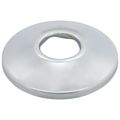
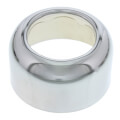
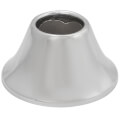
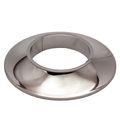
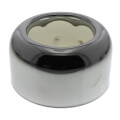
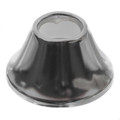
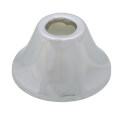
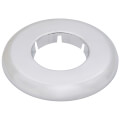
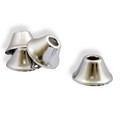

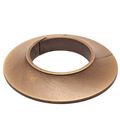
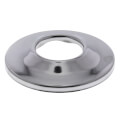
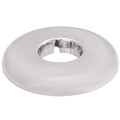
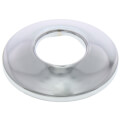
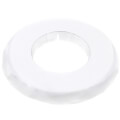
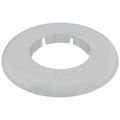
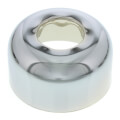
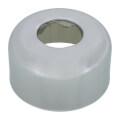
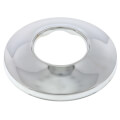
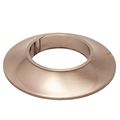
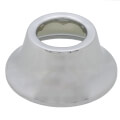
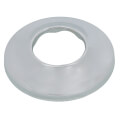
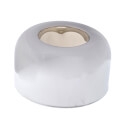
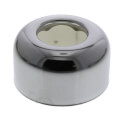
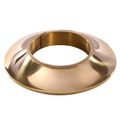
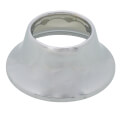
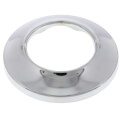
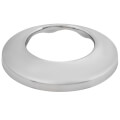
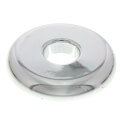

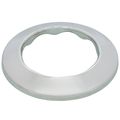
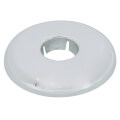
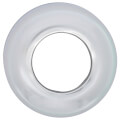
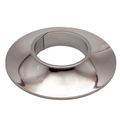
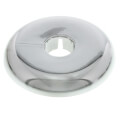
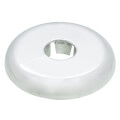
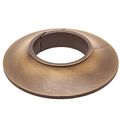

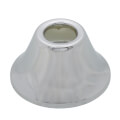
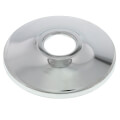
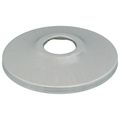
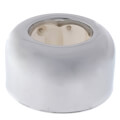
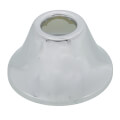
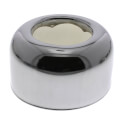
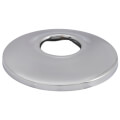
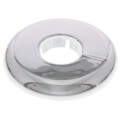
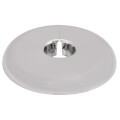
Escutcheons are decorative cover plates that conceal the hole where a pipe, valve stem, or supply line passes through a wall, floor, or ceiling. Plumbers and heating techs use them to finish off exposed penetrations around shutoff valves, radiator risers, and tub and shower valves without patching drywall or tile. A clean escutcheon install turns a rough cutout into a professional-looking finished surface in seconds.
Most escutcheons are stamped from chrome-plated steel or brass and snap or slide over the pipe, then hold in place with a friction fit, set screw, or spring clip. Picking the right one matters because it hides the imperfect hole a contractor had to cut to route the pipe, protects the wall or floor surface from wear where the pipe moves slightly, and gives the finished job a look that matches the rest of the fixture trim.
Subcategories
- Split Escutcheons: Split escutcheons have a hinge or slot cut through one side so they can be installed around a pipe that's already connected, without disconnecting anything. Contractors reach for these on service and retrofit jobs where the supply line or radiator riser is already in place. They typically snap shut and stay seated with spring tension or a locking tab.
- Solid Escutcheons: Solid, one-piece escutcheons slide onto the pipe before it's connected to a fixture or valve, so they're mainly used on new construction or when a line is being fully replaced. Because there's no seam, they give a cleaner finished look and a more secure fit than a split design. They're common on exposed supply risers and radiator connections.
- Deep and Offset Escutcheons: Deep escutcheons extend further from the wall or floor than a standard flat plate, which makes them useful when the pipe doesn't come through flush or when an oversized hole needs extra coverage. Offset versions shift the center hole away from the plate's middle to line up with a pipe that isn't centered in its opening. Both styles solve rough-in mismatches without recutting the wall or floor.
- Radiator and Baseboard Escutcheons: Radiator and baseboard escutcheons are sized and shaped specifically for the risers feeding cast iron radiators and baseboard heating elements, which often run at odd angles from the floor. They're built to sit flush against baseboard trim or flooring and commonly come in finishes that match radiator valve trim. Techs use them on hydronic heating retrofits and repairs where the original cover plate is missing or damaged.
Buying Guide
Choosing the right escutcheon starts with measuring the pipe's outside diameter and the size of the hole it passes through, since a plate that's too small won't cover the gap and one that's too large will look sloppy or fail to seat against the surface. Split escutcheons solve the most common headache on service calls: replacing a damaged cover plate without shutting down and disconnecting an active line. For any job where the pipe hasn't been connected yet, a solid one-piece escutcheon gives a tighter, more finished fit and is usually the cheaper option.
Material and finish should match the fixture or valve trim it's paired with. Chrome-plated steel is standard for exposed supply stops and works with most modern fixture finishes, while brass and other specialty finishes are worth stocking for higher-end bath remodels where trim consistency gets noticed. On radiator and baseboard jobs, look for an escutcheon rated to sit flush against the specific trim profile in the home, since standard round plates don't always match baseboard heating covers.
Depth matters more than it seems on the surface. A standard flat escutcheon works fine when the pipe comes through cleanly and close to the surface, but rough framing, thick tile, or an oversized cutout calls for a deep or offset escutcheon so the plate still seats properly and hides the full opening. Keeping a few different depths and hole sizes on the truck avoids a second trip when the rough-in doesn't match what was expected.
Frequently Asked Questions
Can an escutcheon be installed without disconnecting the pipe?
Yes, a split escutcheon is designed for exactly that. It opens along a hinge or slot so it can be closed around a pipe that's already connected, which is why it's the standard choice for service and repair work.
What's the difference between a split and solid escutcheon?
A split escutcheon has a seam so it can go on around an existing connection, while a solid escutcheon is one continuous piece that has to slide onto the pipe before it's hooked up. Solid escutcheons generally give a cleaner look since there's no visible seam.
How do I know what size escutcheon to buy?
Match the escutcheon's inner hole diameter to the outside diameter of the pipe it will cover, and make sure the plate's overall diameter is large enough to hide the rough opening in the wall, floor, or ceiling. Measuring both before ordering avoids a mismatch on site.
Do escutcheons need to match the valve or fixture finish?
It's not required for the plate to function, but matching the finish gives a more finished appearance, especially in bathrooms and other visible areas. Chrome is the most common finish and pairs with the majority of standard fixture trim.
When should a deep or offset escutcheon be used instead of a standard flat one?
Use a deep or offset escutcheon when the pipe doesn't come through the surface flush, when the cutout is larger than a standard plate can cover, or when the pipe isn't centered in its hole. Rough framing and thick flooring or finishing materials are the most common reasons these situations come up.
