




Filters
SORT
Product Availability –
Product Type –
Max Airflow (CFM) –
Length (Inches) –
Width (Inches) –
Speeds –
Duct Size –
Review Score –
 --%3E %3Csvg version='1.1' id='Fill' xmlns='http://www.w3.org/2000/svg' xmlns:xlink='http://www.w3.org/1999/xlink' x='0px' y='0px' viewBox='0 0 100 100' enable-background='new 0 0 100 100' xml:space='preserve'%3E %3Cpath fill='%23F15C02' d='M79.44,0.95H20.56C9.78,0.95,0.95,9.78,0.95,20.56v58.87c0,10.79,8.82,19.61,19.61,19.61h58.87 c10.79,0,19.61-8.83,19.61-19.61V20.56C99.05,9.78,90.22,0.95,79.44,0.95z M65.38,58.24l9.38,29.58L49.69,69.78L24.5,87.82 l9.34-29.6L8.8,39.6l30.73-0.17c0,0,6.98-19.61,10-28.93c0.54,1.36,9.88,29.1,9.88,29.1H91.2L65.38,58.24z'/%3E %3C/svg%3E)
 --%3E %3Csvg version='1.1' id='With-RB' xmlns='http://www.w3.org/2000/svg' xmlns:xlink='http://www.w3.org/1999/xlink' x='0px' y='0px' viewBox='0 0 100 100' enable-background='new 0 0 100 100' xml:space='preserve'%3E %3Cpath fill='%23FBC8B4' d='M79.44,0.95H20.56C9.78,0.95,0.95,9.78,0.95,20.56v58.87c0,10.79,8.82,19.61,19.61,19.61h58.87 c10.79,0,19.61-8.83,19.61-19.61V20.56C99.05,9.78,90.22,0.95,79.44,0.95z M65.38,58.24l9.38,29.58L49.69,69.78L24.5,87.82 l9.34-29.6L8.8,39.6l30.73-0.17c0,0,6.98-19.61,10-28.93c0.54,1.36,9.88,29.1,9.88,29.1H91.2L65.38,58.24z'/%3E %3C/svg%3E)
Price Range –
Fantech Energy Recovery Ventilators


 --%3E %3Csvg version='1.1' id='No-RB' xmlns='http://www.w3.org/2000/svg' xmlns:xlink='http://www.w3.org/1999/xlink' x='0px' y='0px' viewBox='0 0 100 100' enable-background='new 0 0 100 100' xml:space='preserve'%3E %3Cpath fill='%23CECECE' d='M79.44,0.95H20.56C9.78,0.95,0.95,9.78,0.95,20.56v58.87c0,10.79,8.82,19.61,19.61,19.61h58.87 c10.79,0,19.61-8.83,19.61-19.61V20.56C99.05,9.78,90.22,0.95,79.44,0.95z M65.38,58.24l9.38,29.58L49.69,69.78L24.5,87.82 l9.34-29.6L8.8,39.6l30.73-0.17c0,0,6.98-19.61,10-28.93c0.54,1.36,9.88,29.1,9.88,29.1H91.2L65.38,58.24z'/%3E %3C/svg%3E)

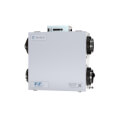

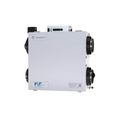


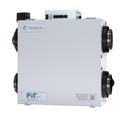
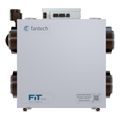

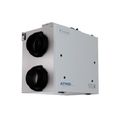
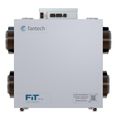
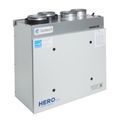
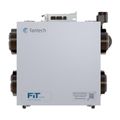
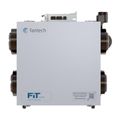
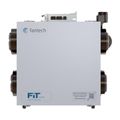
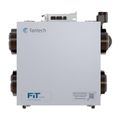
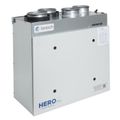
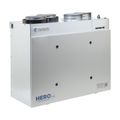
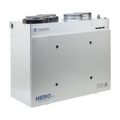


Fantech energy recovery ventilators bring fresh outdoor air into tightly sealed homes and light commercial buildings while exhausting stale indoor air, transferring heat and moisture between the two air streams along the way so the incoming air arrives closer to the indoor temperature and humidity level. This tempering effect reduces the load on the heating and cooling system compared to bringing in untreated outdoor air.
Contractors spec these units on newer, well-insulated builds where natural air leakage is too low to maintain healthy indoor air quality on its own, as well as on renovation projects tightening up an older building's envelope. Sizing the unit to the space's ventilation requirement, rather than to the HVAC system's tonnage, is what determines proper performance.
Subcategories
- Whole-House ERVs: Whole-house units handle continuous balanced ventilation for an entire home, typically ducted to multiple rooms. They're the standard choice on new construction or full renovations where a dedicated ventilation duct system is already planned.
- Single-Room ERVs: Single-room units serve one space, often a bedroom, bathroom, or addition, without tying into a whole-house duct system. They suit retrofit projects where running new ductwork throughout the building isn't practical.
- ERV Replacement Parts & Accessories: Filters, energy recovery cores, and control accessories keep an installed ERV running at its rated efficiency. Filters typically need periodic replacement, while the core itself has a much longer service interval.
Buying Guide
Sizing is the first decision when choosing from Fantech energy recovery ventilators, and it should be based on the building's ventilation requirement, generally driven by square footage, occupancy, and how tightly the envelope is sealed, rather than matched to the tonnage of the existing HVAC equipment. An undersized unit won't meet ventilation targets, while an oversized one adds unnecessary run time and energy use.
Whole-house versus single-room comes down to whether the project already has, or can support, a dedicated ventilation duct run to multiple spaces. New construction and major renovations generally favor a whole-house unit, while retrofits on an already-finished building often lean toward a single-room model to avoid extensive duct work.
Climate plays a role in core selection as well, since some cores are optimized more for sensible heat transfer and others balance both heat and moisture recovery, which matters more in humid climates where controlling incoming moisture is a bigger concern than in dry ones.
Once a Fantech energy recovery ventilator is installed, planning for accessible filter access and periodic core cleaning during the initial layout saves maintenance headaches later, since a unit buried behind finished ceiling or wall assemblies makes routine service far more difficult.
Frequently Asked Questions
How is a Fantech ERV different from a standard exhaust fan?
An ERV brings in fresh outdoor air while exhausting stale indoor air and transfers heat and moisture between the two streams. A standard exhaust fan only removes air without bringing in tempered replacement air.
How do I size an energy recovery ventilator for a project?
Sizing is based on the building's ventilation requirement, driven by square footage, occupancy, and envelope tightness, rather than on the HVAC system's tonnage.
When does a single-room ERV make more sense than a whole-house unit?
Single-room units suit retrofit projects where running new ductwork to multiple spaces isn't practical. Whole-house units fit better on new construction or full renovations with a planned duct system.
What maintenance does a Fantech ERV need after installation?
Filters need periodic replacement, and the energy recovery core benefits from occasional cleaning, though it has a much longer service interval than the filters.
Does climate affect which ERV core to choose?
Yes, some cores are optimized more for sensible heat transfer while others balance heat and moisture recovery together, which matters more in humid climates where moisture control is a bigger concern.
