



'/%3E%3C/svg%3E)
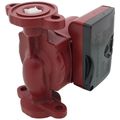
UPS15-58FC, 3-Speed Circulator Pump, 1/25 HP, 115 volt
 --%3E %3Csvg version='1.1' id='Fill' xmlns='http://www.w3.org/2000/svg' xmlns:xlink='http://www.w3.org/1999/xlink' x='0px' y='0px' viewBox='0 0 100 100' enable-background='new 0 0 100 100' xml:space='preserve'%3E %3Cpath fill='%23F15C02' d='M79.44,0.95H20.56C9.78,0.95,0.95,9.78,0.95,20.56v58.87c0,10.79,8.82,19.61,19.61,19.61h58.87 c10.79,0,19.61-8.83,19.61-19.61V20.56C99.05,9.78,90.22,0.95,79.44,0.95z M65.38,58.24l9.38,29.58L49.69,69.78L24.5,87.82 l9.34-29.6L8.8,39.6l30.73-0.17c0,0,6.98-19.61,10-28.93c0.54,1.36,9.88,29.1,9.88,29.1H91.2L65.38,58.24z'/%3E %3C/svg%3E)


MANUALS (3)
'/%3E%3C/svg%3E)
Product Highlights


Description
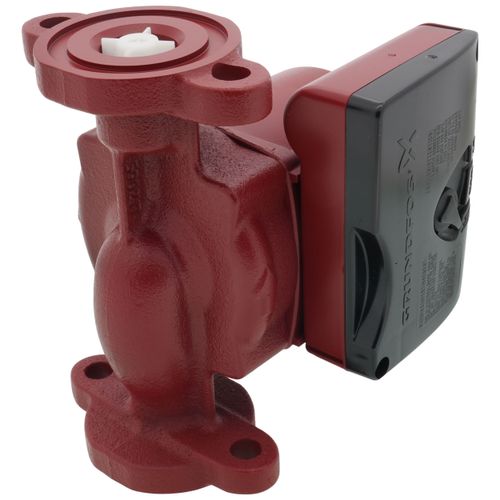
Grundfos UPS15-58FC 3-Speed Circulator Pump, 1/25 HP, 115 Volt
The Grundfos UPS15-58FC is a 3-speed cast iron circulator pump designed for residential and light commercial hydronic heating applications, including boilers, radiant floor heating, and hot water recirculation systems. This 1/25 HP, 115-volt pump features a maintenance-free canned rotor design with an integrated check valve and accepts multiple flange sizes (3/4", 1", 1-1/4", and 1-1/2"). The unit delivers flow rates from 0 to 17 GPM and operates across three selectable speeds for optimized performance.
Key Features & Benefits
- 3-Speed Motor: Adjustable speed settings allow optimization of flow rate and energy consumption to match system requirements.
- Canned Rotor Design: Integrates motor and pump into a single maintenance-free unit with no mechanical shaft seal, reducing leak risk and wear.
- Integral Check Valve: Built-in check valve prevents backflow when the pump is not operating, with removable design for applications requiring unrestricted flow.
- Cast Iron Construction: Corrosion-resistant impeller and durable cast iron housing ensure long-term reliability.
- Multi-Size Flange Compatibility: Accepts 3/4", 1", 1-1/4", and 1-1/2" flanged connections for flexible installation options.
- Compact Design: Space-saving dimensions enable installation in tight mechanical rooms and boiler areas.
- Low-Noise Operation: Designed for quiet residential environments during continuous operation.
- Flow Capacity: Delivers up to 17 GPM maximum flow rate on high speed setting.
- Head Range: Provides 0 to 19.5 feet of head depending on speed selection.
- Operating Temperature Range: Handles system temperatures from 36°F to 230°F.
- Maximum Pressure Rating: Rated for systems up to 145 PSI.
- Power Consumption: Draws 0.75 amps at 115 volts single phase, 60 Hz.
- Speed-Specific Performance: Speed 1 delivers 0-11 GPM, Speed 2 delivers 0-15 GPM, Speed 3 delivers 0-17.5 GPM (flow varies with head pressure).
- RPM Rating: Operates at 2450 RPM on high speed.
- Two-Pole Motor: 60 Hz, single-phase electrical design.
- Frequency: 60 Hz.
- Material: Cast Iron.
- Suitable for Zoning Applications
- Replaces Models: HMCIR01, 59896248, 59896178, 8056173, 59896155.
Compatibility & Requirements
Flanges must be purchased separately and matched to the specific pipe connection size in your system. The pump requires flange pairs sized for 3/4", 1", 1-1/4", or 1-1/2" connections depending on your piping configuration. Select flanges based on connection type: NPT threaded, sweat (solder), or press-fit connections are available. Installation should be performed by a qualified professional familiar with hydronic heating systems and local plumbing codes. System must be properly sized to ensure the pump's flow and head characteristics match the heating load and pipe friction losses. Verify that electrical service provides 115 volts AC, 60 Hz single-phase power. The pump shaft must be installed in a horizontal position, though piping can run vertically or horizontally. Confirm system operating pressure does not exceed 145 PSI and operating temperature remains between 36°F and 230°F. For systems with multiple zones, consider whether the integral check valve should remain installed or be removed to prevent flow restriction.
Installation & Care
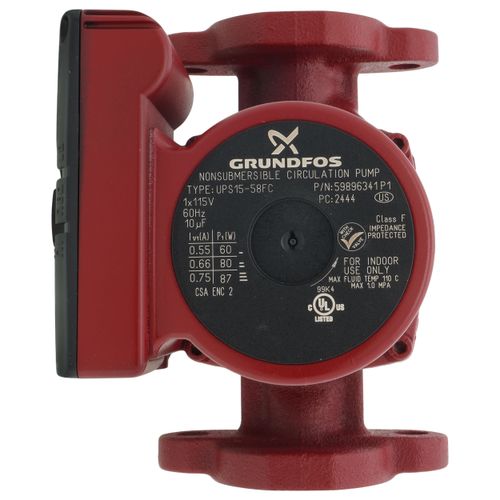
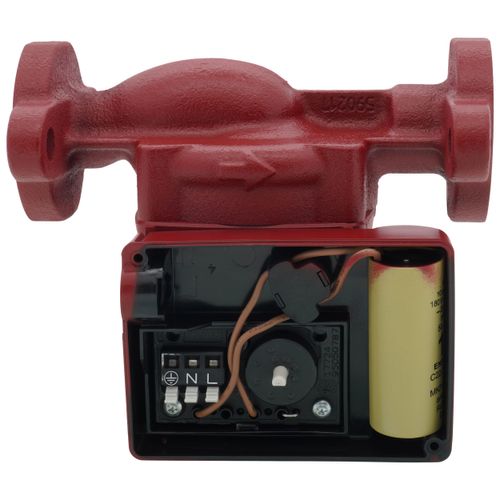
Shut off power and drain the system section where the pump will be installed. Mount the pump with the motor shaft in a horizontal orientation and the pump body positioned to allow the flow direction arrow on the housing to match system flow direction. Install flange pairs on inlet and outlet pipes, ensuring gaskets are properly seated. Bolt the pump to the flanges using the provided hardware, tightening nuts evenly in a crisscross pattern. If removing the check valve for unrestricted flow applications, break apart the plastic valve assembly and extract the core using needle-nose pliers, then remove the remaining retention ring from the casting groove. Confirm all electrical connections are de-energized, then wire the pump according to the wiring diagram on the motor housing. Refill the system and purge all air from the piping and pump body through system bleed valves. Restore power and select the initial speed setting. Monitor the system for several heating cycles and adjust speed up or down as needed to achieve proper circulation and even heat distribution. Check for leaks at flange connections within the first 24 hours of operation. Inspect the pump quarterly for unusual noise, vibration, or heat. Maintain proper system water treatment to prevent scale buildup and corrosion. The high speed setting (87 watts) draws approximately 10% more power than medium speed and is designed for continuous operation when higher flow rates are required. Maximum flow through 3/4" Type M copper tube is 6 GPM; exceeding this rate can erode the tube. Recommended flow is 1 to 4 GPM per zone. For unequal length zones, install a circuit balancing valve on the shorter zone and set flow between 1 to 4 GPM, then adjust pump speed for the second zone. Excessive noise in baseboards indicates high flow rates.
What's Included
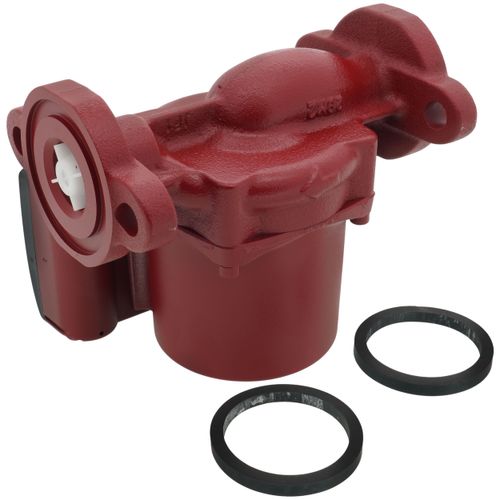
- UPS15-58FC circulator pump
- Square profile flange gaskets (standard)
- Mounting bolts and hardware for flange connection
Frequently Asked Questions
Q: Can I install this pump with the flow direction from top to bottom in a vertical pipe run?
A: Yes, the pump can be installed in vertical piping with flow from top to bottom or bottom to top, provided the motor shaft remains in a horizontal position. Pumping upward allows a constant gravity-fed supply to ensure the pump does not run dry, which can cause seal failure.
Q: Should I remove the check valve for my application?
A: If replacing a pump that did not have a check valve built in, you likely don't need it. Removing the check valve will give slightly more flow. Check valves prevent backflow; if backflow is not a concern, remove it. To remove, break apart the plastic valve assembly, extract the core with needle-nose pliers, and remove the retention ring from the groove. The pump operates efficiently with or without the check valve installed.
Specs
| Frequency: | 60 Hz 60 Hz 60 Hz |
|---|---|
| Amperage: | 0.75 |
| Application: | Zoning |
| Poles: | 2 |
| Material: | Cast Iron |
| Voltage: | 115V |
| Max Pressure (PSI): | 145 |
| Type: | 3-Speed Pump |
| Features: | Integral Check Valve |
| Horse Power: | 1/25 |
| Flow Range (GPM): | 0-17 |
| Max Flow (GPM): | 17 |
| Max Head (Ft): | 19.5 |
| Head Range (ft.): | 0-19.5 |
| Hertz: | 60 |
| Phase: | 1 |
| RPM: | 2450 |
| Temperature Range (F): | 36°F - 230°F |
| Connection Size: | 1-1/4" 1" 1-1/2" 3/4" |
| Connection Type: | Flanged x Flanged |

Questions?
Compare Similar Products
You May Also Need
3 Replacement Parts

Need help finding a replacement part?
Product Reviews
Most Liked Positive Review
Easy Out & Easy In with Exact Replacement Parts
Most Liked Negative Review
 --%3E %3Csvg version='1.1' id='With-RB' xmlns='http://www.w3.org/2000/svg' xmlns:xlink='http://www.w3.org/1999/xlink' x='0px' y='0px' viewBox='0 0 100 100' enable-background='new 0 0 100 100' xml:space='preserve'%3E %3Cpath fill='%23FBC8B4' d='M79.44,0.95H20.56C9.78,0.95,0.95,9.78,0.95,20.56v58.87c0,10.79,8.82,19.61,19.61,19.61h58.87 c10.79,0,19.61-8.83,19.61-19.61V20.56C99.05,9.78,90.22,0.95,79.44,0.95z M65.38,58.24l9.38,29.58L49.69,69.78L24.5,87.82 l9.34-29.6L8.8,39.6l30.73-0.17c0,0,6.98-19.61,10-28.93c0.54,1.36,9.88,29.1,9.88,29.1H91.2L65.38,58.24z'/%3E %3C/svg%3E)
Time will tell
Pump seems good, not impressed with plastic parts.
Would buy again
yes
yes
I will continue to buy from Supplyhouse.com
Great pump
good
Great delivery time
Great product
A solid little work horse
Product Q&A
64 QuestionsQ: What kind of warrenty does this product have?
Asked by Brian 13 years ago
Add your answer
3 years
The Grundfos circulators are designed for long life. I have a neighbor who has some that have been in use for many years. Here is the text from the included manual: /*Limited Warranty* UPS15-58 and UP15-42F circulator pumps manufactured by GRUNDFOS PUMPS CORPORATION (GRUNDFOS) are warranted to the original user only to be free of defects in material and workmanship for a period of 36 months from date of manufacture. GRUNDFOS' liability under this warranty shall be limited to repairing or replacing at GRUNDFOS' option, without charge, F.O.B. GRUNDFOS' factory or authorized service station, any UPS15-58 or UP15-42F circulator pump. GRUNDFOS will not be liable for any costs of removal, installation, transportation, or any other charges which may arise in connection with a warranty claim./
the ups15-58c has a warranty of 36 months to the original owner. covers material and workmanship of the pump. manufacture will either repair or replace defective pump. you will probably never need the warranty as this is a very good pump.
Q: I have this pump for baseboard zone heating system. The heat is working fine but since last few days it is making rattling noise.The noise level change with pump speed. Since pump is working fine, what could cause for this noise? Do I need to replace the pump or any parts?
Asked by rahman 13 years ago
Add your answer
Hi no you have some air trap in the pump you will need to purge the air in it and dovit soon because youbwill break the pump
I don't have an answer. This is the third winter for the pump in my home and it is quiet.
Hard to say from a distance. Could it be air in the lines? That's unlikely if you haven't opened the system and the pressure is maintaining at the recommended 12 PSI. If the pump is truly "rattling" there's a bad bearing or loose impeller. I'd monitor it and if it gets worse, fix it.
You could have air in the system.
hard to say. could be defective pump or some kind of vibration. also could be air in the system which sounds like a rattle when pump runs. has anything changed that would have let air into the system? try purging the line of air to see if that helps.
Try bleeding the system of air. Also, inspect your piping for loose supports, clamps etc. Can you locate or even pinpoint the location of the rattle? Ed Siemer Finish Right LLC
Sounds like its time for a new pump ,but I would make sure its not air locked and running dry.
the noise is usuaaly air in the system, however it can also be caused by verycold water hitting the hot boiler coils, this can ne rectified by lowerng boiler temperature, or installing a mising valve to mix some of the boiler water with the return water, thus raising the teemp of the input water to the boiler. This situation will arise in colder weater, and will be less prevalent in warme(less severe temps)
Q: I have a UPS15-58 FC PN:59896769 Are all UPS15-58 FC pumps the same as far as flange size etc? Under type mine says 1 PH
Asked by Steve 13 years ago
Add your answer
Yes the flanges are standard and will also fit Taco pumps as well as B&G pumps
Yes. Thank you!
What is important is, if replacing a pump already installed what is there now, as there may be something odd. In most instances flanges can be interchanged.
Look at the specs for this pump. 3/4" - 1 1/4" pipe can be adapted to it depending on the flange size you choose. If you are using 3/4" pipe get the 3/4" flange kit; 1" pipe use the 1" flange kit; etc.
I beleive so - the absoute best flange system is the Webstone isolator uniflange ball valve - they come in pairs.Item #50403 -- Tey facilitate removal of the pump without draing the boiler or losing a lot of fluid.
kind of a tricky question. all ups-58 pumps are the same as far as the flange. just order the flange out let according to your pipe size. 3/4 in. thru 1-1/2. the ph just means ( single phase). 120 volt single phase.
Q: Is this pump good for out door wood furnaces? My lines come from the outdoor furnace into the basement and are horzontal to the coil in my oil furncae.
Asked by no nickname 13 years ago
Add your answer
This pump can not be installed outdoors , it can be installed horizontal with some limitations that you will see on the instructions provided with the pump.
It will work fine as long as the pump is not exposex to the outside elements. Sent from my Galaxy S®III
Q: WILL THIS PUMP FIT INTO THE SPACE THAT IS CURRENTLY OCCUPIED BY A TACO 007 F5? ARE THE FLANGES COMPATABLE TO THE TACO FLANGES?
Asked by STEVE 13 years ago
Add your answer
Verified Reply- PexSupply StaffThis circulator has the same flange-to-flange dimensions as a Taco 007 and it works with the same flanges. Note that the direction of the motor would be different unless you have a rotated-flange 007.
Yes, this is a direct replacement for a Taco 007, and in my opinion, a much better pump. I replaced a Taco 007 with one of these in my dad's house because I needed a pump with a higher head pressure so the hot water would reach the baseboards on the second floor. It works great there. Mark
Q: Further to my previous question "can this pump be manually stopped": why the pump seems to have stopped if I turn the dial and let it stay between lo and med or between med and hi? I'm pretty sure the pump stopped. And if I turn it to any of lo/med/hi, the pump started to run again. Does it do it any harm if the speed is manually adjusted that way ?
Asked by z 14 years ago
Add your answer
Hello U won't harm the pump doing this but it may harm the switch and capacitor if done repeatedly Sent from my iPad
Shouldn't turn the dial well under load or power not good for the motor on the pump..
Q: Can the pump be manually stopped? It seems possible by turning the dial between lo and medium or between medium and high speed.
Asked by Zhong 14 years ago
Add your answer
en> The only way to manually stop this pump is to disconnect the power. I have about a dozen of these in my system. I placed simple switches on some of them that I wanted to be able to stop without shutting down the entire system.
Personally I would install a off/on switch. Or GFI, or Power strip with off / on switch. Since the Pump only runs on 120 volts AC. Hope this helps you!!.
Never tried this means to manually turn pump off and would not suggest it. Contacts inside pump speed change switch are of a "sliding" nature and might make weak contact causing a hot spot in the switch and a burn-out. You are best to simply unplug the pump or power off its control source.
It's best to have the pump on a switched circuit. Using the speed switch to shut off the pump is not advisable. It's not designed to turn on or off the pump.
Q: I would like to know how to manually turn the pump - UPS15-58 FC. There is no slot to put the screwdriver. The furnace/boiler that it is attached to was just in a flood courtesy of Sandy. I managed to get the pilot on, but the pump is not circulating - I heard humming though. I shut it to prevent burning it out. Any help would be appreciated. We're still cleaning up after Sandy and I would like to get the heat on. Thank you. ...Lorraine
Asked by Rainey 14 years ago
Add your answer
Verified Reply- PexSupply StaffThis circulator requires electricity to operate. It's possible that the control that signals the pump to come on was damaged in the storm.
More information would be helpful. Do you have a pressurized system?Sounds like you have airlock. I would try this first. Open the pressure release valve on the boiler and let the air out until water comes out. With the system off and cooled down you might have to do this a couple times until the air is bled out. These pumps don't actually push water so any air in the system causes the water to not circulate.
Wow! You can't do it without removing the motor from the volute. The pump is in a closed system and the storm shouldn't have gotten into the piping. However electrical on the outside could be water damaged. If you had 220V in the house wiring due to the storm (this could happen outside of your house on the power lines) you could have serious damage to electrical parts. A complete inspection by a professional is mandatory for any heating system that has been flooded.
Q: If the ups15-58fc pump is mated with the dielectric isolation valve set, 96806136, which comes with flat epdm seals, are both sets of gaskets used? i.e the flat seals and the ring gaskets that come with the pump.
Asked by Patrick 14 years ago
Add your answer
Verified Reply- PexSupply StaffThe key thing is that you don't use both, but the literature that comes with the isolation flanges advises that you use the diamond-shaped gaskets that come with the flanges.
I would use only one , the one that makes the best contact with both surfaces.
I would just use the large o-ring on the pump. It should compress adequately against the flat surface of the valve set. Hal Sent from my iPad
do not use more than one set of seals. use whatever you think will seal the best. one or the other, not both.
I used the flat ones but I would guess that you could use either or but not both. You will have a extra set. If you look at the matting surface on the pump it should be flat.
Q: I have a pump that has been working greatly for over 2 years. Recently it stopped working, the unit felt very hot and I pulled the plug. A few days later, I plugged it back in and It began to work immediately. Later that day, it stopped recirculating hot water. Is there something operational that needs to be fixed.? or must the unit be replaced ?
Asked by James 14 years ago
Add your answer
Verified Reply- PexSupply StaffYou can consider replacing the pump cartridge (part 599378), which is the only replaceable component in this pump. Although it's normal for a circulator pump to feel hot, it sounds like the unit may also be having an electrical or wiring issue.
It could be electrical, measure at the pump J-box when it is malfunctioning, for 115 Volts. More than likely something is stopping the rotor from turning. These pumps have very little starting torque, so it doesn't take much to prevent rotation. Take the pump apart by removing the four allen screws and gently knock the pump motor off the volute. Rotate the impeller by hand. It should rotate freely. Look for solder in the impeller. Gently pry the rotor off the motor housing where the gasket is (between the gasket and the stainless plate). Clean the rotor and inside of housing with CLR or lime remover, rinse and check rotation and re-assemble to volute. This pump is for a closed system not for water heater re-circulation.