



LifeBreath Heat Recovery Ventilators

 --%3E %3Csvg version='1.1' id='Fill' xmlns='http://www.w3.org/2000/svg' xmlns:xlink='http://www.w3.org/1999/xlink' x='0px' y='0px' viewBox='0 0 100 100' enable-background='new 0 0 100 100' xml:space='preserve'%3E %3Cpath fill='%23F15C02' d='M79.44,0.95H20.56C9.78,0.95,0.95,9.78,0.95,20.56v58.87c0,10.79,8.82,19.61,19.61,19.61h58.87 c10.79,0,19.61-8.83,19.61-19.61V20.56C99.05,9.78,90.22,0.95,79.44,0.95z M65.38,58.24l9.38,29.58L49.69,69.78L24.5,87.82 l9.34-29.6L8.8,39.6l30.73-0.17c0,0,6.98-19.61,10-28.93c0.54,1.36,9.88,29.1,9.88,29.1H91.2L65.38,58.24z'/%3E %3C/svg%3E)
 --%3E %3Csvg version='1.1' id='Half' xmlns='http://www.w3.org/2000/svg' xmlns:xlink='http://www.w3.org/1999/xlink' x='0px' y='0px' viewBox='0 0 100 100' enable-background='new 0 0 100 100' xml:space='preserve'%3E %3Cg%3E %3Cpath fill='%23F15C02' d='M30.05,70.23l3.79-12.01L8.8,39.6l30.73-0.17c0,0,6.98-19.61,10-28.93c0.54,1.36,9.88,29.1,9.88,29.1h1.58 L93.71,7.18c-3.58-3.82-8.66-6.23-14.28-6.23H20.56C9.78,0.95,0.95,9.78,0.95,20.56v58.87c0,5.41,2.22,10.32,5.79,13.88 L30.05,70.23z'/%3E %3C/g%3E %3Cpath fill='%23FBC8B4' d='M93.71,7.18L60.98,39.6H91.2L65.38,58.24l9.38,29.58L49.69,69.78L24.5,87.82l5.55-17.59L6.75,93.32 c3.55,3.54,8.44,5.73,13.82,5.73h58.87c10.79,0,19.61-8.83,19.61-19.61V20.56C99.05,15.4,97.01,10.69,93.71,7.18z'/%3E %3C/svg%3E)
 --%3E %3Csvg version='1.1' id='No-RB' xmlns='http://www.w3.org/2000/svg' xmlns:xlink='http://www.w3.org/1999/xlink' x='0px' y='0px' viewBox='0 0 100 100' enable-background='new 0 0 100 100' xml:space='preserve'%3E %3Cpath fill='%23CECECE' d='M79.44,0.95H20.56C9.78,0.95,0.95,9.78,0.95,20.56v58.87c0,10.79,8.82,19.61,19.61,19.61h58.87 c10.79,0,19.61-8.83,19.61-19.61V20.56C99.05,9.78,90.22,0.95,79.44,0.95z M65.38,58.24l9.38,29.58L49.69,69.78L24.5,87.82 l9.34-29.6L8.8,39.6l30.73-0.17c0,0,6.98-19.61,10-28.93c0.54,1.36,9.88,29.1,9.88,29.1H91.2L65.38,58.24z'/%3E %3C/svg%3E)
 --%3E %3Csvg version='1.1' id='With-RB' xmlns='http://www.w3.org/2000/svg' xmlns:xlink='http://www.w3.org/1999/xlink' x='0px' y='0px' viewBox='0 0 100 100' enable-background='new 0 0 100 100' xml:space='preserve'%3E %3Cpath fill='%23FBC8B4' d='M79.44,0.95H20.56C9.78,0.95,0.95,9.78,0.95,20.56v58.87c0,10.79,8.82,19.61,19.61,19.61h58.87 c10.79,0,19.61-8.83,19.61-19.61V20.56C99.05,9.78,90.22,0.95,79.44,0.95z M65.38,58.24l9.38,29.58L49.69,69.78L24.5,87.82 l9.34-29.6L8.8,39.6l30.73-0.17c0,0,6.98-19.61,10-28.93c0.54,1.36,9.88,29.1,9.88,29.1H91.2L65.38,58.24z'/%3E %3C/svg%3E)

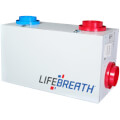
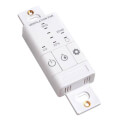
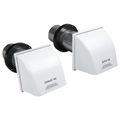
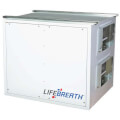
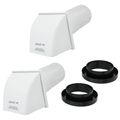
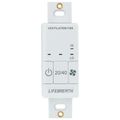
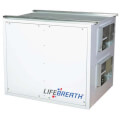
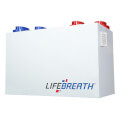
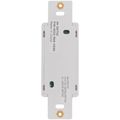
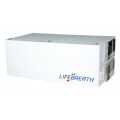
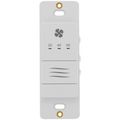
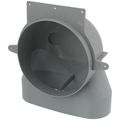
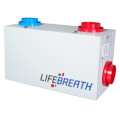
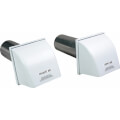

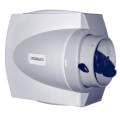
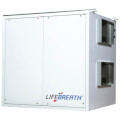



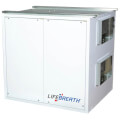

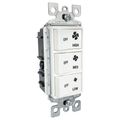
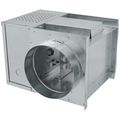
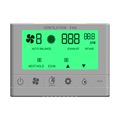

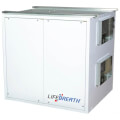
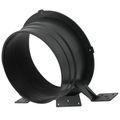
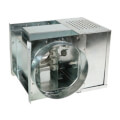
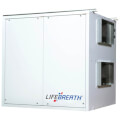
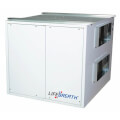
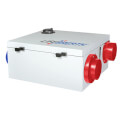

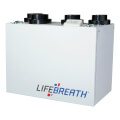
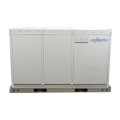
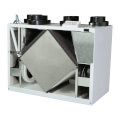

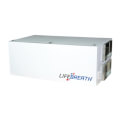
LifeBreath heat recovery ventilators bring fresh outdoor air into a home or light commercial building while pulling stale indoor air out, exchanging heat between the two airstreams along the way. LifeBreath is manufactured by Airia Brands, which has been part of the Zehnder Group since February 2022 and builds its ventilation equipment in an ISO 9001 certified facility. Tightly sealed, energy-efficient buildings trap moisture, odors, and airborne pollutants indoors, and a heat recovery ventilator is the mechanism that clears that air without dumping conditioned heat outside with it. Contractors spec these units on new construction and retrofit indoor air quality jobs where a homeowner or building owner wants continuous fresh air without a spike in heating or cooling costs. Because the incoming and outgoing airstreams cross paths inside a core rather than mixing, the system recovers a meaningful share of the energy that would otherwise be lost through simple exhaust-only ventilation. That balance of air quality and energy performance is why HRVs have become a standard line item on tighter building envelopes.
Subcategories
- Residential HRV Units: Residential heat recovery ventilators are sized for single-family homes and are the most commonly specified units in this category. Installers typically pair them with a home's existing ductwork or run dedicated fresh-air and stale-air lines to a central unit. Homeowners and remodelers turn to these when a house is tight enough that natural air leakage no longer provides adequate fresh air. LifeBreath offers multiple airflow capacities within this line so a contractor can match the unit to the square footage and occupancy of the home.
- Residential ERV Units: Energy recovery ventilators work like HRVs but also transfer some humidity between the incoming and outgoing airstreams, not just heat. Contractors in humid climates often prefer an ERV over an HRV so a home does not become overly dry in winter or overly humid in summer. Homeowners with allergy or asthma concerns also lean toward this option because it keeps ventilation running without swinging indoor humidity levels. The unit still exhausts stale air and pollutants while bringing in fresh outdoor air on a continuous basis.
- Commercial HRV and ERV Units: Commercial-duty units serve light commercial spaces such as offices, schools, and multi-family common areas that need higher airflow than a single residential unit can deliver. Facility managers and mechanical contractors specify these where code requires a minimum ventilation rate tied to occupancy. Built for continuous duty cycles, they are designed to run for longer stretches than a typical residential unit. Multiple units are often installed together to cover larger buildings.
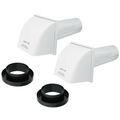
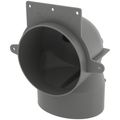
- Replacement Cores and Accessories: Replacement cores, filters, and mounting accessories keep an existing LifeBreath ventilator running at its rated efficiency as it ages. Service technicians replace the core when airflow drops or when a unit has been in service long enough that its heat exchange surfaces are no longer performing efficiently. Property managers and homeowners use filter accessories to protect the core between service visits. Keeping these parts in stock lets a contractor complete a service call in a single trip.
Buying Guide
Choosing between the residential and commercial lines starts with the space being served. A single-family home rarely needs more airflow than a residential unit provides, while a multi-family building or school needs the sustained duty cycle of a commercial model. Once building type is settled, the next decision is HRV versus ERV, and that comes down to climate and humidity control goals rather than raw airflow.
Contractors working in cold, dry climates often default to an HRV because there is less concern about over-drying indoor air in winter. In humid or mixed climates, an ERV's ability to moderate humidity transfer between airstreams tends to keep occupants more comfortable year-round and can reduce the load on a separate dehumidification system.
Sizing matters as much as unit type. Undersizing a LifeBreath heat recovery ventilator leaves a home under-ventilated even though the equipment is technically installed and running, while oversizing adds unnecessary equipment and installation cost. Ductwork layout, occupancy, and square footage all factor into the airflow calculation, and that calculation should happen before a model is chosen rather than after.
Access for future service is also worth planning at installation. A unit tucked into a hard-to-reach attic or crawlspace makes routine filter changes and core replacement a bigger job than it needs to be, so leaving a clear service path pays off over the life of the equipment.
Finally, confirm the unit integrates with any existing ductwork or controls before finalizing a purchase. Retrofits in particular benefit from matching airflow capacity to what the existing duct system can actually handle, since a mismatch can undercut the efficiency gains the ventilator is meant to deliver.
Frequently Asked Questions
What is the difference between an HRV and an ERV?
An HRV transfers heat between the incoming and outgoing airstreams, while an ERV transfers both heat and a portion of humidity. The choice usually comes down to climate and how much humidity control the space needs.
Do I need a heat recovery ventilator in a newly built home?
Newer homes are often built tight enough that natural air leakage cannot supply enough fresh air on its own. A ventilator brings in fresh air on a controlled schedule without letting conditioned air escape uncontrolled.
How often does the core need to be replaced?
Service life depends on usage and filter maintenance, but a technician can tell during a routine inspection whether airflow and heat exchange have dropped enough to warrant a core replacement.
Can one unit serve a whole multi-family building?
Commercial-duty units handle higher airflow than residential models, but larger buildings typically need multiple units working together rather than one unit covering the entire structure.
Will installing a ventilator increase heating costs?
A heat recovery ventilator is designed to recover a share of the energy in outgoing air before it leaves the building, which keeps the added heating and cooling load lower than simple exhaust-only ventilation.
