




Filters
SORT
Product Availability –
Flow Rate (GPH) –
Review Score –
 --%3E %3Csvg version='1.1' id='Fill' xmlns='http://www.w3.org/2000/svg' xmlns:xlink='http://www.w3.org/1999/xlink' x='0px' y='0px' viewBox='0 0 100 100' enable-background='new 0 0 100 100' xml:space='preserve'%3E %3Cpath fill='%23F15C02' d='M79.44,0.95H20.56C9.78,0.95,0.95,9.78,0.95,20.56v58.87c0,10.79,8.82,19.61,19.61,19.61h58.87 c10.79,0,19.61-8.83,19.61-19.61V20.56C99.05,9.78,90.22,0.95,79.44,0.95z M65.38,58.24l9.38,29.58L49.69,69.78L24.5,87.82 l9.34-29.6L8.8,39.6l30.73-0.17c0,0,6.98-19.61,10-28.93c0.54,1.36,9.88,29.1,9.88,29.1H91.2L65.38,58.24z'/%3E %3C/svg%3E)
 --%3E %3Csvg version='1.1' id='With-RB' xmlns='http://www.w3.org/2000/svg' xmlns:xlink='http://www.w3.org/1999/xlink' x='0px' y='0px' viewBox='0 0 100 100' enable-background='new 0 0 100 100' xml:space='preserve'%3E %3Cpath fill='%23FBC8B4' d='M79.44,0.95H20.56C9.78,0.95,0.95,9.78,0.95,20.56v58.87c0,10.79,8.82,19.61,19.61,19.61h58.87 c10.79,0,19.61-8.83,19.61-19.61V20.56C99.05,9.78,90.22,0.95,79.44,0.95z M65.38,58.24l9.38,29.58L49.69,69.78L24.5,87.82 l9.34-29.6L8.8,39.6l30.73-0.17c0,0,6.98-19.61,10-28.93c0.54,1.36,9.88,29.1,9.88,29.1H91.2L65.38,58.24z'/%3E %3C/svg%3E)
Price Range –
Suntec Oil Pumps



 --%3E %3Csvg version='1.1' id='Half' xmlns='http://www.w3.org/2000/svg' xmlns:xlink='http://www.w3.org/1999/xlink' x='0px' y='0px' viewBox='0 0 100 100' enable-background='new 0 0 100 100' xml:space='preserve'%3E %3Cg%3E %3Cpath fill='%23F15C02' d='M30.05,70.23l3.79-12.01L8.8,39.6l30.73-0.17c0,0,6.98-19.61,10-28.93c0.54,1.36,9.88,29.1,9.88,29.1h1.58 L93.71,7.18c-3.58-3.82-8.66-6.23-14.28-6.23H20.56C9.78,0.95,0.95,9.78,0.95,20.56v58.87c0,5.41,2.22,10.32,5.79,13.88 L30.05,70.23z'/%3E %3C/g%3E %3Cpath fill='%23FBC8B4' d='M93.71,7.18L60.98,39.6H91.2L65.38,58.24l9.38,29.58L49.69,69.78L24.5,87.82l5.55-17.59L6.75,93.32 c3.55,3.54,8.44,5.73,13.82,5.73h58.87c10.79,0,19.61-8.83,19.61-19.61V20.56C99.05,15.4,97.01,10.69,93.71,7.18z'/%3E %3C/svg%3E)

 --%3E %3Csvg version='1.1' id='No-RB' xmlns='http://www.w3.org/2000/svg' xmlns:xlink='http://www.w3.org/1999/xlink' x='0px' y='0px' viewBox='0 0 100 100' enable-background='new 0 0 100 100' xml:space='preserve'%3E %3Cpath fill='%23CECECE' d='M79.44,0.95H20.56C9.78,0.95,0.95,9.78,0.95,20.56v58.87c0,10.79,8.82,19.61,19.61,19.61h58.87 c10.79,0,19.61-8.83,19.61-19.61V20.56C99.05,9.78,90.22,0.95,79.44,0.95z M65.38,58.24l9.38,29.58L49.69,69.78L24.5,87.82 l9.34-29.6L8.8,39.6l30.73-0.17c0,0,6.98-19.61,10-28.93c0.54,1.36,9.88,29.1,9.88,29.1H91.2L65.38,58.24z'/%3E %3C/svg%3E)
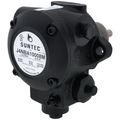
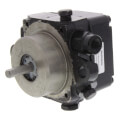

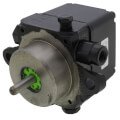
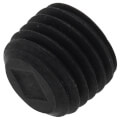
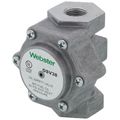
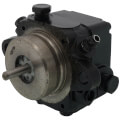
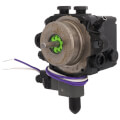
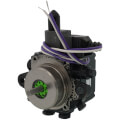

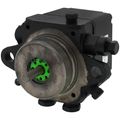
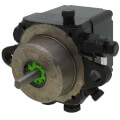
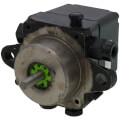
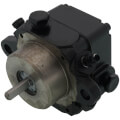
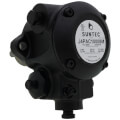
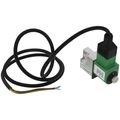
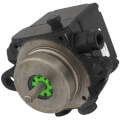
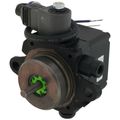
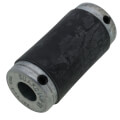
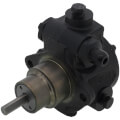
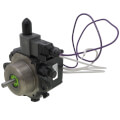
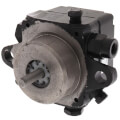
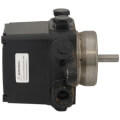
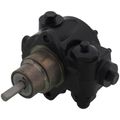

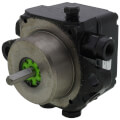
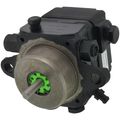

Suntec oil pumps are gear-driven fuel pumps that supply and pressurize heating oil for residential and commercial oil burners. Suntec manufactures these pumps at facilities in France and in Glasgow, Kentucky, producing gear pump models built for domestic heating applications as well as industrial process heating and other fluid-handling uses. A failing oil pump typically shows up as burner short-cycling, a loss of nozzle pressure, or a burner that won't establish flame at startup, and swapping the pump is usually faster than attempting a field rebuild. Because Suntec produces a wide range of pump references built for different burner manufacturers and flow rates, matching the replacement pump to the burner's original specification keeps nozzle pressure and fuel delivery within the appliance's rated performance. Technicians servicing oil-fired equipment keep common Suntec pump models on hand since burner downtime during heating season creates urgency that a same-visit pump swap can resolve.
Subcategories
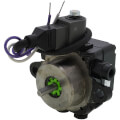
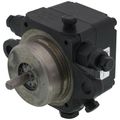
- Single-Stage Oil Pumps: Single-stage oil pumps use one gear set to draw fuel from the tank and pressurize it for the nozzle, and they're the common choice for residential oil burners with shorter supply line runs. Technicians select a single-stage pump when the oil tank sits close to the burner and gravity or a simple one-pipe system can deliver enough fuel without needing extra lift. Matching pump pressure rating to the burner's nozzle GPH keeps the flame properly sized for the appliance's rated output. Single-stage pumps are typically the more economical and straightforward option to service on routine burner maintenance calls.
- Two-Stage Oil Pumps: Two-stage oil pumps add a second pumping stage to generate stronger suction, which lets the pump pull fuel from a tank located farther away or below the burner's elevation. Two-pipe systems, which use a separate return line to carry excess fuel back to the tank, commonly rely on this pump configuration. Technicians choose two-stage pumps for longer supply runs or tanks in below-grade locations where a single-stage pump can't generate enough lift. Confirming the supply line length and elevation change before ordering avoids installing a pump that isn't matched to the job's fuel delivery needs.
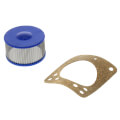
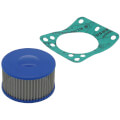
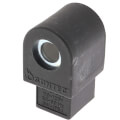
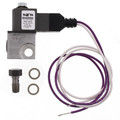
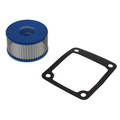
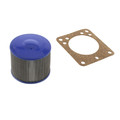
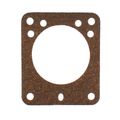
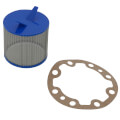
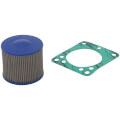
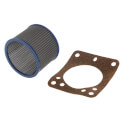
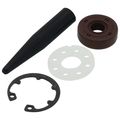
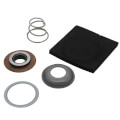
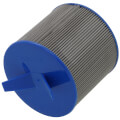
- Oil Pump Repair Kits and Accessories: Repair kits and accessories cover the seals, strainers, and fittings that support a Suntec oil pump without replacing the entire unit. A clogged strainer is a common cause of reduced fuel pressure that gets mistaken for pump failure, so checking and replacing the strainer first can save an unnecessary pump swap. Seal kits address minor fuel weeping at the shaft seal, which if left unaddressed can lead to a bigger leak over time. Keeping accessory parts on hand alongside full replacement pumps covers both quick fixes and full pump swaps on the same service call.
Buying Guide
Start by confirming the burner manufacturer and model, since Suntec oil pumps are built across a wide range of references matched to specific burners rather than sold as one universal part. The pump's model number is typically stamped on the pump body itself, and matching that number against the parts catalog is the most reliable way to order the correct replacement.
Next, determine whether the installation uses a one-pipe or two-pipe fuel supply system, since a two-pipe system with a return line to the tank generally pairs with a two-stage pump, while a simpler one-pipe gravity-fed system typically uses a single-stage pump. Measure the actual supply line length and any elevation change between the tank and the burner, since a tank located below grade or farther from the burner may need the added suction of a two-stage Suntec oil pump to maintain proper fuel delivery.
Before assuming a pump has failed, check the strainer and fuel filter for clogging, since restricted flow from a dirty strainer produces similar symptoms to a worn pump and is a much faster fix. Confirm the pump's pressure rating matches the burner nozzle's GPH requirement, since mismatched pressure results in an improperly sized flame and inefficient combustion. Keep repair kit components such as seals and strainers on hand alongside full pump replacements, since a service call in the middle of heating season often needs the flexibility to handle either fix on the same visit.
Frequently Asked Questions
What are common signs that a Suntec oil pump needs replacement?
Burner short-cycling, a drop in nozzle pressure, or a burner that fails to establish flame at startup are common signs of a failing pump, and replacing the pump is usually faster than attempting a field repair.
What's the difference between a single-stage and two-stage oil pump?
A single-stage pump uses one gear set and works well for burners with a short supply line, while a two-stage pump adds a second pumping stage for stronger suction on longer supply runs or tanks located below the burner's elevation.
Can a clogged strainer be mistaken for pump failure?
Yes, a clogged strainer restricts fuel flow and can cause the same low-pressure symptoms as a failing pump, so checking and replacing the strainer first can rule out a simpler fix before swapping the entire pump.
Where does Suntec manufacture its oil pumps?
Suntec operates manufacturing facilities in France and in Glasgow, Kentucky, producing gear pump products for domestic heating along with other fluid-handling applications.
Does every Suntec pump fit any oil burner?
No, Suntec produces a wide range of pump references built for different burner manufacturers and flow rates, so the replacement pump needs to match the burner's original specification to keep nozzle pressure within its rated range.
