




Filters
SORT
Product Availability –
Brand –
Product Type –
Size –
Torque –
Review Score –
 --%3E %3Csvg version='1.1' id='Fill' xmlns='http://www.w3.org/2000/svg' xmlns:xlink='http://www.w3.org/1999/xlink' x='0px' y='0px' viewBox='0 0 100 100' enable-background='new 0 0 100 100' xml:space='preserve'%3E %3Cpath fill='%23F15C02' d='M79.44,0.95H20.56C9.78,0.95,0.95,9.78,0.95,20.56v58.87c0,10.79,8.82,19.61,19.61,19.61h58.87 c10.79,0,19.61-8.83,19.61-19.61V20.56C99.05,9.78,90.22,0.95,79.44,0.95z M65.38,58.24l9.38,29.58L49.69,69.78L24.5,87.82 l9.34-29.6L8.8,39.6l30.73-0.17c0,0,6.98-19.61,10-28.93c0.54,1.36,9.88,29.1,9.88,29.1H91.2L65.38,58.24z'/%3E %3C/svg%3E)
 --%3E %3Csvg version='1.1' id='With-RB' xmlns='http://www.w3.org/2000/svg' xmlns:xlink='http://www.w3.org/1999/xlink' x='0px' y='0px' viewBox='0 0 100 100' enable-background='new 0 0 100 100' xml:space='preserve'%3E %3Cpath fill='%23FBC8B4' d='M79.44,0.95H20.56C9.78,0.95,0.95,9.78,0.95,20.56v58.87c0,10.79,8.82,19.61,19.61,19.61h58.87 c10.79,0,19.61-8.83,19.61-19.61V20.56C99.05,9.78,90.22,0.95,79.44,0.95z M65.38,58.24l9.38,29.58L49.69,69.78L24.5,87.82 l9.34-29.6L8.8,39.6l30.73-0.17c0,0,6.98-19.61,10-28.93c0.54,1.36,9.88,29.1,9.88,29.1H91.2L65.38,58.24z'/%3E %3C/svg%3E)
Price Range –
Torque Wrenches





 --%3E %3Csvg version='1.1' id='No-RB' xmlns='http://www.w3.org/2000/svg' xmlns:xlink='http://www.w3.org/1999/xlink' x='0px' y='0px' viewBox='0 0 100 100' enable-background='new 0 0 100 100' xml:space='preserve'%3E %3Cpath fill='%23CECECE' d='M79.44,0.95H20.56C9.78,0.95,0.95,9.78,0.95,20.56v58.87c0,10.79,8.82,19.61,19.61,19.61h58.87 c10.79,0,19.61-8.83,19.61-19.61V20.56C99.05,9.78,90.22,0.95,79.44,0.95z M65.38,58.24l9.38,29.58L49.69,69.78L24.5,87.82 l9.34-29.6L8.8,39.6l30.73-0.17c0,0,6.98-19.61,10-28.93c0.54,1.36,9.88,29.1,9.88,29.1H91.2L65.38,58.24z'/%3E %3C/svg%3E)


 --%3E %3Csvg version='1.1' id='Half' xmlns='http://www.w3.org/2000/svg' xmlns:xlink='http://www.w3.org/1999/xlink' x='0px' y='0px' viewBox='0 0 100 100' enable-background='new 0 0 100 100' xml:space='preserve'%3E %3Cg%3E %3Cpath fill='%23F15C02' d='M30.05,70.23l3.79-12.01L8.8,39.6l30.73-0.17c0,0,6.98-19.61,10-28.93c0.54,1.36,9.88,29.1,9.88,29.1h1.58 L93.71,7.18c-3.58-3.82-8.66-6.23-14.28-6.23H20.56C9.78,0.95,0.95,9.78,0.95,20.56v58.87c0,5.41,2.22,10.32,5.79,13.88 L30.05,70.23z'/%3E %3C/g%3E %3Cpath fill='%23FBC8B4' d='M93.71,7.18L60.98,39.6H91.2L65.38,58.24l9.38,29.58L49.69,69.78L24.5,87.82l5.55-17.59L6.75,93.32 c3.55,3.54,8.44,5.73,13.82,5.73h58.87c10.79,0,19.61-8.83,19.61-19.61V20.56C99.05,15.4,97.01,10.69,93.71,7.18z'/%3E %3C/svg%3E)





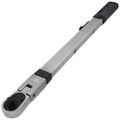


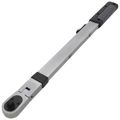


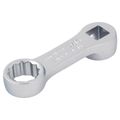
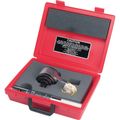


Torque Wrenches are hand tools that apply a measured amount of rotational force to a fastener so it lands within a manufacturer's specified range instead of guesswork. The category covers micrometer-style wrenches like a 3/8-inch drive model with a 10 to 80 foot-pound range, along with digital wrenches that display and log torque values in real time. Plumbers and HVAC techs use them on flare fittings, mini-split line sets, and refrigerant connections where over-tightening can crack a fitting or cause a slow leak, and under-tightening risks a failed joint later. A torque wrench set to the OEM-specified value takes the guesswork out of hand-tightening a fitting that would otherwise depend on feel alone. Getting the torque right the first time matters most on service calls, since a callback for a leaking flare connection costs more time than setting the wrench correctly during the original install.
Subcategories
- Micrometer (Click-Style) Torque Wrenches: Micrometer torque wrenches use an adjustable scale and an internal click mechanism to signal when a fastener reaches the set torque value, with models like a 3/8-inch drive wrench covering a 10 to 80 foot-pound range. Techs use them for flare fittings, bolts, and general HVAC or plumbing connections where a specific torque spec needs to be hit by feel and sound. Most models work in both forward and reverse directions for tightening and loosening.
- Digital Torque Wrenches: Digital torque wrenches display the applied torque value on a screen and often store multiple preset values for repeat jobs, such as a model that holds five factory and five user-defined presets for mini-split installations. Some digital models add a motor that drives the fastener and then measures torque in the same tool, cutting install time on repetitive connections. Techs use them when a job calls for logging or verifying torque values rather than just hitting a click.
- Multi-Head Torque Wrench Sets: Multi-head torque wrench sets pair one torque wrench body with several interchangeable jaw or crowfoot heads sized for different fitting diameters, such as a set covering multiple SAE sizes from 5/8-inch up to 1-5/16-inch. HVAC techs use these sets on refrigerant line connections where fitting sizes vary from one job to the next. Carrying one wrench body with swappable heads cuts down on the number of separate tools needed in a service bag.
Buying Guide
Start with the torque range the job calls for, since a wrench built for high-torque bolt work won't read accurately at the low end needed for a flare fitting, and the reverse is also true. HVAC and refrigeration work on mini-splits and line sets typically falls in a lower range, often under 100 foot-pounds, while structural or larger pipe fitting work needs a wrench rated for a higher range. Matching the tool's range to the fastener spec keeps readings accurate instead of guessing at the low or high end of a wrench's capability.
Accuracy and repeatability matter next, especially for techs who set the same torque value on every job. A digital model with stored presets removes the step of resetting a scale by hand each time, which speeds up repetitive work like mini-split installs. A basic micrometer-style wrench still gets the job done for techs who only need to hit a handful of different values across a workday.
Drive size and head compatibility round out the decision. Torque Wrenches come in different drive sizes and, for some models, interchangeable heads sized for specific fitting diameters, so checking the drive size against existing sockets and the head style against the fittings being torqued avoids buying a tool that doesn't fit the job. A wrench that covers forward and reverse torque also handles both tightening and loosening tasks with one tool instead of two.
Frequently Asked Questions
What torque range is needed for mini-split line set connections?
Mini-split flare fittings typically need a torque wrench covering a lower range, often under 100 foot-pounds, since over-tightening can crack the flare and under-tightening risks a leak. A digital torque wrench with stored presets works well for hitting the exact OEM value on repeat installs. Checking the equipment manufacturer's torque spec before setting the wrench confirms the right value for each fitting size.
What's the difference between a micrometer and a digital torque wrench?
A micrometer torque wrench uses an adjustable scale and a click mechanism to signal when the set torque is reached, while a digital torque wrench displays the value on a screen and can store multiple presets. Digital models suit repetitive jobs where the same torque value gets set often. Micrometer-style wrenches remain a straightforward option for techs who only need a handful of different torque settings.
Can one torque wrench cover multiple fitting sizes?
A multi-head torque wrench set pairs one wrench body with several interchangeable jaw or crowfoot heads sized for different fitting diameters, covering a range of sizes with a single tool. HVAC techs use these sets on refrigerant line work where fitting sizes vary job to job. Carrying one body with swappable heads cuts down on the number of separate wrenches needed in a service bag.
Do torque wrenches work for both tightening and loosening?
Many micrometer-style torque wrenches operate in forward and reverse, handling both tightening and loosening tasks with the same tool. Torque Wrenches used only for tightening are typically simpler, single-direction models. Checking a model's spec for reversibility before buying avoids needing a second wrench for loosening work.
How often should a torque wrench be checked for accuracy?
Torque wrenches drift out of calibration with heavy daily use, so periodic checking against a known reference keeps readings reliable, especially on wrenches used for critical connections like refrigerant fittings. Digital models with logging features make it easier to spot a wrench that's reading inconsistently over time. Replacing or recalibrating a wrench that's out of spec avoids under- or over-torqued fittings on future jobs.
