




Filters
SORT
Product Availability –
Product Type –
Control –
Voltage –
Review Score –
 --%3E %3Csvg version='1.1' id='Fill' xmlns='http://www.w3.org/2000/svg' xmlns:xlink='http://www.w3.org/1999/xlink' x='0px' y='0px' viewBox='0 0 100 100' enable-background='new 0 0 100 100' xml:space='preserve'%3E %3Cpath fill='%23F15C02' d='M79.44,0.95H20.56C9.78,0.95,0.95,9.78,0.95,20.56v58.87c0,10.79,8.82,19.61,19.61,19.61h58.87 c10.79,0,19.61-8.83,19.61-19.61V20.56C99.05,9.78,90.22,0.95,79.44,0.95z M65.38,58.24l9.38,29.58L49.69,69.78L24.5,87.82 l9.34-29.6L8.8,39.6l30.73-0.17c0,0,6.98-19.61,10-28.93c0.54,1.36,9.88,29.1,9.88,29.1H91.2L65.38,58.24z'/%3E %3C/svg%3E)
 --%3E %3Csvg version='1.1' id='With-RB' xmlns='http://www.w3.org/2000/svg' xmlns:xlink='http://www.w3.org/1999/xlink' x='0px' y='0px' viewBox='0 0 100 100' enable-background='new 0 0 100 100' xml:space='preserve'%3E %3Cpath fill='%23FBC8B4' d='M79.44,0.95H20.56C9.78,0.95,0.95,9.78,0.95,20.56v58.87c0,10.79,8.82,19.61,19.61,19.61h58.87 c10.79,0,19.61-8.83,19.61-19.61V20.56C99.05,9.78,90.22,0.95,79.44,0.95z M65.38,58.24l9.38,29.58L49.69,69.78L24.5,87.82 l9.34-29.6L8.8,39.6l30.73-0.17c0,0,6.98-19.61,10-28.93c0.54,1.36,9.88,29.1,9.88,29.1H91.2L65.38,58.24z'/%3E %3C/svg%3E)
Price Range –
Wall Controls





 --%3E %3Csvg version='1.1' id='Half' xmlns='http://www.w3.org/2000/svg' xmlns:xlink='http://www.w3.org/1999/xlink' x='0px' y='0px' viewBox='0 0 100 100' enable-background='new 0 0 100 100' xml:space='preserve'%3E %3Cg%3E %3Cpath fill='%23F15C02' d='M30.05,70.23l3.79-12.01L8.8,39.6l30.73-0.17c0,0,6.98-19.61,10-28.93c0.54,1.36,9.88,29.1,9.88,29.1h1.58 L93.71,7.18c-3.58-3.82-8.66-6.23-14.28-6.23H20.56C9.78,0.95,0.95,9.78,0.95,20.56v58.87c0,5.41,2.22,10.32,5.79,13.88 L30.05,70.23z'/%3E %3C/g%3E %3Cpath fill='%23FBC8B4' d='M93.71,7.18L60.98,39.6H91.2L65.38,58.24l9.38,29.58L49.69,69.78L24.5,87.82l5.55-17.59L6.75,93.32 c3.55,3.54,8.44,5.73,13.82,5.73h58.87c10.79,0,19.61-8.83,19.61-19.61V20.56C99.05,15.4,97.01,10.69,93.71,7.18z'/%3E %3C/svg%3E)

 --%3E %3Csvg version='1.1' id='No-RB' xmlns='http://www.w3.org/2000/svg' xmlns:xlink='http://www.w3.org/1999/xlink' x='0px' y='0px' viewBox='0 0 100 100' enable-background='new 0 0 100 100' xml:space='preserve'%3E %3Cpath fill='%23CECECE' d='M79.44,0.95H20.56C9.78,0.95,0.95,9.78,0.95,20.56v58.87c0,10.79,8.82,19.61,19.61,19.61h58.87 c10.79,0,19.61-8.83,19.61-19.61V20.56C99.05,9.78,90.22,0.95,79.44,0.95z M65.38,58.24l9.38,29.58L49.69,69.78L24.5,87.82 l9.34-29.6L8.8,39.6l30.73-0.17c0,0,6.98-19.61,10-28.93c0.54,1.36,9.88,29.1,9.88,29.1H91.2L65.38,58.24z'/%3E %3C/svg%3E)

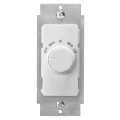

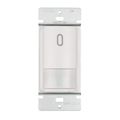


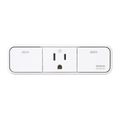


Wall Controls are wired or wireless interfaces mounted on a wall that let occupants and technicians manage a ductless or VRF HVAC system's temperature, mode, and schedule from one fixed location.
Mitsubishi Electric's PAR-40MAA, for example, uses a backlit LCD screen for readability in low light and supports a weekly timer with up to eight operation patterns per day.
Wall controls replace or supplement handheld remotes, giving occupants a permanent, tamper-resistant point of control that won't get lost or left in another room.
In commercial buildings, a fixed wall control simplifies zone management and gives facility staff one consistent interface for checking and adjusting settings.
Selecting the right wall control affects how much scheduling flexibility and diagnostic access a system offers once installation is complete.
Subcategories
- Wired Wall Controllers: Wired wall controllers connect directly to the indoor unit through a control cable, giving a stable, low-latency link that doesn't depend on batteries or signal range. Commercial installers favor wired controls in offices and multi-zone buildings because the fixed connection resists interference and stays reliable over years of daily use. The Mitsubishi Electric PAR-40MAA is a wired example with a backlit LCD screen and weekly scheduling for up to eight patterns per day. Wired controllers suit installations where the wall control sits within cable-run distance of the indoor unit.
- Wireless Wall Controllers: Wireless wall controllers communicate with the indoor unit over a radio signal instead of a hardwired cable, which simplifies installation in retrofit jobs and finished spaces. Residential installers use wireless controls when running new cable through existing walls isn't practical or would add significant labor. They still deliver core functions like temperature setpoint, mode selection, and fan speed adjustment without a physical connection. Battery life and signal range are the main tradeoffs against a wired setup.
- Programmable Wall Controllers: Programmable wall controllers add scheduling on top of basic temperature and mode control, letting a system run different setpoints throughout the day without manual adjustment. Facility managers rely on this type to automate setback temperatures overnight or during unoccupied hours, cutting run time without daily intervention. The PAR-40MAA supports up to eight operation patterns per day within its weekly timer function. Programmable controls suit buildings with predictable occupancy schedules, like offices or schools.
- Sensor-Equipped Wall Controllers: Sensor-equipped wall controllers include a built-in temperature sensor that reads the actual room temperature at the control's location, rather than relying solely on the indoor unit's internal sensor. Installers place these controls where they'll get an accurate read on occupied space, since a controller mounted near a door or window can skew results. Mitsubishi Electric's PAR series controllers with this feature give more realistic, timely temperature measurement for the space being conditioned. A sensor near the occupied space helps the system respond to actual room conditions rather than conditions near the indoor unit itself.
Buying Guide
Start with the installation type. New construction with open access to wall cavities makes a wired control the straightforward choice, since running a control cable during the build adds little labor and delivers the most reliable connection. Retrofit jobs in finished spaces often favor a wireless control instead, since it avoids cutting into walls to route cable.
Next, consider scheduling needs. A basic wall control handles temperature and mode selection but won't automate setbacks, which is fine for a single-family home with consistent occupancy. Buildings with variable schedules, like offices, schools, or multi-tenant properties, benefit from a programmable Wall Controls option that supports multiple daily patterns, since automated setbacks cut run time without someone adjusting settings by hand every day.
Sensor placement matters more than it might seem. A wall control with a built-in temperature sensor gives a more accurate room reading than relying on the indoor unit's sensor location, but only if it's mounted away from doors, windows, and direct sunlight that would skew the reading.
Compatibility is non-negotiable. Wall controls are built to work with specific indoor unit lines, so confirming the control matches the installed or planned equipment prevents a return trip. Checking the manufacturer's compatibility chart before ordering saves time and avoids a mismatched install that won't communicate with the system.
Frequently Asked Questions
What's the difference between a wired and wireless wall control?
A wired wall control connects to the indoor unit through a physical control cable, giving a stable connection that doesn't depend on batteries or signal range. A wireless wall control communicates over radio signal instead, which simplifies installation in retrofit jobs where running new cable isn't practical. Both types handle core functions like temperature and mode selection, but the connection method and installation process differ.
Can a wall control replace the handheld remote entirely?
A wall control can replace a handheld remote for day-to-day operation, since it provides the same temperature, mode, and fan speed adjustments from a fixed location. Many installations keep a handheld remote as a backup for portability or diagnostic access. Facility settings especially benefit from a fixed wall control since it can't be misplaced.
How many schedule patterns can a programmable wall control run per day?
Programmable wall controls like the Mitsubishi Electric PAR-40MAA support up to eight operation patterns per day through a weekly timer function. Each pattern can set a different on/off time, mode, and temperature setpoint. Scheduling at this level suits buildings with varied daily occupancy, like offices or schools.
Does a wall control need to match a specific indoor unit brand?
Wall controls are built to communicate with specific indoor unit lines, so compatibility between the control and the installed equipment matters. Mixing brands or incompatible series typically won't work, since the control protocol differs between manufacturers. Checking a compatibility chart before purchasing prevents a mismatched install.
Where should a wall control with a built-in sensor be mounted?
A wall control with a built-in temperature sensor should be mounted away from doors, windows, and direct sunlight, since those locations skew the temperature reading. Interior walls at roughly average room height give the most accurate representation of occupied space conditions. Correct placement helps the system respond to actual conditions rather than a skewed reading near the sensor.
