



Filters
SORT
Product Availability –
Fuel Type –
BTU Output –
Efficiency –
Review Score –
 --%3E %3Csvg version='1.1' id='Fill' xmlns='http://www.w3.org/2000/svg' xmlns:xlink='http://www.w3.org/1999/xlink' x='0px' y='0px' viewBox='0 0 100 100' enable-background='new 0 0 100 100' xml:space='preserve'%3E %3Cpath fill='%23F15C02' d='M79.44,0.95H20.56C9.78,0.95,0.95,9.78,0.95,20.56v58.87c0,10.79,8.82,19.61,19.61,19.61h58.87 c10.79,0,19.61-8.83,19.61-19.61V20.56C99.05,9.78,90.22,0.95,79.44,0.95z M65.38,58.24l9.38,29.58L49.69,69.78L24.5,87.82 l9.34-29.6L8.8,39.6l30.73-0.17c0,0,6.98-19.61,10-28.93c0.54,1.36,9.88,29.1,9.88,29.1H91.2L65.38,58.24z'/%3E %3C/svg%3E)
 --%3E %3Csvg version='1.1' id='With-RB' xmlns='http://www.w3.org/2000/svg' xmlns:xlink='http://www.w3.org/1999/xlink' x='0px' y='0px' viewBox='0 0 100 100' enable-background='new 0 0 100 100' xml:space='preserve'%3E %3Cpath fill='%23FBC8B4' d='M79.44,0.95H20.56C9.78,0.95,0.95,9.78,0.95,20.56v58.87c0,10.79,8.82,19.61,19.61,19.61h58.87 c10.79,0,19.61-8.83,19.61-19.61V20.56C99.05,9.78,90.22,0.95,79.44,0.95z M65.38,58.24l9.38,29.58L49.69,69.78L24.5,87.82 l9.34-29.6L8.8,39.6l30.73-0.17c0,0,6.98-19.61,10-28.93c0.54,1.36,9.88,29.1,9.88,29.1H91.2L65.38,58.24z'/%3E %3C/svg%3E)
Price Range –
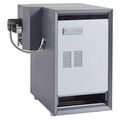
Weil Mclain CGI Boilers

 --%3E %3Csvg version='1.1' id='No-RB' xmlns='http://www.w3.org/2000/svg' xmlns:xlink='http://www.w3.org/1999/xlink' x='0px' y='0px' viewBox='0 0 100 100' enable-background='new 0 0 100 100' xml:space='preserve'%3E %3Cpath fill='%23CECECE' d='M79.44,0.95H20.56C9.78,0.95,0.95,9.78,0.95,20.56v58.87c0,10.79,8.82,19.61,19.61,19.61h58.87 c10.79,0,19.61-8.83,19.61-19.61V20.56C99.05,9.78,90.22,0.95,79.44,0.95z M65.38,58.24l9.38,29.58L49.69,69.78L24.5,87.82 l9.34-29.6L8.8,39.6l30.73-0.17c0,0,6.98-19.61,10-28.93c0.54,1.36,9.88,29.1,9.88,29.1H91.2L65.38,58.24z'/%3E %3C/svg%3E)


Weil-McLain CGI boilers are cast iron, gas-fired water boilers built for residential and light commercial heating systems. The cast iron sections pair with an insulated steel jacket to hold heat and reduce standby loss compared with an older, uninsulated design. The boilers run on natural gas or propane and use intermittent electronic ignition rather than a standing pilot, which cuts fuel use when the boiler is idle between heating calls. Weil-McLain rates CGI boilers for ENERGY STAR certification and heat pump ready operation, reflecting the efficiency baseline contractors now specify for cast iron replacements. Because cast iron boilers last for decades under normal operation, technicians most often encounter CGI boilers on replacement jobs where an older cast iron unit has failed or is being upgraded for better efficiency, rather than as new equipment for a first-time hydronic installation.
Subcategories
- CGI Gas Boilers: Weil-McLain CGI gas boilers are the complete cast iron boiler units, sized across a range of BTU inputs to match residential and light commercial heating loads. Each unit uses intermittent electronic ignition rather than a standing pilot, which reduces standby fuel consumption between heating calls. The boilers run on natural gas or propane, so the fuel type has to be confirmed before ordering since orifice sizing differs between the two. Contractors typically select a specific model based on a heat loss calculation for the building rather than simply matching the BTU rating of the boiler being replaced.
- CGI Boiler Circulators and Piping Components: Circulator pumps and piping components move heated water from the CGI boiler out to the building's radiators, baseboard, or radiant loops. The circulator on these boilers ships loose from the factory rather than pre-mounted, so it can be installed on either the supply or return piping depending on the system layout. Technicians replacing an older cast iron boiler often reuse existing piping where possible, but near-boiler piping sometimes needs modification to match the CGI boiler's tappings. Confirming pump sizing against the system's actual flow requirements avoids underperformance in longer piping runs.
- CGI Boiler Venting Components: Venting components for CGI boilers include the vent connectors and hardware needed to safely exhaust combustion byproducts. CGI boilers use a simplified venting arrangement that does not require a vertical draft hood, which gives installers more flexibility in tight mechanical room layouts than older atmospheric boiler designs. Matching vent pipe diameter to the specific boiler model's rated output keeps draft and combustion performance within the manufacturer's specification. Technicians confirm vent sizing against the installation manual rather than reusing vent pipe sized for the boiler being replaced.
- CGI Boiler Controls and Ignition Parts: Controls and ignition parts include the intermittent electronic ignition module, low water cutoff, and related safety components built into the CGI boiler design. The built-in low water cutoff shuts down the burner if water level drops below a safe threshold, protecting the cast iron sections from dry-firing damage. Because ignition modules and control boards are specific to the boiler series, technicians match replacement parts to the exact model rather than substituting a similar-looking part from another boiler line. Replacing ignition components typically requires verifying flame sensing and combustion settings afterward.
Buying Guide
Start with an accurate heat loss calculation for the building rather than matching the BTU rating of the boiler being replaced, since older cast iron boilers were frequently oversized relative to current insulation and window standards. Confirm the fuel type available at the property, since Weil-McLain CGI boilers run on natural gas or propane but require different orifice sizing for each, and check whether a fuel conversion kit is needed if the property's gas service has changed since the original boiler was installed.
Verify the mechanical room's venting arrangement before ordering, since CGI boilers use a simplified venting setup that does not require a vertical draft hood, which can simplify a replacement in a tight space where a taller vent connector will not fit. Confirm the circulator pump size against the system's actual flow requirements rather than reusing the circulator from the old boiler by default, since pump sizing that worked for one boiler's piping does not automatically match another.
When replacing an aging cast iron boiler with a CGI boiler, inspect the existing near-boiler piping and tappings, since some modification is often needed even when the new boiler is a similar physical size to the old one. Finally, budget time for combustion testing and control verification after installation, since the ignition module and low water cutoff both need to be confirmed operating correctly before the system is turned over to the customer.
Frequently Asked Questions
What makes a Weil-McLain CGI boiler different from an older standing-pilot cast iron boiler?
CGI boilers use intermittent electronic ignition instead of a standing pilot, which cuts fuel consumption between heating calls, and they carry ENERGY STAR certification reflecting a higher efficiency baseline than older atmospheric cast iron designs.
Can a CGI boiler run on propane instead of natural gas?
Yes, CGI boilers are built to run on either natural gas or propane, but the orifice sizing differs between fuel types, so the correct fuel configuration needs to be confirmed at the time of order or converted with the appropriate kit.
Does the circulator come pre-installed on a CGI boiler?
No, the circulator ships loose from the factory and can be mounted on either the supply or return piping, giving the installer flexibility to match the existing system layout.
Do CGI boilers require a vertical draft hood for venting?
No, CGI boilers use a simplified venting arrangement that does not require a vertical draft hood, which gives installers more flexibility in tight mechanical room installations compared with older atmospheric designs.
What protects a CGI boiler if the water level drops too low?
A built-in low water cutoff shuts down the burner when water level falls below a safe threshold, preventing the cast iron sections from dry-firing and sustaining heat damage.
