




Lux

 --%3E %3Csvg version='1.1' id='No-RB' xmlns='http://www.w3.org/2000/svg' xmlns:xlink='http://www.w3.org/1999/xlink' x='0px' y='0px' viewBox='0 0 100 100' enable-background='new 0 0 100 100' xml:space='preserve'%3E %3Cpath fill='%23CECECE' d='M79.44,0.95H20.56C9.78,0.95,0.95,9.78,0.95,20.56v58.87c0,10.79,8.82,19.61,19.61,19.61h58.87 c10.79,0,19.61-8.83,19.61-19.61V20.56C99.05,9.78,90.22,0.95,79.44,0.95z M65.38,58.24l9.38,29.58L49.69,69.78L24.5,87.82 l9.34-29.6L8.8,39.6l30.73-0.17c0,0,6.98-19.61,10-28.93c0.54,1.36,9.88,29.1,9.88,29.1H91.2L65.38,58.24z'/%3E %3C/svg%3E)
 --%3E %3Csvg version='1.1' id='Fill' xmlns='http://www.w3.org/2000/svg' xmlns:xlink='http://www.w3.org/1999/xlink' x='0px' y='0px' viewBox='0 0 100 100' enable-background='new 0 0 100 100' xml:space='preserve'%3E %3Cpath fill='%23F15C02' d='M79.44,0.95H20.56C9.78,0.95,0.95,9.78,0.95,20.56v58.87c0,10.79,8.82,19.61,19.61,19.61h58.87 c10.79,0,19.61-8.83,19.61-19.61V20.56C99.05,9.78,90.22,0.95,79.44,0.95z M65.38,58.24l9.38,29.58L49.69,69.78L24.5,87.82 l9.34-29.6L8.8,39.6l30.73-0.17c0,0,6.98-19.61,10-28.93c0.54,1.36,9.88,29.1,9.88,29.1H91.2L65.38,58.24z'/%3E %3C/svg%3E)

 --%3E %3Csvg version='1.1' id='Half' xmlns='http://www.w3.org/2000/svg' xmlns:xlink='http://www.w3.org/1999/xlink' x='0px' y='0px' viewBox='0 0 100 100' enable-background='new 0 0 100 100' xml:space='preserve'%3E %3Cg%3E %3Cpath fill='%23F15C02' d='M30.05,70.23l3.79-12.01L8.8,39.6l30.73-0.17c0,0,6.98-19.61,10-28.93c0.54,1.36,9.88,29.1,9.88,29.1h1.58 L93.71,7.18c-3.58-3.82-8.66-6.23-14.28-6.23H20.56C9.78,0.95,0.95,9.78,0.95,20.56v58.87c0,5.41,2.22,10.32,5.79,13.88 L30.05,70.23z'/%3E %3C/g%3E %3Cpath fill='%23FBC8B4' d='M93.71,7.18L60.98,39.6H91.2L65.38,58.24l9.38,29.58L49.69,69.78L24.5,87.82l5.55-17.59L6.75,93.32 c3.55,3.54,8.44,5.73,13.82,5.73h58.87c10.79,0,19.61-8.83,19.61-19.61V20.56C99.05,15.4,97.01,10.69,93.71,7.18z'/%3E %3C/svg%3E)


Lux Products traces back to 1914, when Paul Lux and his family founded the company in Waterbury, Connecticut, originally producing clock movements before expanding into full clock manufacturing. The company contributed to wartime manufacturing during World War II and later expanded with additional facilities in Tennessee and Canada.
Ownership has changed hands several times since: Robertshaw-Fulton Controls Company in 1961, a management buyout in 1991, Johnson Controls in 2018, and EME Americas since 2023. Despite those changes, Lux has stayed focused on thermostats and home comfort controls.
Product Lines
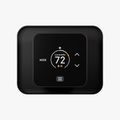
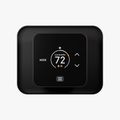
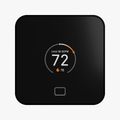
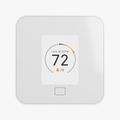
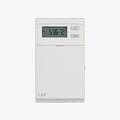
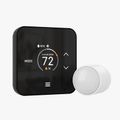
Lux's current thermostat catalog includes the TQX and TQ1 Matter Smart Thermostats, built around the Matter smart home standard for cross-platform compatibility.
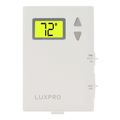
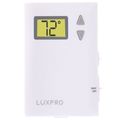
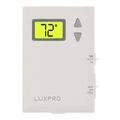
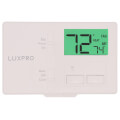
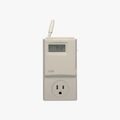
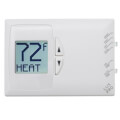
Low voltage thermostats cover standard residential heating and cooling systems, while line voltage models serve applications like electric baseboard heat that need direct line voltage switching.
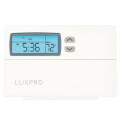
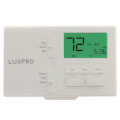
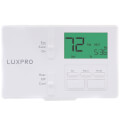
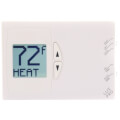
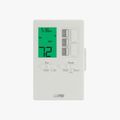
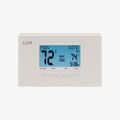
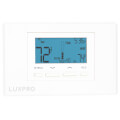
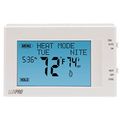
Both programmable and non-programmable options are available, along with a choice between mechanical and touch screen interfaces.
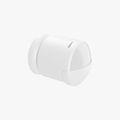
Smart sensors and accessories round out the lineup, extending thermostat functionality to remote temperature sensing.
Why Contractors Specify Lux
Contractors specify Lux thermostats on jobs that need Matter compatibility, since the TQX and TQ1 models connect across multiple smart home platforms without locking a homeowner into one ecosystem.
The line voltage thermostat option covers electric baseboard heat, giving contractors a purpose-built choice instead of a generic workaround.
Lux still builds both mechanical and touch screen models. Contractors can match the control to a customer's comfort with technology instead of defaulting to a touch screen on every job.
How to Choose Lux Products
Confirm the system's voltage first. Electric baseboard heat and similar direct-switching loads need a line voltage thermostat. Standard residential heating and cooling systems call for a low voltage model.
For a smart home installation where cross-platform compatibility matters, the TQX or TQ1 Matter Smart Thermostat connects across the Matter standard rather than a single manufacturer's app.
When a customer wants a simpler interface, a mechanical or non-programmable model may fit better than a touch screen programmable unit.
Adding smart sensors covers remote temperature sensing in a room the thermostat itself doesn't reach well.
Frequently Asked Questions
When was Lux Products founded, and who owns it today?
Lux Products was founded in 1914 in Waterbury, Connecticut. It has changed ownership several times since and has been owned by EME Americas since 2023.
What is the Matter standard, and does Lux support it?
Matter is a smart home standard. Lux's TQX and TQ1 thermostats are built around it for cross-platform compatibility.
Does Lux make thermostats for electric baseboard heat?
Yes. Lux's line voltage thermostats are built for direct line voltage switching loads such as electric baseboard heat.
Are Lux thermostats available in non-programmable models?
Yes. Lux offers both programmable and non-programmable thermostats, along with a choice of mechanical or touch screen interfaces.
Was Lux always a thermostat company?
No. Lux began in 1914 producing clock movements and full clocks before its product line shifted toward thermostats and home comfort controls.
