




Filters
SORT
Product Availability –
Application –
Programmability –
User Interface –
Mount –
Options –
Review Score –
 --%3E %3Csvg version='1.1' id='Fill' xmlns='http://www.w3.org/2000/svg' xmlns:xlink='http://www.w3.org/1999/xlink' x='0px' y='0px' viewBox='0 0 100 100' enable-background='new 0 0 100 100' xml:space='preserve'%3E %3Cpath fill='%23F15C02' d='M79.44,0.95H20.56C9.78,0.95,0.95,9.78,0.95,20.56v58.87c0,10.79,8.82,19.61,19.61,19.61h58.87 c10.79,0,19.61-8.83,19.61-19.61V20.56C99.05,9.78,90.22,0.95,79.44,0.95z M65.38,58.24l9.38,29.58L49.69,69.78L24.5,87.82 l9.34-29.6L8.8,39.6l30.73-0.17c0,0,6.98-19.61,10-28.93c0.54,1.36,9.88,29.1,9.88,29.1H91.2L65.38,58.24z'/%3E %3C/svg%3E)
Price Range –
Lux Thermostats

 --%3E %3Csvg version='1.1' id='No-RB' xmlns='http://www.w3.org/2000/svg' xmlns:xlink='http://www.w3.org/1999/xlink' x='0px' y='0px' viewBox='0 0 100 100' enable-background='new 0 0 100 100' xml:space='preserve'%3E %3Cpath fill='%23CECECE' d='M79.44,0.95H20.56C9.78,0.95,0.95,9.78,0.95,20.56v58.87c0,10.79,8.82,19.61,19.61,19.61h58.87 c10.79,0,19.61-8.83,19.61-19.61V20.56C99.05,9.78,90.22,0.95,79.44,0.95z M65.38,58.24l9.38,29.58L49.69,69.78L24.5,87.82 l9.34-29.6L8.8,39.6l30.73-0.17c0,0,6.98-19.61,10-28.93c0.54,1.36,9.88,29.1,9.88,29.1H91.2L65.38,58.24z'/%3E %3C/svg%3E)



 --%3E %3Csvg version='1.1' id='Half' xmlns='http://www.w3.org/2000/svg' xmlns:xlink='http://www.w3.org/1999/xlink' x='0px' y='0px' viewBox='0 0 100 100' enable-background='new 0 0 100 100' xml:space='preserve'%3E %3Cg%3E %3Cpath fill='%23F15C02' d='M30.05,70.23l3.79-12.01L8.8,39.6l30.73-0.17c0,0,6.98-19.61,10-28.93c0.54,1.36,9.88,29.1,9.88,29.1h1.58 L93.71,7.18c-3.58-3.82-8.66-6.23-14.28-6.23H20.56C9.78,0.95,0.95,9.78,0.95,20.56v58.87c0,5.41,2.22,10.32,5.79,13.88 L30.05,70.23z'/%3E %3C/g%3E %3Cpath fill='%23FBC8B4' d='M93.71,7.18L60.98,39.6H91.2L65.38,58.24l9.38,29.58L49.69,69.78L24.5,87.82l5.55-17.59L6.75,93.32 c3.55,3.54,8.44,5.73,13.82,5.73h58.87c10.79,0,19.61-8.83,19.61-19.61V20.56C99.05,15.4,97.01,10.69,93.71,7.18z'/%3E %3C/svg%3E)
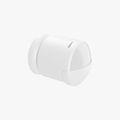
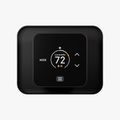
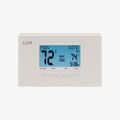
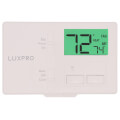

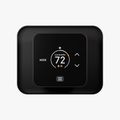
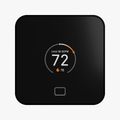
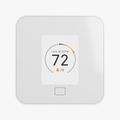
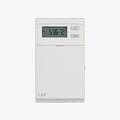
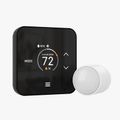

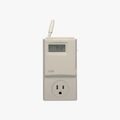

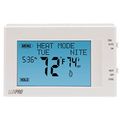


Lux thermostats are heating and cooling controls manufactured by Lux Products, a company that got its start in 1914 making clock movements in Waterbury, Connecticut before expanding into thermostat manufacturing. Contractors and homeowners use Lux thermostats to control single stage and multi stage HVAC systems in both new installations and retrofit jobs. The lineup spans mechanical dial thermostats for straightforward single stage systems up through programmable and touch screen models for households that want scheduled setback temperatures. Lux has more recently added TQ Matter smart thermostats to the lineup, positioning the brand as an early adopter of the Matter smart home standard that lets a thermostat work across multiple smart home ecosystems. Line voltage models round out the catalog for baseboard heaters and other systems that run without a low voltage transformer. The range of control types makes Lux a common pick for jobs that do not call for a full smart home ecosystem thermostat.
Subcategories
- Mechanical Thermostats: Mechanical Lux thermostats use a dial and bimetallic switch instead of a digital display, giving a straightforward control for single stage heating or cooling systems. Property managers and landlords favor this style for rental units where a simple control reduces tenant complaints about programming. The dial format needs no batteries, since the switching mechanism runs entirely off the line voltage or low voltage circuit it is wired into. This style fits older systems that do not support the multi-stage terminals many digital thermostats expect.
- Non-Programmable Thermostats: Non-programmable Lux thermostats add a digital display and precise temperature readout without a scheduling function, giving a simple upgrade from a mechanical dial. Homeowners who want an exact setpoint but do not need automatic setbacks reach for this style. Battery backup on most models keeps the set temperature and any stored settings through a power outage. This category typically covers single stage systems, similar to the mechanical lineup, but with tighter temperature control.
- Programmable Thermostats: Programmable Lux thermostats let a schedule be set for different times of day or days of the week, automatically adjusting the setpoint to match occupancy patterns. Contractors install this style for customers looking to cut energy use during unoccupied hours without manually adjusting the temperature each day. Many models in this line support multi-stage heating and cooling, extending compatibility to heat pump systems beyond basic single stage furnaces. Battery powered operation is standard, so installation does not always require a common wire.
- Touch Screen Thermostats: Touch screen Lux thermostats replace physical buttons with a touch interface and a larger display, giving room for more information such as humidity readings alongside temperature. Homeowners upgrading from an older programmable model often choose this style for the more visual programming interface. The TX9600TS model in this line has been recognized as a Best Buy by a leading consumer testing publication. Multi-stage compatibility is standard across this line, supporting both furnace and heat pump systems.
- TQ Matter Smart Thermostats: TQ Matter smart thermostats connect over WiFi and support the Matter smart home standard, letting the thermostat work across ecosystems such as Google Home or Amazon Alexa without being locked to a single app. Homeowners building out a broader smart home system choose this line specifically for that cross platform compatibility. The TQ1 and TQX models in this line include smart sensor compatibility for remote temperature monitoring in specific rooms. Contractors installing these units typically need a common wire, as is standard for most WiFi connected thermostats.
Buying Guide
Matching a Lux thermostat to the equipment already installed is the first step, since single stage furnaces and multi-stage heat pump systems do not use the same thermostat wiring or control logic. Mechanical and non-programmable models suit straightforward single stage systems where scheduling is not a priority, while programmable and touch screen models fit systems that benefit from setback scheduling and, in many cases, support multi-stage equipment as well. Checking whether a system provides a common wire matters for battery life and long term reliability. Most modern systems include a common wire, but older homes sometimes do not, which narrows the field toward models designed to run without one. For households building toward a broader smart home setup, the TQ Matter lineup adds compatibility with multiple smart home ecosystems rather than requiring a dedicated app for the thermostat alone. Rental properties often do better with a mechanical or basic non-programmable thermostat, since a simpler interface means fewer tenant calls about a misprogrammed schedule. Households that want detailed information at a glance, such as indoor humidity alongside temperature, should look toward the touch screen line for the larger display. Whatever the model, confirming voltage compatibility matters too, since line voltage thermostats for baseboard heat use different wiring than low voltage models designed for central heating and cooling systems.
Frequently Asked Questions
Do Lux thermostats need a common wire?
It depends on the model. Programmable and touch screen thermostats typically use a common wire to maintain battery charge and display function, while some non-programmable and mechanical models can run without one. Checking the wiring already in place at the wall before choosing a model avoids running into a compatibility issue during installation.
Are Lux thermostats compatible with heat pump systems?
Many models in the programmable and touch screen lines support multi-stage heat pump systems in addition to standard single stage furnaces. Mechanical and basic non-programmable models are generally limited to single stage compatibility. Confirming the stage count and equipment type on the thermostat's compatibility listing before ordering prevents a mismatch with the installed system.
What is a TQ Matter smart thermostat?
A TQ Matter thermostat connects to WiFi and supports the Matter smart home standard, a protocol that lets smart home devices work across different ecosystems such as Google Home or Amazon Alexa. Homeowners choose this line when building a smart home setup that is not tied to a single brand's app. These models also support optional smart sensors for monitoring temperature in specific rooms beyond where the thermostat itself is mounted.
What is the difference between a programmable and non-programmable Lux thermostat?
A programmable thermostat allows a schedule to be set for automatic temperature changes throughout the day, while a non-programmable thermostat holds a single setpoint until it is manually adjusted. Non-programmable models suit households or rental units where a simple, fixed control is preferred over automated scheduling. Programmable models fit homes looking to reduce energy use during unoccupied hours without manual adjustment.
Who manufactures Lux thermostats?
Lux thermostats are made by Lux Products, a company that started in 1914 producing clock movements in Waterbury, Connecticut before moving into thermostat manufacturing. The company has changed ownership several times over the decades, most recently coming under EME Americas in 2023 after a period under Johnson Controls. Despite the ownership changes, the Lux brand has stayed continuously in production for over a century.
