




Filters
SORT
Product Availability –
Brand –
Product Type –
Body Pattern –
Valve Type –
Inlet Size –
Outlet Size –
Inlet Type –
Outlet Type –
Material –
Includes –
Review Score –
 --%3E %3Csvg version='1.1' id='Fill' xmlns='http://www.w3.org/2000/svg' xmlns:xlink='http://www.w3.org/1999/xlink' x='0px' y='0px' viewBox='0 0 100 100' enable-background='new 0 0 100 100' xml:space='preserve'%3E %3Cpath fill='%23F15C02' d='M79.44,0.95H20.56C9.78,0.95,0.95,9.78,0.95,20.56v58.87c0,10.79,8.82,19.61,19.61,19.61h58.87 c10.79,0,19.61-8.83,19.61-19.61V20.56C99.05,9.78,90.22,0.95,79.44,0.95z M65.38,58.24l9.38,29.58L49.69,69.78L24.5,87.82 l9.34-29.6L8.8,39.6l30.73-0.17c0,0,6.98-19.61,10-28.93c0.54,1.36,9.88,29.1,9.88,29.1H91.2L65.38,58.24z'/%3E %3C/svg%3E)
 --%3E %3Csvg version='1.1' id='With-RB' xmlns='http://www.w3.org/2000/svg' xmlns:xlink='http://www.w3.org/1999/xlink' x='0px' y='0px' viewBox='0 0 100 100' enable-background='new 0 0 100 100' xml:space='preserve'%3E %3Cpath fill='%23FBC8B4' d='M79.44,0.95H20.56C9.78,0.95,0.95,9.78,0.95,20.56v58.87c0,10.79,8.82,19.61,19.61,19.61h58.87 c10.79,0,19.61-8.83,19.61-19.61V20.56C99.05,9.78,90.22,0.95,79.44,0.95z M65.38,58.24l9.38,29.58L49.69,69.78L24.5,87.82 l9.34-29.6L8.8,39.6l30.73-0.17c0,0,6.98-19.61,10-28.93c0.54,1.36,9.88,29.1,9.88,29.1H91.2L65.38,58.24z'/%3E %3C/svg%3E)
Price Range –
Supply Stop Valves

 --%3E %3Csvg version='1.1' id='No-RB' xmlns='http://www.w3.org/2000/svg' xmlns:xlink='http://www.w3.org/1999/xlink' x='0px' y='0px' viewBox='0 0 100 100' enable-background='new 0 0 100 100' xml:space='preserve'%3E %3Cpath fill='%23CECECE' d='M79.44,0.95H20.56C9.78,0.95,0.95,9.78,0.95,20.56v58.87c0,10.79,8.82,19.61,19.61,19.61h58.87 c10.79,0,19.61-8.83,19.61-19.61V20.56C99.05,9.78,90.22,0.95,79.44,0.95z M65.38,58.24l9.38,29.58L49.69,69.78L24.5,87.82 l9.34-29.6L8.8,39.6l30.73-0.17c0,0,6.98-19.61,10-28.93c0.54,1.36,9.88,29.1,9.88,29.1H91.2L65.38,58.24z'/%3E %3C/svg%3E)
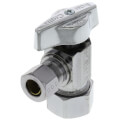
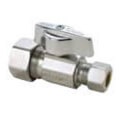
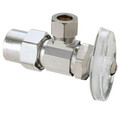
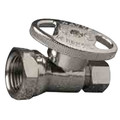
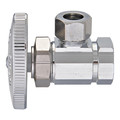
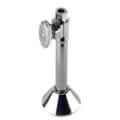
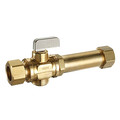
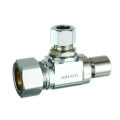
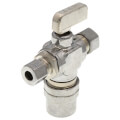
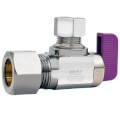
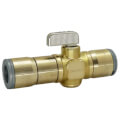
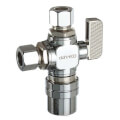
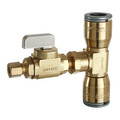

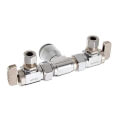
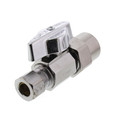
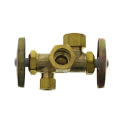
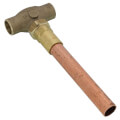
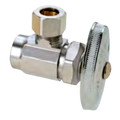
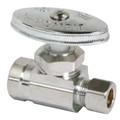
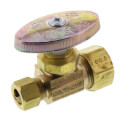
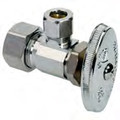
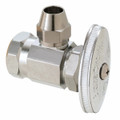
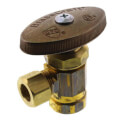
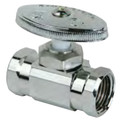
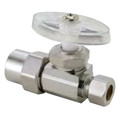
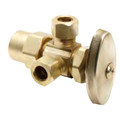

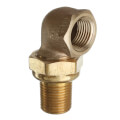
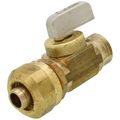
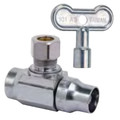
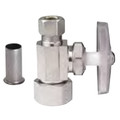
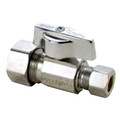
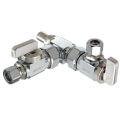
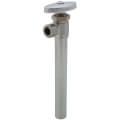
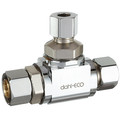
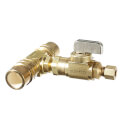

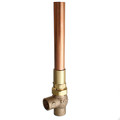
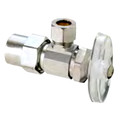
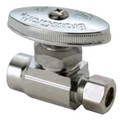
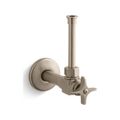
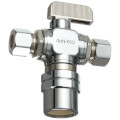
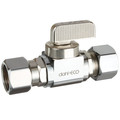
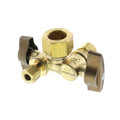
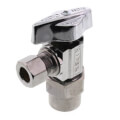

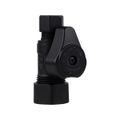
Supply stops are the shutoff valves installed at a fixture's water supply line, giving a plumber or homeowner a way to isolate a single sink, toilet, or appliance without shutting down water to the whole building. Compression, sweat, and push-to-connect connection types cover most rough-in situations, so matching the stop to the existing supply line material, whether copper, PEX, or CPVC, is the first step before installation. Quarter-turn ball designs have largely replaced older multi-turn compression stops on new installations, since a quarter-turn handle is faster to operate and less prone to seizing after years of infrequent use. Having a reliable supply stop at every fixture matters most during an emergency repair, when isolating a single leaking connection quickly can be the difference between a contained drip and a flooded cabinet.
Subcategories
- Quarter-Turn Ball Supply Stops: Quarter-turn stops use a ball valve mechanism that shuts off water flow with a ninety degree handle turn instead of the multiple turns a compression stop requires. Plumbers favor this style for new installations and remodels because the mechanism resists seizing after long periods without use, unlike older multi-turn designs. Straight and angle configurations both exist to match the supply line's approach to the fixture.
- Compression Supply Stops: Compression stops connect to copper supply lines using a compression fitting rather than solder, which makes them a common choice for retrofit work where sweating a new connection isn't practical. Multi-turn handles on older compression stops can become difficult to operate after years of mineral buildup, which is one reason many replacement jobs upgrade to a quarter-turn design instead. Sizing follows the outlet connection needed for the fixture, typically a smaller diameter than the supply line itself.
- Push-to-Connect Supply Stops: Push-to-connect stops install without soldering, threading, or compression fittings, using an internal gripping mechanism that seals against the pipe as it's pushed into place. Remodeling jobs in occupied buildings benefit from this style since installation doesn't require an open flame or extended water shutoff. Removal requires a release collar or tool specific to the fitting brand, which is worth keeping on hand for any future service call.
- Supply Stop Extension Kits & Accessories: Extension kits add length between the supply stop and the fixture connection when the rough-in location doesn't line up with the finished wall or floor. Escutcheons and connector kits in this group finish the installation with a clean appearance around the stop. Keeping a small assortment of extension lengths on the truck avoids a return trip when a rough-in measurement is off by an inch or two.
Buying Guide
Matching the stop to the existing supply line material comes first. Copper lines typically pair with either a compression or sweat connection, while PEX and CPVC lines often call for a stop with a matching push-to-connect or crimp-style inlet, so confirming pipe material before ordering avoids a mismatched fitting on the job. Outlet connection size is the next factor, since most fixtures use a smaller diameter supply line than the rough-in pipe feeding the wall or floor, and the stop needs to step down to that size. Handle type affects long-term usability: quarter-turn ball valves resist seizing over years of infrequent use, while older multi-turn compression handles can become stiff or difficult to fully close after mineral buildup accumulates inside the valve. Supply Stops installed in a finished bathroom or kitchen also need to account for escutcheon coverage, since a stop set too far from the wall leaves a visible gap that calls for an extension kit or deeper escutcheon. Configuration, straight or angle, depends on how the supply line approaches the fixture; getting this wrong means the connecting line has to bend awkwardly behind the cabinet or wall. For remodel work in an occupied home, a push-to-connect stop cuts installation time and avoids an open flame, which matters when water needs to come back on the same day.
Frequently Asked Questions
What's the difference between a quarter-turn and multi-turn supply stop?
A quarter-turn stop uses a ball valve that shuts off with a ninety degree handle turn, while a multi-turn stop uses a compression washer that tightens down over several rotations. Quarter-turn designs are generally easier to operate after years of infrequent use, since the compression washer in older multi-turn stops can stick or wear unevenly.
Can a push-to-connect supply stop be removed and reused?
Removing a push-to-connect stop requires a release collar or tool specific to that fitting brand rather than simply pulling the pipe out. Once released, most push-to-connect stops can be reinstalled on the same pipe as long as the pipe end hasn't been damaged during removal.
How is the correct supply stop size determined?
Sizing depends on both the supply line diameter feeding the wall or floor and the smaller outlet connection the fixture requires, which are often two different measurements. Checking both the rough-in pipe size and the fixture's connector size before ordering avoids picking up a stop that needs an adapter.
What's the advantage of an angle stop over a straight stop?
An angle stop changes the direction of the water line by ninety degrees, which suits installations where the supply line comes out of the wall and needs to connect to a fixture line running up from the floor or cabinet base. A straight stop keeps the same direction, which fits installations where the supply line and connector line run parallel.
Why upgrade older compression stops to quarter-turn ball valves?
Compression stops that see infrequent use can develop mineral buildup around the washer, making them difficult to fully close during an emergency shutoff. Quarter-turn ball valves use a simpler mechanism that's less prone to that kind of buildup, so replacing old compression stops during a remodel or repair reduces the chance of a stuck valve later.
