




Filters
SORT
Product Availability –
Brand –
Features –
Voltage –
Review Score –
 --%3E %3Csvg version='1.1' id='Fill' xmlns='http://www.w3.org/2000/svg' xmlns:xlink='http://www.w3.org/1999/xlink' x='0px' y='0px' viewBox='0 0 100 100' enable-background='new 0 0 100 100' xml:space='preserve'%3E %3Cpath fill='%23F15C02' d='M79.44,0.95H20.56C9.78,0.95,0.95,9.78,0.95,20.56v58.87c0,10.79,8.82,19.61,19.61,19.61h58.87 c10.79,0,19.61-8.83,19.61-19.61V20.56C99.05,9.78,90.22,0.95,79.44,0.95z M65.38,58.24l9.38,29.58L49.69,69.78L24.5,87.82 l9.34-29.6L8.8,39.6l30.73-0.17c0,0,6.98-19.61,10-28.93c0.54,1.36,9.88,29.1,9.88,29.1H91.2L65.38,58.24z'/%3E %3C/svg%3E)
 --%3E %3Csvg version='1.1' id='With-RB' xmlns='http://www.w3.org/2000/svg' xmlns:xlink='http://www.w3.org/1999/xlink' x='0px' y='0px' viewBox='0 0 100 100' enable-background='new 0 0 100 100' xml:space='preserve'%3E %3Cpath fill='%23FBC8B4' d='M79.44,0.95H20.56C9.78,0.95,0.95,9.78,0.95,20.56v58.87c0,10.79,8.82,19.61,19.61,19.61h58.87 c10.79,0,19.61-8.83,19.61-19.61V20.56C99.05,9.78,90.22,0.95,79.44,0.95z M65.38,58.24l9.38,29.58L49.69,69.78L24.5,87.82 l9.34-29.6L8.8,39.6l30.73-0.17c0,0,6.98-19.61,10-28.93c0.54,1.36,9.88,29.1,9.88,29.1H91.2L65.38,58.24z'/%3E %3C/svg%3E)
Price Range –
Defrost Timers





 --%3E %3Csvg version='1.1' id='No-RB' xmlns='http://www.w3.org/2000/svg' xmlns:xlink='http://www.w3.org/1999/xlink' x='0px' y='0px' viewBox='0 0 100 100' enable-background='new 0 0 100 100' xml:space='preserve'%3E %3Cpath fill='%23CECECE' d='M79.44,0.95H20.56C9.78,0.95,0.95,9.78,0.95,20.56v58.87c0,10.79,8.82,19.61,19.61,19.61h58.87 c10.79,0,19.61-8.83,19.61-19.61V20.56C99.05,9.78,90.22,0.95,79.44,0.95z M65.38,58.24l9.38,29.58L49.69,69.78L24.5,87.82 l9.34-29.6L8.8,39.6l30.73-0.17c0,0,6.98-19.61,10-28.93c0.54,1.36,9.88,29.1,9.88,29.1H91.2L65.38,58.24z'/%3E %3C/svg%3E)
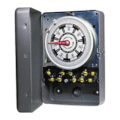

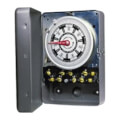
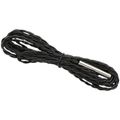
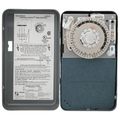
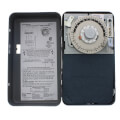
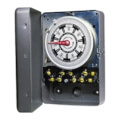
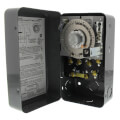
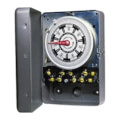
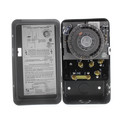
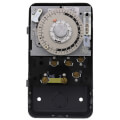
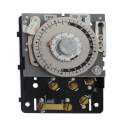
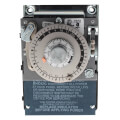


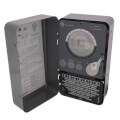

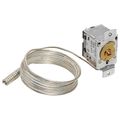
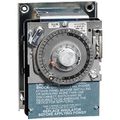



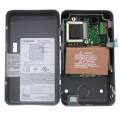
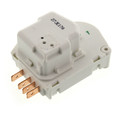
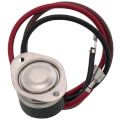
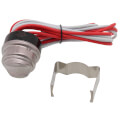

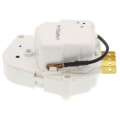
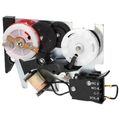
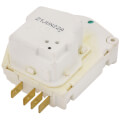
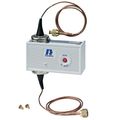
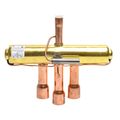
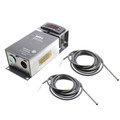
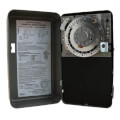
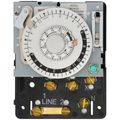
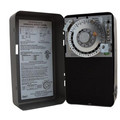


Defrost timers are electromechanical or electronic controls that manage when a heat pump or refrigeration unit interrupts normal operation to melt frost buildup off its outdoor or evaporator coil. Frost accumulates on a coil during normal operation whenever moist air passes over a surface cold enough to freeze condensation, and left unchecked it restricts airflow and reduces system efficiency. The timer switches the unit into defrost mode on a set schedule or in response to a sensor reading, then switches it back to normal operation once the coil clears. Technicians select a replacement timer based on the number of contacts, timing interval, and voltage rating the original equipment manufacturer specifies for that unit. Because a failed defrost timer can leave a coil iced over or cause a unit to short-cycle unnecessarily, matching the replacement timer's specifications exactly to the original part avoids introducing a new operating problem.
Subcategories
- Mechanical Defrost Timers: Mechanical defrost timers use a small motor-driven cam that advances on a fixed schedule regardless of actual frost conditions, triggering defrost mode at set intervals. Technicians replace these on older heat pump and refrigeration units that were originally built with a time-based rather than sensor-based control. The mechanical design makes them straightforward to diagnose when a unit fails to defrost. Contact configuration and timing interval need to match the original part exactly.
- Electronic Defrost Timers: Electronic defrost timers use solid-state circuitry, often combined with a temperature sensor, to trigger defrost mode based on actual coil conditions rather than a fixed schedule alone. Technicians favor these on newer equipment designed around demand-based defrost control, which can reduce unnecessary defrost cycles compared to a purely time-based mechanical timer. Wiring and sensor compatibility need to match the specific unit. These controls typically integrate with the rest of the unit's control board.
- Defrost Timer Accessories: Defrost timer accessories include mounting sockets, wiring harnesses, and termination kits that connect a replacement timer into the existing control circuit. Technicians keep a small stock of these on hand since a damaged socket or connector is sometimes the actual cause of an intermittent defrost problem rather than the timer itself. Confirming the accessory matches the timer's pin configuration avoids a faulty connection after installation. These parts are typically sold alongside the timers they support.
Buying Guide
Replacing a defrost timer starts with confirming the exact specifications of the original part, including the number of switch contacts, the timing interval between defrost cycles, and the voltage rating of the control circuit it operates in. A mechanical timer and an electronic timer aren't generally interchangeable on the same unit unless the manufacturer specifically allows for that substitution, since the rest of the control wiring and any associated sensors are built around one type or the other. Technicians diagnosing a unit that won't defrost, or one that defrosts too frequently, should confirm whether the timer itself has failed or whether the problem lies elsewhere in the control circuit, such as a bad defrost thermostat or a wiring fault at the mounting socket. For units built around demand-based defrost control, an electronic timer paired with the correct sensor typically reduces unnecessary defrost cycles compared to a purely schedule-based mechanical timer, which can improve overall system efficiency. Mounting configuration matters as well, since the replacement timer needs to physically fit the existing socket or mounting bracket without modification. Keeping a small stock of common mounting accessories alongside a range of timer models lets a technician resolve a defrost-related service call in a single visit rather than returning after ordering a missing part.
Frequently Asked Questions
How do I know if a defrost timer has failed?
Signs include a coil that stays iced over because defrost never triggers, or a unit that cycles into defrost far more often than expected. A technician can confirm the timer itself is at fault rather than another component in the defrost circuit.
Can a mechanical defrost timer be replaced with an electronic one?
Only if the unit's control wiring and any required sensors support that type of timer. Substituting timer types without confirming compatibility can cause the defrost system to malfunction.
What information do I need before ordering a replacement timer?
The number of switch contacts, the timing interval, and the voltage rating of the original part are the key specifications to match. The unit's model number often helps identify the correct replacement.
Why does frost build up on a coil in the first place?
Frost forms when moist air passes over a coil surface cold enough to freeze condensation, which happens during normal heat pump or refrigeration operation. The defrost cycle exists specifically to clear that buildup before it restricts airflow.
Do electronic defrost timers reduce energy use compared to mechanical ones?
Electronic timers paired with a sensor can trigger defrost only when actually needed, which reduces unnecessary cycles compared to a fixed-schedule mechanical timer. The efficiency gain depends on the specific unit and operating conditions.
