



Filters
SORT
Product Availability –
Size –
Review Score –
 --%3E %3Csvg version='1.1' id='Fill' xmlns='http://www.w3.org/2000/svg' xmlns:xlink='http://www.w3.org/1999/xlink' x='0px' y='0px' viewBox='0 0 100 100' enable-background='new 0 0 100 100' xml:space='preserve'%3E %3Cpath fill='%23F15C02' d='M79.44,0.95H20.56C9.78,0.95,0.95,9.78,0.95,20.56v58.87c0,10.79,8.82,19.61,19.61,19.61h58.87 c10.79,0,19.61-8.83,19.61-19.61V20.56C99.05,9.78,90.22,0.95,79.44,0.95z M65.38,58.24l9.38,29.58L49.69,69.78L24.5,87.82 l9.34-29.6L8.8,39.6l30.73-0.17c0,0,6.98-19.61,10-28.93c0.54,1.36,9.88,29.1,9.88,29.1H91.2L65.38,58.24z'/%3E %3C/svg%3E)
 --%3E %3Csvg version='1.1' id='With-RB' xmlns='http://www.w3.org/2000/svg' xmlns:xlink='http://www.w3.org/1999/xlink' x='0px' y='0px' viewBox='0 0 100 100' enable-background='new 0 0 100 100' xml:space='preserve'%3E %3Cpath fill='%23FBC8B4' d='M79.44,0.95H20.56C9.78,0.95,0.95,9.78,0.95,20.56v58.87c0,10.79,8.82,19.61,19.61,19.61h58.87 c10.79,0,19.61-8.83,19.61-19.61V20.56C99.05,9.78,90.22,0.95,79.44,0.95z M65.38,58.24l9.38,29.58L49.69,69.78L24.5,87.82 l9.34-29.6L8.8,39.6l30.73-0.17c0,0,6.98-19.61,10-28.93c0.54,1.36,9.88,29.1,9.88,29.1H91.2L65.38,58.24z'/%3E %3C/svg%3E)
Price Range –
PVC Schedule 80 Fittings


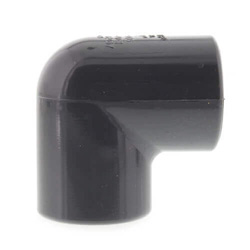
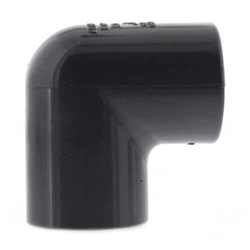
(Soc x FIPT) (14)
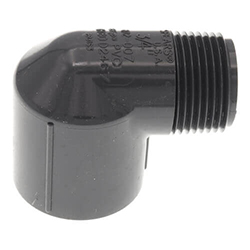
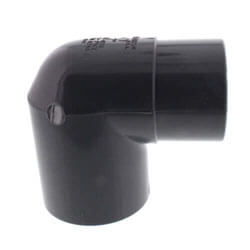
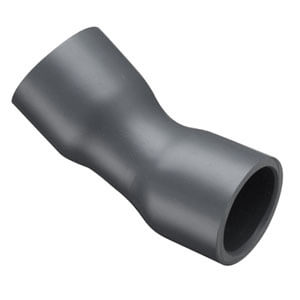
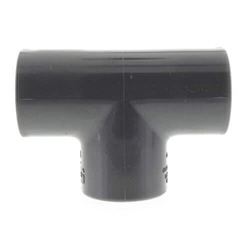
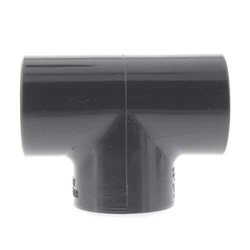

(Soc x Soc x FIPT) (9)
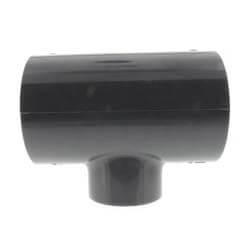
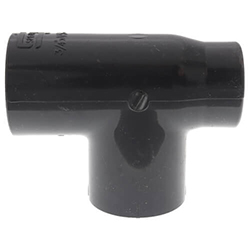

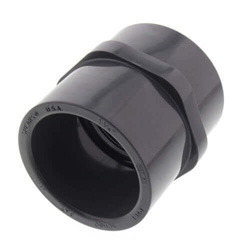
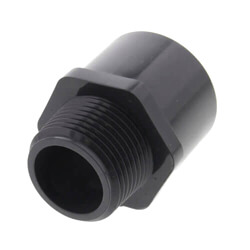
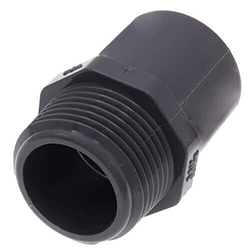


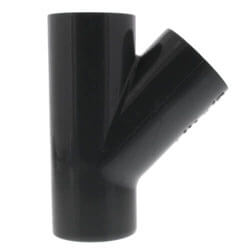
(Soc x FIPT) (42)
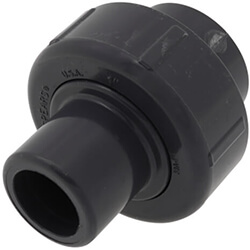
(Soc x Spigot) (20)

(MIPT x FIPT) (31)
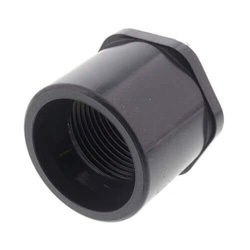
(Spigot x FIPT) (47)

(Spigot x Soc) (58)

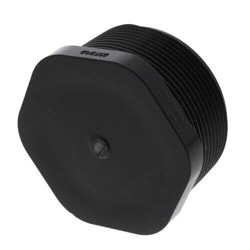
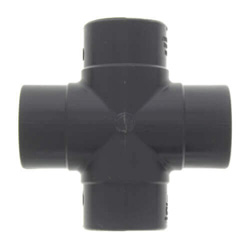
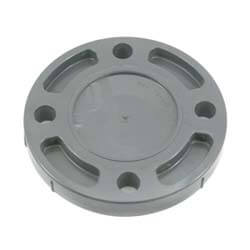
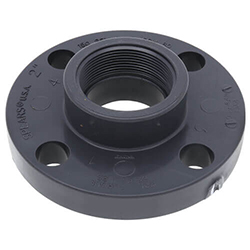
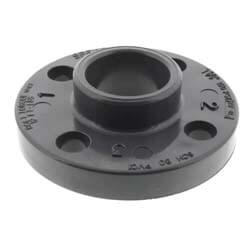
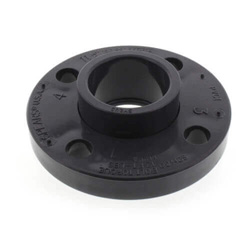
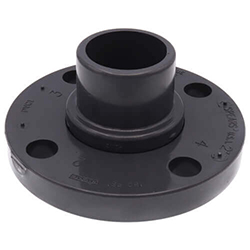
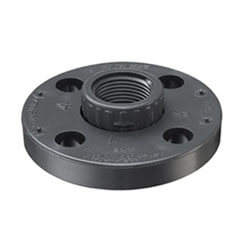
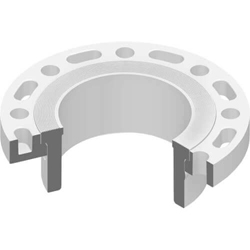
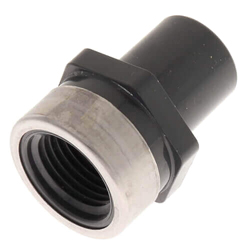
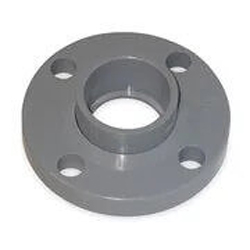
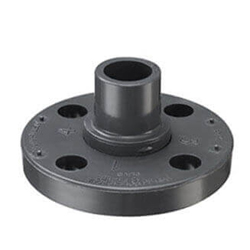
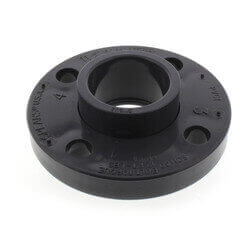
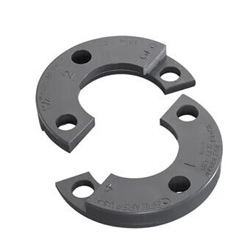
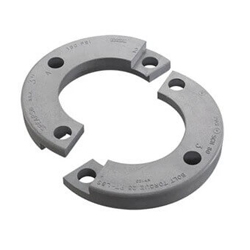
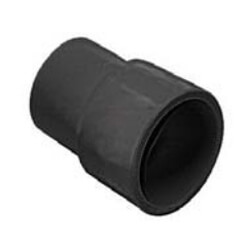
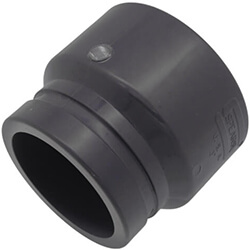
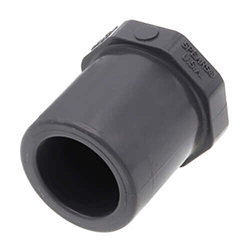
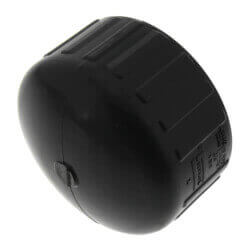
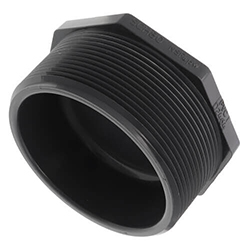
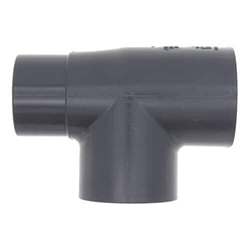
(SPG x S x S) (6)
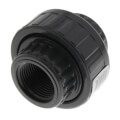

 --%3E %3Csvg version='1.1' id='Half' xmlns='http://www.w3.org/2000/svg' xmlns:xlink='http://www.w3.org/1999/xlink' x='0px' y='0px' viewBox='0 0 100 100' enable-background='new 0 0 100 100' xml:space='preserve'%3E %3Cg%3E %3Cpath fill='%23F15C02' d='M30.05,70.23l3.79-12.01L8.8,39.6l30.73-0.17c0,0,6.98-19.61,10-28.93c0.54,1.36,9.88,29.1,9.88,29.1h1.58 L93.71,7.18c-3.58-3.82-8.66-6.23-14.28-6.23H20.56C9.78,0.95,0.95,9.78,0.95,20.56v58.87c0,5.41,2.22,10.32,5.79,13.88 L30.05,70.23z'/%3E %3C/g%3E %3Cpath fill='%23FBC8B4' d='M93.71,7.18L60.98,39.6H91.2L65.38,58.24l9.38,29.58L49.69,69.78L24.5,87.82l5.55-17.59L6.75,93.32 c3.55,3.54,8.44,5.73,13.82,5.73h58.87c10.79,0,19.61-8.83,19.61-19.61V20.56C99.05,15.4,97.01,10.69,93.71,7.18z'/%3E %3C/svg%3E)
 --%3E %3Csvg version='1.1' id='No-RB' xmlns='http://www.w3.org/2000/svg' xmlns:xlink='http://www.w3.org/1999/xlink' x='0px' y='0px' viewBox='0 0 100 100' enable-background='new 0 0 100 100' xml:space='preserve'%3E %3Cpath fill='%23CECECE' d='M79.44,0.95H20.56C9.78,0.95,0.95,9.78,0.95,20.56v58.87c0,10.79,8.82,19.61,19.61,19.61h58.87 c10.79,0,19.61-8.83,19.61-19.61V20.56C99.05,9.78,90.22,0.95,79.44,0.95z M65.38,58.24l9.38,29.58L49.69,69.78L24.5,87.82 l9.34-29.6L8.8,39.6l30.73-0.17c0,0,6.98-19.61,10-28.93c0.54,1.36,9.88,29.1,9.88,29.1H91.2L65.38,58.24z'/%3E %3C/svg%3E)
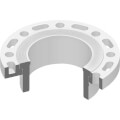
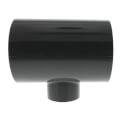
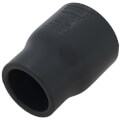
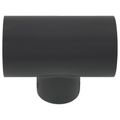
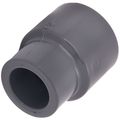
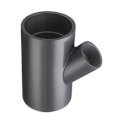



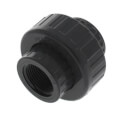
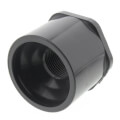
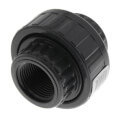
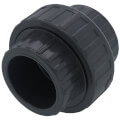

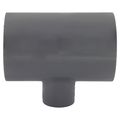
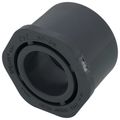
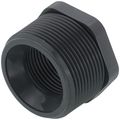

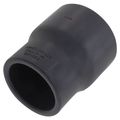
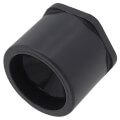
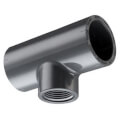
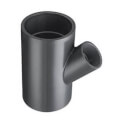
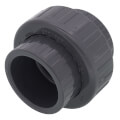
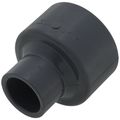
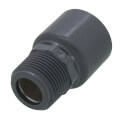
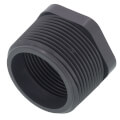
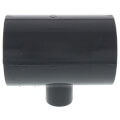
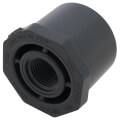

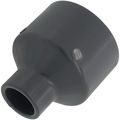
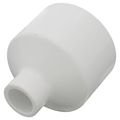
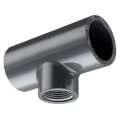
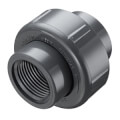
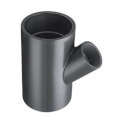
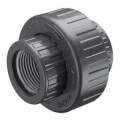

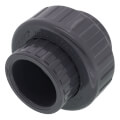
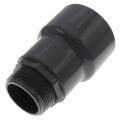
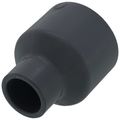
PVC Schedule 80 fittings connect and transition rigid PVC pipe in systems that need a thicker pipe wall than Schedule 40 provides, giving the joint added pressure capacity and resistance to physical damage. The thicker wall reduces the fitting's interior diameter slightly compared to a Schedule 40 fitting of the same nominal size, a detail installers account for when calculating flow through a run of pipe. Chemical processing lines, compressed air systems, and industrial water systems that operate at higher pressures or face rougher handling on a job site commonly specify Schedule 80 over the lighter-duty Schedule 40 alternative. Elbows, tees, adapters, and unions all come in Schedule 80 versions built from the same gray PVC compound, letting a system stay consistent in material and pressure rating from the straight pipe runs through every fitting and transition.
Subcategories
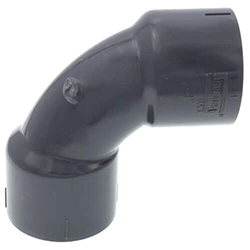
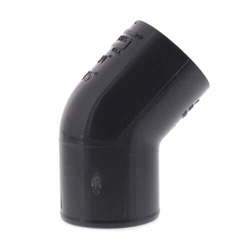
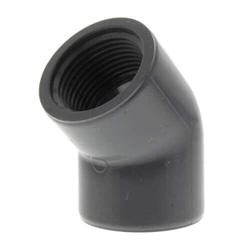
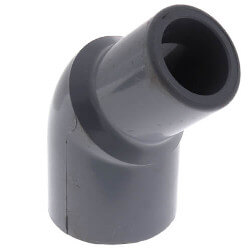
- 90° and 45° Elbows: Elbows change the direction of a pipe run, with 90-degree fittings handling sharp turns and 45-degree fittings used where a gentler bend reduces flow turbulence and pressure drop. Schedule 80 elbows carry the same thicker wall as the straight pipe they connect to, keeping the pressure rating consistent through the direction change. Installers select socket-weld, threaded, or spigot-style ends depending on how the rest of the run is joined. Sizing an elbow correctly means matching both the pipe diameter and the connection type used elsewhere in that section of the system.
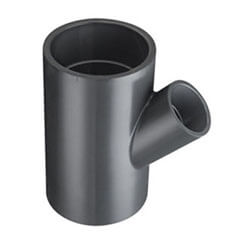
- Tees: Tees split a single pipe run into two directions, commonly used to branch off a supply line without breaking the main run's pressure rating. Reducing tees allow the branch line to step down to a smaller diameter than the main line, which is common when a secondary line feeds a lower-flow application. Schedule 80 tees are specified in systems where the branch itself needs the same pressure and impact resistance as the main line. Orientation matters during installation, since a tee installed backward can restrict flow more than the branch was designed for.
- Male and Female Adapters: Adapters transition PVC pipe to threaded connections, letting a solvent-welded PVC run connect to a valve, pump, or metal fitting with NPT threads. Male adapters have external threads while female adapters have internal threads, and choosing the right one depends on the threading of the component being connected. Schedule 80 adapters are built with extra wall thickness around the threaded section specifically to handle the added stress threaded connections place on the fitting compared to an all-solvent-welded joint. Over-tightening a threaded adapter is a common cause of cracked fittings, so many installers use thread sealant rather than excessive torque.
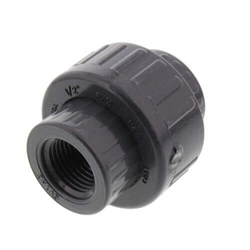
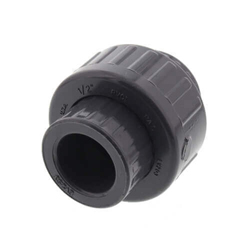
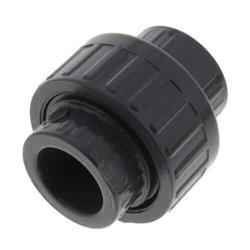
- Unions: Unions let a section of pipe be disconnected and reconnected without cutting into the solvent-welded joints on either side, which makes them valuable at pump connections, valves, or any point in the system likely to need future service. A union has three parts, two end pieces solvent-welded or threaded to the pipe and a center nut that draws them together with a gasket seal. Schedule 80 unions hold up to the higher pressures and physical stress found in industrial applications better than lighter-duty alternatives. Placing unions at logical service points during initial installation saves significant rework time later.
Buying Guide
Choosing PVC Schedule 80 fittings starts with confirming the system's operating pressure and comparing it against the pressure rating of Schedule 40 alternatives already under consideration. Systems running compressed air, chemical transfer lines, or anything exposed to physical impact on a job site benefit from Schedule 80's thicker wall, even though the fittings cost more and the reduced interior diameter slightly increases friction loss compared to Schedule 40 of the same nominal size.
Connection type is the next decision. Solvent-welded joints work well for permanent runs that won't need future disassembly, while threaded and union connections make sense at pumps, valves, and equipment that may need service down the road. Mixing connection types within PVC Schedule 80 Fittings on a single job is common and generally fine, as long as each transition point uses a fitting rated for both sides of that joint.
Matching every fitting's nominal pipe size to the existing pipe run avoids a mismatch that either restricts flow or creates a weak joint. Contractors also confirm that all fittings in a system, not just the pipe itself, carry the same Schedule 80 rating, since pairing a Schedule 80 line with lower-rated fittings undermines the pressure and impact resistance the heavier pipe was chosen to provide in the first place.
Frequently Asked Questions
What's the practical difference between Schedule 40 and Schedule 80 PVC fittings?
Schedule 80 fittings have a noticeably thicker wall than Schedule 40 fittings of the same nominal pipe size, giving them a higher pressure rating and better resistance to impact damage. The tradeoff is a slightly smaller interior diameter and a higher cost, so Schedule 80 tends to get specified for higher-pressure or more demanding applications rather than standard residential plumbing.
Can Schedule 80 fittings be solvent-welded to Schedule 40 pipe?
Fittings and pipe of different schedules generally shouldn't be mixed on the same run, since the differing wall thickness affects how the solvent weld cures and how the joint handles pressure. Keeping pipe and fittings matched to the same schedule throughout a run is the standard practice for a reliable, consistent-pressure system.
Why would a job specify threaded adapters instead of an all-solvent-welded system?
Threaded adapters and unions allow a section of the system to connect to equipment like pumps and valves, or to be disassembled for service, without cutting into solvent-welded joints. An all-welded system is simpler and often cheaper, but it makes future access to a specific fitting or valve far more difficult.
How does the reduced interior diameter of Schedule 80 fittings affect flow?
Because Schedule 80 fittings have thicker walls than Schedule 40 fittings of the same nominal size, the actual interior diameter is slightly smaller, which increases friction loss marginally over long runs. For most job sizes this difference is minor, but it becomes a real consideration on long runs or high-flow applications where every bit of friction loss adds up.
Where should unions be placed in a PVC Schedule 80 system?
Placing unions near pumps, valves, and any other component likely to need future service or replacement lets a section of pipe come apart without cutting into permanent solvent-welded joints. Planning union placement during initial installation, rather than adding them later, saves significant time on any future repair work.
