



Bluefin Isolation Valve Flanges

 --%3E %3Csvg version='1.1' id='Fill' xmlns='http://www.w3.org/2000/svg' xmlns:xlink='http://www.w3.org/1999/xlink' x='0px' y='0px' viewBox='0 0 100 100' enable-background='new 0 0 100 100' xml:space='preserve'%3E %3Cpath fill='%23F15C02' d='M79.44,0.95H20.56C9.78,0.95,0.95,9.78,0.95,20.56v58.87c0,10.79,8.82,19.61,19.61,19.61h58.87 c10.79,0,19.61-8.83,19.61-19.61V20.56C99.05,9.78,90.22,0.95,79.44,0.95z M65.38,58.24l9.38,29.58L49.69,69.78L24.5,87.82 l9.34-29.6L8.8,39.6l30.73-0.17c0,0,6.98-19.61,10-28.93c0.54,1.36,9.88,29.1,9.88,29.1H91.2L65.38,58.24z'/%3E %3C/svg%3E)

 --%3E %3Csvg version='1.1' id='No-RB' xmlns='http://www.w3.org/2000/svg' xmlns:xlink='http://www.w3.org/1999/xlink' x='0px' y='0px' viewBox='0 0 100 100' enable-background='new 0 0 100 100' xml:space='preserve'%3E %3Cpath fill='%23CECECE' d='M79.44,0.95H20.56C9.78,0.95,0.95,9.78,0.95,20.56v58.87c0,10.79,8.82,19.61,19.61,19.61h58.87 c10.79,0,19.61-8.83,19.61-19.61V20.56C99.05,9.78,90.22,0.95,79.44,0.95z M65.38,58.24l9.38,29.58L49.69,69.78L24.5,87.82 l9.34-29.6L8.8,39.6l30.73-0.17c0,0,6.98-19.61,10-28.93c0.54,1.36,9.88,29.1,9.88,29.1H91.2L65.38,58.24z'/%3E %3C/svg%3E)
 --%3E %3Csvg version='1.1' id='With-RB' xmlns='http://www.w3.org/2000/svg' xmlns:xlink='http://www.w3.org/1999/xlink' x='0px' y='0px' viewBox='0 0 100 100' enable-background='new 0 0 100 100' xml:space='preserve'%3E %3Cpath fill='%23FBC8B4' d='M79.44,0.95H20.56C9.78,0.95,0.95,9.78,0.95,20.56v58.87c0,10.79,8.82,19.61,19.61,19.61h58.87 c10.79,0,19.61-8.83,19.61-19.61V20.56C99.05,9.78,90.22,0.95,79.44,0.95z M65.38,58.24l9.38,29.58L49.69,69.78L24.5,87.82 l9.34-29.6L8.8,39.6l30.73-0.17c0,0,6.98-19.61,10-28.93c0.54,1.36,9.88,29.1,9.88,29.1H91.2L65.38,58.24z'/%3E %3C/svg%3E)
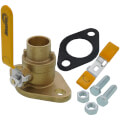
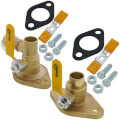
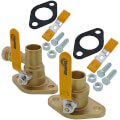
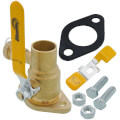
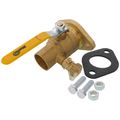
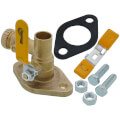
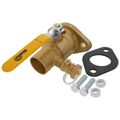
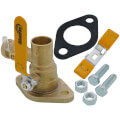
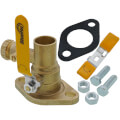
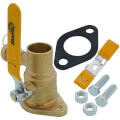
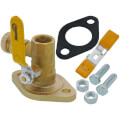
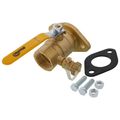
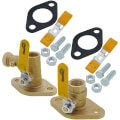
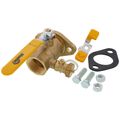
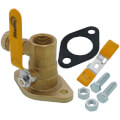
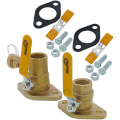
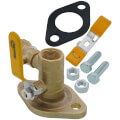
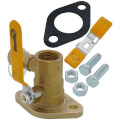
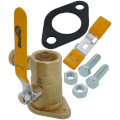

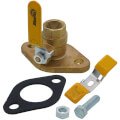
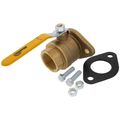
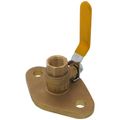
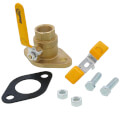
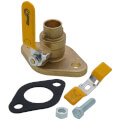
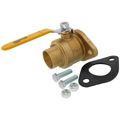
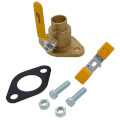
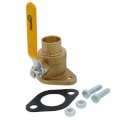
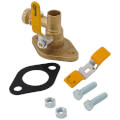
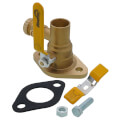
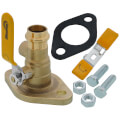
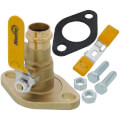
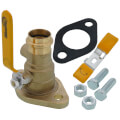
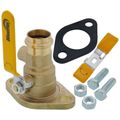
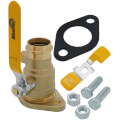
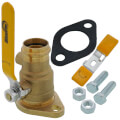
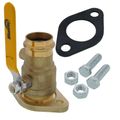
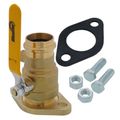
Bluefin Isolation Valve Flanges are ball valve and flange assemblies that let contractors isolate a circulator pump in a hydronic heating system without draining the loop.
Each flange has a forged brass body rated for 600 psi non-shock WOG, a chrome plated brass ball, and a PTFE seat, so the valve holds up through repeated servicing over the life of a boiler or hydronic system.
Installed in pairs on either side of a circulator, the flanges combine a 2-bolt connection with a full-port ball valve, cutting the number of separate fittings needed at the pump.
Sizes run from 3/4 inch through 1-1/4 inch, with sweat and threaded connection options to match copper or IPS piping already in place.
For a service tech, being able to shut off and pull a circulator without draining the entire system cuts both labor time and the risk of introducing air into the loop on refill.
Subcategories
- Sweat Isolator Flanges: Solder onto copper pipe for new installs built around copper mains, using a forged brass body rated for 600 psi non-shock WOG. Available in sizes from 3/4 inch through 1-1/4 inch to match common circulator connections.
- Threaded Isolator Flanges (IPS): Threaded connections sized to IPS pipe suit retrofits where steel or brass threaded piping already feeds the circulator location. The same forged brass body and 600 psi rating carry over from the sweat version.
- Threaded Isolation Flanges with Hose Drain and Rotating Flange: Add a boiler drain valve for purging air and debris during commissioning, plus a flange that rotates independently of the ball valve body so bolt holes can be aligned without twisting the whole assembly. Available in sizes such as 1-1/4 inch for service heavy multi-zone hydronic systems.
Buying Guide
Match the flange size to the circulator flange pattern already on the pump or specified in the boiler package, since a mismatched bolt pattern means a return trip for the correct part.
Connection type comes next: sweat flanges solder onto copper piping and suit new installs built around copper mains, while threaded IPS flanges suit retrofits where steel or brass threaded pipe already feeds the pump location.
On service heavy installations such as multi-zone hydronic systems, a rotating flange with an integrated hose drain earns back its added cost by letting a tech purge air and debris at the flange itself instead of running a separate boiler drain into the loop.
Bluefin Isolation Valve Flanges are rated for 600 psi non-shock working pressure, which covers standard residential and light commercial hydronic pressures, so pressure rating rarely becomes the deciding factor between models.
Pay closer attention to orientation and clearance around the circulator instead, since flanges installed in pairs need enough room on both sides for a ball valve handle to swing fully open and closed.
Chrome plated brass balls and PTFE seats resist mineral buildup better than unprotected metal, which matters in systems that see frequent fill and drain cycles from seasonal boiler servicing.
Ordering both flanges from the same connection type, either both sweat or both threaded, keeps the installation consistent and avoids mixing incompatible fittings at the pump.
Frequently Asked Questions
What do Bluefin Isolation Valve Flanges do?
They combine a ball valve with a bolt on flange so a circulator pump can be shut off and removed for service without draining the hydronic system. Installed in pairs on either side of the pump, they cut the number of separate fittings needed at the connection point.
What is the pressure rating on these flanges?
Bluefin Isolation Valve Flanges carry a forged brass body rated for 600 psi non-shock working pressure, well above typical residential and light commercial hydronic system pressures. The 600 psi rating applies across both the sweat and threaded connection versions.
Should a sweat or threaded flange be chosen?
Sweat flanges solder onto copper piping and fit naturally into new installs built around copper mains, while threaded IPS flanges thread onto steel or brass pipe already in place. The choice comes down to what piping already feeds the circulator location.
What does the hose drain and rotating flange option add?
The hose drain and rotating flange option adds a boiler drain valve for purging air and debris during startup, along with a flange that rotates independently of the ball valve body so bolt holes can be aligned without twisting the whole fitting. It works well on service heavy multi-zone hydronic systems.
Can both flanges in a pair use different connection types?
Mixing connection types on the same circulator is uncommon since the piping feeding each side of the pump is usually the same material. Matching both flanges to the same connection type, either sweat or threaded, keeps the installation consistent and simplifies future servicing.
