




Filters
SORT
Product Availability –
Brand –
Size –
Body Pattern –
Flow Capacity (Cv) –
Voltage –
Position –
Review Score –
 --%3E %3Csvg version='1.1' id='Fill' xmlns='http://www.w3.org/2000/svg' xmlns:xlink='http://www.w3.org/1999/xlink' x='0px' y='0px' viewBox='0 0 100 100' enable-background='new 0 0 100 100' xml:space='preserve'%3E %3Cpath fill='%23F15C02' d='M79.44,0.95H20.56C9.78,0.95,0.95,9.78,0.95,20.56v58.87c0,10.79,8.82,19.61,19.61,19.61h58.87 c10.79,0,19.61-8.83,19.61-19.61V20.56C99.05,9.78,90.22,0.95,79.44,0.95z M65.38,58.24l9.38,29.58L49.69,69.78L24.5,87.82 l9.34-29.6L8.8,39.6l30.73-0.17c0,0,6.98-19.61,10-28.93c0.54,1.36,9.88,29.1,9.88,29.1H91.2L65.38,58.24z'/%3E %3C/svg%3E)
 --%3E %3Csvg version='1.1' id='With-RB' xmlns='http://www.w3.org/2000/svg' xmlns:xlink='http://www.w3.org/1999/xlink' x='0px' y='0px' viewBox='0 0 100 100' enable-background='new 0 0 100 100' xml:space='preserve'%3E %3Cpath fill='%23FBC8B4' d='M79.44,0.95H20.56C9.78,0.95,0.95,9.78,0.95,20.56v58.87c0,10.79,8.82,19.61,19.61,19.61h58.87 c10.79,0,19.61-8.83,19.61-19.61V20.56C99.05,9.78,90.22,0.95,79.44,0.95z M65.38,58.24l9.38,29.58L49.69,69.78L24.5,87.82 l9.34-29.6L8.8,39.6l30.73-0.17c0,0,6.98-19.61,10-28.93c0.54,1.36,9.88,29.1,9.88,29.1H91.2L65.38,58.24z'/%3E %3C/svg%3E)
Price Range –
Direct Acting Solenoid Valves

 --%3E %3Csvg version='1.1' id='No-RB' xmlns='http://www.w3.org/2000/svg' xmlns:xlink='http://www.w3.org/1999/xlink' x='0px' y='0px' viewBox='0 0 100 100' enable-background='new 0 0 100 100' xml:space='preserve'%3E %3Cpath fill='%23CECECE' d='M79.44,0.95H20.56C9.78,0.95,0.95,9.78,0.95,20.56v58.87c0,10.79,8.82,19.61,19.61,19.61h58.87 c10.79,0,19.61-8.83,19.61-19.61V20.56C99.05,9.78,90.22,0.95,79.44,0.95z M65.38,58.24l9.38,29.58L49.69,69.78L24.5,87.82 l9.34-29.6L8.8,39.6l30.73-0.17c0,0,6.98-19.61,10-28.93c0.54,1.36,9.88,29.1,9.88,29.1H91.2L65.38,58.24z'/%3E %3C/svg%3E)
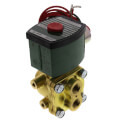

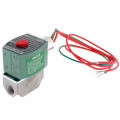

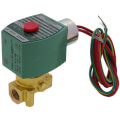
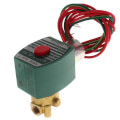
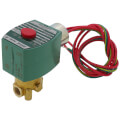
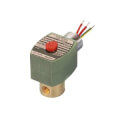
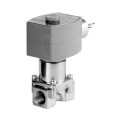
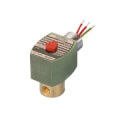
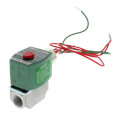
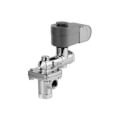
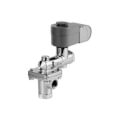
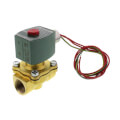
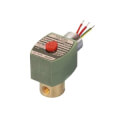
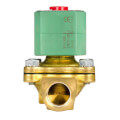
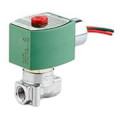
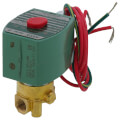
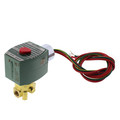
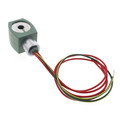
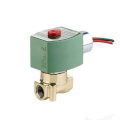
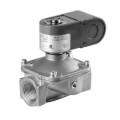
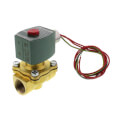
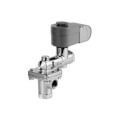
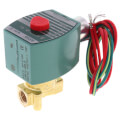
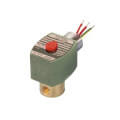
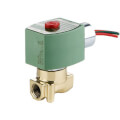
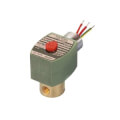
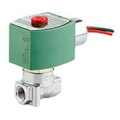
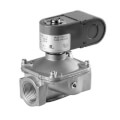

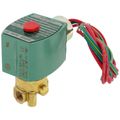
Direct acting solenoid valves are electrically operated valves that open and close using the force of the solenoid coil alone, without relying on differential pressure across the valve to assist movement. This design lets them function at very low pressure, including zero differential pressure, where a pilot-operated valve would fail to open. HVAC, refrigeration, and plumbing systems use direct acting solenoid valves in low-flow applications such as small line sizes, drain lines, and control circuits where reliable operation at low pressure matters more than raw flow capacity. Because the coil does all the work of opening the valve, direct acting models typically handle smaller orifice sizes than pilot-operated valves of a similar body size. Technicians select these valves when a system's pressure conditions can't reliably deliver the differential a pilot-operated valve needs to function, making direct acting design the more dependable choice in those situations.
Subcategories
- Normally Closed Direct Acting Valves: Normally closed direct acting valves stay shut until the coil is energized, opening only when power is applied. This fail-safe behavior makes them the standard choice for applications where the valve should default to a closed, no-flow state during a power outage. Drain lines, dispensing systems, and safety shutoffs commonly specify normally closed operation. Sizing the orifice to match the system's required flow at low pressure is part of selecting the right valve for the job.
- Normally Open Direct Acting Valves: Normally open direct acting valves stay open until energized, then close when the coil receives power. Systems that need continuous flow by default, interrupted only for a specific control event, use this configuration instead of normally closed valves. Venting and bypass circuits are common applications for normally open direct acting valves. Confirming the fail-safe state needed for the application before ordering avoids installing the wrong configuration.
- Miniature & Low-Flow Direct Acting Valves: Miniature direct acting valves handle very small line sizes and low flow rates found in instrumentation, sampling, and small control circuits. Their compact size and low power draw suit installations with limited space or battery-powered control systems. Response time on these smaller valves tends to be faster than larger direct acting or pilot-operated valves. Technicians working on precision control or metering equipment often specify this class of valve.
Buying Guide
Differential pressure range is the starting point for choosing between direct acting and pilot-operated solenoid valves. Direct Acting Solenoid Valves are built to open and close using coil force alone, so they work reliably at low or zero differential pressure where a pilot-operated valve would stay shut. Reviewing the system's actual operating pressure, not just its rated capacity, prevents choosing a valve that can't function at the pressures the system actually sees.
Orifice size and flow capacity need to match the application's flow requirements. Direct acting valves generally handle smaller orifice sizes than pilot-operated valves in a comparable body size, so higher-flow applications may call for a pilot-operated or piloted-direct acting hybrid design instead.
Coil voltage and power draw matter for control compatibility. Confirming the coil's voltage rating against the control circuit, and checking whether continuous-duty operation is expected, avoids coil burnout from an undersized or mismatched selection.
Fail-safe position, normally open or normally closed, should match what the system needs during a power interruption. Body material and seal compatibility with the media being controlled, whether that's water, air, refrigerant, or another fluid, round out the remaining selection criteria for a reliable installation.
Frequently Asked Questions
What's the difference between direct acting and pilot-operated solenoid valves?
Direct acting valves use the solenoid coil's force alone to open and close, while pilot-operated valves rely on differential pressure across the valve, assisted by a small pilot orifice, to do most of the work. This difference means direct acting valves function at low or zero differential pressure where pilot-operated valves can't open. Pilot-operated valves typically handle larger orifice sizes and higher flow for the same coil size.
Can a direct acting solenoid valve work at zero pressure?
Direct acting solenoid valves are built specifically to operate at zero or very low differential pressure, since the coil provides all the force needed to move the valve's plunger. This makes them suitable for drain lines, vacuum applications, and other low-pressure systems where a pilot-operated valve would fail to open. Confirming the valve's rated pressure range against the application's actual operating conditions is still worth checking before installation.
Why does a direct acting valve have a smaller flow capacity?
The coil has to supply all the force needed to open the valve directly, which limits how large the orifice can be for a given coil size and power draw. A larger orifice would need a bigger, more powerful coil to move it, which increases cost and power consumption. Pilot-operated valves get around this limit by using system pressure to do the heavy lifting once a small pilot port opens.
What happens to a normally closed valve during a power outage?
A normally closed direct acting valve returns to its closed, no-flow position whenever power is lost, since the coil's energized state is what holds the valve open. This fail-safe behavior is why normally closed valves are the standard choice for safety shutoffs and drain applications. Systems that need to stay open during a power loss instead require a normally open valve.
What media are direct acting solenoid valves compatible with?
Compatibility depends on the valve's body material and seal compounds, since different fluids and gases require different materials to avoid corrosion or seal degradation. Water, air, and various refrigerants each have their own compatible material options within the direct acting valve lineup. Checking the valve's material specification against the system's actual media prevents a seal failure after installation.
