




Filters
SORT
Product Availability –
Product Type –
Brand –
Voltage –
Review Score –
 --%3E %3Csvg version='1.1' id='Fill' xmlns='http://www.w3.org/2000/svg' xmlns:xlink='http://www.w3.org/1999/xlink' x='0px' y='0px' viewBox='0 0 100 100' enable-background='new 0 0 100 100' xml:space='preserve'%3E %3Cpath fill='%23F15C02' d='M79.44,0.95H20.56C9.78,0.95,0.95,9.78,0.95,20.56v58.87c0,10.79,8.82,19.61,19.61,19.61h58.87 c10.79,0,19.61-8.83,19.61-19.61V20.56C99.05,9.78,90.22,0.95,79.44,0.95z M65.38,58.24l9.38,29.58L49.69,69.78L24.5,87.82 l9.34-29.6L8.8,39.6l30.73-0.17c0,0,6.98-19.61,10-28.93c0.54,1.36,9.88,29.1,9.88,29.1H91.2L65.38,58.24z'/%3E %3C/svg%3E)
 --%3E %3Csvg version='1.1' id='With-RB' xmlns='http://www.w3.org/2000/svg' xmlns:xlink='http://www.w3.org/1999/xlink' x='0px' y='0px' viewBox='0 0 100 100' enable-background='new 0 0 100 100' xml:space='preserve'%3E %3Cpath fill='%23FBC8B4' d='M79.44,0.95H20.56C9.78,0.95,0.95,9.78,0.95,20.56v58.87c0,10.79,8.82,19.61,19.61,19.61h58.87 c10.79,0,19.61-8.83,19.61-19.61V20.56C99.05,9.78,90.22,0.95,79.44,0.95z M65.38,58.24l9.38,29.58L49.69,69.78L24.5,87.82 l9.34-29.6L8.8,39.6l30.73-0.17c0,0,6.98-19.61,10-28.93c0.54,1.36,9.88,29.1,9.88,29.1H91.2L65.38,58.24z'/%3E %3C/svg%3E)
Price Range –
Hard Start Devices



 --%3E %3Csvg version='1.1' id='Half' xmlns='http://www.w3.org/2000/svg' xmlns:xlink='http://www.w3.org/1999/xlink' x='0px' y='0px' viewBox='0 0 100 100' enable-background='new 0 0 100 100' xml:space='preserve'%3E %3Cg%3E %3Cpath fill='%23F15C02' d='M30.05,70.23l3.79-12.01L8.8,39.6l30.73-0.17c0,0,6.98-19.61,10-28.93c0.54,1.36,9.88,29.1,9.88,29.1h1.58 L93.71,7.18c-3.58-3.82-8.66-6.23-14.28-6.23H20.56C9.78,0.95,0.95,9.78,0.95,20.56v58.87c0,5.41,2.22,10.32,5.79,13.88 L30.05,70.23z'/%3E %3C/g%3E %3Cpath fill='%23FBC8B4' d='M93.71,7.18L60.98,39.6H91.2L65.38,58.24l9.38,29.58L49.69,69.78L24.5,87.82l5.55-17.59L6.75,93.32 c3.55,3.54,8.44,5.73,13.82,5.73h58.87c10.79,0,19.61-8.83,19.61-19.61V20.56C99.05,15.4,97.01,10.69,93.71,7.18z'/%3E %3C/svg%3E)


 --%3E %3Csvg version='1.1' id='No-RB' xmlns='http://www.w3.org/2000/svg' xmlns:xlink='http://www.w3.org/1999/xlink' x='0px' y='0px' viewBox='0 0 100 100' enable-background='new 0 0 100 100' xml:space='preserve'%3E %3Cpath fill='%23CECECE' d='M79.44,0.95H20.56C9.78,0.95,0.95,9.78,0.95,20.56v58.87c0,10.79,8.82,19.61,19.61,19.61h58.87 c10.79,0,19.61-8.83,19.61-19.61V20.56C99.05,9.78,90.22,0.95,79.44,0.95z M65.38,58.24l9.38,29.58L49.69,69.78L24.5,87.82 l9.34-29.6L8.8,39.6l30.73-0.17c0,0,6.98-19.61,10-28.93c0.54,1.36,9.88,29.1,9.88,29.1H91.2L65.38,58.24z'/%3E %3C/svg%3E)

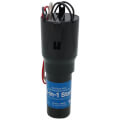
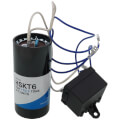

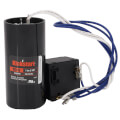

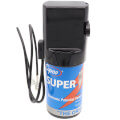
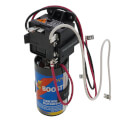
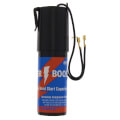

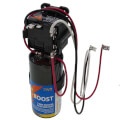
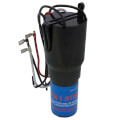

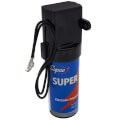

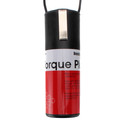
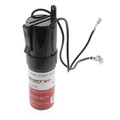
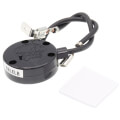
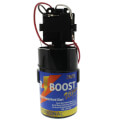
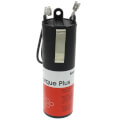
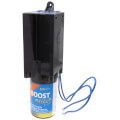
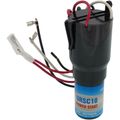
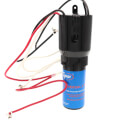
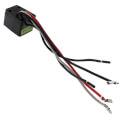

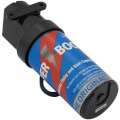
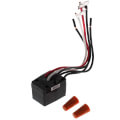
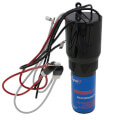
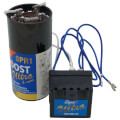
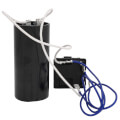
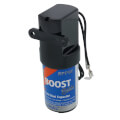

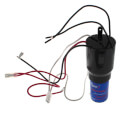
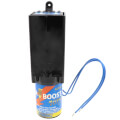
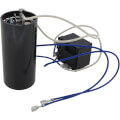
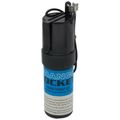
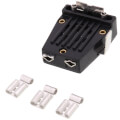


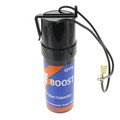
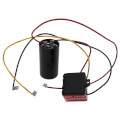
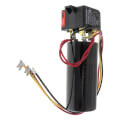
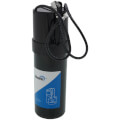
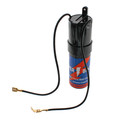
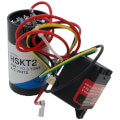
Hard start devices are electrical components that give an HVAC or refrigeration compressor motor an extra boost of torque during startup, helping it overcome the higher initial load some systems face when starting under pressure. A typical hard start device combines a start capacitor with a relay that engages briefly at startup and then disconnects once the motor reaches running speed, rather than staying in the circuit continuously. Compressors on older systems, systems in hot climates where head pressure has not fully equalized between cycles, or single-phase compressors on long line sets are common candidates for a hard start device. Adding one can reduce the strain of frequent hard starts on a motor's windings and may extend the compressor's service life, though it does not address an underlying problem like a failing capacitor or restricted refrigerant flow elsewhere in the system. Technicians typically consider a hard start device only after ruling out other causes of a slow or labored compressor start.
Subcategories
- Potential Relay Kits: Potential relay kits pair a start capacitor with a voltage-sensing relay that monitors the back-EMF generated by the motor's start winding, disconnecting the capacitor once the motor reaches a set percentage of running speed. This design responds to actual motor conditions rather than a fixed time delay, which makes it adaptable across a range of load conditions the compressor might face. Potential relays are a common choice on larger residential and light commercial compressors where load conditions vary more than on a small single application. Matching the relay's voltage rating to the motor's start winding voltage is necessary for reliable operation.
- Capacitor Start Kits: Capacitor start kits add a start capacitor in parallel with the motor's run capacitor, delivering extra starting torque without necessarily requiring the sensing relay that a potential relay kit uses. These kits are often chosen for simpler installations or smaller compressors where a fixed-duration boost is sufficient to overcome the startup load. Correct capacitor sizing, measured in microfarads, needs to match the motor's specifications, since an oversized capacitor can create excess current on start and an undersized one will not deliver enough of a boost. These kits are generally more compact and lower cost than a full potential relay setup.
- Positive Temperature Coefficient (PTC) Devices: PTC devices use a solid-state component whose resistance rises sharply with temperature, allowing current to flow freely at startup and then restricting it as the device heats up during the motor's start cycle. This design has no moving parts, which some technicians prefer for reliability compared with a mechanical relay that can wear out over repeated cycles. PTC devices need a cooldown period between starts to reset properly, so they are less suited to applications with very frequent short-cycling. They are a common choice on smaller compressors, including many found in residential refrigeration and light air conditioning applications.
Buying Guide
Choosing a hard start device starts with confirming the compressor actually needs one, since a device that boosts starting torque does not fix an underlying issue like a failing run capacitor, low voltage supply, or restricted refrigerant flow, and installing one to mask a different problem often leads to a repeat service call. Once a hard start is confirmed as the right fix, potential relay kits suit larger residential and light commercial compressors where load conditions vary, since the relay responds to the motor's actual back-EMF rather than a fixed timer. Capacitor start kits work well for simpler installations or smaller compressors where a fixed-duration torque boost is enough, and they tend to cost less and take up less space than a full potential relay setup. PTC devices offer a solid-state alternative with no moving parts, which appeals in applications where relay wear is a concern, but they need adequate time between starts to reset and are a poor fit for systems that cycle on and off frequently. Sizing matters across all three types: capacitor microfarad rating and relay voltage both need to match the compressor's specifications rather than being estimated from a general compressor size chart. Technicians should also check local warranty terms before adding a hard start device to a compressor still under manufacturer warranty, since some manufacturers have specific requirements or exclusions around aftermarket starting components.
Frequently Asked Questions
What problem does a hard start device solve on a compressor?
It provides an extra boost of starting torque to help a compressor motor overcome higher initial load, which is common in older systems, hot climates, or single-phase compressors on long line sets.
Does a hard start device fix a compressor that is struggling to start?
Not on its own if the root cause is something else, such as a failing run capacitor or restricted refrigerant flow, so ruling out other causes before installing one avoids masking a different problem.
What is the difference between a potential relay kit and a capacitor start kit?
A potential relay kit uses a voltage-sensing relay that responds to the motor's actual back-EMF, while a capacitor start kit delivers a fixed-duration torque boost without that sensing component.
Why might a PTC device not be suitable for a frequently cycling system?
PTC devices need a cooldown period between starts to reset properly, so a system that short-cycles often may not give the device enough time to reset before the next start.
Can installing a hard start device affect a compressor's warranty?
It can in some cases, since certain manufacturers have specific requirements or exclusions around aftermarket starting components, so checking warranty terms before installation is worth doing on a compressor still under coverage.
