




Filters
SORT
Product Availability –
Brand –
Size –
Length (Inches) –
Finish –
Material –
Review Score –
 --%3E %3Csvg version='1.1' id='Fill' xmlns='http://www.w3.org/2000/svg' xmlns:xlink='http://www.w3.org/1999/xlink' x='0px' y='0px' viewBox='0 0 100 100' enable-background='new 0 0 100 100' xml:space='preserve'%3E %3Cpath fill='%23F15C02' d='M79.44,0.95H20.56C9.78,0.95,0.95,9.78,0.95,20.56v58.87c0,10.79,8.82,19.61,19.61,19.61h58.87 c10.79,0,19.61-8.83,19.61-19.61V20.56C99.05,9.78,90.22,0.95,79.44,0.95z M65.38,58.24l9.38,29.58L49.69,69.78L24.5,87.82 l9.34-29.6L8.8,39.6l30.73-0.17c0,0,6.98-19.61,10-28.93c0.54,1.36,9.88,29.1,9.88,29.1H91.2L65.38,58.24z'/%3E %3C/svg%3E)
 --%3E %3Csvg version='1.1' id='With-RB' xmlns='http://www.w3.org/2000/svg' xmlns:xlink='http://www.w3.org/1999/xlink' x='0px' y='0px' viewBox='0 0 100 100' enable-background='new 0 0 100 100' xml:space='preserve'%3E %3Cpath fill='%23FBC8B4' d='M79.44,0.95H20.56C9.78,0.95,0.95,9.78,0.95,20.56v58.87c0,10.79,8.82,19.61,19.61,19.61h58.87 c10.79,0,19.61-8.83,19.61-19.61V20.56C99.05,9.78,90.22,0.95,79.44,0.95z M65.38,58.24l9.38,29.58L49.69,69.78L24.5,87.82 l9.34-29.6L8.8,39.6l30.73-0.17c0,0,6.98-19.61,10-28.93c0.54,1.36,9.88,29.1,9.88,29.1H91.2L65.38,58.24z'/%3E %3C/svg%3E)
Plastic Tubular Products




 --%3E %3Csvg version='1.1' id='Half' xmlns='http://www.w3.org/2000/svg' xmlns:xlink='http://www.w3.org/1999/xlink' x='0px' y='0px' viewBox='0 0 100 100' enable-background='new 0 0 100 100' xml:space='preserve'%3E %3Cg%3E %3Cpath fill='%23F15C02' d='M30.05,70.23l3.79-12.01L8.8,39.6l30.73-0.17c0,0,6.98-19.61,10-28.93c0.54,1.36,9.88,29.1,9.88,29.1h1.58 L93.71,7.18c-3.58-3.82-8.66-6.23-14.28-6.23H20.56C9.78,0.95,0.95,9.78,0.95,20.56v58.87c0,5.41,2.22,10.32,5.79,13.88 L30.05,70.23z'/%3E %3C/g%3E %3Cpath fill='%23FBC8B4' d='M93.71,7.18L60.98,39.6H91.2L65.38,58.24l9.38,29.58L49.69,69.78L24.5,87.82l5.55-17.59L6.75,93.32 c3.55,3.54,8.44,5.73,13.82,5.73h58.87c10.79,0,19.61-8.83,19.61-19.61V20.56C99.05,15.4,97.01,10.69,93.71,7.18z'/%3E %3C/svg%3E)


 --%3E %3Csvg version='1.1' id='No-RB' xmlns='http://www.w3.org/2000/svg' xmlns:xlink='http://www.w3.org/1999/xlink' x='0px' y='0px' viewBox='0 0 100 100' enable-background='new 0 0 100 100' xml:space='preserve'%3E %3Cpath fill='%23CECECE' d='M79.44,0.95H20.56C9.78,0.95,0.95,9.78,0.95,20.56v58.87c0,10.79,8.82,19.61,19.61,19.61h58.87 c10.79,0,19.61-8.83,19.61-19.61V20.56C99.05,9.78,90.22,0.95,79.44,0.95z M65.38,58.24l9.38,29.58L49.69,69.78L24.5,87.82 l9.34-29.6L8.8,39.6l30.73-0.17c0,0,6.98-19.61,10-28.93c0.54,1.36,9.88,29.1,9.88,29.1H91.2L65.38,58.24z'/%3E %3C/svg%3E)


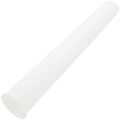


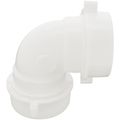


Plastic Tubular Products are the P-traps, tailpieces, waste arms, and extension tubes that connect a sink or fixture drain to the branch drain line, typically made from polypropylene or PVC. These components are lightweight and corrosion-resistant compared to metal alternatives, and most are available in 1-1/4 inch and 1-1/2 inch sizes to match common sink and lavatory drain openings. Slip-joint connections let installers make length and angle adjustments on the spot without solvent welding, which speeds up service calls and remodel work. Many tubular products ship with a washer already included at the joint, so the connection is ready to seal as soon as it's assembled. Because these parts handle daily drain flow and sit exposed under sinks, choosing the right size and configuration up front keeps callbacks for leaks or slow drains to a minimum.
Subcategories
- P-Traps: P-traps hold a water seal that blocks sewer gas from entering the building while allowing wastewater to pass through. Plumbers install them on sinks, lavatories, and other fixtures in both 1-1/4 inch and 1-1/2 inch sizes, often with a reducing washer to adapt between the two. Polypropylene and PVC versions are interchangeable with brass in most residential applications. Slip-joint nuts on both ends make it possible to adjust alignment during installation.
- Tailpieces: Tailpieces connect the fixture drain outlet down to the P-trap, and installers select length based on the distance between the sink and the trap. Branch tailpieces with a slip-joint top are commonly used to tie a dishwasher drain line into the tubular assembly. They come in the same 1-1/4 inch and 1-1/2 inch sizing as traps for consistent fit. Extension tailpieces let plumbers lengthen a run without cutting and re-gluing solvent-weld pipe.
- Waste Arms: Waste arms run from the trap to the wall or floor drain stub-out, completing the visible drain assembly under a sink. Installers use them to bridge whatever gap exists between the trap outlet and the building's fixed drain line. Like other tubular parts, they rely on slip-joint connections rather than solvent welding for easy field adjustment. Waste arms are available in straight and offset configurations to work around cabinet obstructions.
- Extension Tubes: Extension tubes add length to an existing tailpiece or waste arm when the factory length doesn't reach the trap or drain stub-out. Remodelers reach for these when relocating a sink or adjusting cabinet depth changes the drain layout. They connect with the same slip-joint hardware as the rest of the tubular system, so no additional adapters are needed. Extension tubes come in both 1-1/4 inch and 1-1/2 inch diameters to match the trap and tailpiece in use.
Buying Guide
Confirm drain size first, since Plastic Tubular Products are built around two standard diameters, 1-1/4 inch for lavatories and smaller fixtures and 1-1/2 inch for kitchen sinks and larger drains. A reducing washer bridges the two sizes when a trap needs to step down from a 1-1/2 inch tailpiece to a 1-1/4 inch trap, so check whether the fixture and trap sizes actually match before assuming a straight connection will work.
Material choice comes down to the application. Polypropylene and PVC tubular parts handle standard residential wastewater without corroding, and they cost less than brass while installing just as easily with slip-joint nuts and washers. Brass tubular components exist for situations where appearance matters, such as an exposed trap under a pedestal sink, but for concealed under-cabinet installations, plastic is the practical choice.
Map out the physical layout before ordering. Measure the distance from the fixture outlet to the trap and from the trap to the wall or floor stub-out, then select tailpiece, waste arm, and extension tube lengths that cover those runs with enough slip-joint overlap to make solid connections. Buying components that are too short forces a return trip for extension tubes, while overly long parts just need trimming, so it's worth measuring twice before placing the order.
Frequently Asked Questions
What sizes do plastic tubular P-traps and tailpieces come in?
Plastic tubular products are typically available in 1-1/4 inch and 1-1/2 inch diameters, matching the drain openings on lavatories and kitchen sinks respectively. A reducing washer can adapt between the two sizes when a fixture and trap don't match.
Is PVC tubular pipe as durable as brass under a sink?
Polypropylene and PVC tubular components resist corrosion and hold up well under normal residential wastewater flow, and they're interchangeable with brass in most applications. Brass is mainly chosen for exposed traps where appearance matters rather than for added durability.
Do plastic tubular fittings need to be solvent-welded?
No, plastic tubular products connect using slip-joint nuts and washers rather than solvent welding, which allows adjustments to length and angle during installation. That makes them faster to install and easier to service than glued PVC.
How does a branch tailpiece work with a dishwasher connection?
A branch tailpiece includes a slip-joint top along with a side inlet designed to accept the dishwasher drain hose, tying it into the sink's tubular drain assembly. This lets the dishwasher discharge through the same trap as the sink instead of requiring a separate drain line.
What happens if the tailpiece is too short to reach the trap?
An extension tube can be added between the tailpiece and the trap to close the gap without replacing either part. Extension tubes use the same slip-joint connections and come in matching 1-1/4 inch and 1-1/2 inch diameters.
