



Bradford White 50 Gallon Water Heaters

 --%3E %3Csvg version='1.1' id='Fill' xmlns='http://www.w3.org/2000/svg' xmlns:xlink='http://www.w3.org/1999/xlink' x='0px' y='0px' viewBox='0 0 100 100' enable-background='new 0 0 100 100' xml:space='preserve'%3E %3Cpath fill='%23F15C02' d='M79.44,0.95H20.56C9.78,0.95,0.95,9.78,0.95,20.56v58.87c0,10.79,8.82,19.61,19.61,19.61h58.87 c10.79,0,19.61-8.83,19.61-19.61V20.56C99.05,9.78,90.22,0.95,79.44,0.95z M65.38,58.24l9.38,29.58L49.69,69.78L24.5,87.82 l9.34-29.6L8.8,39.6l30.73-0.17c0,0,6.98-19.61,10-28.93c0.54,1.36,9.88,29.1,9.88,29.1H91.2L65.38,58.24z'/%3E %3C/svg%3E)
 --%3E %3Csvg version='1.1' id='Half' xmlns='http://www.w3.org/2000/svg' xmlns:xlink='http://www.w3.org/1999/xlink' x='0px' y='0px' viewBox='0 0 100 100' enable-background='new 0 0 100 100' xml:space='preserve'%3E %3Cg%3E %3Cpath fill='%23F15C02' d='M30.05,70.23l3.79-12.01L8.8,39.6l30.73-0.17c0,0,6.98-19.61,10-28.93c0.54,1.36,9.88,29.1,9.88,29.1h1.58 L93.71,7.18c-3.58-3.82-8.66-6.23-14.28-6.23H20.56C9.78,0.95,0.95,9.78,0.95,20.56v58.87c0,5.41,2.22,10.32,5.79,13.88 L30.05,70.23z'/%3E %3C/g%3E %3Cpath fill='%23FBC8B4' d='M93.71,7.18L60.98,39.6H91.2L65.38,58.24l9.38,29.58L49.69,69.78L24.5,87.82l5.55-17.59L6.75,93.32 c3.55,3.54,8.44,5.73,13.82,5.73h58.87c10.79,0,19.61-8.83,19.61-19.61V20.56C99.05,15.4,97.01,10.69,93.71,7.18z'/%3E %3C/svg%3E)

 --%3E %3Csvg version='1.1' id='With-RB' xmlns='http://www.w3.org/2000/svg' xmlns:xlink='http://www.w3.org/1999/xlink' x='0px' y='0px' viewBox='0 0 100 100' enable-background='new 0 0 100 100' xml:space='preserve'%3E %3Cpath fill='%23FBC8B4' d='M79.44,0.95H20.56C9.78,0.95,0.95,9.78,0.95,20.56v58.87c0,10.79,8.82,19.61,19.61,19.61h58.87 c10.79,0,19.61-8.83,19.61-19.61V20.56C99.05,9.78,90.22,0.95,79.44,0.95z M65.38,58.24l9.38,29.58L49.69,69.78L24.5,87.82 l9.34-29.6L8.8,39.6l30.73-0.17c0,0,6.98-19.61,10-28.93c0.54,1.36,9.88,29.1,9.88,29.1H91.2L65.38,58.24z'/%3E %3C/svg%3E)
 --%3E %3Csvg version='1.1' id='No-RB' xmlns='http://www.w3.org/2000/svg' xmlns:xlink='http://www.w3.org/1999/xlink' x='0px' y='0px' viewBox='0 0 100 100' enable-background='new 0 0 100 100' xml:space='preserve'%3E %3Cpath fill='%23CECECE' d='M79.44,0.95H20.56C9.78,0.95,0.95,9.78,0.95,20.56v58.87c0,10.79,8.82,19.61,19.61,19.61h58.87 c10.79,0,19.61-8.83,19.61-19.61V20.56C99.05,9.78,90.22,0.95,79.44,0.95z M65.38,58.24l9.38,29.58L49.69,69.78L24.5,87.82 l9.34-29.6L8.8,39.6l30.73-0.17c0,0,6.98-19.61,10-28.93c0.54,1.36,9.88,29.1,9.88,29.1H91.2L65.38,58.24z'/%3E %3C/svg%3E)
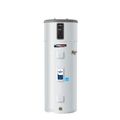

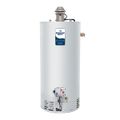
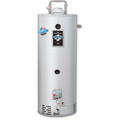
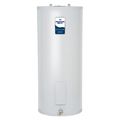
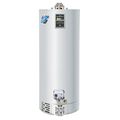
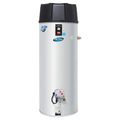
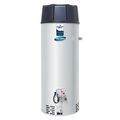

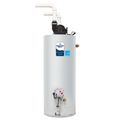
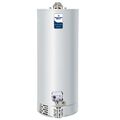
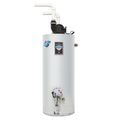
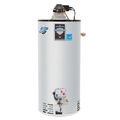

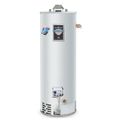
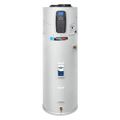
Bradford White 50 gallon water heaters deliver enough stored hot water for a three- to four-bathroom household or a small business with moderate simultaneous demand. A 50 gallon tank sits at the upper end of common residential sizing, giving more of a buffer during back-to-back showers, laundry loads, and dishwasher cycles than a 30 or 40 gallon unit. These tanks are available in gas and electric configurations, with atmospheric vent, power vent, and direct vent options depending on the series, so a contractor can match the replacement to the existing venting and fuel setup on a job site. Bradford White builds these tanks on a glass-lined steel design with a sacrificial anode rod, typically magnesium or aluminum depending on local water chemistry, to slow tank corrosion over the unit's service life. For a property that has outgrown a 40 gallon tank but does not need a full commercial water heater, a 50 gallon model is often the practical next step to quote first.
Subcategories
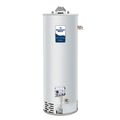
- Atmospheric Vent (Standard) Models: Atmospheric vent 50 gallon gas water heaters draft naturally through a chimney or B-vent and cost less upfront than power or direct vent equivalents. Contractors typically spec these for straightforward replacements where the existing venting is already in place and code-compliant. They use a standard gas control valve and thermocouple or flame sensor assembly, which keeps parts simple and widely stocked. This is usually the first option checked on a like-for-like swap.
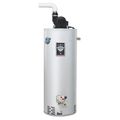
- Power Vent Models: Power vent 50 gallon water heaters use a blower to push exhaust out through PVC or similar venting, which lets them be installed in basements or interior spaces without a masonry chimney. Contractors reach for these on jobs where the original vent path is no longer viable or where the water heater is relocating within the structure. The added blower motor and pressure switch mean a slightly more involved troubleshooting call if the unit fails to ignite. Power vent models draw combustion air from outside the immediate space in some configurations, which matters for tight mechanical rooms.
- Direct Vent Models: Direct vent 50 gallon water heaters draw combustion air from outdoors through a sealed intake and exhaust through a coaxial or two-pipe vent system, isolating combustion from the indoor air supply entirely. These are common in tightly sealed homes or mechanical closets where makeup air is limited. Installers size the vent run carefully since direct vent systems are more sensitive to total equivalent length than atmospheric designs. This option shows up often in new construction and remodels with sealed combustion requirements.
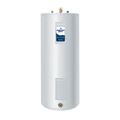
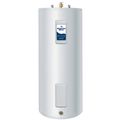
- Electric Models: Electric 50 gallon water heaters use upper and lower heating elements and thermostats instead of a gas burner, which removes venting from the installation entirely. Contractors spec these where there is no gas line, in all-electric buildings, or as a straightforward swap for an existing electric tank. Element and thermostat replacement is typically simpler than gas control valve service, which some techs prefer for callbacks. These units still use a sacrificial anode rod to protect the tank the same way gas models do.
Buying Guide
Start by confirming fuel type and venting before comparing anything else. A gas replacement needs to match the existing vent category (atmospheric, power, or direct vent), since swapping categories usually means additional venting work and cost the customer did not budget for. An electric replacement is more forgiving since there is no venting to match, but the service panel still needs enough capacity for the element load.
Next, size the tank to the household or facility, not just the unit being replaced. A property that has added bathrooms, appliances, or occupants since the original installation may be a better fit for Bradford White 50 Gallon Water Heaters than a straight downsize back to what was there before, even if the old tank was smaller. Recovery time matters as much as stored capacity for households that run showers and laundry back to back.
Check anode rod type against local water conditions. Softened water or low pH water is more conductive and can shorten the life of a standard magnesium anode, so an aluminum or aluminum-alloy rod is often the better long-term choice in those conditions.
Confirm clearances and pan requirements for the install location, especially for power and direct vent models where the blower assembly and vent connections take up more space than a simple atmospheric draft hood.
Finally, stock or quote the matching gas control valve, thermocouple or flame sensor, and anode rod alongside the tank itself so the first service call after installation does not turn into a second trip for a part that could have gone out with the original job.
Frequently Asked Questions
What size household does a 50 gallon water heater typically support?
A 50 gallon tank generally covers a three- to four-bathroom household with normal simultaneous hot water use, such as back-to-back showers plus a laundry or dishwasher cycle. Actual capacity needed depends on fixture count and how many hot water draws happen at the same time of day.
Can an atmospheric vent water heater be replaced with a power vent model without changing the venting?
No, power vent models use a blower and PVC-style venting instead of a chimney or B-vent, so the existing atmospheric venting cannot be reused. Switching vent categories on a replacement job means budgeting for new vent pipe and possibly a different termination point.
How do I know whether to install a magnesium or aluminum anode rod?
Magnesium is generally the better default choice because it protects the tank more aggressively, but aluminum is usually the better call when the water is softened or has a lower pH, since those conditions make magnesium wear out faster. Testing the water or asking about existing anode wear patterns helps confirm which material fits the job.
Is there a difference in parts availability between gas and electric 50 gallon models?
Gas models need a gas control valve, thermocouple or flame sensor, and burner assembly, while electric models rely on heating elements, thermostats, and a high-limit switch instead. Both share the same tank, anode rod, and drain valve components, so stocking overlaps more than it differs.
Do direct vent 50 gallon water heaters need special clearance for the intake and exhaust?
Yes, direct vent systems use a sealed combustion air intake alongside the exhaust, so both the intake and termination point need to meet the manufacturer's clearance and total equivalent vent length requirements. Confirming vent run length before ordering the tank avoids a mismatch between the unit and the venting kit on site.
