




Filters
SORT
Product Availability –
Brand –
Fuel Type –
BTU Output –
Efficiency –
Review Score –
 --%3E %3Csvg version='1.1' id='Fill' xmlns='http://www.w3.org/2000/svg' xmlns:xlink='http://www.w3.org/1999/xlink' x='0px' y='0px' viewBox='0 0 100 100' enable-background='new 0 0 100 100' xml:space='preserve'%3E %3Cpath fill='%23F15C02' d='M79.44,0.95H20.56C9.78,0.95,0.95,9.78,0.95,20.56v58.87c0,10.79,8.82,19.61,19.61,19.61h58.87 c10.79,0,19.61-8.83,19.61-19.61V20.56C99.05,9.78,90.22,0.95,79.44,0.95z M65.38,58.24l9.38,29.58L49.69,69.78L24.5,87.82 l9.34-29.6L8.8,39.6l30.73-0.17c0,0,6.98-19.61,10-28.93c0.54,1.36,9.88,29.1,9.88,29.1H91.2L65.38,58.24z'/%3E %3C/svg%3E)
 --%3E %3Csvg version='1.1' id='With-RB' xmlns='http://www.w3.org/2000/svg' xmlns:xlink='http://www.w3.org/1999/xlink' x='0px' y='0px' viewBox='0 0 100 100' enable-background='new 0 0 100 100' xml:space='preserve'%3E %3Cpath fill='%23FBC8B4' d='M79.44,0.95H20.56C9.78,0.95,0.95,9.78,0.95,20.56v58.87c0,10.79,8.82,19.61,19.61,19.61h58.87 c10.79,0,19.61-8.83,19.61-19.61V20.56C99.05,9.78,90.22,0.95,79.44,0.95z M65.38,58.24l9.38,29.58L49.69,69.78L24.5,87.82 l9.34-29.6L8.8,39.6l30.73-0.17c0,0,6.98-19.61,10-28.93c0.54,1.36,9.88,29.1,9.88,29.1H91.2L65.38,58.24z'/%3E %3C/svg%3E)
Price Range –
Combination Boilers


 --%3E %3Csvg version='1.1' id='No-RB' xmlns='http://www.w3.org/2000/svg' xmlns:xlink='http://www.w3.org/1999/xlink' x='0px' y='0px' viewBox='0 0 100 100' enable-background='new 0 0 100 100' xml:space='preserve'%3E %3Cpath fill='%23CECECE' d='M79.44,0.95H20.56C9.78,0.95,0.95,9.78,0.95,20.56v58.87c0,10.79,8.82,19.61,19.61,19.61h58.87 c10.79,0,19.61-8.83,19.61-19.61V20.56C99.05,9.78,90.22,0.95,79.44,0.95z M65.38,58.24l9.38,29.58L49.69,69.78L24.5,87.82 l9.34-29.6L8.8,39.6l30.73-0.17c0,0,6.98-19.61,10-28.93c0.54,1.36,9.88,29.1,9.88,29.1H91.2L65.38,58.24z'/%3E %3C/svg%3E)

 --%3E %3Csvg version='1.1' id='Half' xmlns='http://www.w3.org/2000/svg' xmlns:xlink='http://www.w3.org/1999/xlink' x='0px' y='0px' viewBox='0 0 100 100' enable-background='new 0 0 100 100' xml:space='preserve'%3E %3Cg%3E %3Cpath fill='%23F15C02' d='M30.05,70.23l3.79-12.01L8.8,39.6l30.73-0.17c0,0,6.98-19.61,10-28.93c0.54,1.36,9.88,29.1,9.88,29.1h1.58 L93.71,7.18c-3.58-3.82-8.66-6.23-14.28-6.23H20.56C9.78,0.95,0.95,9.78,0.95,20.56v58.87c0,5.41,2.22,10.32,5.79,13.88 L30.05,70.23z'/%3E %3C/g%3E %3Cpath fill='%23FBC8B4' d='M93.71,7.18L60.98,39.6H91.2L65.38,58.24l9.38,29.58L49.69,69.78L24.5,87.82l5.55-17.59L6.75,93.32 c3.55,3.54,8.44,5.73,13.82,5.73h58.87c10.79,0,19.61-8.83,19.61-19.61V20.56C99.05,15.4,97.01,10.69,93.71,7.18z'/%3E %3C/svg%3E)

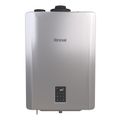


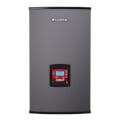


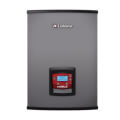


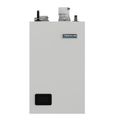
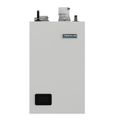

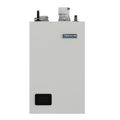
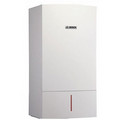
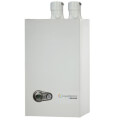

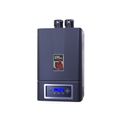
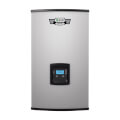

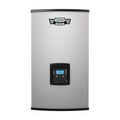
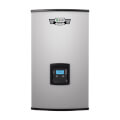

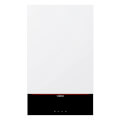

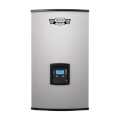
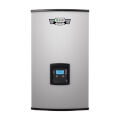
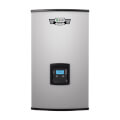
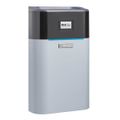

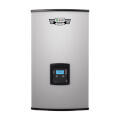
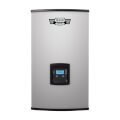
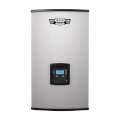
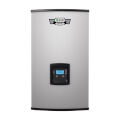
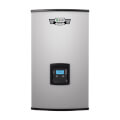
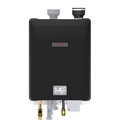

Combination boilers, often called combi boilers, supply both space heating and on-demand domestic hot water from a single compact unit without a separate storage tank. Cold water passes through a secondary heat exchanger inside the boiler whenever a hot water tap opens, heating it instantly rather than drawing from stored hot water. This design saves mechanical room space compared to a system boiler paired with a separate indirect tank, making combi boilers a common choice in smaller homes, condominiums, and buildings where floor space is limited. Because domestic hot water production takes priority over space heating whenever a tap is open, combi boilers are best suited to buildings with moderate simultaneous hot water demand rather than large households running multiple showers at once. Contractors replacing an aging tank-style system with a combi boiler should size the unit's hot water output to the building's peak demand rather than the space heating load alone.
Subcategories
- Wall-Hung Combination Boilers: Wall-hung combi boilers mount directly to a wall, freeing floor space in mechanical rooms, closets, and utility areas common in condominiums and smaller homes. Their compact footprint makes them a popular replacement for older floor-standing boilers and separate water heaters during a renovation. Because the unit hangs on structural mounting hardware, contractors need to confirm the wall can support the boiler's weight before installation. Vent and gas line routing are planned around the wall-mounted location rather than a floor-level connection.
- Condensing Combination Boilers: Condensing combi boilers extract additional heat from flue gases before they exit the building, improving efficiency compared to non-condensing designs. These units produce acidic condensate that must be managed through a dedicated drain and neutralizer, similar to other condensing appliances. Contractors installing a condensing combi boiler need to plan for both a condensate line and appropriately rated venting material. The efficiency gain often justifies the added installation complexity on jobs where fuel costs are a primary concern for the building owner.
- Combination Boiler Parts & Accessories: Replacement parts for combi boilers include plate heat exchangers, diverter valves, and flow sensors specific to the dual-purpose design these units rely on. A failing diverter valve is a common cause of a unit that heats domestic hot water but stops supplying space heating, or the reverse. Stocking common wear parts for the most frequently installed combi boiler models shortens service calls considerably. Accessories such as external expansion tanks and filling loops round out a typical combi boiler installation.
Buying Guide
Selecting the right combination boiler starts with calculating the building's peak domestic hot water demand, since combi boilers prioritize hot water production over space heating whenever a fixture is open. Homes with multiple bathrooms running fixtures simultaneously may need a higher-output combi unit or should consider a system boiler paired with a separate storage tank instead. Space heating load still matters and should be calculated separately using a standard heat loss method, since an oversized combi boiler wastes fuel while an undersized one struggles to maintain temperature on the coldest days. Wall-mounted units require confirming that the mounting wall can support the boiler's weight, along with adequate clearance for service access and venting. Condensing models need a condensate drain routed to an appropriate disposal point and combustion venting material rated for the flue gas temperatures involved, which differs from venting used on non-condensing equipment. Contractors should also plan for a properly sized expansion tank and filling loop, since combi boilers are sealed systems that rely on these components to maintain safe pressure through temperature swings. Reviewing the manufacturer's minimum flow rate requirements for the domestic hot water side helps avoid installing a unit that cannot reliably fire on fixtures with low flow rates, such as certain low-flow faucets and showerheads.
Frequently Asked Questions
How does a combination boiler differ from a system boiler?
A combination boiler produces domestic hot water on demand through an internal heat exchanger, while a system boiler heats water for space heating only and relies on a separate storage tank for domestic hot water. Combi boilers eliminate the tank but prioritize hot water production over heating whenever a tap is open.
Can a combi boiler supply hot water to multiple bathrooms at once?
Combi boilers can supply multiple fixtures simultaneously, but output drops as more taps open at the same time, which can result in reduced flow or temperature during peak simultaneous demand. Buildings with heavy simultaneous hot water use may be better served by a system boiler and separate tank.
Why would a combi boiler stop providing space heating while hot water still works?
A failing diverter valve is a frequent cause of this complaint, since it controls whether the boiler directs heat toward the space heating loop or the domestic hot water heat exchanger. Testing the diverter valve's operation identifies whether it is stuck in the hot water position.
Does a combination boiler need an expansion tank?
Combination boilers are sealed systems and require a properly sized expansion tank to absorb pressure changes as water heats and cools. Skipping or undersizing this component can cause the pressure relief valve to discharge repeatedly.
What is the minimum flow rate needed to activate hot water production?
Each combi boiler model specifies a minimum flow rate that must pass through the unit before the domestic hot water function activates, and low-flow fixtures can sometimes fall below that threshold. Checking the manufacturer's minimum flow specification against the building's fixtures avoids a hot water system that won't reliably turn on.
