




Twist Drill Bits


 --%3E %3Csvg version='1.1' id='No-RB' xmlns='http://www.w3.org/2000/svg' xmlns:xlink='http://www.w3.org/1999/xlink' x='0px' y='0px' viewBox='0 0 100 100' enable-background='new 0 0 100 100' xml:space='preserve'%3E %3Cpath fill='%23CECECE' d='M79.44,0.95H20.56C9.78,0.95,0.95,9.78,0.95,20.56v58.87c0,10.79,8.82,19.61,19.61,19.61h58.87 c10.79,0,19.61-8.83,19.61-19.61V20.56C99.05,9.78,90.22,0.95,79.44,0.95z M65.38,58.24l9.38,29.58L49.69,69.78L24.5,87.82 l9.34-29.6L8.8,39.6l30.73-0.17c0,0,6.98-19.61,10-28.93c0.54,1.36,9.88,29.1,9.88,29.1H91.2L65.38,58.24z'/%3E %3C/svg%3E)



 --%3E %3Csvg version='1.1' id='Fill' xmlns='http://www.w3.org/2000/svg' xmlns:xlink='http://www.w3.org/1999/xlink' x='0px' y='0px' viewBox='0 0 100 100' enable-background='new 0 0 100 100' xml:space='preserve'%3E %3Cpath fill='%23F15C02' d='M79.44,0.95H20.56C9.78,0.95,0.95,9.78,0.95,20.56v58.87c0,10.79,8.82,19.61,19.61,19.61h58.87 c10.79,0,19.61-8.83,19.61-19.61V20.56C99.05,9.78,90.22,0.95,79.44,0.95z M65.38,58.24l9.38,29.58L49.69,69.78L24.5,87.82 l9.34-29.6L8.8,39.6l30.73-0.17c0,0,6.98-19.61,10-28.93c0.54,1.36,9.88,29.1,9.88,29.1H91.2L65.38,58.24z'/%3E %3C/svg%3E)
 --%3E %3Csvg version='1.1' id='With-RB' xmlns='http://www.w3.org/2000/svg' xmlns:xlink='http://www.w3.org/1999/xlink' x='0px' y='0px' viewBox='0 0 100 100' enable-background='new 0 0 100 100' xml:space='preserve'%3E %3Cpath fill='%23FBC8B4' d='M79.44,0.95H20.56C9.78,0.95,0.95,9.78,0.95,20.56v58.87c0,10.79,8.82,19.61,19.61,19.61h58.87 c10.79,0,19.61-8.83,19.61-19.61V20.56C99.05,9.78,90.22,0.95,79.44,0.95z M65.38,58.24l9.38,29.58L49.69,69.78L24.5,87.82 l9.34-29.6L8.8,39.6l30.73-0.17c0,0,6.98-19.61,10-28.93c0.54,1.36,9.88,29.1,9.88,29.1H91.2L65.38,58.24z'/%3E %3C/svg%3E)


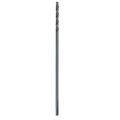


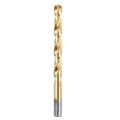


Twist Drill Bits are the standard cutting tool for boring round holes in metal, wood, and plastic across nearly every trade. Their spiral flutes carry chips up and out of the hole while the cutting edges at the tip do the actual boring. Material and coating determine how a bit performs under heat and load. Cobalt bits, for example, hold their edge through repeated use in hard metal; Milwaukee's Red Helix cobalt line is rated for up to 15 times the life of black oxide bits in comparable applications. Titanium-coated bits use a titanium nitride layer over high speed steel to cut friction and extend life in wood, metal, and PVC. Black oxide bits offer a lower-cost, general-purpose option suited to steel, aluminum, and common plastics. Picking the right bit type keeps drilling fast and holes clean instead of burning up cutting edges on the wrong material. For contractors running through dozens of holes a day, matching bit material to the job cuts down on tool changes and wasted time.
Subcategories
- Cobalt Twist Drill Bits: Cobalt twist drill bits are alloyed with cobalt throughout the material, not just coated on the surface, which lets them hold a sharp edge through repeated resharpening. Milwaukee's Red Helix cobalt bits use a variable helix design with a 35-degree angle tapering to 15 degrees and a 135-degree split point tip that starts precisely without walking. The line is rated for up to 15 times the life of black oxide bits. Contractors drilling stainless steel, cast iron, and other hard metals rely on cobalt bits for high-production work.
- Cobalt Step Drill Bits: Step drill bits use a series of stepped diameters on a single bit to cut progressively larger holes in thin materials without needing multiple bit changes. Milwaukee's cobalt step bits are rated for up to 15 times the life in stainless steel compared to prior designs and can produce up to 1,000 holes in mild steel up to 14 gauge. A Rapid Strike tip delivers faster starts in stainless applications. Electricians and sheet metal workers use step bits for conduit knockouts and enclosure penetrations.
- Titanium-Coated Drill Bits: Titanium-coated bits start as high speed steel and receive a titanium nitride coating that reduces friction and heat buildup during drilling. DeWalt's titanium pilot point bits feature a patented web taper for added strength and a pilot point tip designed to prevent walking and produce burr-free holes. Sets like the DW1369 cover sizes from 1/16 inch through 1/2 inch across 29 pieces. Contractors doing mixed-material work in wood, metal, and PVC use titanium bits as a versatile, mid-range option.
- Black Oxide Drill Bits: Black oxide bits are precision-ground high speed steel bits finished with an oxide coating that improves surface wear resistance and reduces friction during drilling. Bosch's Impact Tough black oxide bits feature a split-point tip for no-skate starts and are available in jobber, stubby, extended, and reduced-shank lengths. They're built for use in steel, aluminum, brass, and common wood and plastic materials. Contractors doing everyday drilling tasks reach for black oxide bits as a durable, general-purpose choice.
Buying Guide
Start with the material being drilled, since that determines how much heat and resistance the bit needs to handle. Soft materials like wood, common plastics, and thin sheet metal work fine with standard black oxide bits, which offer a durable, lower-cost option for everyday tasks. Hard metals such as stainless steel, cast iron, and hardened alloys call for cobalt bits, which hold an edge through repeated resharpening better than coated alternatives.
Coating matters as much as base material when comparing Twist Drill Bits for a given job. Titanium nitride coatings reduce friction and extend life over uncoated high speed steel, making them a reasonable middle option for mixed-material work that spans wood, metal, and PVC in the same job. Cobalt bits skip the coating altogether because the cobalt runs through the entire bit, so resharpening doesn't wear away a protective layer the way it does on coated bits.
Bit geometry also affects performance. A split-point or pilot-point tip starts on contact and resists walking across the material surface, which produces cleaner, more accurate holes. Step drill bits solve a different problem entirely, cutting multiple hole diameters with one tool in thin sheet metal or electrical boxes.
Finally, match shank style and bit length to the drill and application. Reduced shanks fit standard chucks even on larger-diameter bits, while extended lengths reach through thick material or tight framing cavities.
Frequently Asked Questions
What's the difference between cobalt and titanium-coated drill bits?
Cobalt bits are made from a cobalt alloy that runs through the entire bit, so the material stays consistent even after repeated resharpening. Titanium-coated bits start as high speed steel with a titanium nitride layer applied to the surface, and that coating eventually wears away with heavy use. Cobalt generally holds up better in hard metals like stainless steel and cast iron. Titanium-coated bits work well for general-purpose drilling across wood, metal, and PVC.
When should a step drill bit replace a standard twist bit?
Step drill bits work best on thin sheet metal and electrical enclosures where multiple hole diameters are needed without swapping tools. A single step bit cuts progressively larger holes as it advances, covering a range of sizes in one pass. Standard twist bits are better suited to thicker materials or single-diameter holes drilled repeatedly. Electricians commonly reach for step bits when cutting conduit knockouts.
How many times can a cobalt bit be resharpened?
Cobalt runs through the entire bit rather than sitting on the surface as a coating, so resharpening removes worn material without exposing bare, unprotected steel underneath. Cobalt's solid construction is why cobalt bits are rated for extended life, with some lines rated up to 15 times the life of black oxide bits in comparable use. Exact resharpening counts depend on how much material gets removed each time and how the bit is used. Frequent light resharpening extends usable life longer than infrequent heavy grinding.
What size range do titanium pilot point drill bit sets typically cover?
Titanium pilot point sets commonly range from 1/16 inch through 1/2 inch, covering the most frequently used sizes for wood, metal, and PVC drilling. DeWalt's 29-piece titanium set follows that range with a pilot point tip designed to prevent walking on contact. Larger sets add more size increments within the same overall range rather than extending beyond it. Contractors choose set size based on how many different hole diameters a job typically requires.
Are black oxide bits suitable for drilling steel?
Black oxide bits handle steel, aluminum, brass, and common wood and plastic materials, making them a solid general-purpose choice. The black oxide coating reduces friction and improves wear resistance compared to bare high speed steel. Bosch's Impact Tough line adds a split-point tip for no-skate starts on steel surfaces. Contractors doing everyday drilling across mixed materials often keep black oxide bits as their default option.
