




Filters
SORT
Product Availability –
Brand –
Application –
Reset Type –
Review Score –
 --%3E %3Csvg version='1.1' id='Fill' xmlns='http://www.w3.org/2000/svg' xmlns:xlink='http://www.w3.org/1999/xlink' x='0px' y='0px' viewBox='0 0 100 100' enable-background='new 0 0 100 100' xml:space='preserve'%3E %3Cpath fill='%23F15C02' d='M79.44,0.95H20.56C9.78,0.95,0.95,9.78,0.95,20.56v58.87c0,10.79,8.82,19.61,19.61,19.61h58.87 c10.79,0,19.61-8.83,19.61-19.61V20.56C99.05,9.78,90.22,0.95,79.44,0.95z M65.38,58.24l9.38,29.58L49.69,69.78L24.5,87.82 l9.34-29.6L8.8,39.6l30.73-0.17c0,0,6.98-19.61,10-28.93c0.54,1.36,9.88,29.1,9.88,29.1H91.2L65.38,58.24z'/%3E %3C/svg%3E)
 --%3E %3Csvg version='1.1' id='With-RB' xmlns='http://www.w3.org/2000/svg' xmlns:xlink='http://www.w3.org/1999/xlink' x='0px' y='0px' viewBox='0 0 100 100' enable-background='new 0 0 100 100' xml:space='preserve'%3E %3Cpath fill='%23FBC8B4' d='M79.44,0.95H20.56C9.78,0.95,0.95,9.78,0.95,20.56v58.87c0,10.79,8.82,19.61,19.61,19.61h58.87 c10.79,0,19.61-8.83,19.61-19.61V20.56C99.05,9.78,90.22,0.95,79.44,0.95z M65.38,58.24l9.38,29.58L49.69,69.78L24.5,87.82 l9.34-29.6L8.8,39.6l30.73-0.17c0,0,6.98-19.61,10-28.93c0.54,1.36,9.88,29.1,9.88,29.1H91.2L65.38,58.24z'/%3E %3C/svg%3E)
Price Range –
Water/Line Voltage Low Water Cutoffs


 --%3E %3Csvg version='1.1' id='Half' xmlns='http://www.w3.org/2000/svg' xmlns:xlink='http://www.w3.org/1999/xlink' x='0px' y='0px' viewBox='0 0 100 100' enable-background='new 0 0 100 100' xml:space='preserve'%3E %3Cg%3E %3Cpath fill='%23F15C02' d='M30.05,70.23l3.79-12.01L8.8,39.6l30.73-0.17c0,0,6.98-19.61,10-28.93c0.54,1.36,9.88,29.1,9.88,29.1h1.58 L93.71,7.18c-3.58-3.82-8.66-6.23-14.28-6.23H20.56C9.78,0.95,0.95,9.78,0.95,20.56v58.87c0,5.41,2.22,10.32,5.79,13.88 L30.05,70.23z'/%3E %3C/g%3E %3Cpath fill='%23FBC8B4' d='M93.71,7.18L60.98,39.6H91.2L65.38,58.24l9.38,29.58L49.69,69.78L24.5,87.82l5.55-17.59L6.75,93.32 c3.55,3.54,8.44,5.73,13.82,5.73h58.87c10.79,0,19.61-8.83,19.61-19.61V20.56C99.05,15.4,97.01,10.69,93.71,7.18z'/%3E %3C/svg%3E)



 --%3E %3Csvg version='1.1' id='No-RB' xmlns='http://www.w3.org/2000/svg' xmlns:xlink='http://www.w3.org/1999/xlink' x='0px' y='0px' viewBox='0 0 100 100' enable-background='new 0 0 100 100' xml:space='preserve'%3E %3Cpath fill='%23CECECE' d='M79.44,0.95H20.56C9.78,0.95,0.95,9.78,0.95,20.56v58.87c0,10.79,8.82,19.61,19.61,19.61h58.87 c10.79,0,19.61-8.83,19.61-19.61V20.56C99.05,9.78,90.22,0.95,79.44,0.95z M65.38,58.24l9.38,29.58L49.69,69.78L24.5,87.82 l9.34-29.6L8.8,39.6l30.73-0.17c0,0,6.98-19.61,10-28.93c0.54,1.36,9.88,29.1,9.88,29.1H91.2L65.38,58.24z'/%3E %3C/svg%3E)



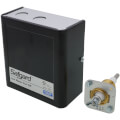
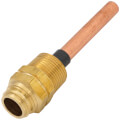
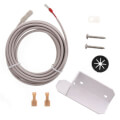

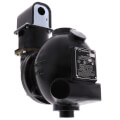
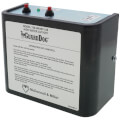

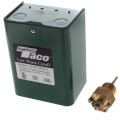
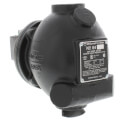
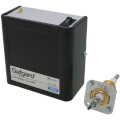
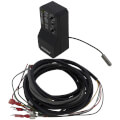
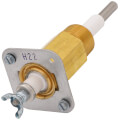
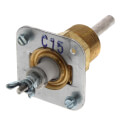
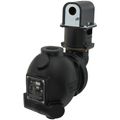
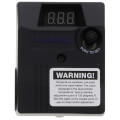
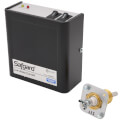
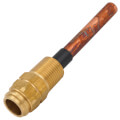
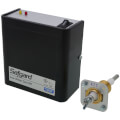

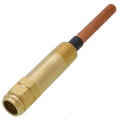
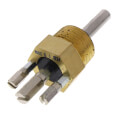
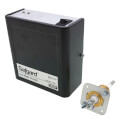
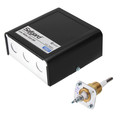
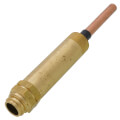
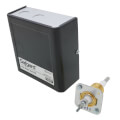
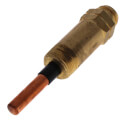

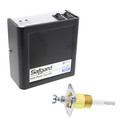
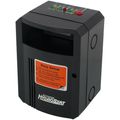
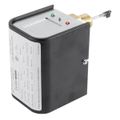
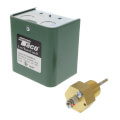
Water/Line Voltage Low Water Cutoffs are safety controls that shut down a boiler's burner circuit whenever the water level inside the vessel drops below a safe operating point, protecting steam and hot water boilers from dry-firing and heat exchanger damage. The McDonnell & Miller Series 67, a widely specified line voltage cutoff, connects via a 3/4 inch NPT fitting and operates on 24, 120, or 240 VAC power, so it drops into most residential and light commercial boiler control circuits without a separate transformer. Manual reset versions add a lockout step that keeps a technician in the loop after a low water event, rather than letting the burner restart automatically. Because a failed low water cutoff can lead to a cracked heat exchanger or a full boiler replacement, contractors treat this component as a non-negotiable safety device on every steam and hot water installation, not an optional accessory.
Subcategories
- Line Voltage Low Water Cutoffs: Standard line voltage cutoffs like the McDonnell & Miller Series 67 wire directly into a boiler's 24, 120, or 240 VAC burner circuit and connect through a 3/4 inch NPT tapping. Residential and light commercial installers use them on steam boilers as the primary safety interlock. A float mechanism inside the body rises and falls with water level, opening the burner circuit before the water surface drops out of sight. They're typically the first cutoff installed on a new steam boiler since no separate low voltage transformer is needed.
- Manual Reset Low Water Cutoffs: Manual reset units such as the McDonnell & Miller 67-M lock the burner circuit open after a low water event until a technician resets the switch by hand. Commercial property managers and code officials often specify manual reset over automatic reset because it forces a service call and inspection before the boiler fires again. Installers use them on unattended commercial steam plants where an unnoticed low water condition could go undetected for days. The extra step trades convenience for a documented human check on the boiler's water level.
- Millivolt Low Water Cutoffs: Millivolt cutoffs, including the McDonnell & Miller 67-G, are built for standing pilot and millivolt control systems that have no external power source available. Installers on older residential steam boilers and off-grid heating setups rely on this model because it draws its switching power from the pilot's thermopile rather than house current. The float switch still operates mechanically, but the electrical side is sized for millivolt-level circuits instead of line voltage. Techs replacing an aging standing-pilot boiler control usually match the cutoff type to the existing millivolt wiring rather than rewiring for line voltage.
- Combination Cutoff/Water Feeders: Combination units pair a low water cutoff with an automatic water feeder in one body, so the device feeds makeup water to the boiler before it resorts to killing the burner circuit. Property managers favor this style on unattended or infrequently checked steam systems because it reduces nuisance shutdowns caused by normal water loss. Installers still wire the unit into the same 24, 120, or 240 VAC burner circuit as a standard line voltage cutoff. The feeder function doesn't replace manual boiler inspections, but it buys time between water level checks.
Buying Guide
Start with the boiler type before picking a cutoff. Steam boilers need a float-type control mounted at the correct water line, while hot water boilers typically pair a cutoff with a separate flow switch or low water probe. Water/Line Voltage Low Water Cutoffs cover the steam side of that decision, since they're rated for the higher water temperatures and pressures a steam vessel produces. Check the existing control voltage before ordering a replacement: a boiler wired for 120 or 240 VAC line voltage takes a different cutoff than one running on a millivolt standing-pilot circuit, and mismatching the two means rewiring the control panel. Confirm the tapping size next, since most residential units thread into a 3/4 inch NPT boiler tapping, and match manual reset versus automatic reset to the code requirements or property manager's preference for commercial jobs. Automatic reset works fine for residential steam boilers that get regular attention, but commercial and unattended installations often require manual reset so a low water event forces a service call. Order a full combination cutoff/feeder only when the system genuinely needs automatic makeup water; adding a feeder to a boiler that doesn't need one just creates another failure point and hides a leak that should get repaired instead of continuously fed. When in doubt about voltage, tapping size, or reset type, the existing failed unit on the boiler is the most reliable spec sheet, so pull it and match the nameplate.
Frequently Asked Questions
What's the difference between a line voltage and millivolt low water cutoff?
Line voltage low water cutoffs wire directly into a boiler's 120 or 240 VAC burner circuit, while millivolt cutoffs like the McDonnell & Miller 67-G draw switching power from a standing pilot's thermopile instead of house current. Millivolt models suit older boilers that never had line voltage run to the control panel. Line voltage models fit most modern residential and commercial steam boilers instead.
Does a low water cutoff work on both steam and hot water boilers?
Water/Line Voltage Low Water Cutoffs are built primarily for steam boilers, where a float switch tracks the visible water line inside the vessel. Hot water boilers usually rely on a different combination of flow switches and low water probes since they don't maintain a visible water line the same way. Matching the cutoff style to the boiler type keeps the safety interlock reading water level correctly.
What's the difference between manual and automatic reset cutoffs?
Automatic reset cutoffs restore the burner circuit as soon as water returns to a safe level, while manual reset units like the 67-M stay locked out until a technician resets the switch by hand. Manual reset forces a service call and inspection after every low water event. Many commercial jobs and local codes require manual reset for that reason.
What tapping size do most low water cutoffs use?
Most residential line voltage cutoffs, including the McDonnell & Miller Series 67, connect through a 3/4 inch NPT boiler tapping. Confirming that tapping size against the existing control before ordering a replacement avoids a mismatched fitting on the job. Larger commercial boilers sometimes use different tapping sizes, so checking the boiler's control tapping is still worth doing.
Why would a combination cutoff/feeder make sense over a standard cutoff?
Combination units add an automatic water feeder alongside the cutoff, so the boiler gets makeup water before the burner circuit shuts down. Unattended or infrequently checked steam systems benefit most from that added feed function. A standard cutoff without a feeder still works fine on systems that get regular manual water level checks.
