




Cordless Ratchets

 --%3E %3Csvg version='1.1' id='Fill' xmlns='http://www.w3.org/2000/svg' xmlns:xlink='http://www.w3.org/1999/xlink' x='0px' y='0px' viewBox='0 0 100 100' enable-background='new 0 0 100 100' xml:space='preserve'%3E %3Cpath fill='%23F15C02' d='M79.44,0.95H20.56C9.78,0.95,0.95,9.78,0.95,20.56v58.87c0,10.79,8.82,19.61,19.61,19.61h58.87 c10.79,0,19.61-8.83,19.61-19.61V20.56C99.05,9.78,90.22,0.95,79.44,0.95z M65.38,58.24l9.38,29.58L49.69,69.78L24.5,87.82 l9.34-29.6L8.8,39.6l30.73-0.17c0,0,6.98-19.61,10-28.93c0.54,1.36,9.88,29.1,9.88,29.1H91.2L65.38,58.24z'/%3E %3C/svg%3E)


 --%3E %3Csvg version='1.1' id='No-RB' xmlns='http://www.w3.org/2000/svg' xmlns:xlink='http://www.w3.org/1999/xlink' x='0px' y='0px' viewBox='0 0 100 100' enable-background='new 0 0 100 100' xml:space='preserve'%3E %3Cpath fill='%23CECECE' d='M79.44,0.95H20.56C9.78,0.95,0.95,9.78,0.95,20.56v58.87c0,10.79,8.82,19.61,19.61,19.61h58.87 c10.79,0,19.61-8.83,19.61-19.61V20.56C99.05,9.78,90.22,0.95,79.44,0.95z M65.38,58.24l9.38,29.58L49.69,69.78L24.5,87.82 l9.34-29.6L8.8,39.6l30.73-0.17c0,0,6.98-19.61,10-28.93c0.54,1.36,9.88,29.1,9.88,29.1H91.2L65.38,58.24z'/%3E %3C/svg%3E)
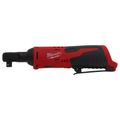





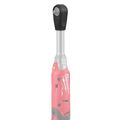

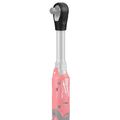

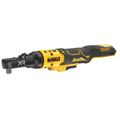
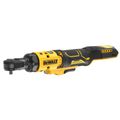


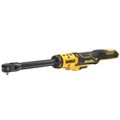

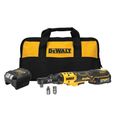
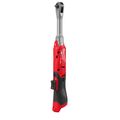


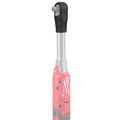




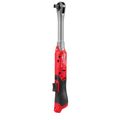
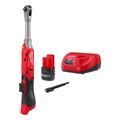
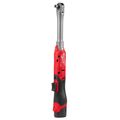

Cordless ratchets give plumbers, HVAC techs, and electricians a faster way to spin fasteners in tight spaces where a full-size impact driver won't fit. A battery-powered ratchet head replaces manual wrist-turning, so a tech can run down a strut clamp or flange bolt in seconds instead of minutes. The Milwaukee M12 3/8" cordless ratchet delivers up to 35 ft-lbs of torque and 250 RPM from a compact 12-volt platform, which is representative of the output most techs need for routine fastener work. Because these tools share battery platforms with drills and other compact tools already on a truck, a tech can add one without carrying a separate charger or battery line. For anyone who spends a shift under a sink, behind an air handler, or inside a mechanical room, a cordless ratchet cuts fatigue and finishes repetitive bolt-up work considerably faster.
Subcategories
- 3/8" Drive Ratchets: 3/8" drive is the most common size for plumbing and HVAC fastener work, covering everything from strut hardware to flange bolts. The Milwaukee M12 3/8" ratchet runs at up to 35 ft-lbs of torque and 250 RPM, enough for most general maintenance and installation tasks. Mechanics and service techs who already own 3/8" sockets can adopt this size without buying new accessories. It's the default choice for a first cordless ratchet on a truck.
- 1/4" Drive Ratchets: 1/4" drive ratchets handle smaller fasteners like control panel screws, light electrical hardware, and small equipment access panels. Techs working on furnaces, boilers, or appliance panels reach for this size when a 3/8" head is too bulky. The smaller head profile fits into recessed screw bosses that a standard ratchet can't access. It pairs well with compact bit sockets for mixed screw and bolt work.
- 1/2" Drive Ratchets: 1/2" drive ratchets step up torque output for larger fasteners like heavier equipment mounts and structural brackets. Extended-reach 1/2" models add length to get past obstructions on ductwork or piping runs. Contractors doing heavier mechanical installs use this size when a 3/8" ratchet stalls out under load. It's less common than 3/8" but essential for specific heavy-duty tasks.
- Extended-Reach Ratchets: Extended-reach ratchets add several inches of head length so a tech can get a socket onto a fastener buried behind a panel, joist, or piece of equipment. Drive size and torque range stay the same as standard counterparts, just with a longer neck added to the head. Installers working in finished mechanical rooms or crawlspaces rely on this style to avoid removing surrounding components. It's a targeted upgrade for jobs where clearance is the main obstacle.
Buying Guide
Start with drive size, since it determines which sockets already on the truck will work. Most plumbing and HVAC fastener work runs on 3/8" drive, so that's the safest default unless a specific job calls for 1/4" precision work or 1/2" heavy-duty torque. Models in this range typically deliver 35 to 55 ft-lbs of torque depending on voltage and brand, which covers the vast majority of strut, flange, and panel fasteners encountered in the field.
When shopping for Cordless Ratchets, battery platform compatibility matters as much as the tool itself. Choosing a ratchet on the same battery system as existing drills, impact drivers, or work lights means fewer chargers and battery types to manage on a service vehicle. Bare tool options let a tech add a ratchet to an existing kit without paying for another battery and charger.
Head clearance is the next consideration for anyone working in tight mechanical spaces. Standard-length ratchets work for open access panels, while extended-reach models are worth the extra cost when fasteners sit behind ductwork, joists, or other equipment. A low-profile head width also matters in cramped cabinets or crawlspaces.
Finally, weigh RPM against torque based on the work mix. Higher RPM drives long bolts faster, while higher torque matters more for breaking loose stuck fasteners. A tech doing mostly assembly work benefits from speed, while one servicing older equipment with corroded hardware benefits more from torque.
Frequently Asked Questions
What drive size cordless ratchet do most techs need?
3/8" drive covers the majority of plumbing and HVAC fastener work, from strut hardware to flange bolts. It matches the sockets most techs already carry, which makes it the standard starting point before considering 1/4" or 1/2" options for specialized tasks.
How much torque does a cordless ratchet produce?
Output varies by voltage and brand, but a 12-volt model like the Milwaukee M12 3/8" ratchet delivers up to 35 ft-lbs of torque. Higher-voltage platforms can push past that figure, so torque needs should guide the voltage decision as much as the drive size does.
Can a cordless ratchet share batteries with other cordless tools?
Most cordless ratchets are sold as bare tools built on an existing battery platform, such as Milwaukee's M12 line. Buying within a platform already in use on a truck means one less battery and charger system to manage.
When does an extended-reach ratchet make sense over a standard one?
Extended-reach ratchets add head length to reach fasteners hidden behind ductwork, joists, or other equipment. A standard-length ratchet works fine for open access, but extended reach saves time when disassembly would otherwise be required just to get a socket in place.
Is RPM or torque more important for a cordless ratchet?
It depends on the job. Higher RPM drives long runs of threaded fastener faster, while higher torque matters more for breaking loose stuck or corroded hardware. Techs doing mostly new assembly favor RPM, while service techs on older equipment favor torque.
