




Filters
SORT
Product Availability –
Category –
Brand –
Review Score –
 --%3E %3Csvg version='1.1' id='Fill' xmlns='http://www.w3.org/2000/svg' xmlns:xlink='http://www.w3.org/1999/xlink' x='0px' y='0px' viewBox='0 0 100 100' enable-background='new 0 0 100 100' xml:space='preserve'%3E %3Cpath fill='%23F15C02' d='M79.44,0.95H20.56C9.78,0.95,0.95,9.78,0.95,20.56v58.87c0,10.79,8.82,19.61,19.61,19.61h58.87 c10.79,0,19.61-8.83,19.61-19.61V20.56C99.05,9.78,90.22,0.95,79.44,0.95z M65.38,58.24l9.38,29.58L49.69,69.78L24.5,87.82 l9.34-29.6L8.8,39.6l30.73-0.17c0,0,6.98-19.61,10-28.93c0.54,1.36,9.88,29.1,9.88,29.1H91.2L65.38,58.24z'/%3E %3C/svg%3E)
 --%3E %3Csvg version='1.1' id='With-RB' xmlns='http://www.w3.org/2000/svg' xmlns:xlink='http://www.w3.org/1999/xlink' x='0px' y='0px' viewBox='0 0 100 100' enable-background='new 0 0 100 100' xml:space='preserve'%3E %3Cpath fill='%23FBC8B4' d='M79.44,0.95H20.56C9.78,0.95,0.95,9.78,0.95,20.56v58.87c0,10.79,8.82,19.61,19.61,19.61h58.87 c10.79,0,19.61-8.83,19.61-19.61V20.56C99.05,9.78,90.22,0.95,79.44,0.95z M65.38,58.24l9.38,29.58L49.69,69.78L24.5,87.82 l9.34-29.6L8.8,39.6l30.73-0.17c0,0,6.98-19.61,10-28.93c0.54,1.36,9.88,29.1,9.88,29.1H91.2L65.38,58.24z'/%3E %3C/svg%3E)
Price Range –
Honeywell & Honeywell Home Commercial Thermostats & Controls

 --%3E %3Csvg version='1.1' id='Half' xmlns='http://www.w3.org/2000/svg' xmlns:xlink='http://www.w3.org/1999/xlink' x='0px' y='0px' viewBox='0 0 100 100' enable-background='new 0 0 100 100' xml:space='preserve'%3E %3Cg%3E %3Cpath fill='%23F15C02' d='M30.05,70.23l3.79-12.01L8.8,39.6l30.73-0.17c0,0,6.98-19.61,10-28.93c0.54,1.36,9.88,29.1,9.88,29.1h1.58 L93.71,7.18c-3.58-3.82-8.66-6.23-14.28-6.23H20.56C9.78,0.95,0.95,9.78,0.95,20.56v58.87c0,5.41,2.22,10.32,5.79,13.88 L30.05,70.23z'/%3E %3C/g%3E %3Cpath fill='%23FBC8B4' d='M93.71,7.18L60.98,39.6H91.2L65.38,58.24l9.38,29.58L49.69,69.78L24.5,87.82l5.55-17.59L6.75,93.32 c3.55,3.54,8.44,5.73,13.82,5.73h58.87c10.79,0,19.61-8.83,19.61-19.61V20.56C99.05,15.4,97.01,10.69,93.71,7.18z'/%3E %3C/svg%3E)



 --%3E %3Csvg version='1.1' id='No-RB' xmlns='http://www.w3.org/2000/svg' xmlns:xlink='http://www.w3.org/1999/xlink' x='0px' y='0px' viewBox='0 0 100 100' enable-background='new 0 0 100 100' xml:space='preserve'%3E %3Cpath fill='%23CECECE' d='M79.44,0.95H20.56C9.78,0.95,0.95,9.78,0.95,20.56v58.87c0,10.79,8.82,19.61,19.61,19.61h58.87 c10.79,0,19.61-8.83,19.61-19.61V20.56C99.05,9.78,90.22,0.95,79.44,0.95z M65.38,58.24l9.38,29.58L49.69,69.78L24.5,87.82 l9.34-29.6L8.8,39.6l30.73-0.17c0,0,6.98-19.61,10-28.93c0.54,1.36,9.88,29.1,9.88,29.1H91.2L65.38,58.24z'/%3E %3C/svg%3E)

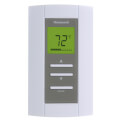
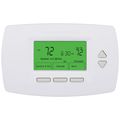



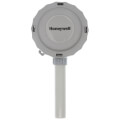
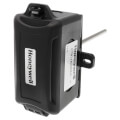

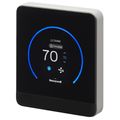
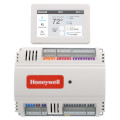
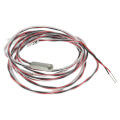
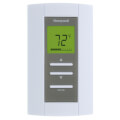

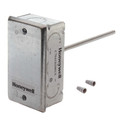
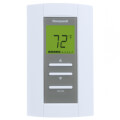
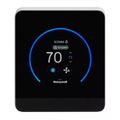
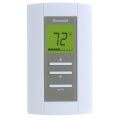
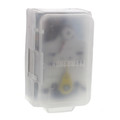
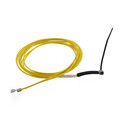
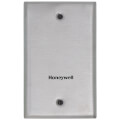
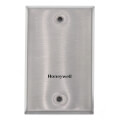
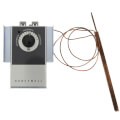
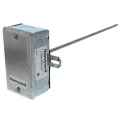
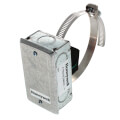
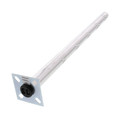
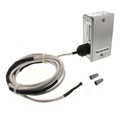
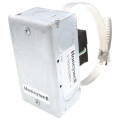
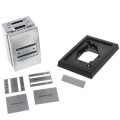

Honeywell and Honeywell Home commercial thermostats and controls manage heating and cooling equipment in office buildings, retail spaces, and other commercial settings where reliability and programmability matter more than they do in a typical home. Honeywell has a long history in building controls, and its commercial lineup includes programmable thermostats, staging controls, and system accessories built to work with a range of HVAC equipment. Commercial spaces often run more complex systems than a single-zone residential setup, so these controls frequently support features like multi-stage heating and cooling, scheduling for occupied and unoccupied hours, and compatibility with rooftop units or multi-zone systems. Facility managers and contractors specify Honeywell controls for their track record in commercial applications and for parts and support availability when a system needs servicing years down the road. Choosing the right thermostat or control means matching it to the equipment it operates and the building's occupancy schedule.
Subcategories
- Programmable Commercial Thermostats: Programmable commercial thermostats let facility staff set different temperature schedules for occupied and unoccupied hours, which helps control energy costs in buildings with predictable operating hours. These units typically support more programming flexibility than residential models, including multiple schedule periods per day. Contractors specify them for offices, retail stores, and similar spaces with regular business hours. Many models include an override feature for after-hours access without disrupting the saved schedule.
- Staging and Equipment Controls: Staging controls manage multi-stage heating and cooling equipment, sequencing compressors, heat strips, or burners so the system ramps capacity up or down smoothly instead of cycling a single stage on and off. These are common in larger commercial spaces where a single-stage thermostat could not properly control the equipment. Proper staging setup helps equipment run more efficiently and reduces wear from short cycling. Compatibility with the specific rooftop unit or split system should be confirmed before installation.
- Sensors and System Accessories: Sensors and accessories extend the capability of a base commercial thermostat, adding features like remote temperature sensing, outdoor air sensing, or communication modules that connect to a building automation system. Facility managers use remote sensors in larger zones where a single wall-mounted thermostat does not represent the whole space accurately. These accessories are typically matched to a specific control line rather than being universally compatible. Confirming compatibility with the installed thermostat model avoids a mismatched accessory.
Buying Guide
Selecting Honeywell and Honeywell Home commercial thermostats and controls starts with confirming compatibility with the existing HVAC equipment, including the number of heating and cooling stages the system uses. A thermostat rated for single-stage equipment will not properly control a multi-stage rooftop unit, so matching staging capability is one of the first checks to make.
Building occupancy patterns should guide the choice between a basic programmable thermostat and a more advanced control with multiple schedule periods. A retail space with consistent daily hours may only need a simple occupied/unoccupied schedule, while a building with variable hours or multiple tenants might benefit from more granular programming.
Consider whether the space needs additional sensors, such as a remote temperature sensor for a large or oddly shaped zone, or an outdoor air sensor for economizer control. These accessories add cost but can improve comfort and efficiency in spaces where a single wall-mounted thermostat does not represent conditions accurately.
For buildings with an existing building automation system, confirm whether the thermostat or control supports the necessary communication protocol before purchasing, since not every commercial thermostat is designed to connect with a central system.
Finally, factor in long-term parts and support availability. Facility managers often prioritize established commercial control lines because replacement parts and technical support remain accessible well after the initial installation.
Frequently Asked Questions
How do I know if a thermostat supports multi-stage equipment?
Check the thermostat's specification sheet for the number of heating and cooling stages it supports, and confirm this matches the staging on the installed rooftop unit or split system. Installing a single-stage thermostat on multi-stage equipment prevents the system from operating as designed.
Can remote sensors be added to an existing commercial thermostat?
Many commercial thermostat lines support remote sensor accessories, but compatibility depends on the specific model installed. Confirm the sensor is designed to work with the existing thermostat before purchasing.
What is the benefit of a programmable schedule in a commercial building?
A programmable schedule allows the system to reduce heating and cooling during unoccupied hours, which can lower energy costs in buildings with predictable operating hours. Many models also include a temporary override for after-hours access without disrupting the saved schedule.
Do these controls work with building automation systems?
Some commercial thermostats and controls can connect with building automation systems, but this depends on the specific communication protocol supported by the model. Confirm compatibility with the existing building automation setup before selecting a control.
How often should commercial thermostats and controls be serviced or replaced?
Service intervals depend on the equipment and manufacturer recommendations, but facility managers should have controls checked during routine HVAC maintenance visits. Replacement is typically driven by equipment age, changing system needs, or parts availability rather than a fixed schedule.
