




Filters
SORT
Product Availability –
Horse Power –
RPM –
Voltage –
Speeds –
Review Score –
 --%3E %3Csvg version='1.1' id='Fill' xmlns='http://www.w3.org/2000/svg' xmlns:xlink='http://www.w3.org/1999/xlink' x='0px' y='0px' viewBox='0 0 100 100' enable-background='new 0 0 100 100' xml:space='preserve'%3E %3Cpath fill='%23F15C02' d='M79.44,0.95H20.56C9.78,0.95,0.95,9.78,0.95,20.56v58.87c0,10.79,8.82,19.61,19.61,19.61h58.87 c10.79,0,19.61-8.83,19.61-19.61V20.56C99.05,9.78,90.22,0.95,79.44,0.95z M65.38,58.24l9.38,29.58L49.69,69.78L24.5,87.82 l9.34-29.6L8.8,39.6l30.73-0.17c0,0,6.98-19.61,10-28.93c0.54,1.36,9.88,29.1,9.88,29.1H91.2L65.38,58.24z'/%3E %3C/svg%3E)
 --%3E %3Csvg version='1.1' id='With-RB' xmlns='http://www.w3.org/2000/svg' xmlns:xlink='http://www.w3.org/1999/xlink' x='0px' y='0px' viewBox='0 0 100 100' enable-background='new 0 0 100 100' xml:space='preserve'%3E %3Cpath fill='%23FBC8B4' d='M79.44,0.95H20.56C9.78,0.95,0.95,9.78,0.95,20.56v58.87c0,10.79,8.82,19.61,19.61,19.61h58.87 c10.79,0,19.61-8.83,19.61-19.61V20.56C99.05,9.78,90.22,0.95,79.44,0.95z M65.38,58.24l9.38,29.58L49.69,69.78L24.5,87.82 l9.34-29.6L8.8,39.6l30.73-0.17c0,0,6.98-19.61,10-28.93c0.54,1.36,9.88,29.1,9.88,29.1H91.2L65.38,58.24z'/%3E %3C/svg%3E)
Price Range –
Lennox Draft Blowers and Motors





 --%3E %3Csvg version='1.1' id='Half' xmlns='http://www.w3.org/2000/svg' xmlns:xlink='http://www.w3.org/1999/xlink' x='0px' y='0px' viewBox='0 0 100 100' enable-background='new 0 0 100 100' xml:space='preserve'%3E %3Cg%3E %3Cpath fill='%23F15C02' d='M30.05,70.23l3.79-12.01L8.8,39.6l30.73-0.17c0,0,6.98-19.61,10-28.93c0.54,1.36,9.88,29.1,9.88,29.1h1.58 L93.71,7.18c-3.58-3.82-8.66-6.23-14.28-6.23H20.56C9.78,0.95,0.95,9.78,0.95,20.56v58.87c0,5.41,2.22,10.32,5.79,13.88 L30.05,70.23z'/%3E %3C/g%3E %3Cpath fill='%23FBC8B4' d='M93.71,7.18L60.98,39.6H91.2L65.38,58.24l9.38,29.58L49.69,69.78L24.5,87.82l5.55-17.59L6.75,93.32 c3.55,3.54,8.44,5.73,13.82,5.73h58.87c10.79,0,19.61-8.83,19.61-19.61V20.56C99.05,15.4,97.01,10.69,93.71,7.18z'/%3E %3C/svg%3E)


 --%3E %3Csvg version='1.1' id='No-RB' xmlns='http://www.w3.org/2000/svg' xmlns:xlink='http://www.w3.org/1999/xlink' x='0px' y='0px' viewBox='0 0 100 100' enable-background='new 0 0 100 100' xml:space='preserve'%3E %3Cpath fill='%23CECECE' d='M79.44,0.95H20.56C9.78,0.95,0.95,9.78,0.95,20.56v58.87c0,10.79,8.82,19.61,19.61,19.61h58.87 c10.79,0,19.61-8.83,19.61-19.61V20.56C99.05,9.78,90.22,0.95,79.44,0.95z M65.38,58.24l9.38,29.58L49.69,69.78L24.5,87.82 l9.34-29.6L8.8,39.6l30.73-0.17c0,0,6.98-19.61,10-28.93c0.54,1.36,9.88,29.1,9.88,29.1H91.2L65.38,58.24z'/%3E %3C/svg%3E)


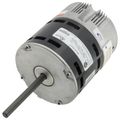


Lennox Draft Blowers and Motors are replacement parts that pull combustion gases out of a furnace's heat exchanger and push them safely out through the flue or vent pipe, creating the negative pressure a gas furnace needs to fire correctly. A typical draft inducer in this category, such as the 42250-001, runs on a 1/30 HP motor at 208 to 230 volts, drawing 0.6 amps at 3000 RPM. Other models step up to 1/10 HP on a permanent split capacitor design suited to higher-voltage 460 volt applications. Technicians replace this part when a furnace fails to fire, produces a pressure switch fault code, or the original blower wheel becomes noisy or unbalanced after years of run time. Matching the exact part number to the furnace model matters more with draft inducers than with most furnace parts, since HP, voltage, and RPM vary significantly across the Lennox furnace lineup, and an incorrect motor can trip the pressure switch even when it physically bolts into place.
Subcategories
- 115 Volt Draft Inducer Motors: Draft inducers built for 115 volt single-phase power, such as the 65204100 assembly, commonly run at 1/25 HP and 3000 RPM. Residential Lennox furnaces on standard household circuits make up the majority of applications using this voltage. Installers confirm voltage compatibility before ordering, since a 115 volt motor won't run correctly on a furnace wired for 208-230 volts. Catalog number 20J89 cross-references this assembly for Lennox parts counters and distributors.
- 208-230 Volt Draft Inducer Motors: Motors rated for 208 to 230 volts, like the 42250-001, typically run at 1/30 HP, 3000 RPM, and draw around 0.6 amps. Many mid-size residential and light commercial Lennox furnace models rely on this voltage range for their draft inducer motor. Catalog number 74K77 identifies this assembly at Lennox parts counters. Confirming the amp draw and RPM against the furnace's original part label prevents ordering a motor that runs at the wrong speed for the venting system.
- 460 Volt PSC Draft Inducer Motors: Higher-voltage 460 volt models, such as the 69M32, use a permanent split capacitor design running at 3200 RPM and 1/10 HP. Light commercial and larger residential furnace installs on three-phase or higher-voltage service call for this motor type instead of a standard 115 or 230 volt unit. PSC motors of this type require a run capacitor sized to the motor, so replacing the motor without also checking capacitor compatibility can leave the draft inducer underpowered. Getting the voltage right up front avoids installing a motor that won't reach the RPM needed to trip the furnace's pressure switch.
Buying Guide
Start with the voltage stamped on the furnace's original motor or listed in the unit's wiring diagram, since Lennox draft inducers span 115 volt, 208-230 volt, and 460 volt configurations that aren't interchangeable. A 115 volt motor won't run on a 230 volt circuit, and a 460 volt PSC motor needs three-phase or higher-voltage service that most single-family homes don't have. Horsepower and RPM matter just as much as voltage. A furnace's original part carries a specific HP and RPM rating, commonly 1/30 HP at 3000 RPM or 1/10 HP at 3200 RPM depending on the model, and a mismatched RPM can leave the draft inducer unable to generate enough negative pressure to satisfy the furnace's pressure switch, which shows up as a fault code and a furnace that won't fire. Amperage draw is worth checking too, since a motor pulling more current than the furnace's control board or wiring is rated for can trip a breaker or damage the board over time. Lennox Draft Blowers and Motors are typically ordered by catalog number rather than by generic specs, so pulling the number off the furnace's failed motor or its rating plate is the fastest way to confirm an exact match. When the original catalog number isn't visible or the label has worn off, cross-referencing HP, voltage, amp draw, and RPM together narrows the search to the correct replacement without guessing.
Frequently Asked Questions
How is the correct voltage draft inducer identified for a Lennox furnace?
Voltage is stamped on the furnace's original motor or listed on the unit's wiring diagram, and Lennox draft inducers span 115 volt, 208-230 volt, and 460 volt configurations. Matching that voltage exactly matters, since a 115 volt motor won't operate correctly on a 230 volt circuit.
What happens if the wrong RPM motor gets installed?
A mismatched RPM can leave the draft inducer unable to generate enough negative pressure to satisfy the furnace's pressure switch. The furnace typically responds with a fault code and won't fire, even though the replacement motor physically bolts into place.
What's the best way to find the exact replacement part?
Pulling the catalog number directly off the failed motor or the furnace's rating plate is the fastest way to confirm an exact match. When the label has worn off, cross-referencing HP, voltage, amp draw, and RPM together narrows the search to the correct replacement.
Can a 115 volt motor be swapped for a 230 volt one on the same furnace?
No, voltage needs to match the furnace's original wiring and control board rating. Installing the wrong voltage motor can trip a breaker, damage the control board, or leave the motor unable to reach the RPM the furnace needs to satisfy its pressure switch.
Why does a furnace need a draft inducer at all?
A draft inducer pulls combustion gases out of the heat exchanger and pushes them out through the flue or vent pipe, creating the negative pressure a gas furnace needs to fire safely. Without it, combustion gases could linger in the heat exchanger instead of venting properly.
