




Filters
SORT
Product Availability –
Brand –
Voltage –
Hertz –
Review Score –
 --%3E %3Csvg version='1.1' id='Fill' xmlns='http://www.w3.org/2000/svg' xmlns:xlink='http://www.w3.org/1999/xlink' x='0px' y='0px' viewBox='0 0 100 100' enable-background='new 0 0 100 100' xml:space='preserve'%3E %3Cpath fill='%23F15C02' d='M79.44,0.95H20.56C9.78,0.95,0.95,9.78,0.95,20.56v58.87c0,10.79,8.82,19.61,19.61,19.61h58.87 c10.79,0,19.61-8.83,19.61-19.61V20.56C99.05,9.78,90.22,0.95,79.44,0.95z M65.38,58.24l9.38,29.58L49.69,69.78L24.5,87.82 l9.34-29.6L8.8,39.6l30.73-0.17c0,0,6.98-19.61,10-28.93c0.54,1.36,9.88,29.1,9.88,29.1H91.2L65.38,58.24z'/%3E %3C/svg%3E)
 --%3E %3Csvg version='1.1' id='With-RB' xmlns='http://www.w3.org/2000/svg' xmlns:xlink='http://www.w3.org/1999/xlink' x='0px' y='0px' viewBox='0 0 100 100' enable-background='new 0 0 100 100' xml:space='preserve'%3E %3Cpath fill='%23FBC8B4' d='M79.44,0.95H20.56C9.78,0.95,0.95,9.78,0.95,20.56v58.87c0,10.79,8.82,19.61,19.61,19.61h58.87 c10.79,0,19.61-8.83,19.61-19.61V20.56C99.05,9.78,90.22,0.95,79.44,0.95z M65.38,58.24l9.38,29.58L49.69,69.78L24.5,87.82 l9.34-29.6L8.8,39.6l30.73-0.17c0,0,6.98-19.61,10-28.93c0.54,1.36,9.88,29.1,9.88,29.1H91.2L65.38,58.24z'/%3E %3C/svg%3E)
Price Range –
Ductless/Mini Split Condensate Pumps

 --%3E %3Csvg version='1.1' id='Half' xmlns='http://www.w3.org/2000/svg' xmlns:xlink='http://www.w3.org/1999/xlink' x='0px' y='0px' viewBox='0 0 100 100' enable-background='new 0 0 100 100' xml:space='preserve'%3E %3Cg%3E %3Cpath fill='%23F15C02' d='M30.05,70.23l3.79-12.01L8.8,39.6l30.73-0.17c0,0,6.98-19.61,10-28.93c0.54,1.36,9.88,29.1,9.88,29.1h1.58 L93.71,7.18c-3.58-3.82-8.66-6.23-14.28-6.23H20.56C9.78,0.95,0.95,9.78,0.95,20.56v58.87c0,5.41,2.22,10.32,5.79,13.88 L30.05,70.23z'/%3E %3C/g%3E %3Cpath fill='%23FBC8B4' d='M93.71,7.18L60.98,39.6H91.2L65.38,58.24l9.38,29.58L49.69,69.78L24.5,87.82l5.55-17.59L6.75,93.32 c3.55,3.54,8.44,5.73,13.82,5.73h58.87c10.79,0,19.61-8.83,19.61-19.61V20.56C99.05,15.4,97.01,10.69,93.71,7.18z'/%3E %3C/svg%3E)

 --%3E %3Csvg version='1.1' id='No-RB' xmlns='http://www.w3.org/2000/svg' xmlns:xlink='http://www.w3.org/1999/xlink' x='0px' y='0px' viewBox='0 0 100 100' enable-background='new 0 0 100 100' xml:space='preserve'%3E %3Cpath fill='%23CECECE' d='M79.44,0.95H20.56C9.78,0.95,0.95,9.78,0.95,20.56v58.87c0,10.79,8.82,19.61,19.61,19.61h58.87 c10.79,0,19.61-8.83,19.61-19.61V20.56C99.05,9.78,90.22,0.95,79.44,0.95z M65.38,58.24l9.38,29.58L49.69,69.78L24.5,87.82 l9.34-29.6L8.8,39.6l30.73-0.17c0,0,6.98-19.61,10-28.93c0.54,1.36,9.88,29.1,9.88,29.1H91.2L65.38,58.24z'/%3E %3C/svg%3E)
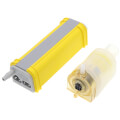
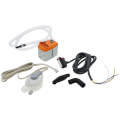
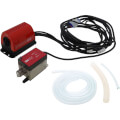
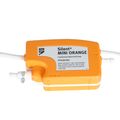
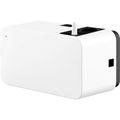
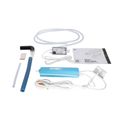
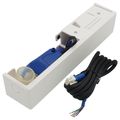

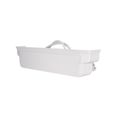
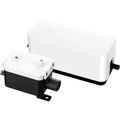
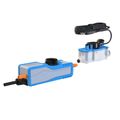
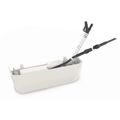
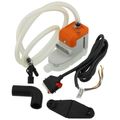
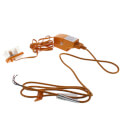
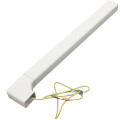

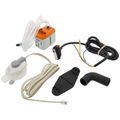
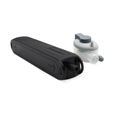
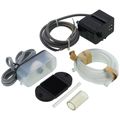
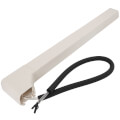
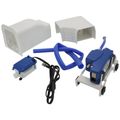
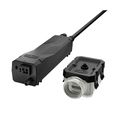
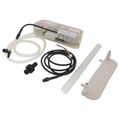

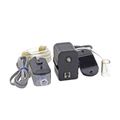

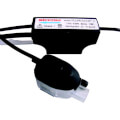
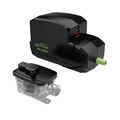
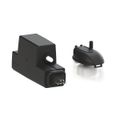
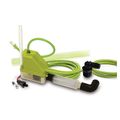
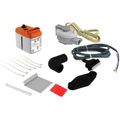


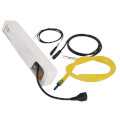
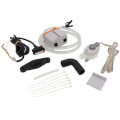
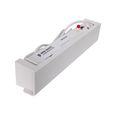
Mini split and ductless condensate removal pumps are small electric pumps that lift the water a ductless indoor unit produces up and out to a drain, a window, or the outside of a building when a gravity drain line isn't practical. Most units mount directly to the wall beneath or beside the indoor evaporator and connect to its drain pan with flexible tubing. A float switch inside the reservoir triggers the pump automatically once condensate reaches a set level, so the mechanism cycles on and off without a technician resetting anything. Many models run on standard household voltage and shut the connected system down through a built-in safety switch if the pump fails or the line clogs, protecting ceilings and walls from water damage. Contractors installing or servicing ductless systems in finished spaces, offices, and multi-story buildings rely on these pumps whenever routing a gravity drain isn't an option. Choosing the right pump means matching lift height and flow rate to the installation, which is why the sizing details below matter for a lasting repair or new install.
Subcategories
- Low-Profile Mini Pumps: Low-profile mini pumps mount in tight spaces behind or beside a ductless indoor unit where a standard-size pump housing won't fit. Installers use them most often on wall-mounted units in bedrooms and offices where a compact footprint keeps the installation out of sight. A shorter vertical lift than larger models suits them to single-story installations with a nearby drain point. Servicing crews favor the smaller housings because they simplify future access to the float switch and tubing connections.
- High-Lift Condensate Pumps: High-lift condensate pumps push water up several feet of vertical run, which matters in multi-story buildings and commercial spaces where the nearest drain sits well above the indoor unit. Property managers and commercial HVAC crews specify them when a ductless system serves an interior room with no exterior wall nearby. Higher lift capacity comes with a stronger motor and larger reservoir than a basic model. Routing the discharge line correctly still matters at this lift range, since a kink or long horizontal run can overwork the pump.
- Condensate Pump Kits with Safety Switches: Condensate pump kits with safety switches pair the pump itself with a float-activated shutoff that cuts power to the connected system if water backs up. Facility maintenance teams choose these kits for finished spaces like server rooms and retail buildouts, where a slow leak could cause real damage before anyone notices. The safety switch wires directly into the low-voltage thermostat circuit on most ductless systems. Pairing the switch with the pump in one kit saves a separate parts order and keeps the wiring compatible from the start.
- Reservoir-Style Pumps: Reservoir-style pumps hold a larger volume of condensate before cycling on, which reduces how often the motor starts and stops during heavy cooling loads. Installers reach for them on systems that produce more condensate than a small inline pump can handle efficiently, such as larger ductless units or humid climates. A bigger reservoir also buys a few extra minutes of runtime if the drain line briefly backs up. Replacement reservoirs and float switches are sold separately for teams maintaining these pumps over time.
Buying Guide
Start by measuring the vertical lift and horizontal run the pump needs to cover between the indoor unit and the nearest drain, window, or exterior wall. Pumps rated for a few feet of lift handle most residential installs, while commercial jobs with longer runs or multiple floors call for a higher-lift model with a stronger motor. Flow rate matters just as much as lift: a unit that produces more condensate, or one running in a hot, humid region, needs a pump that can keep up without cycling constantly.
Selecting the right Mini Split/Ductless Condensate Removal Pumps for a job also means checking noise level, since these pumps often sit inside occupied rooms rather than a mechanical closet. Quieter motors cost a little more but prevent callbacks in bedrooms, offices, and hotel rooms. A built-in safety switch is worth the extra step for any installation above a finished ceiling or near electronics, since it cuts power to the system before a clog turns into a repair bill for water damage.
Finally, confirm the reservoir size and tubing diameter match what the existing drain pan and line already use. A mismatch means extra fittings or an adapter kit, which adds labor time to a job that should otherwise be a straightforward swap. Buying a pump built for the specific lift, flow, and noise requirements of the space saves a return trip later.
Frequently Asked Questions
Do all ductless mini split systems need a condensate pump?
Not always. If the indoor unit sits above a floor drain or an exterior wall with a straight gravity path outside, a condensate pump isn't necessary. A pump becomes necessary whenever the unit sits in an interior room, a basement without a nearby drain, or above a finished ceiling where a gravity line can't reach a suitable discharge point.
How much vertical lift can a typical condensate pump handle?
Lift capacity varies by model, with compact units built for shorter residential runs and high-lift versions rated for multi-story commercial installs. Checking the pump's rated lift against the actual vertical distance between the unit and the discharge point prevents a pump that struggles or fails early.
What causes a condensate pump to trip its safety switch?
A clogged discharge line, a stuck float switch, or a pump that's reached the end of its service life are the most common causes. Clearing the line and testing the float first resolves most trips without a full pump replacement.
Can one condensate pump serve multiple indoor units?
Some pump models are built with multiple inlet ports specifically for this purpose, but a standard single-inlet pump should serve only one unit. Combining units on an undersized pump risks overwhelming its flow rate during peak cooling.
How often should a condensate pump be inspected?
Checking the reservoir, float switch, and discharge line at least once a year, or at the start of cooling season, catches buildup before it causes a shutdown. Systems in humid climates or heavy-use commercial spaces benefit from more frequent checks.
