



Filters
SORT
Product Availability –
Brand –
Length (Feet) –
Review Score –
 --%3E %3Csvg version='1.1' id='Fill' xmlns='http://www.w3.org/2000/svg' xmlns:xlink='http://www.w3.org/1999/xlink' x='0px' y='0px' viewBox='0 0 100 100' enable-background='new 0 0 100 100' xml:space='preserve'%3E %3Cpath fill='%23F15C02' d='M79.44,0.95H20.56C9.78,0.95,0.95,9.78,0.95,20.56v58.87c0,10.79,8.82,19.61,19.61,19.61h58.87 c10.79,0,19.61-8.83,19.61-19.61V20.56C99.05,9.78,90.22,0.95,79.44,0.95z M65.38,58.24l9.38,29.58L49.69,69.78L24.5,87.82 l9.34-29.6L8.8,39.6l30.73-0.17c0,0,6.98-19.61,10-28.93c0.54,1.36,9.88,29.1,9.88,29.1H91.2L65.38,58.24z'/%3E %3C/svg%3E)
 --%3E %3Csvg version='1.1' id='With-RB' xmlns='http://www.w3.org/2000/svg' xmlns:xlink='http://www.w3.org/1999/xlink' x='0px' y='0px' viewBox='0 0 100 100' enable-background='new 0 0 100 100' xml:space='preserve'%3E %3Cpath fill='%23FBC8B4' d='M79.44,0.95H20.56C9.78,0.95,0.95,9.78,0.95,20.56v58.87c0,10.79,8.82,19.61,19.61,19.61h58.87 c10.79,0,19.61-8.83,19.61-19.61V20.56C99.05,9.78,90.22,0.95,79.44,0.95z M65.38,58.24l9.38,29.58L49.69,69.78L24.5,87.82 l9.34-29.6L8.8,39.6l30.73-0.17c0,0,6.98-19.61,10-28.93c0.54,1.36,9.88,29.1,9.88,29.1H91.2L65.38,58.24z'/%3E %3C/svg%3E)
Washing Machine Hoses & Connectors


 --%3E %3Csvg version='1.1' id='Half' xmlns='http://www.w3.org/2000/svg' xmlns:xlink='http://www.w3.org/1999/xlink' x='0px' y='0px' viewBox='0 0 100 100' enable-background='new 0 0 100 100' xml:space='preserve'%3E %3Cg%3E %3Cpath fill='%23F15C02' d='M30.05,70.23l3.79-12.01L8.8,39.6l30.73-0.17c0,0,6.98-19.61,10-28.93c0.54,1.36,9.88,29.1,9.88,29.1h1.58 L93.71,7.18c-3.58-3.82-8.66-6.23-14.28-6.23H20.56C9.78,0.95,0.95,9.78,0.95,20.56v58.87c0,5.41,2.22,10.32,5.79,13.88 L30.05,70.23z'/%3E %3C/g%3E %3Cpath fill='%23FBC8B4' d='M93.71,7.18L60.98,39.6H91.2L65.38,58.24l9.38,29.58L49.69,69.78L24.5,87.82l5.55-17.59L6.75,93.32 c3.55,3.54,8.44,5.73,13.82,5.73h58.87c10.79,0,19.61-8.83,19.61-19.61V20.56C99.05,15.4,97.01,10.69,93.71,7.18z'/%3E %3C/svg%3E)
 --%3E %3Csvg version='1.1' id='No-RB' xmlns='http://www.w3.org/2000/svg' xmlns:xlink='http://www.w3.org/1999/xlink' x='0px' y='0px' viewBox='0 0 100 100' enable-background='new 0 0 100 100' xml:space='preserve'%3E %3Cpath fill='%23CECECE' d='M79.44,0.95H20.56C9.78,0.95,0.95,9.78,0.95,20.56v58.87c0,10.79,8.82,19.61,19.61,19.61h58.87 c10.79,0,19.61-8.83,19.61-19.61V20.56C99.05,9.78,90.22,0.95,79.44,0.95z M65.38,58.24l9.38,29.58L49.69,69.78L24.5,87.82 l9.34-29.6L8.8,39.6l30.73-0.17c0,0,6.98-19.61,10-28.93c0.54,1.36,9.88,29.1,9.88,29.1H91.2L65.38,58.24z'/%3E %3C/svg%3E)
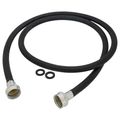
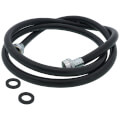
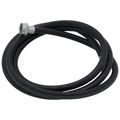
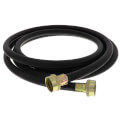
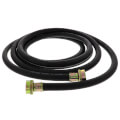
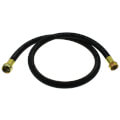
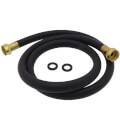
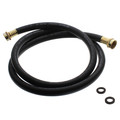
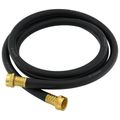
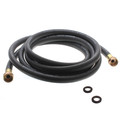
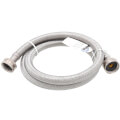
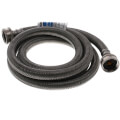
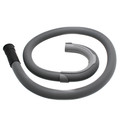
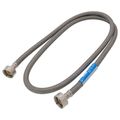
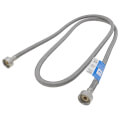
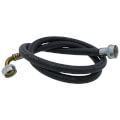
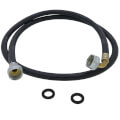
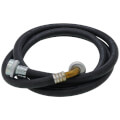
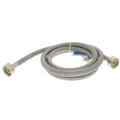
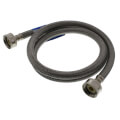
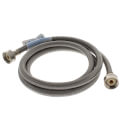
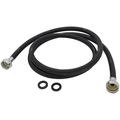
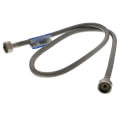
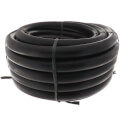
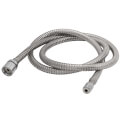
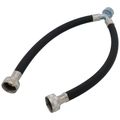
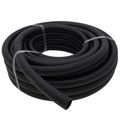
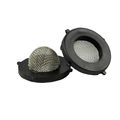

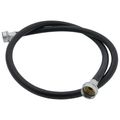
Washing machine hoses and connectors carry hot and cold supply water from the wall valves to the washing machine's fill inlets, and route wastewater from the machine to the drain standpipe. Standard rubber hoses have been largely replaced in new installations by braided stainless steel hoses, which resist bursting under the constant line pressure a supply hose holds even when the machine isn't running. Plumbers replace these hoses on a routine basis since manufacturers and insurers generally recommend swapping them every few years regardless of visible wear, given how much water damage a burst supply hose can cause in a short period. Connectors at each end need to match the washing machine's inlet thread size and the wall valve's outlet, which is standard across most residential machines but worth confirming on commercial units. A properly installed set of supply and drain hoses is one of the simpler ways to prevent a costly water leak behind an appliance that's rarely checked.
Subcategories
- Braided Stainless Steel Supply Hoses: Braided stainless steel hoses wrap a rubber or PVC core in a woven metal sleeve, giving the hose much higher burst resistance than an unreinforced rubber hose. Plumbers favor these for any installation where the hose will sit under constant pressure between wash cycles, which describes nearly every residential washing machine hookup. The braided exterior also resists kinking better than plain rubber, which matters in tight utility closet installations. Length and thread size still need to match the specific installation even though the reinforcement type is the main selling point.
- Rubber Supply Hoses: Rubber supply hoses remain available for replacement situations and lower-cost installations, though they're more prone to bursting from age-related cracking than a braided hose. Some manufacturers and building codes now specify braided or reinforced hoses for new installations, so checking local requirements before substituting rubber matters. Rubber hoses are typically the same standard thread and length options as braided versions, making them a direct swap where permitted. Inspecting a rubber hose for surface cracking at each service call catches a failure before it becomes a leak.
- Drain Hoses and Standpipe Connectors: Drain hoses route wastewater from the washing machine's pump outlet to a standpipe or utility sink, and need enough length and flexibility to route around the appliance without kinking. A standpipe connector or hose clamp secures the drain hose in place so normal vibration from the spin cycle doesn't work it loose over time. Drain hose diameter has to match both the washing machine's pump outlet and the standpipe size to avoid backflow during draining. Replacing a cracked or brittle drain hose prevents a wastewater leak that's often less obvious than a supply line failure.
- Fill Valves and Y-Connectors: Fill valves and Y-connectors let a single hot or cold supply line branch to serve both a washing machine and an adjacent fixture, such as a utility sink, from one wall valve. These fittings need a pressure rating suited to the household's supply pressure and a thread pattern matched to the wall valve outlet. Installers check for adequate flow at both branches after adding a Y-connector, since splitting a single line reduces available pressure to each outlet under simultaneous use. Choosing a connector with integrated shutoff at each branch simplifies future hose replacement without disturbing the whole assembly.
Buying Guide
Hose material is the first decision for most washing machine hookups. Washing machine hoses and connectors built with a braided stainless steel exterior cost more than plain rubber but hold up far better under the constant standby pressure a supply hose experiences between wash cycles, which is when most burst-hose water damage actually happens. For a replacement job, matching the existing thread size and hose length keeps the installation simple, while a new installation gives more flexibility to size the hose to the actual distance between the wall valve and the machine.
Drain-side hardware deserves the same attention as the supply side, since a worn drain hose or a loose standpipe connection causes a slower, less obvious leak that can still lead to water damage over time. Checking the washing machine's pump outlet size against the drain hose diameter avoids a connection that doesn't seal properly. For installations sharing a supply line with another fixture, a Y-connector rated for the household's water pressure keeps flow adequate at both outlets. Replacing supply hoses on a routine schedule rather than waiting for a visible failure is the detail most likely to prevent a homeowner's next water damage claim, and it's worth mentioning during any appliance-adjacent service call.
Frequently Asked Questions
How often should washing machine supply hoses be replaced?
Most manufacturers and insurers recommend replacing supply hoses every few years regardless of visible wear, since the failure often happens with little warning. Rubber hoses generally need more frequent replacement than braided stainless steel due to age-related cracking. Checking hose condition at any service call in the laundry area is a simple way to catch a hose nearing the end of its service life.
Are braided stainless steel hoses worth the extra cost over rubber?
Braided hoses resist bursting under standby pressure far better than rubber, and since the hose sits under pressure continuously between wash cycles, that resistance matters more than it would for an intermittently pressurized line. Many manufacturers and some local codes now specify braided or reinforced hoses for new installations. The added upfront cost is generally worth it given how much damage a burst supply hose can cause.
What thread size do washing machine hoses typically use?
Most residential washing machines and wall valves use a standard garden-hose-style thread on the supply connections, which keeps replacement straightforward across most brands. Some commercial or specialty units use a different thread pattern, so confirming compatibility before purchase avoids a mismatched connector. Drain-side connections vary more by manufacturer and typically rely on hose diameter rather than threaded fittings.
Why does a washing machine hose fail even though it looks fine on the outside?
Most hose failures start as internal deterioration of the rubber core, which isn't visible from the outside until the hose actually bursts. This is part of why routine replacement on a schedule is recommended instead of relying on a visual inspection alone. Braided exteriors reduce but don't eliminate this risk, since the reinforcement protects against bursting but doesn't prevent the inner core from degrading over time.
Can a single wall valve supply both a washing machine and a utility sink?
A Y-connector or dual-outlet fitting can split a single supply line to serve both fixtures, as long as the connector is rated for the household's water pressure and both branches get adequate flow under simultaneous use. Installing shutoff valves at each branch of the Y-connector makes future hose replacement easier without needing to shut off water to both fixtures. Checking flow at each outlet after installation confirms the split is working as expected.
