




Lau

 --%3E %3Csvg version='1.1' id='Fill' xmlns='http://www.w3.org/2000/svg' xmlns:xlink='http://www.w3.org/1999/xlink' x='0px' y='0px' viewBox='0 0 100 100' enable-background='new 0 0 100 100' xml:space='preserve'%3E %3Cpath fill='%23F15C02' d='M79.44,0.95H20.56C9.78,0.95,0.95,9.78,0.95,20.56v58.87c0,10.79,8.82,19.61,19.61,19.61h58.87 c10.79,0,19.61-8.83,19.61-19.61V20.56C99.05,9.78,90.22,0.95,79.44,0.95z M65.38,58.24l9.38,29.58L49.69,69.78L24.5,87.82 l9.34-29.6L8.8,39.6l30.73-0.17c0,0,6.98-19.61,10-28.93c0.54,1.36,9.88,29.1,9.88,29.1H91.2L65.38,58.24z'/%3E %3C/svg%3E)

 --%3E %3Csvg version='1.1' id='No-RB' xmlns='http://www.w3.org/2000/svg' xmlns:xlink='http://www.w3.org/1999/xlink' x='0px' y='0px' viewBox='0 0 100 100' enable-background='new 0 0 100 100' xml:space='preserve'%3E %3Cpath fill='%23CECECE' d='M79.44,0.95H20.56C9.78,0.95,0.95,9.78,0.95,20.56v58.87c0,10.79,8.82,19.61,19.61,19.61h58.87 c10.79,0,19.61-8.83,19.61-19.61V20.56C99.05,9.78,90.22,0.95,79.44,0.95z M65.38,58.24l9.38,29.58L49.69,69.78L24.5,87.82 l9.34-29.6L8.8,39.6l30.73-0.17c0,0,6.98-19.61,10-28.93c0.54,1.36,9.88,29.1,9.88,29.1H91.2L65.38,58.24z'/%3E %3C/svg%3E)
 --%3E %3Csvg version='1.1' id='With-RB' xmlns='http://www.w3.org/2000/svg' xmlns:xlink='http://www.w3.org/1999/xlink' x='0px' y='0px' viewBox='0 0 100 100' enable-background='new 0 0 100 100' xml:space='preserve'%3E %3Cpath fill='%23FBC8B4' d='M79.44,0.95H20.56C9.78,0.95,0.95,9.78,0.95,20.56v58.87c0,10.79,8.82,19.61,19.61,19.61h58.87 c10.79,0,19.61-8.83,19.61-19.61V20.56C99.05,9.78,90.22,0.95,79.44,0.95z M65.38,58.24l9.38,29.58L49.69,69.78L24.5,87.82 l9.34-29.6L8.8,39.6l30.73-0.17c0,0,6.98-19.61,10-28.93c0.54,1.36,9.88,29.1,9.88,29.1H91.2L65.38,58.24z'/%3E %3C/svg%3E)
 --%3E %3Csvg version='1.1' id='Half' xmlns='http://www.w3.org/2000/svg' xmlns:xlink='http://www.w3.org/1999/xlink' x='0px' y='0px' viewBox='0 0 100 100' enable-background='new 0 0 100 100' xml:space='preserve'%3E %3Cg%3E %3Cpath fill='%23F15C02' d='M30.05,70.23l3.79-12.01L8.8,39.6l30.73-0.17c0,0,6.98-19.61,10-28.93c0.54,1.36,9.88,29.1,9.88,29.1h1.58 L93.71,7.18c-3.58-3.82-8.66-6.23-14.28-6.23H20.56C9.78,0.95,0.95,9.78,0.95,20.56v58.87c0,5.41,2.22,10.32,5.79,13.88 L30.05,70.23z'/%3E %3C/g%3E %3Cpath fill='%23FBC8B4' d='M93.71,7.18L60.98,39.6H91.2L65.38,58.24l9.38,29.58L49.69,69.78L24.5,87.82l5.55-17.59L6.75,93.32 c3.55,3.54,8.44,5.73,13.82,5.73h58.87c10.79,0,19.61-8.83,19.61-19.61V20.56C99.05,15.4,97.01,10.69,93.71,7.18z'/%3E %3C/svg%3E)
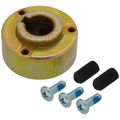
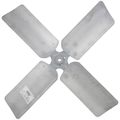

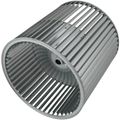
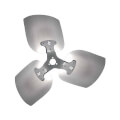
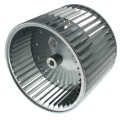
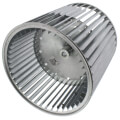
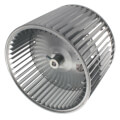
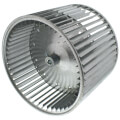
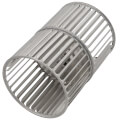
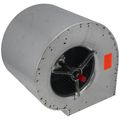
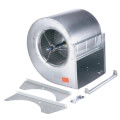
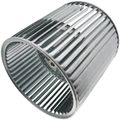

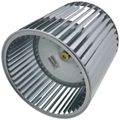
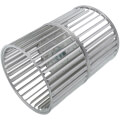
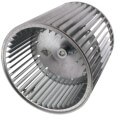

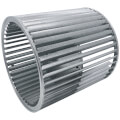

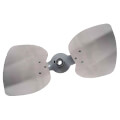
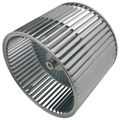
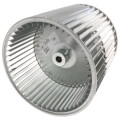
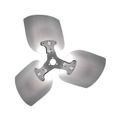
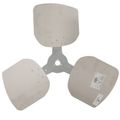
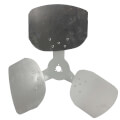

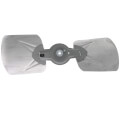
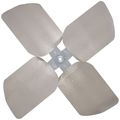
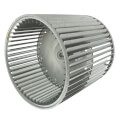
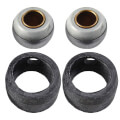
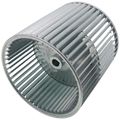


Lau is a manufacturer of fan blades, blower wheels, and HVAC replacement components for residential and commercial heating and cooling systems. The company was founded in 1931 by Edgar B. Lau as the Lau Blower Company in Dayton, Ohio, building high-efficiency, forward-curved blower wheels for the emerging forced-air heating industry. In 1941, Lau earned a patent for a blower conversion unit that adapted gravity-heated homes to forced-air systems, establishing the company's place in the residential HVAC market. Lau engineered the Preslok blower wheel center disc design and developed the world's first external rotor motorized blower package, advances that shaped modern blower wheel manufacturing standards. Today, Lau is recognized as a leading manufacturer of HVAC replacement products, supplying fan blades, blower wheels, belt drives, and pulleys that service technicians rely on to restore air distribution performance in equipment across a wide range of residential and commercial HVAC brands. For contractors maintaining aging HVAC inventory, Lau replacement components often outlast original OEM specifications.
Product Lines
Lau Blower Wheels
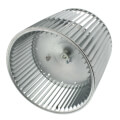
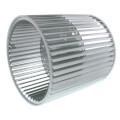
Lau blower wheels are centrifugal fan assemblies designed to replace OEM blower wheels in residential and commercial furnaces, air handlers, and fan coil units. Lau blower wheels are available in forward-curved and backward-curved configurations to match the original equipment's airflow and pressure requirements. Selecting the correct Lau blower wheel requires matching the outside diameter, width, bore size, and blade count to the original assembly being replaced. For contractors maintaining a broad range of equipment brands, Lau blower wheels cover a wider cross-reference than many OEM replacement options, making them a practical stock item for service fleets.
Lau Fan Blades
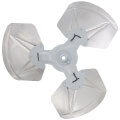
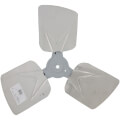
Lau fan blades are direct-drive propeller fans designed for condenser and outdoor unit air movement in residential and light-commercial air conditioning equipment. Lau fan blades are available in a range of pitch angles, blade counts, and hub diameters to match OEM specifications across major equipment brands. The correct Lau fan blade specification requires matching the blade diameter, pitch, hub bore, and rotation direction to the original equipment. Lau fan blades are manufactured to deliver equivalent or improved airflow performance compared to original equipment propeller fans in residential condenser and air-cooled commercial unit applications.
Lau Belt Drives and Pulleys
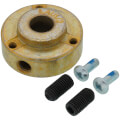
Lau belt drives and pulleys serve belt-drive air handlers, commercial fan coil units, and large-capacity blower assemblies where direct-drive motors are not used. Lau supplies sheaves, pulleys, and V-belts sized to match the drive configurations used in commercial HVAC equipment. For service technicians working on larger commercial units with belt-drive fan sections, Lau drive components allow field replacement without sourcing original equipment parts through slow OEM channels. Correct specification requires matching the belt cross-section, length, and pulley bore to the existing drive geometry on the equipment being serviced.
Why Contractors Specify Lau
Lau has manufactured HVAC replacement components in Dayton, Ohio since 1931, a production history spanning over 90 years in the blower and fan blade category. The company's Preslok blower wheel center disc design and its early innovation in external rotor motorized blowers contributed directly to the standardization of residential forced-air component design. Service technicians return to Lau replacement parts because the cross-reference catalog covers blower wheels and fan blades for equipment from dozens of manufacturers, reducing the number of vendor relationships a service department needs to maintain. The replacement-parts focus means that Lau components are engineered specifically for service and retrofit applications, not adapted from OEM production runs.
How to Choose a Lau Product
The most important decision variable when selecting a Lau replacement component is dimensional accuracy: the replacement part must match the original OEM assembly's critical dimensions to restore correct airflow and system pressure to the equipment.
For Lau blower wheels, the required measurements are outside diameter, wheel width, bore size, and blade count. The rotation direction, whether clockwise or counterclockwise when viewed from the drive side, is also critical and must match the original equipment's configuration. Mismatched bore sizes are the most common cause of blower wheel installation failures in the field.
For Lau fan blades, the required specifications are blade diameter, pitch angle, hub bore, and the number of blades. Propeller fan pitch directly affects airflow volume and condensing unit operating pressure, so substituting a blade with a different pitch than the original can affect system efficiency and potentially equipment longevity. How to size a Lau fan blade correctly: start with the nameplate data on the original fan blade or from the equipment manufacturer's parts documentation.
For belt drive applications, the key Lau specification variables are V-belt cross-section letter (A, B, C, D), belt length, sheave outer diameter, and shaft bore. Running a Lau replacement V-belt at the correct tension is as important as correct part selection, as both over-tensioning and under-tensioning reduce bearing life and belt service life.
Lau publishes cross-reference data through its authorized distributors that maps OEM part numbers to Lau replacement equivalents for major HVAC equipment brands.
FAQs
Where are Lau HVAC replacement components manufactured?
Lau was founded in Dayton, Ohio in 1931 and has a production history in the United States spanning over 90 years. Lau distributes replacement HVAC components, including blower wheels and fan blades, through regional warehouse locations serving the professional HVAC service market.
What warranty does Lau offer on replacement blower wheels and fan blades?
Lau warranty terms are available through authorized distributors at the time of purchase. Contractors should request current warranty documentation for the specific Lau component being specified, as terms may vary by product category.
What is the difference between Lau blower wheels and Lau fan blades?
The difference between Lau blower wheels and Lau fan blades is the application type and airflow direction. Lau blower wheels are centrifugal assemblies used inside furnaces, air handlers, and fan coil units to move air through ductwork against system static pressure. Lau fan blades are propeller-type fans used in outdoor condensing units and other open-air applications to move air across the refrigerant coil for heat rejection. The two products are not interchangeable.
How do I select the right Lau blower wheel for a replacement application?
Selecting the right Lau blower wheel requires matching the outside diameter, wheel width, bore size, and blade count of the original assembly. Rotation direction is also critical and must match the original equipment's drive configuration. Lau cross-reference catalogs, available through authorized distributors, map common OEM blower wheel part numbers to Lau replacement equivalents.
Are Lau fan blades compatible with multiple equipment brands?
Lau fan blades may be compatible with multiple equipment brands when the dimensional specifications, including blade diameter, pitch angle, hub bore, and blade count, match the original equipment. Contractors should verify compatibility through Lau's cross-reference data rather than assuming dimensional similarity is sufficient for all applications.
What is the difference between Lau blower wheels and belt drive assemblies?
The difference between Lau blower wheels and belt drive assemblies is the drive type. Lau blower wheels are the fan assemblies themselves, mounted directly on a motor shaft in direct-drive configurations. Lau belt drive components, including sheaves, pulleys, and V-belts, are used in systems where the motor drives the blower assembly through a belt rather than direct coupling, which is common in larger commercial air handlers and fan coil systems.
