




Filters
SORT
Product Availability –
Length (Inches) –
Review Score –
 --%3E %3Csvg version='1.1' id='Fill' xmlns='http://www.w3.org/2000/svg' xmlns:xlink='http://www.w3.org/1999/xlink' x='0px' y='0px' viewBox='0 0 100 100' enable-background='new 0 0 100 100' xml:space='preserve'%3E %3Cpath fill='%23F15C02' d='M79.44,0.95H20.56C9.78,0.95,0.95,9.78,0.95,20.56v58.87c0,10.79,8.82,19.61,19.61,19.61h58.87 c10.79,0,19.61-8.83,19.61-19.61V20.56C99.05,9.78,90.22,0.95,79.44,0.95z M65.38,58.24l9.38,29.58L49.69,69.78L24.5,87.82 l9.34-29.6L8.8,39.6l30.73-0.17c0,0,6.98-19.61,10-28.93c0.54,1.36,9.88,29.1,9.88,29.1H91.2L65.38,58.24z'/%3E %3C/svg%3E)
Price Range –
Yellow Jacket Vacuum and Charging Hoses


 --%3E %3Csvg version='1.1' id='Half' xmlns='http://www.w3.org/2000/svg' xmlns:xlink='http://www.w3.org/1999/xlink' x='0px' y='0px' viewBox='0 0 100 100' enable-background='new 0 0 100 100' xml:space='preserve'%3E %3Cg%3E %3Cpath fill='%23F15C02' d='M30.05,70.23l3.79-12.01L8.8,39.6l30.73-0.17c0,0,6.98-19.61,10-28.93c0.54,1.36,9.88,29.1,9.88,29.1h1.58 L93.71,7.18c-3.58-3.82-8.66-6.23-14.28-6.23H20.56C9.78,0.95,0.95,9.78,0.95,20.56v58.87c0,5.41,2.22,10.32,5.79,13.88 L30.05,70.23z'/%3E %3C/g%3E %3Cpath fill='%23FBC8B4' d='M93.71,7.18L60.98,39.6H91.2L65.38,58.24l9.38,29.58L49.69,69.78L24.5,87.82l5.55-17.59L6.75,93.32 c3.55,3.54,8.44,5.73,13.82,5.73h58.87c10.79,0,19.61-8.83,19.61-19.61V20.56C99.05,15.4,97.01,10.69,93.71,7.18z'/%3E %3C/svg%3E)
 --%3E %3Csvg version='1.1' id='No-RB' xmlns='http://www.w3.org/2000/svg' xmlns:xlink='http://www.w3.org/1999/xlink' x='0px' y='0px' viewBox='0 0 100 100' enable-background='new 0 0 100 100' xml:space='preserve'%3E %3Cpath fill='%23CECECE' d='M79.44,0.95H20.56C9.78,0.95,0.95,9.78,0.95,20.56v58.87c0,10.79,8.82,19.61,19.61,19.61h58.87 c10.79,0,19.61-8.83,19.61-19.61V20.56C99.05,9.78,90.22,0.95,79.44,0.95z M65.38,58.24l9.38,29.58L49.69,69.78L24.5,87.82 l9.34-29.6L8.8,39.6l30.73-0.17c0,0,6.98-19.61,10-28.93c0.54,1.36,9.88,29.1,9.88,29.1H91.2L65.38,58.24z'/%3E %3C/svg%3E)
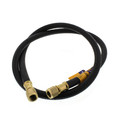
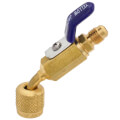
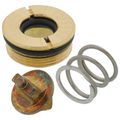
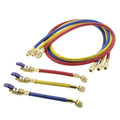
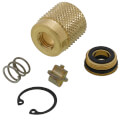
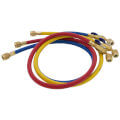
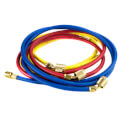
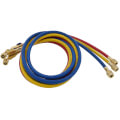
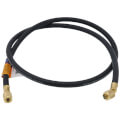
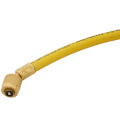
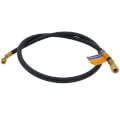
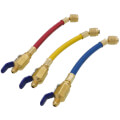
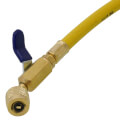
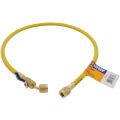
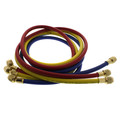
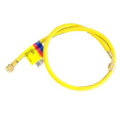

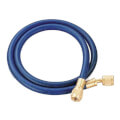
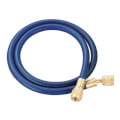
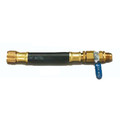
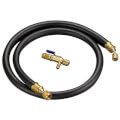
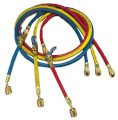
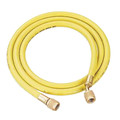
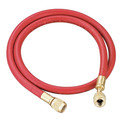
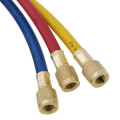

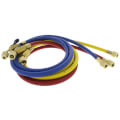
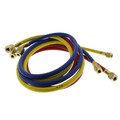
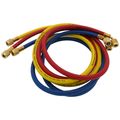
Yellow Jacket Vacuum and Charging Hoses connect a manifold gauge set to a refrigeration or air conditioning system for evacuation, charging, and pressure testing. The hoses are color coded, red for high side, blue for low side, and yellow for the utility or vacuum port, which helps a technician keep connections straight when working quickly on a system. Larger-diameter hoses pull a deeper vacuum faster than standard-diameter hoses, since a wider bore reduces the resistance air has to move through during evacuation, which matters most on larger systems or when time on site is limited. Low-loss fitting versions seal the hose end automatically when disconnected, cutting down on the refrigerant that escapes to atmosphere every time a hose comes off the system.
Subcategories
- Standard Vacuum and Charging Hoses: Standard hoses cover routine service work and general charging tasks across common system sizes. They're the type most techs keep as a daily-use set. Standard diameter keeps the hose flexible and easy to route around tight equipment access. This is the default choice for general maintenance and light repair calls.
- Large-Bore Vacuum Hoses: Large-bore hoses use a wider internal diameter that reduces resistance during evacuation, pulling a system down to a deep vacuum faster than a standard hose can. They're most useful on larger systems or any job where time on site is limited. The wider bore adds some bulk and stiffness compared to a standard hose. Many techs keep one large-bore hose in the set specifically for evacuation work.
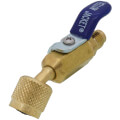
- Low-Loss Fitting Hoses: These hoses use a valve built into the hose end that seals automatically the moment it disconnects from the system, keeping refrigerant from venting to atmosphere. This matters most on charging work where an accurate final charge depends on minimizing loss at each connection. They cost more than a standard fitting hose but reduce refrigerant waste over repeated use. Many techs standardize on this style for charging-specific hoses.
- Replacement Hose Ends and Fittings: This grouping covers individual seals, cores, and fitting ends for repairing an existing hose rather than replacing the entire hose. A worn fitting is often the actual source of a small leak at the gauge connection, not the hose body itself. Keeping spare fittings on hand extends the useful life of an existing hose set.
Buying Guide
Hose diameter has the biggest effect on how quickly a vacuum pump can pull a system down. A wider bore hose offers less resistance to airflow, so evacuation that might take an extended pull with a standard hose can finish notably faster with a large-bore hose, which adds up across a full day of service calls.
Low-loss fittings are worth the added cost on hoses used for charging work in particular, since the built-in valve seals the hose end the moment it disconnects from the system. That seal keeps refrigerant from venting to atmosphere with every connection and disconnection, which matters for both environmental compliance and keeping a measured charge accurate.
Color coding, red for high side, blue for low side, and yellow for the utility port, is standard across the industry, and Yellow Jacket Vacuum and Charging Hoses follow that convention. Sticking with the standard coding across an entire hose set avoids the kind of mix-up that leads to cross-connecting high and low side by mistake.
Hose length should match the working distance from the gauge manifold to the service ports on the equipment actually being serviced, since a hose that's too short forces awkward positioning and one that's excessively long is more prone to kinks that restrict flow during evacuation.
Frequently Asked Questions
Why does hose diameter matter for pulling a vacuum?
A wider hose bore reduces resistance to airflow, letting a vacuum pump pull a system down faster than it could through a narrower standard hose. That difference matters most on larger systems or when a technician needs to minimize time on site.
What's the purpose of the color coding on these hoses?
The standard color coding, red for high side, blue for low side, and yellow for utility or vacuum, helps a technician keep connections straight while working quickly. Sticking with the standard convention across a full hose set reduces the chance of a cross-connection mistake.
Do low-loss fittings actually make a noticeable difference in refrigerant loss?
Yes, since the built-in valve seals the hose end automatically on disconnect instead of venting the small amount of refrigerant trapped in the hose to atmosphere. Over repeated connections across a service day, that adds up to a meaningful reduction in refrigerant loss.
Can a standard hose end be swapped for a low-loss fitting on an existing hose?
In many cases the fitting can be replaced separately without buying a whole new hose, as long as the replacement fitting matches the hose's thread size and rating. Checking compatibility with the specific hose model first avoids a mismatched connection.
How often should vacuum and charging hoses be replaced?
Hoses should be replaced when the rubber shows cracking, the fittings no longer seal reliably, or the hose has been exposed to contamination that could carry over into a system. Regular visual inspection before each use is a better guide than a fixed replacement schedule.
