




Filters
SORT
Product Availability –
Product Type –
Bit Type –
Size –
Review Score –
 --%3E %3Csvg version='1.1' id='Fill' xmlns='http://www.w3.org/2000/svg' xmlns:xlink='http://www.w3.org/1999/xlink' x='0px' y='0px' viewBox='0 0 100 100' enable-background='new 0 0 100 100' xml:space='preserve'%3E %3Cpath fill='%23F15C02' d='M79.44,0.95H20.56C9.78,0.95,0.95,9.78,0.95,20.56v58.87c0,10.79,8.82,19.61,19.61,19.61h58.87 c10.79,0,19.61-8.83,19.61-19.61V20.56C99.05,9.78,90.22,0.95,79.44,0.95z M65.38,58.24l9.38,29.58L49.69,69.78L24.5,87.82 l9.34-29.6L8.8,39.6l30.73-0.17c0,0,6.98-19.61,10-28.93c0.54,1.36,9.88,29.1,9.88,29.1H91.2L65.38,58.24z'/%3E %3C/svg%3E)
Price Range –
Wera Tools




 --%3E %3Csvg version='1.1' id='No-RB' xmlns='http://www.w3.org/2000/svg' xmlns:xlink='http://www.w3.org/1999/xlink' x='0px' y='0px' viewBox='0 0 100 100' enable-background='new 0 0 100 100' xml:space='preserve'%3E %3Cpath fill='%23CECECE' d='M79.44,0.95H20.56C9.78,0.95,0.95,9.78,0.95,20.56v58.87c0,10.79,8.82,19.61,19.61,19.61h58.87 c10.79,0,19.61-8.83,19.61-19.61V20.56C99.05,9.78,90.22,0.95,79.44,0.95z M65.38,58.24l9.38,29.58L49.69,69.78L24.5,87.82 l9.34-29.6L8.8,39.6l30.73-0.17c0,0,6.98-19.61,10-28.93c0.54,1.36,9.88,29.1,9.88,29.1H91.2L65.38,58.24z'/%3E %3C/svg%3E)


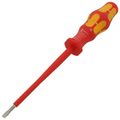


Wera Tools are German-engineered hand tools built around ergonomic handle design and fast bit-changing systems for technicians working on repetitive fastening tasks. The lineup includes Kraftform screwdrivers with multi-component handles, Rapidaptor quick-release bit holders, L-keys, ratcheting wrenches, and torque-adjustable screwdrivers such as the Series 7400, which covers a torque range of 0.1 to 3.0 Nm. HVAC and plumbing technicians use these tools for control panel wiring, electrical connections, and small fastener work where consistent torque and grip comfort reduce fatigue over a full shift. Sets like the Tool-Check PLUS bundle multiple drive types, bits, and sockets into a single case so a technician can carry fewer individual tools on a service call. Because many Wera tools share a common bit and socket interface across product lines, a technician can standardize on one brand instead of juggling mismatched hand tools from several manufacturers.
Subcategories
- Kraftform Screwdrivers: Kraftform Screwdrivers use a multi-component handle that combines a hard inner core with a softer outer grip for better torque transfer and comfort. The design reduces hand fatigue during repetitive driving tasks compared to a single-material handle. Technicians use this line for everyday fastening on electrical panels, access covers, and equipment housings. Tip styles include slotted, Phillips, Pozidriv, and Torx to match common fastener types found in HVAC and plumbing equipment.
- Rapidaptor Bit Holders and Screwdrivers: Rapidaptor Bit Holders and Screwdrivers use a quick-release chuck that locks a bit in place automatically when it contacts the screw, without needing to pull back a sleeve first. Technicians swap bits one-handed, which speeds up jobs that call for switching between drive types repeatedly. The system is built into dedicated screwdriver handles as well as standalone universal bit holders. The design saves time on service calls that involve multiple fastener types in a single panel or assembly.
- L-Keys: L-Keys are hex-profile wrenches used to drive socket-head and set screws found in valve actuators, control linkages, and equipment housings. Wera's L-key sets include both ball-end and standard hex tips, letting a technician drive a fastener at an angle when a tool cannot sit flush with the screw head. Sets are offered in both metric and imperial sizing to match the hex fasteners found in different equipment. Color-coded handles help a technician identify the correct size quickly when working from a tool roll.
- Ratcheting Wrenches and Socket Sets: Ratcheting Wrenches and Socket Sets combine a ratchet mechanism with interchangeable sockets and bits for fastening in tight spaces. The Tool-Check PLUS Imperial set packs 39 pieces, including a mini ratchet, bits, and sockets, into a single compact case. Technicians use these sets for general fastening on mechanical equipment where swapping between wrench and socket drive styles saves a trip back to the truck for a different tool. The compact case keeps pieces organized and easy to inventory after a job.
- Torque-Adjustable Screwdrivers: Torque-Adjustable Screwdrivers let a technician set a specific torque value and feel or hear a signal once that value is reached, preventing overtightening on sensitive fasteners. The Series 7400 line covers torque ranges from 0.1 to 3.0 Nm in one model and 3.0 to 8.8 Nm in a higher-range model, accepting standard 1/4 inch hex bits. Technicians use these on electronics, control boards, and other components where overtightening can crack a housing or strip a fastener. Matching the torque range to the specific fastener spec avoids both under- and overtightening.
Buying Guide
Start with the type of fastening work being done most often on the job. General electrical and panel work calls for a Kraftform screwdriver set covering common tip styles like slotted, Phillips, and Torx, since those cover the majority of fasteners found on HVAC and plumbing equipment. Jobs that involve switching between many different fastener types in a single panel benefit more from a Rapidaptor bit holder, which lets a technician change bits one-handed instead of reaching for a different screwdriver each time.
Torque-sensitive work changes the calculation. Wera Tools in the Series 7400 torque-adjustable line give a clear signal once a preset torque value is reached, which matters on electronics, control boards, and other components that crack or strip if overtightened. Checking the torque spec on the actual fastener or component before buying a screwdriver keeps the tool's range matched to the work instead of guessing.
For technicians who need a broad set in one case, a ratcheting kit like the Tool-Check PLUS bundles a mini ratchet with bits and sockets into a single compact case, reducing how many individual tools need to be carried on a service call. L-keys round out a kit for hex-head fasteners on valve actuators and control linkages, with ball-end tips useful when a fastener sits at an angle. Buying a few core categories, rather than one of everything, usually covers more job types without overloading a tool bag.
Frequently Asked Questions
What makes Wera's Kraftform handle different from a standard screwdriver handle?
The Kraftform handle combines a harder inner plastic core with a softer outer grip zone, which improves torque transfer from the hand to the tip while reducing slip. The design reduces hand fatigue during repetitive driving tasks compared to a single-material handle. It's commonly paired with slotted, Phillips, Pozidriv, and Torx tips for general electrical and mechanical fastening.
How does the Rapidaptor bit holder work?
A Rapidaptor bit holder locks a bit in place automatically as soon as it touches the fastener, without needing to retract a sleeve first. The mechanism lets a technician switch bits one-handed, which speeds up jobs that involve multiple fastener types in one panel or assembly.
What's included in the Wera Tool-Check PLUS set?
The Tool-Check PLUS Imperial set bundles 39 pieces, including a mini ratchet, bits, and sockets, into a single compact case. It covers a range of common imperial fastener sizes, making it a practical option for technicians who want one case instead of several loose tools.
When should a torque-adjustable screwdriver be used instead of a standard one?
A torque-adjustable screwdriver, such as the Series 7400 line rated from 0.1 to 3.0 Nm or 3.0 to 8.8 Nm depending on the model, signals once a preset torque value is reached. Components like electronics and control boards that can crack or strip from overtightening benefit most from this feature, since a standard screwdriver has no built-in way to limit applied torque.
Do Wera L-keys come in metric and imperial sizes?
Wera L-key sets are offered in both metric and imperial sizing to match the hex fasteners found in different equipment. Many sets include both standard and ball-end tips, with the ball-end style useful for driving a fastener at an angle where a straight hex key cannot sit flush.
