




Filters
SORT
Product Availability –
Brand –
Size –
Length (Feet) –
Review Score –
 --%3E %3Csvg version='1.1' id='Fill' xmlns='http://www.w3.org/2000/svg' xmlns:xlink='http://www.w3.org/1999/xlink' x='0px' y='0px' viewBox='0 0 100 100' enable-background='new 0 0 100 100' xml:space='preserve'%3E %3Cpath fill='%23F15C02' d='M79.44,0.95H20.56C9.78,0.95,0.95,9.78,0.95,20.56v58.87c0,10.79,8.82,19.61,19.61,19.61h58.87 c10.79,0,19.61-8.83,19.61-19.61V20.56C99.05,9.78,90.22,0.95,79.44,0.95z M65.38,58.24l9.38,29.58L49.69,69.78L24.5,87.82 l9.34-29.6L8.8,39.6l30.73-0.17c0,0,6.98-19.61,10-28.93c0.54,1.36,9.88,29.1,9.88,29.1H91.2L65.38,58.24z'/%3E %3C/svg%3E)
 --%3E %3Csvg version='1.1' id='With-RB' xmlns='http://www.w3.org/2000/svg' xmlns:xlink='http://www.w3.org/1999/xlink' x='0px' y='0px' viewBox='0 0 100 100' enable-background='new 0 0 100 100' xml:space='preserve'%3E %3Cpath fill='%23FBC8B4' d='M79.44,0.95H20.56C9.78,0.95,0.95,9.78,0.95,20.56v58.87c0,10.79,8.82,19.61,19.61,19.61h58.87 c10.79,0,19.61-8.83,19.61-19.61V20.56C99.05,9.78,90.22,0.95,79.44,0.95z M65.38,58.24l9.38,29.58L49.69,69.78L24.5,87.82 l9.34-29.6L8.8,39.6l30.73-0.17c0,0,6.98-19.61,10-28.93c0.54,1.36,9.88,29.1,9.88,29.1H91.2L65.38,58.24z'/%3E %3C/svg%3E)
Price Range –
Pneumatic Test Plugs and Tools


 --%3E %3Csvg version='1.1' id='No-RB' xmlns='http://www.w3.org/2000/svg' xmlns:xlink='http://www.w3.org/1999/xlink' x='0px' y='0px' viewBox='0 0 100 100' enable-background='new 0 0 100 100' xml:space='preserve'%3E %3Cpath fill='%23CECECE' d='M79.44,0.95H20.56C9.78,0.95,0.95,9.78,0.95,20.56v58.87c0,10.79,8.82,19.61,19.61,19.61h58.87 c10.79,0,19.61-8.83,19.61-19.61V20.56C99.05,9.78,90.22,0.95,79.44,0.95z M65.38,58.24l9.38,29.58L49.69,69.78L24.5,87.82 l9.34-29.6L8.8,39.6l30.73-0.17c0,0,6.98-19.61,10-28.93c0.54,1.36,9.88,29.1,9.88,29.1H91.2L65.38,58.24z'/%3E %3C/svg%3E)
 --%3E %3Csvg version='1.1' id='Half' xmlns='http://www.w3.org/2000/svg' xmlns:xlink='http://www.w3.org/1999/xlink' x='0px' y='0px' viewBox='0 0 100 100' enable-background='new 0 0 100 100' xml:space='preserve'%3E %3Cg%3E %3Cpath fill='%23F15C02' d='M30.05,70.23l3.79-12.01L8.8,39.6l30.73-0.17c0,0,6.98-19.61,10-28.93c0.54,1.36,9.88,29.1,9.88,29.1h1.58 L93.71,7.18c-3.58-3.82-8.66-6.23-14.28-6.23H20.56C9.78,0.95,0.95,9.78,0.95,20.56v58.87c0,5.41,2.22,10.32,5.79,13.88 L30.05,70.23z'/%3E %3C/g%3E %3Cpath fill='%23FBC8B4' d='M93.71,7.18L60.98,39.6H91.2L65.38,58.24l9.38,29.58L49.69,69.78L24.5,87.82l5.55-17.59L6.75,93.32 c3.55,3.54,8.44,5.73,13.82,5.73h58.87c10.79,0,19.61-8.83,19.61-19.61V20.56C99.05,15.4,97.01,10.69,93.71,7.18z'/%3E %3C/svg%3E)


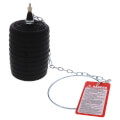
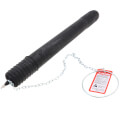
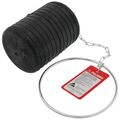
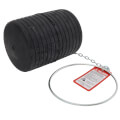
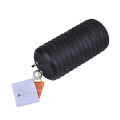
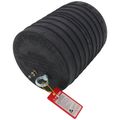

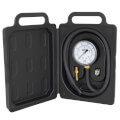
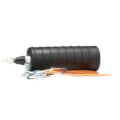

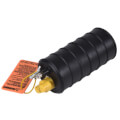
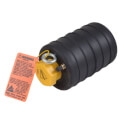

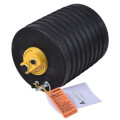
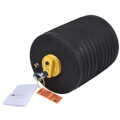
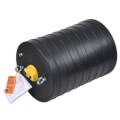
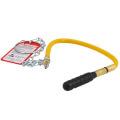

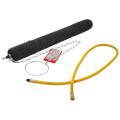
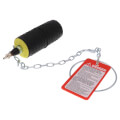
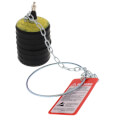
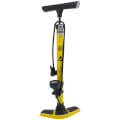

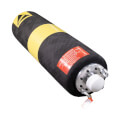
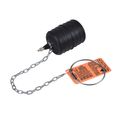
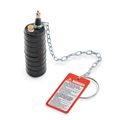
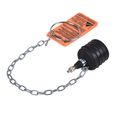
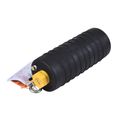
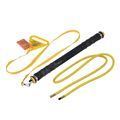
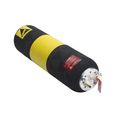
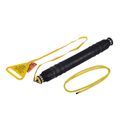
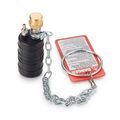
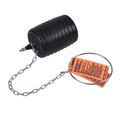
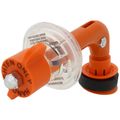

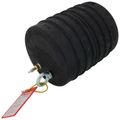
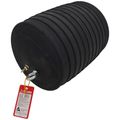
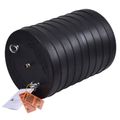
Pneumatic test plugs and tools are inflatable devices plumbers and drain technicians use to seal off a section of pipe for pressure or leak testing before a system is put into service. An inflatable plug is inserted into the pipe and expanded with air from a hand pump or compressor until it forms a tight seal against the pipe wall, isolating the line so water or air pressure can be applied without escaping past the test point. Contractors rely on pneumatic test plugs for DWV system testing required by plumbing code before drywall closes in a wall, as well as for isolating a section of an existing line during repair work. Plug diameter has to match the pipe size closely, since an undersized plug will not seal fully and an oversized one may not seat properly inside the pipe. Pressure gauges and inflation tools round out the category, letting the technician monitor and control both the plug's seal pressure and the test pressure applied to the isolated pipe section.
Subcategories
- Inflatable Test Plugs: Inflatable test plugs expand radially when air is added through a valve stem, pressing against the inside of the pipe to create a temporary seal. Sizes are matched to specific pipe diameters, and using the correct size is critical since an undersized plug will leak past its edges under test pressure. Most plugs include a pressure relief valve or rating limit to prevent over-inflation, which can damage both the plug and the pipe. Rubber or synthetic bladder plugs are the most common style for standard DWV and sewer line testing.
- Test Plug Inflators & Pressure Gauges: Hand pumps and small air compressors inflate the test plug to its sealing pressure, while a dedicated pressure gauge lets the technician confirm both the plug's seal pressure and the test pressure inside the isolated pipe section. Separate gauges for plug inflation and line testing prevent a technician from mistaking one reading for the other during a test. Accurate gauge readings matter most on code-required DWV tests, where the inspector checks that pressure was held for a specified duration. Replacement gauges and inflation hoses keep an existing test kit functional without buying a full new set.
- Mechanical Test Plugs: Mechanical test plugs use a screw-tightened rubber gasket rather than air pressure to form a seal inside the pipe, expanding the gasket radially as the center bolt is tightened, and working without a pump or air source makes them useful for quick spot tests or situations where inflation equipment is not on hand. Torque applied to the center bolt controls seal tightness directly, so overtightening can distort or damage the gasket over repeated use. Mechanical plugs tend to hold a rating comparable to smaller inflatable plugs but are generally used on lower-pressure test applications.
- Test Ball Assemblies & Accessories: Test ball assemblies combine an inflatable or mechanical plug with a fitting designed to thread into a cleanout or test tee, simplifying setup on systems built with a dedicated test point. Accessories such as extension rods, retrieval cords, and replacement gaskets extend the working life of an existing plug and let a technician reach test points set back from an access opening. Retrieval cords are especially useful on inflatable plugs used deep in a line, since a plug that shifts or fails to deflate fully can otherwise be difficult to remove. Matching accessory thread size and plug diameter to the specific test point avoids setup delays on the job.
Buying Guide
Choosing the right test plug starts with matching plug diameter to the exact pipe size being tested, since a poor fit is the most common cause of a failed pressure test that has nothing to do with the actual pipe joint. Inflatable plugs offer flexibility across a small range of pipe sizes with one plug body, while mechanical plugs are generally sized more narrowly to a single diameter. Rated test pressure is the next factor: code-required DWV tests typically specify a minimum pressure that must be held for a set duration, so the plug and gauge combination needs a pressure rating that comfortably exceeds the required test pressure with margin to spare. Pneumatic Test Plugs and Tools designed for larger-diameter sewer or storm lines generally need a higher-capacity air source than a hand pump can practically provide, so checking a plug's inflation volume against available compressor capacity avoids a slow or incomplete test setup. Retrieval features matter more on deep or long-run tests, where losing an inflatable plug inside the line means cutting into the pipe to recover it. Technicians working across multiple pipe materials and diameters on a regular basis often carry a set of graduated plug sizes rather than a single plug, since job sites rarely present only one pipe size in a day. Checking a plug's rated working pressure against the specific test standard required by local code before purchase prevents a plug that cannot legally satisfy the inspection requirement.
Frequently Asked Questions
What is the difference between a pneumatic and a mechanical test plug?
A pneumatic test plug seals by inflating a bladder with air from a pump, while a mechanical test plug seals by tightening a bolt that compresses a rubber gasket radially. Pneumatic plugs generally cover a wider size range with fewer individual plugs, while mechanical plugs work without any air source.
How do I know what size test plug to buy?
Test plug size is matched to the inside diameter of the pipe being tested, so measuring the pipe or confirming its nominal size before ordering is the most reliable approach. An undersized plug will not seal fully, and an oversized plug may not seat correctly inside the pipe.
What pressure should a DWV test plug hold?
Required test pressure and duration are set by local plumbing code and the inspector overseeing the job rather than a single national standard, so confirming the specific requirement before testing is standard practice. Selecting a plug and gauge rated above the required test pressure leaves margin for an accurate result.
Can a test plug get stuck inside the pipe?
An inflatable plug that fails to deflate fully or shifts position during a test can become difficult to remove, which is why many technicians use a plug with a retrieval cord on deep or long-run tests. Mechanical plugs are less prone to this problem since the seal releases as soon as the center bolt is loosened.
Do test plugs work on both PVC and cast iron pipe?
Most inflatable and mechanical test plugs work across common DWV pipe materials, including PVC, ABS, and cast iron, as long as the plug diameter matches the pipe's actual inside dimension. Checking the plug manufacturer's material compatibility notes is still worthwhile before testing an unusual or older pipe material.
