




Filters
SORT
Product Availability –
Brand –
BTU (Max) –
BTU (Min) –
Energy Factor –
Vent Type –
Installation Type –
Width (Inches) –
Depth (Inches) –
Review Score –
 --%3E %3Csvg version='1.1' id='Fill' xmlns='http://www.w3.org/2000/svg' xmlns:xlink='http://www.w3.org/1999/xlink' x='0px' y='0px' viewBox='0 0 100 100' enable-background='new 0 0 100 100' xml:space='preserve'%3E %3Cpath fill='%23F15C02' d='M79.44,0.95H20.56C9.78,0.95,0.95,9.78,0.95,20.56v58.87c0,10.79,8.82,19.61,19.61,19.61h58.87 c10.79,0,19.61-8.83,19.61-19.61V20.56C99.05,9.78,90.22,0.95,79.44,0.95z M65.38,58.24l9.38,29.58L49.69,69.78L24.5,87.82 l9.34-29.6L8.8,39.6l30.73-0.17c0,0,6.98-19.61,10-28.93c0.54,1.36,9.88,29.1,9.88,29.1H91.2L65.38,58.24z'/%3E %3C/svg%3E)
 --%3E %3Csvg version='1.1' id='With-RB' xmlns='http://www.w3.org/2000/svg' xmlns:xlink='http://www.w3.org/1999/xlink' x='0px' y='0px' viewBox='0 0 100 100' enable-background='new 0 0 100 100' xml:space='preserve'%3E %3Cpath fill='%23FBC8B4' d='M79.44,0.95H20.56C9.78,0.95,0.95,9.78,0.95,20.56v58.87c0,10.79,8.82,19.61,19.61,19.61h58.87 c10.79,0,19.61-8.83,19.61-19.61V20.56C99.05,9.78,90.22,0.95,79.44,0.95z M65.38,58.24l9.38,29.58L49.69,69.78L24.5,87.82 l9.34-29.6L8.8,39.6l30.73-0.17c0,0,6.98-19.61,10-28.93c0.54,1.36,9.88,29.1,9.88,29.1H91.2L65.38,58.24z'/%3E %3C/svg%3E)
Price Range –
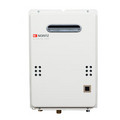
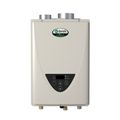
Propane Tankless Water Heaters

 --%3E %3Csvg version='1.1' id='Half' xmlns='http://www.w3.org/2000/svg' xmlns:xlink='http://www.w3.org/1999/xlink' x='0px' y='0px' viewBox='0 0 100 100' enable-background='new 0 0 100 100' xml:space='preserve'%3E %3Cg%3E %3Cpath fill='%23F15C02' d='M30.05,70.23l3.79-12.01L8.8,39.6l30.73-0.17c0,0,6.98-19.61,10-28.93c0.54,1.36,9.88,29.1,9.88,29.1h1.58 L93.71,7.18c-3.58-3.82-8.66-6.23-14.28-6.23H20.56C9.78,0.95,0.95,9.78,0.95,20.56v58.87c0,5.41,2.22,10.32,5.79,13.88 L30.05,70.23z'/%3E %3C/g%3E %3Cpath fill='%23FBC8B4' d='M93.71,7.18L60.98,39.6H91.2L65.38,58.24l9.38,29.58L49.69,69.78L24.5,87.82l5.55-17.59L6.75,93.32 c3.55,3.54,8.44,5.73,13.82,5.73h58.87c10.79,0,19.61-8.83,19.61-19.61V20.56C99.05,15.4,97.01,10.69,93.71,7.18z'/%3E %3C/svg%3E)



 --%3E %3Csvg version='1.1' id='No-RB' xmlns='http://www.w3.org/2000/svg' xmlns:xlink='http://www.w3.org/1999/xlink' x='0px' y='0px' viewBox='0 0 100 100' enable-background='new 0 0 100 100' xml:space='preserve'%3E %3Cpath fill='%23CECECE' d='M79.44,0.95H20.56C9.78,0.95,0.95,9.78,0.95,20.56v58.87c0,10.79,8.82,19.61,19.61,19.61h58.87 c10.79,0,19.61-8.83,19.61-19.61V20.56C99.05,9.78,90.22,0.95,79.44,0.95z M65.38,58.24l9.38,29.58L49.69,69.78L24.5,87.82 l9.34-29.6L8.8,39.6l30.73-0.17c0,0,6.98-19.61,10-28.93c0.54,1.36,9.88,29.1,9.88,29.1H91.2L65.38,58.24z'/%3E %3C/svg%3E)
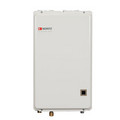
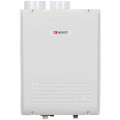
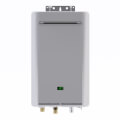
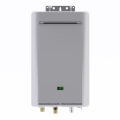
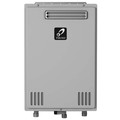
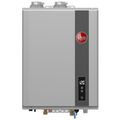
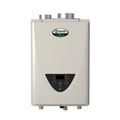
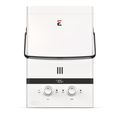
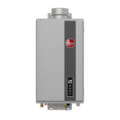
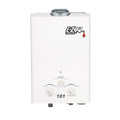
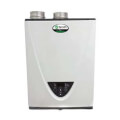
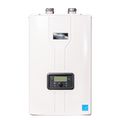
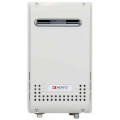
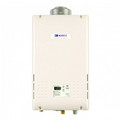
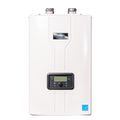
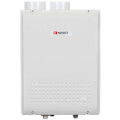
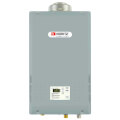
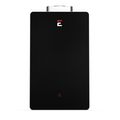
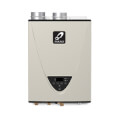
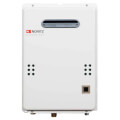
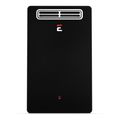
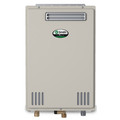
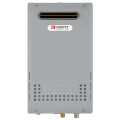
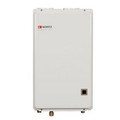
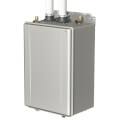
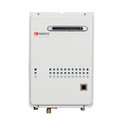
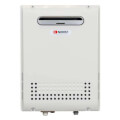
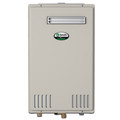

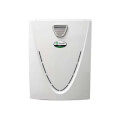
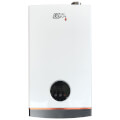
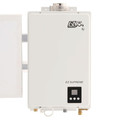
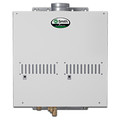

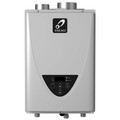
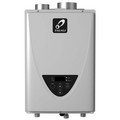
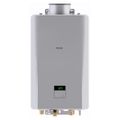
Propane Tankless Water Heaters heat water on demand using a propane-fired burner instead of storing preheated water in a tank, which suits homes and cabins without natural gas service but that still want continuous hot water. Because there's no storage tank losing standby heat between uses, these units only fire when a hot water fixture opens, which can reduce fuel use compared to a standard propane storage tank water heater in a household with moderate hot water demand. Sizing is based on flow rate and the temperature rise needed for the local incoming water temperature, so a unit that works well in a warmer climate may not keep up with multiple fixtures running at once in a colder region. Venting requirements differ from a standard atmospheric water heater, with most models requiring dedicated intake and exhaust venting rated for the unit's higher efficiency operation. Propane supply line sizing also needs attention, since a tankless unit's burner draws considerably more gas at peak firing than a typical tank-style heater.
Subcategories
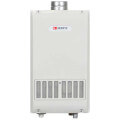
- Indoor Tankless Units: Indoor tankless units mount inside a home, garage, or mechanical room and require dedicated intake and exhaust venting routed to the exterior. Installers choose this style for climates where an outdoor unit would face freeze risk or excessive weather exposure. Combustion air can typically be drawn from indoors or outdoors depending on the model, so confirming which configuration a specific unit supports matters before finalizing the vent plan. Clearances around the unit need to match the installation manual, particularly for combustible surfaces near the burner compartment.
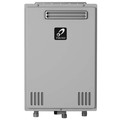
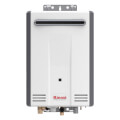
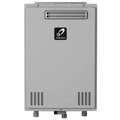
- Outdoor Tankless Units: Outdoor tankless units mount on an exterior wall and draw combustion air directly from outside without needing dedicated intake venting through the structure. Contractors often prefer this style on retrofit jobs where routing vent pipe through a finished interior isn't practical. Freeze protection built into the unit protects the internal components in cold climates, but exposed water lines leading to and from the unit still need their own freeze protection. Placement should account for prevailing wind and snow load in the area, since both can affect combustion air intake and exhaust performance.
- Venting Components: Venting components for indoor units include the intake and exhaust pipe, terminations, and firestop materials rated for the specific tankless model. Installers need to follow the manufacturer's approved venting materials and maximum run length exactly, since tankless water heaters often use a different vent material and diameter than a standard atmospheric tank heater. Proper slope back to the unit keeps condensate from pooling in the vent run on high-efficiency models. Termination clearances from windows, doors, and mechanical air intakes are typically stricter than a standard water heater vent, so checking the manual before cutting an exterior penetration avoids a redo.
- Water & Gas Connection Kits: Water and gas connection kits include the isolation valves, unions, and flexible connectors used to hook up the unit and make future service easier. Isolation valves with built-in flush ports let a technician descale the heat exchanger without disconnecting the unit from the plumbing system, which matters more on a tankless unit than a tank heater since mineral scale buildup directly affects a tankless heat exchanger's performance. Gas connectors need to be sized for the unit's maximum propane demand, not just matched to the existing line size from the old equipment. Confirming a full isolation valve kit is included, rather than assuming the old tank heater's valves can be reused, avoids a return trip for missing parts.
Buying Guide
Flow rate and temperature rise are the two numbers that matter most when sizing a unit, since a heater rated for a warm-climate temperature rise may fall short of household demand in a region with cold incoming groundwater. Count the fixtures likely to run at the same time, such as two showers plus a dishwasher, and size the unit to handle that combined flow rate rather than just the household's single largest fixture. Propane Tankless Water Heaters draw considerably more gas at peak firing than a typical tank-style heater, so confirm the existing propane line and regulator can support the new unit's maximum input before installation. Venting differs from a standard atmospheric heater too, and most models require specific intake and exhaust materials rated for the unit, so substituting a cheaper or mismatched vent material risks a failed inspection or unsafe installation. Water quality matters more with a tankless unit than a tank heater, since mineral scale builds up on the heat exchanger and reduces both flow and efficiency over time in areas with hard water; a scale-reduction system or a regular descaling schedule protects the investment. Freeze protection needs differ between indoor and outdoor models, so confirm the unit and its exposed piping are appropriately protected for the local climate before finalizing the installation location.
Frequently Asked Questions
How is a propane tankless water heater sized differently than a tank heater?
Tank heaters are sized mainly by storage capacity and recovery rate, while tankless units are sized by flow rate and the temperature rise needed for the local incoming water temperature. Running multiple fixtures at once requires adding their flow rates together and confirming the unit can maintain temperature rise at that combined demand. A unit sized correctly for one climate can fall short in a colder region with lower incoming water temperature.
Does hard water affect a propane tankless water heater?
Yes, mineral scale builds up on the internal heat exchanger over time in areas with hard water, which reduces both flow rate and heating efficiency. Isolation valves with flush ports allow for periodic descaling without disconnecting the unit from the plumbing. A whole-house scale reduction system can extend the interval between descaling services in particularly hard water areas.
Can an outdoor tankless unit be installed in a cold climate?
Many outdoor models include internal freeze protection for the unit itself, but exposed water lines running to and from the unit still need separate freeze protection in cold climates. Placement should also account for wind and snow load, since both can interfere with combustion air intake and exhaust. Checking the manufacturer's minimum operating temperature rating before choosing an outdoor unit for a cold region avoids a mismatch.
What's different about venting a tankless propane unit compared to a standard water heater?
Tankless units typically require specific intake and exhaust venting materials rated for the higher efficiency of the unit, unlike the simple single-pipe vent used on a standard atmospheric tank heater. Maximum vent run length and termination clearances are usually stricter as well. Following the manufacturer's approved venting chart exactly, rather than substituting a similar-looking material, keeps the installation code-compliant.
How much more propane does a tankless unit use at peak demand than a tank heater?
A tankless unit's burner fires at a much higher input rate than a typical tank heater's burner, since it needs to heat water instantly rather than gradually over time in storage. Existing propane line sizing and the regulator both need to be checked against the new unit's maximum input rating before installation. Undersized gas supply is a common reason a new tankless installation underperforms even though the unit itself is functioning correctly.
