




Filters
SORT
Product Availability –
Brand –
Finish –
Type –
Flow Rate (GPM) –
Installation Type –
Approvals –
Handle Style –
Number Of Handles –
Number Of Holes –
Series –
Review Score –
 --%3E %3Csvg version='1.1' id='Fill' xmlns='http://www.w3.org/2000/svg' xmlns:xlink='http://www.w3.org/1999/xlink' x='0px' y='0px' viewBox='0 0 100 100' enable-background='new 0 0 100 100' xml:space='preserve'%3E %3Cpath fill='%23F15C02' d='M79.44,0.95H20.56C9.78,0.95,0.95,9.78,0.95,20.56v58.87c0,10.79,8.82,19.61,19.61,19.61h58.87 c10.79,0,19.61-8.83,19.61-19.61V20.56C99.05,9.78,90.22,0.95,79.44,0.95z M65.38,58.24l9.38,29.58L49.69,69.78L24.5,87.82 l9.34-29.6L8.8,39.6l30.73-0.17c0,0,6.98-19.61,10-28.93c0.54,1.36,9.88,29.1,9.88,29.1H91.2L65.38,58.24z'/%3E %3C/svg%3E)
 --%3E %3Csvg version='1.1' id='With-RB' xmlns='http://www.w3.org/2000/svg' xmlns:xlink='http://www.w3.org/1999/xlink' x='0px' y='0px' viewBox='0 0 100 100' enable-background='new 0 0 100 100' xml:space='preserve'%3E %3Cpath fill='%23FBC8B4' d='M79.44,0.95H20.56C9.78,0.95,0.95,9.78,0.95,20.56v58.87c0,10.79,8.82,19.61,19.61,19.61h58.87 c10.79,0,19.61-8.83,19.61-19.61V20.56C99.05,9.78,90.22,0.95,79.44,0.95z M65.38,58.24l9.38,29.58L49.69,69.78L24.5,87.82 l9.34-29.6L8.8,39.6l30.73-0.17c0,0,6.98-19.61,10-28.93c0.54,1.36,9.88,29.1,9.88,29.1H91.2L65.38,58.24z'/%3E %3C/svg%3E)
Price Range –
Commercial Faucets


 --%3E %3Csvg version='1.1' id='No-RB' xmlns='http://www.w3.org/2000/svg' xmlns:xlink='http://www.w3.org/1999/xlink' x='0px' y='0px' viewBox='0 0 100 100' enable-background='new 0 0 100 100' xml:space='preserve'%3E %3Cpath fill='%23CECECE' d='M79.44,0.95H20.56C9.78,0.95,0.95,9.78,0.95,20.56v58.87c0,10.79,8.82,19.61,19.61,19.61h58.87 c10.79,0,19.61-8.83,19.61-19.61V20.56C99.05,9.78,90.22,0.95,79.44,0.95z M65.38,58.24l9.38,29.58L49.69,69.78L24.5,87.82 l9.34-29.6L8.8,39.6l30.73-0.17c0,0,6.98-19.61,10-28.93c0.54,1.36,9.88,29.1,9.88,29.1H91.2L65.38,58.24z'/%3E %3C/svg%3E)
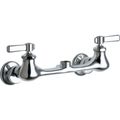

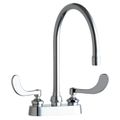
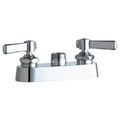


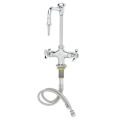
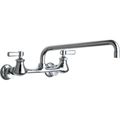
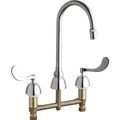
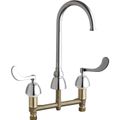
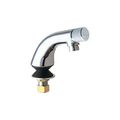
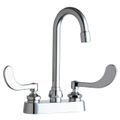
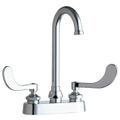
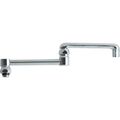
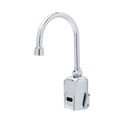
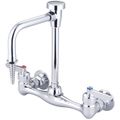


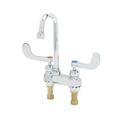
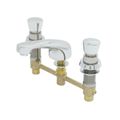

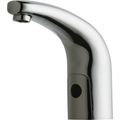


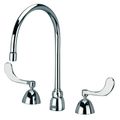
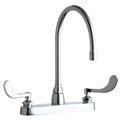
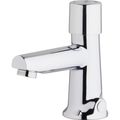
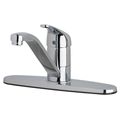
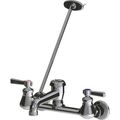
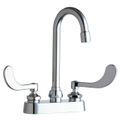


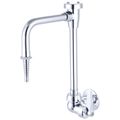


Commercial faucets are heavy-duty fixtures built for restaurants, offices, schools, and other high-traffic facilities where a residential-grade faucet would wear out quickly under constant use. Plumbers and facility maintenance teams specify them for kitchens, break rooms, and public restrooms where durability and code compliance matter more than decorative styling. Many commercial faucets use a rugged brass or stainless-steel body along with replaceable cartridges, so a worn part can be swapped out rather than replacing the entire fixture. Options range from simple deck-mounted lavatory faucets for a public restroom to pre-rinse spray assemblies and pot-fillers for a commercial kitchen, covering a much wider set of use cases than typical residential lines. Because commercial buildings often fall under stricter plumbing and health codes, choosing a faucet built and rated for commercial service from the start avoids compliance issues down the line.
Subcategories
- Commercial Kitchen Faucets: Kitchen-grade faucets for commercial use include pre-rinse units, single-lever mixing faucets, and pot-fillers built to handle constant, heavy-duty use in a restaurant or institutional kitchen. Foodservice staff rely on the pre-rinse spray style especially for scraping dishes before they go into a warewasher. Many models feature a swing spout that reaches across a wide double-basin sink.
- Commercial Lavatory Faucets: Lavatory faucets for public restrooms are built to withstand far more daily cycles than a residential bathroom faucet, and many include vandal-resistant components for high-traffic public settings. Building owners often choose sensor or metering versions for restrooms with heavy foot traffic to control water use. Facility managers favor these styles specifically for their reduced maintenance needs over time.
- Commercial Bar Faucets: Bar-specific faucets are compact, deck-mounted units designed for the tight counter space behind a commercial bar, often paired with a hose spray for rinsing glassware. Bar staff use the pull-down spray function constantly through a shift, so these units are built with reinforced hoses and heavier-duty cartridges than a residential equivalent. A gooseneck spout style is common to clear tall glassware and pitchers.
Buying Guide
Application comes first when narrowing down commercial faucets, since a kitchen pre-rinse unit, a restroom lavatory faucet, and a bar faucet are built around very different daily demands even though all three fall under the commercial category. Material matters just as much: solid brass bodies with a chrome or stainless finish resist the corrosion and heavy daily wear that a commercial setting produces far better than lower-grade metals. For public restrooms, deciding between manual, metering, or sensor-activated operation depends on expected foot traffic and how much control is needed over water use, with metering and sensor faucets generally reducing both water waste and wear from constant manual operation. Commercial faucets intended for foodservice settings should also meet the relevant health code and backflow prevention requirements for that jurisdiction, since a kitchen faucet often needs an integrated vacuum breaker or air gap depending on local rules. Cartridge design is worth checking too, since a faucet with a widely available, easily replaceable cartridge keeps future maintenance simple compared to a proprietary part that's harder to source. Facilities replacing multiple fixtures at once often standardize on a single manufacturer's commercial line across kitchen, restroom, and bar applications, which simplifies both installation and future parts stocking for the maintenance team.
Frequently Asked Questions
What makes a commercial faucet different from a residential one?
Commercial faucets use heavier-duty bodies, typically solid brass, and replaceable cartridges built to handle far more daily use cycles than a residential fixture sees. Many are also designed to meet stricter plumbing and health codes that apply to commercial kitchens and public restrooms. The added durability generally means a longer service life under constant use.
Should a commercial kitchen faucet include a backflow prevention device?
Most jurisdictions require some form of backflow protection, such as a vacuum breaker or air gap, on faucets connected to a commercial kitchen sink. Checking local health and plumbing code before installation confirms the specific requirement for that facility. Choosing a faucet with the device already integrated simplifies the installation.
Are sensor-activated faucets worth it for a public restroom?
Sensor faucets reduce both water waste and wear from constant manual handle operation, which matters in high-traffic public restrooms. Facility managers often see lower maintenance needs over time compared to manual faucets in the same setting. The tradeoff is a higher upfront cost and, in some models, a battery or wiring requirement.
How often do commercial faucet cartridges need replacing?
Cartridge life depends heavily on water quality and how frequently the faucet is used, but a high-traffic commercial fixture typically needs a cartridge swap more often than a residential one. Choosing a faucet with a widely stocked, easily replaceable cartridge keeps that maintenance simple when the time comes. Facility maintenance teams often keep spare cartridges on hand for their most-used fixtures.
Can one commercial faucet line cover kitchen, restroom, and bar needs?
Many manufacturers offer a full commercial line spanning kitchen pre-rinse units, restroom lavatory faucets, and bar faucets, letting a facility standardize on one brand across applications. Standardizing simplifies both installation training and future parts stocking for the maintenance team. Matching each specific application's faucet style still matters even within a single manufacturer's line.
